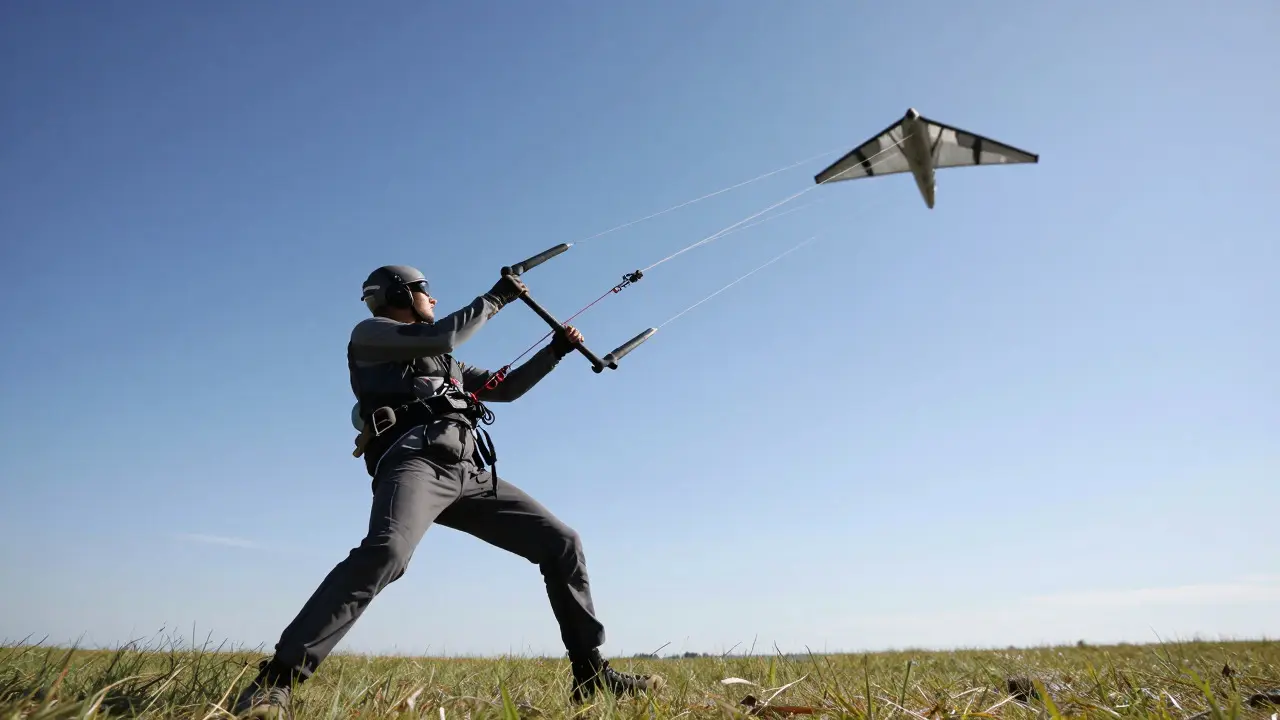
There is a specific sound that only happens when you pull the control bar hard enough to break the boundary of linear flight. It’s a high-pitched whine that drops into a low hum as the Fighter Kite enters a full aerobatic maneuver where the kite rotates rapidly around its own vertical axis while maintaining altitude. This is the chakkar spin. For many pilots, it looks like magic; for those who fly it, it is pure physics applied to a piece of ripstop nylon.
If you are new to aerobatic kiting, the chakkar might look intimidating. But once you understand the mechanics behind this rotational movement, it becomes one of the most satisfying tricks in your arsenal. It requires less strength than a loop-the-loop but demands more precision in timing. Let’s break down exactly how to get that kite spinning without losing altitude or crashing into the ground.
Understanding the Physics of the Spin
To execute a clean chakkar, you need to understand what is actually happening with the airflow. A standard Dual-line Kite flies by balancing lift against gravity. When you initiate a spin, you are shifting that balance. The key to the chakkar is not just pulling hard; it is about creating an asymmetric force on the leading edge.
Unlike a simple turn, which pivots the kite around a horizontal axis (like rolling a car), a chakkar rotates the kite around its vertical axis. Think of it like a helicopter blade spinning up. You achieve this by applying pressure to one side of the control bar while simultaneously adjusting the tension on both lines. If you pull too evenly, you’ll just do a steep turn. If you pull too unevenly without enough total tension, the kite will stall and drop. The sweet spot is a combination of high total line tension and a slight bias toward one hand.
Choosing the Right Gear for Speed
Not all kites are built for high-speed rotations. While any stable delta wing can attempt a basic spin, dedicated Aerobatic Kites are designed with specific attributes that make chakkars easier and safer.
- Frame Stiffness: A rigid frame prevents the kite from flexing under high G-forces. Flexing absorbs energy that should be used for rotation, making the spin sluggish.
- Surface Area: Smaller surface area means less drag. For high-speed spins, a 1.5m to 2.0m kite is often preferred over larger 3m models because they react faster to input changes.
- Line Length: Shorter lines (60-80 meters) provide better feedback and tighter control radius. Longer lines add lag, making it harder to correct a wobble mid-spin.
The control bar also matters. A wide bar gives you more leverage for subtle adjustments, which is crucial for keeping the spin level. If your bar is too narrow, you risk over-correcting and sending the kite into a corkscrew.
Step-by-Step: Executing Your First Chakkar
Do not try to learn this in strong winds. Start in light air, around 8-12 mph, where the kite has enough power to rotate but not so much that it pulls you off your feet. Here is the sequence to follow:
- Positioning: Stand facing the wind. Hold the control bar at waist height. Keep your arms relaxed but ready.
- The Build-Up: Pull the bar back gently to increase speed. You want the kite to be moving fast across the sky before you initiate the turn.
- The Trigger: As the kite reaches peak speed, apply firm pressure to one side of the bar (let’s say your right hand). Simultaneously, pull the entire bar slightly closer to your body.
- The Rotation: Do not jerk. Push smoothly. The kite should begin to bank sharply. As it banks, continue to maintain that side pressure. You will feel the lines tighten significantly.
- The Completion: Once the kite completes 360 degrees, release the side pressure and center the bar. The kite should exit the spin and resume normal flight.
The most common mistake beginners make is pulling the bar too close to their chest during the initiation. This kills forward momentum. Keep the bar at a consistent distance until the spin is fully engaged, then let the natural tension bring it in.

Troubleshooting Common Issues
Even experienced pilots face problems with chakkars. If yours isn’t working, check these three areas first.
| Problem | Likely Cause | Solution |
|---|---|---|
| Kite stalls and drops | Too little line tension | Pull the bar further away from your body before initiating the spin to build speed. |
| Corkscrew instead of flat spin | Uneven line tension or twisted lines | Check for line twists. Ensure both hands apply even vertical force while only one applies lateral pressure. |
| Spin is slow and weak | Wing is too large or wind is too light | Use a smaller kite or wait for stronger winds (12+ mph). |
Line management is critical here. Twisted lines change the angle of attack on the kite’s tips. If one line is twisted, that tip will generate more drag, causing the kite to tilt unexpectedly. Always manage your lines after every flight to prevent this buildup.
Safety Considerations for High-Speed Flight
High-speed maneuvers mean high-energy objects. A fighter kite traveling at 40 mph carries significant kinetic energy. If it hits you, it hurts. If it hits a bystander, it can cause injury.
- Clear Zone: Always ensure there is a 50-meter clear radius around you. No people, no pets, no trees.
- Gloves: Use padded gloves. The friction from high-tension lines can burn your palms quickly during rapid corrections.
- Footwear: Wear closed-toe shoes. If the kite pulls you off balance, you don’t want to trip and fall.
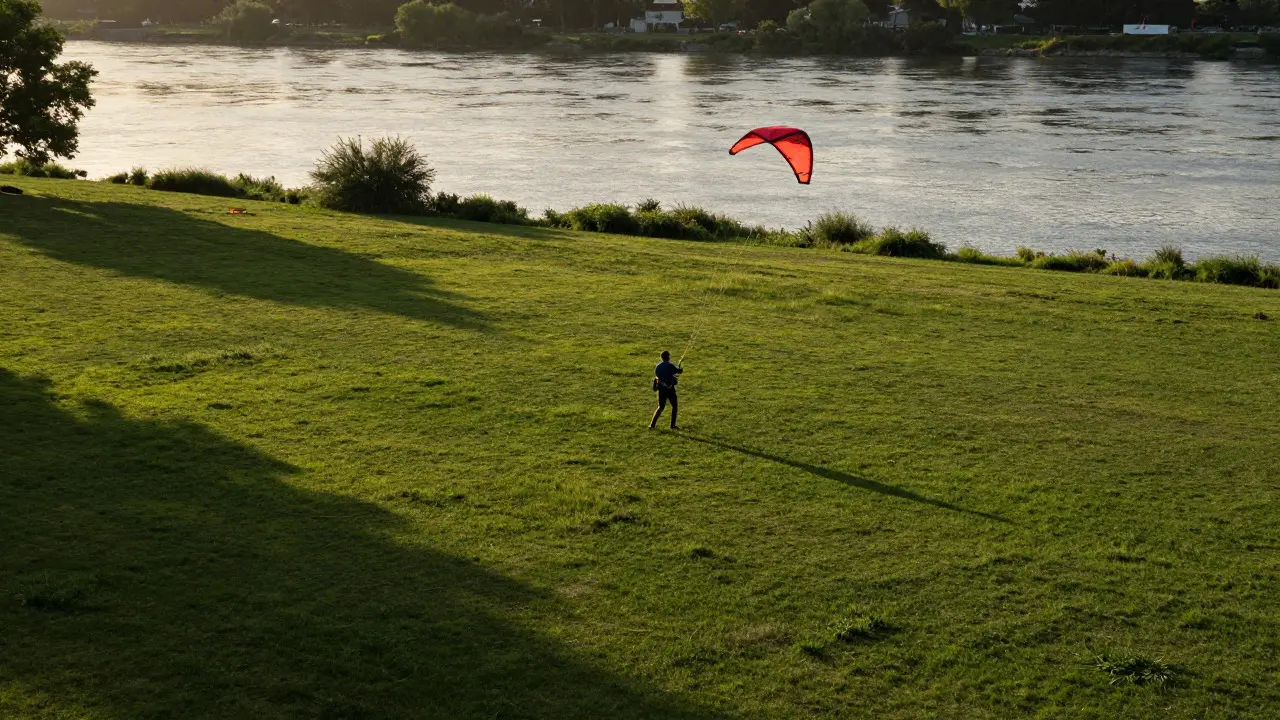
In Portland, we often fly near the Willamette River or in open parks like Washington Park. These locations offer great space, but always check local regulations regarding noise and airspace, especially if you are practicing near airports or busy trails.
Progressing Beyond the Basic Spin
Once you can consistently land a flat chakkar, you can start experimenting with variations. Try combining the spin with a figure-eight entry. Or practice reversing the direction of the spin by switching which hand you apply pressure to. Some pilots even attempt double chakkars, where the kite rotates twice before exiting. This requires extreme precision and usually only works in very strong, steady winds.
The goal is not just to do the trick, but to control it. A controlled chakkar is smooth, silent, and predictable. An uncontrolled one is chaotic and dangerous. Focus on consistency first, then speed.
Frequently Asked Questions
What wind speed is best for learning chakkar spins?
Light to moderate winds, typically between 8 and 15 mph, are ideal for learning. Strong winds above 20 mph can make the spin unpredictable and difficult to control for beginners.
Can I do a chakkar with a single-line kite?
It is very difficult. Single-line kites have limited steering capability. Chakkars require precise differential tension on two lines, which is why they are primarily associated with dual-line fighter kites.
How long does it take to master this trick?
Most pilots can perform a basic chakkar within 5 to 10 hours of focused practice. Mastering it to the point of consistency in varying conditions may take several months of regular flying.
Why does my kite drop after the spin?
This usually happens because you released the line tension too early. Maintain tension through the completion of the 360-degree rotation before easing off the bar.
Are chakkar spins safe for small children to watch?
Only if they are outside the 50-meter safety zone. The lines can whip around quickly during high-speed maneuvers, posing a cutting hazard if someone is too close.