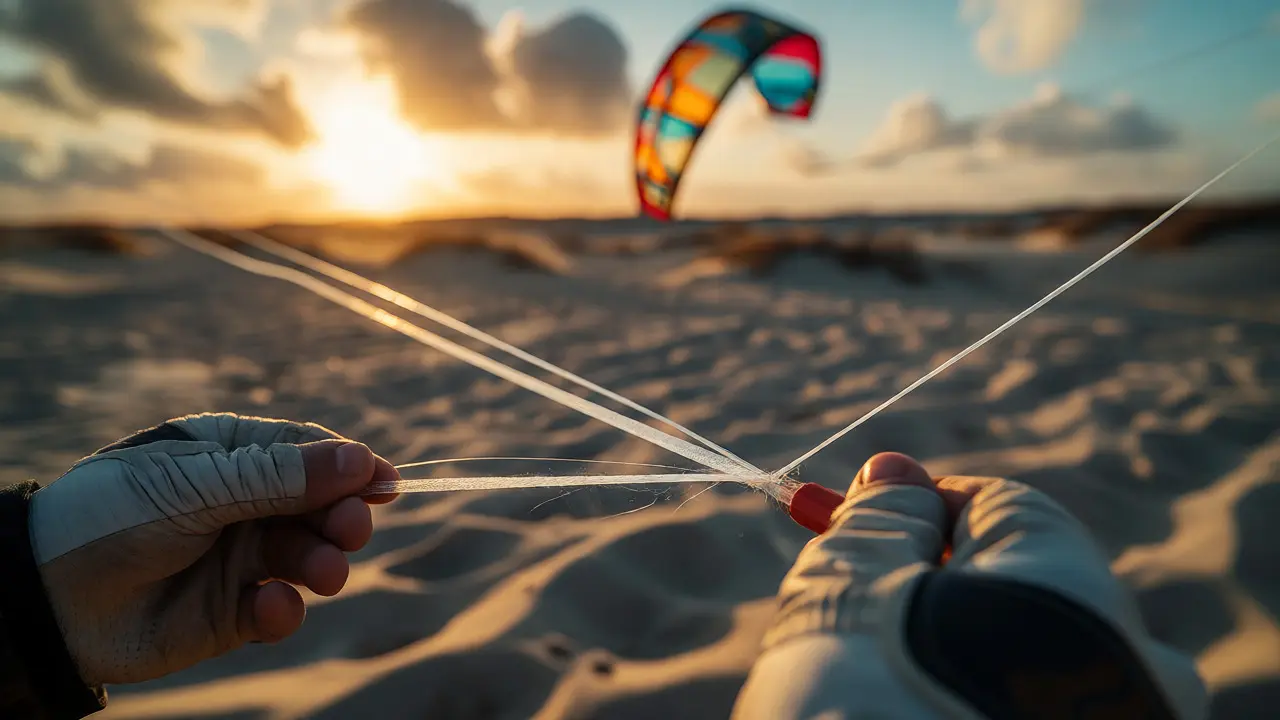
You’re standing on the beach, wind picking up, ready to launch. You check your lines one last time-seems fine. Then, kite line failure hits you like a slap in the face. One second your kite is stable; the next, it’s gone, or worse, whipping back at you with enough force to take out an eye. It’s not just bad luck. It’s physics meeting neglect.
Most people think kites are simple toys. They aren’t. A modern sport kite or power kite is a high-tension machine. The lines are under constant stress from wind gusts, sudden maneuvers, and even UV exposure. If you don’t understand how lines fail and how to fix them fast, you’re gambling with your gear and your safety. Let’s break down why lines snap, what happens when they do, and how to get back in the air without turning your afternoon into a repair shop session.
Why Kite Lines Actually Snap
It’s rarely one thing. Usually, it’s a combination of factors that weaken the line until it gives up. Understanding the root cause helps you prevent it next time.
Dyneema (also known as Spectra) is the standard for modern kite lines. It’s incredibly strong for its weight and has very little stretch. But here’s the catch: Dyneema hates abrasion and heat. If you drag your lines across sand, concrete, or rough pavement, you’re cutting fibers every single time. Those tiny cuts become weak points. Under load, those points tear apart.
Then there’s UV damage. Polyethylene-based lines degrade when exposed to sunlight over long periods. A line that looks new might be brittle inside. If you leave your kite coiled on the dashboard of your car in July, you’re cooking those lines. Check them regularly. If they feel stiff or look fuzzy, they’re done.
Gust loads are another silent killer. When a sudden gust hits, the tension spikes. If your lines are too short or your kite is oversized for the conditions, that spike can exceed the breaking strength instantly. This is why matching your line length to your wind speed matters. Shorter lines react faster but handle less extreme gusts before snapping compared to longer, more forgiving setups in lighter winds.
The Danger Zone: Recoil Mechanics
A snapped line isn’t just about losing your kite. It’s about what happens in the split second after the snap. This is called recoil. When tension releases suddenly, the remaining line segments whip back toward the anchor point-you. At speeds that can exceed 100 mph depending on the tension and length.
Think of it like a stretched rubber band. Cut it, and it snaps back hard. Now imagine that rubber band is a thin, sharp filament under 50 pounds of pressure. That’s a laceration waiting to happen. Most injuries occur to the hands, arms, and face. Never fly without gloves if you’re using heavy-duty lines. And never stand directly in the plane of the lines when launching or landing.
| Failure Mode | Cause | Risk Level | Prevention Tip |
|---|---|---|---|
| Abrasion Snap | Dragging on ground/rough surfaces | High | Use line guards; keep lines off ground |
| UV Degradation | Prolonged sun exposure | Medium | Store indoors; inspect monthly |
| Knot Slip | Improper knot tying | Low-Medium | Use double fisherman’s knots; check regularly |
| Overload Snap | Gusts exceeding tensile strength | High | Match kite size to wind speed |

Inspecting Your Rig Before Every Session
You wouldn’t drive a car without checking the tires, right? Same logic applies here. Spend two minutes doing a tactile inspection. Run your fingers along each line. Feel for nicks, frays, or soft spots. A healthy line feels smooth and uniform. A damaged one feels like it has a bump or a thin spot.
Pay special attention to connection points. Where the line meets the bridle or the handles, friction is highest. These areas wear out fastest. If you see fuzziness at the ends, trim them and re-knot. Don’t wait for it to break mid-flight.
Check your connectors too. Metal clips and swivels can corrode or deform. A bent clip won’t hold under load. Replace any hardware that shows signs of stress. It’s cheap insurance against a catastrophic failure.
Field Repairs: How to Re-Rig Fast
So, your line snapped. You’re stranded. What now? You need a quick fix to get home or finish the day. You can’t just tie a granny knot. It will slip under tension. You need a secure, low-profile knot that holds tight.
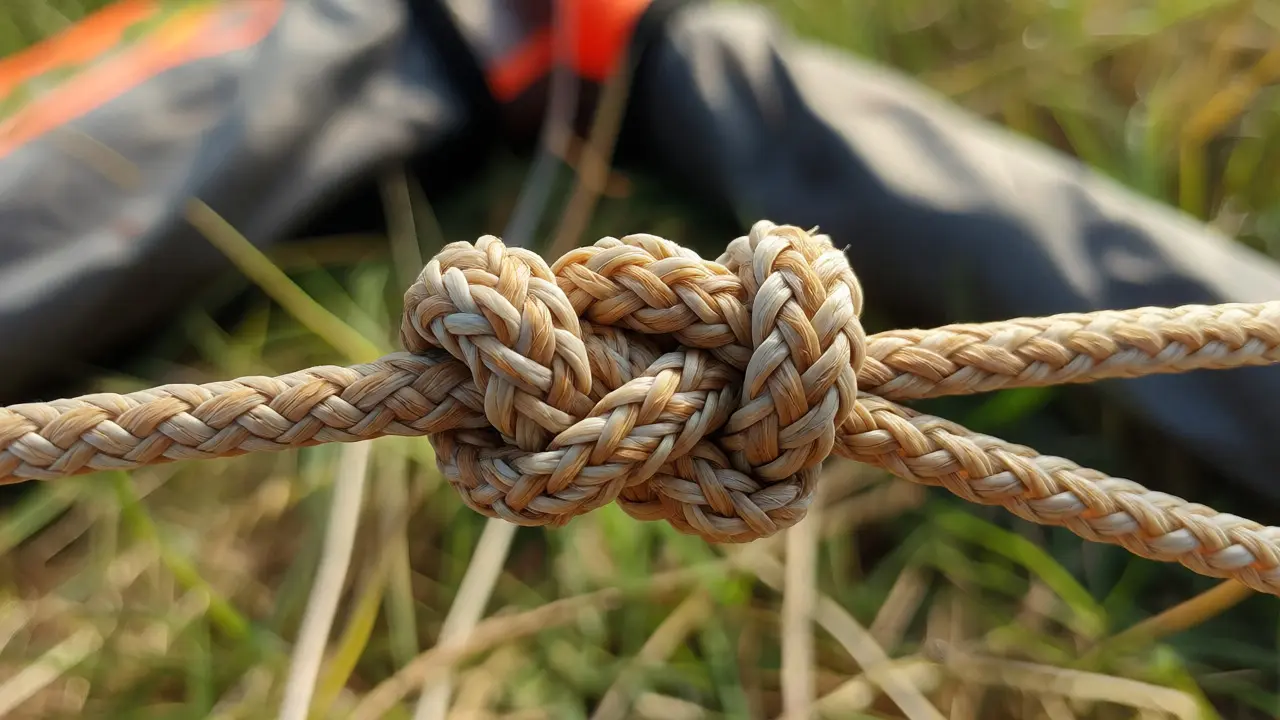
The gold standard for joining kite lines is the Double Fisherman’s Knot. It’s bulky but incredibly secure. Here’s how to do it:
- Lay the two line ends parallel, overlapping by about six inches.
- Take one end and wrap it around both lines three times, forming a coil.
- Thread the end through the center of the coil.
- Repeat the same process with the other end, wrapping in the opposite direction.
- Pull both standing lines to slide the knots together until they jam tightly.
- Trim the excess tails close to the knot.
This knot adds bulk, which can snag on branches or rigging, but it won’t slip. For temporary fixes where bulk is an issue, some flyers use a splice, but that requires specialized tools and practice. In the field, stick to the Double Fisherman’s.
If you have a spare line segment, replace the whole section rather than patching a short piece. Patching creates a weak point in the middle of the span. Replacing ensures consistent strength throughout.
Preventive Maintenance Strategies
Re-rigging is annoying. Preventing failures is smarter. Adopt these habits to extend the life of your lines.
- Coil Properly: Never wrap lines around your hand or arm. Use a figure-eight winder or a dedicated spool. Tight coils crush fibers.
- Keep Them Clean: Saltwater, sand, and dirt abrade lines. Rinse them with fresh water after saltwater sessions. Let them dry completely before storing.
- Rotate Lines: If you fly often, rotate your lines periodically. This spreads wear evenly across all four lines instead of wearing one side disproportionately.
- Store Indoors: Keep your kite bag in a cool, dark place. Heat accelerates chemical degradation in synthetic fibers.
Consider upgrading to colored lines. While aesthetics matter, different colors help you identify twists and tangles quickly. A twisted line pair can lead to uneven loading and premature failure. Seeing the twist lets you correct it before it becomes a problem.
When to Retire Your Lines
How long should lines last? There’s no fixed expiration date. It depends on usage frequency, storage conditions, and care. However, there are clear signs it’s time to retire them.
If you’ve repaired a line more than twice, replace it. Multiple knots create multiple weak points. If the line color has faded significantly, UV damage is likely advanced. If you experience unexplained snaps despite good care, the entire set may be compromised.
Pro tip: Mark your lines with a permanent marker and the date you started using them. After 1-2 years of regular use, consider replacing them regardless of appearance. Prevention is cheaper than replacement parts-and safer than a trip to the ER.
What is the strongest material for kite lines?
Dyneema (Spectra) is currently the strongest common material for kite lines relative to its weight. It offers high tensile strength and minimal stretch, making it ideal for precise control in sport and power kiting. However, it is susceptible to abrasion and UV degradation, requiring careful maintenance.
Can I use fishing line for my kite?
While monofilament fishing line is strong, it is generally not recommended for modern sport kites. It has significant stretch, which reduces responsiveness and control. Additionally, it tends to curl and tangle easily. Braided Dyneema lines offer superior performance and safety characteristics for most kite flying applications.
How often should I replace my kite lines?
There is no universal timeline, but frequent flyers should inspect lines before every session. Replace them immediately if you notice fraying, fading, or stiffness. As a general rule, consider retiring lines after 1-2 years of regular use or after multiple repairs, as cumulative wear compromises structural integrity.
What knot is best for repairing kite lines?
The Double Fisherman’s Knot is widely considered the most reliable for joining kite lines. It provides a secure, non-slipping connection that withstands high tension. Although it creates a bulky joint, its reliability makes it the preferred choice for field repairs and permanent connections alike.
Why do my kite lines twist?
Lines twist due to improper winding, spinning during flight, or manufacturing defects. Twisting causes uneven tension distribution, leading to accelerated wear and potential tangling. To minimize this, always wind lines in the same direction and use swivels in your rigging setup to allow rotation without transferring torque to the lines.