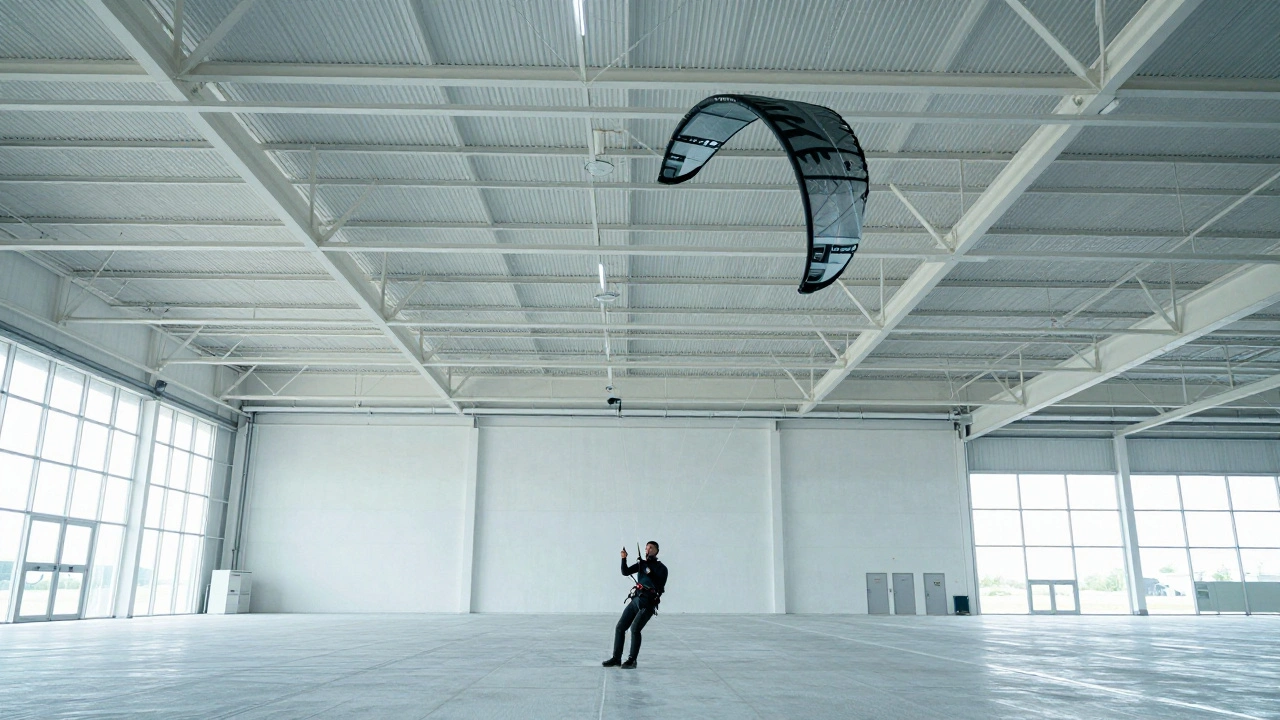
Imagine a room the size of an airplane hangar. It’s quiet, except for the low hum of ventilation fans. In the center, a pilot stands with a thin line in their hand. With a flick of the wrist, a lightweight frame dances across the ceiling, performing loops that defy gravity. This isn’t magic; it is indoor kite flying, a precision sport where wind is simulated by human movement and skill. While outdoor kite festivals draw crowds with giant parafoils, the indoor scene is about control, agility, and artistic expression. If you have ever wondered how judges score these performances or what format governs the world championships, this guide breaks down the mechanics of the sport.
The Arena and Equipment Rules
Before discussing scoring, you must understand the playing field. Indoor kite competitions are strictly regulated by the Fédération Aéronautique Internationale (FAI), the international air sports federation. The FAI defines the standards for equipment and arena dimensions to ensure fairness across global events.
The arena itself is typically a large indoor space, such as a gymnasium or exhibition hall. The minimum required area is usually 40 meters by 20 meters, though major tournaments often use larger spaces to allow for more complex maneuvers. The ceiling height matters significantly. A standard indoor kite requires at least 15 meters of vertical clearance to perform high-altitude tricks without hitting the roof structure. Lighting must be uniform to prevent shadows from obscuring the judge's view of the kite's position relative to the pilot.
Regarding the equipment, the rules are specific. An indoor kite is not just a smaller version of an outdoor stunt kite. It is a specialized freestyle indoor kite designed for low-air-density environments. These kites are constructed from ultra-lightweight materials like carbon fiber spars and ripstop nylon. They feature a high aspect ratio wing design to generate lift even when the pilot moves slowly. The line material is also critical; it must be extremely thin and strong, often made from Dyneema or similar synthetic fibers, to minimize drag. Pilots are generally allowed two lines for steering, but some advanced formats may include a third line for braking or specific aerodynamic effects.
Competition Formats: Freestyle vs. Routine
Most modern indoor kite competitions focus on two primary formats: Freestyle and Routine. Understanding the difference between these is key to grasping how points are awarded.
In the Freestyle category, pilots have a set time limit, typically three minutes, to perform any sequence of maneuvers they choose. There is no prescribed list of tricks. Instead, the pilot demonstrates their personal style, creativity, and technical mastery. This format rewards innovation. A pilot might combine a rapid series of figure-eights with a sudden stall-and-drop maneuver, followed by a graceful spiral descent. The goal is to keep the kite moving fluidly while showcasing difficult elements.
The Routine category, sometimes called "Figure Flying," is more structured. Pilots must execute a predefined set of figures within a specific timeframe. These figures might include horizontal circles, vertical loops, and precise landings. The emphasis here is on accuracy and consistency. Unlike freestyle, where flair can compensate for minor errors, routine flying demands geometric precision. Judges look for sharp angles and perfect symmetry. If a pilot misses the apex of a loop by even a few degrees, points are deducted.
Some regional competitions also host a "Gaggle" event, where multiple pilots fly simultaneously in the same arena. This tests spatial awareness and coordination, as pilots must avoid collisions while maintaining their performance quality. However, individual freestyle remains the most popular format at the World Championships.
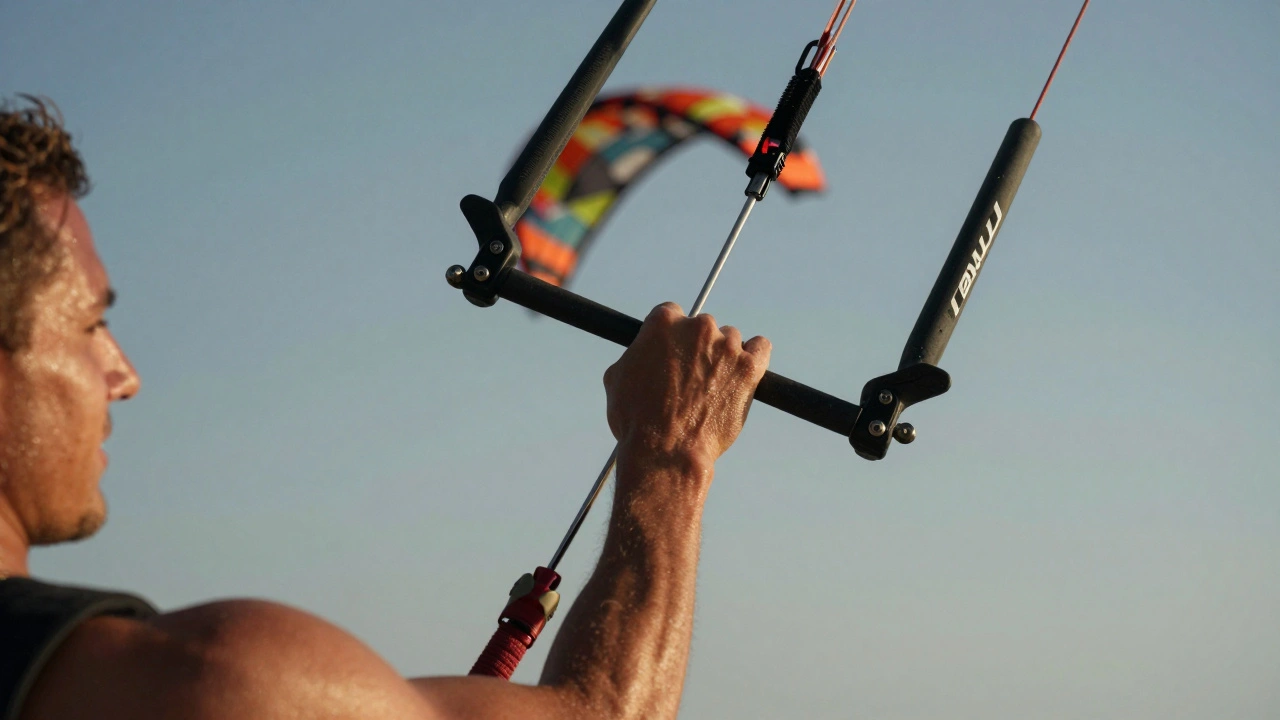
How Judges Score Indoor Kite Flights
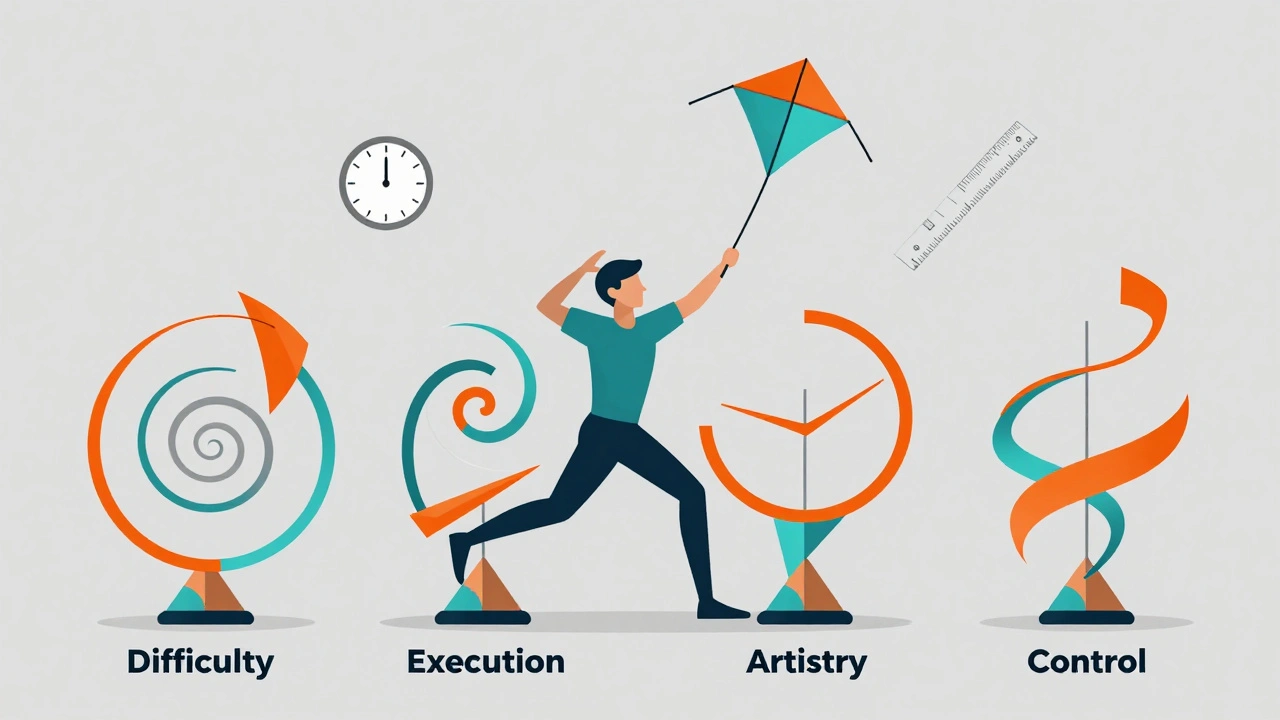
Scoring in indoor kite competitions is subjective but guided by strict criteria. A panel of three to five judges evaluates each flight independently. Their scores are averaged to determine the final result. To ensure objectivity, judges are trained to focus on four main pillars: Difficulty, Execution, Artistry, and Control.
- Difficulty: This measures the complexity of the maneuvers performed. Simple loops and turns earn fewer points than advanced tricks like inverted flights, rapid direction changes, or hovering against simulated wind currents. Judges maintain a mental catalog of known maneuvers and assign base values based on their rarity and technical demand. If a pilot attempts a move that has never been seen before, it may receive a bonus multiplier if executed successfully.
- Execution: Even the hardest trick scores zero if the kite crashes or stalls unintentionally. Execution assesses how cleanly the maneuver was performed. Did the kite maintain its shape? Was the transition smooth? Judges look for crispness in movements. A sloppy loop, where the kite wobbles or loses altitude unnecessarily, will be penalized heavily. Precision is paramount.
- Artistry: This is the creative component. Does the flight tell a story? Is there rhythm and flow? Pilots who vary their speed-mixing fast, aggressive bursts with slow, deliberate glides-score higher on artistry. The use of the entire arena space is also evaluated. A pilot who stays confined to one corner of the hangar will lose points compared to one who utilizes the full width and height of the venue.
- Control: This refers to the pilot's ability to manage the kite under all conditions. Since indoor environments lack natural wind, the pilot generates all the airflow. Judges watch for signs of struggle. If the pilot has to run excessively to keep the kite aloft, or if the kite appears unstable during transitions, control scores drop. Mastery is demonstrated when the pilot looks relaxed, making subtle adjustments rather than frantic corrections.
Each pillar is scored on a scale, often out of 10 or 100. The weights assigned to each category can vary slightly depending on the specific competition rules, but execution and difficulty usually carry the most weight. For example, a common weighting might be 30% Difficulty, 30% Execution, 20% Artistry, and 20% Control.
The Role of the Pilot and Technique
In outdoor kite flying, the wind does much of the work. In indoor flying, the kite pilot is the engine. Your body movement creates the apparent wind that keeps the kite flying. This requires a unique set of physical skills.
Pilots use a technique called "stepping into the wind." By walking or running forward, they generate airflow over the kite's wings. Skilled pilots can make the kite appear to hover in mid-air by precisely matching their walking speed to the kite's sink rate. This illusion of stillness is highly prized in judging.
Hand-eye coordination is tested to the limit. Because the kite is small and moves quickly, pilots must track it visually while manipulating the lines with fine motor skills. Many pilots develop a rhythmic cadence, stepping and pulling in sync to create complex patterns. Training often involves practicing basic maneuvers in front of a mirror or recording flights to analyze timing and posture.
Physical fitness plays a role too. While not as demanding as contact sports, indoor kite flying requires endurance. A three-minute freestyle run can be intense, involving continuous arm movement and footwork. Pilots train core strength and leg stamina to maintain consistent energy output throughout their performance.
Common Mistakes and Penalties
Newcomers to competitive indoor flying often make specific errors that lead to point deductions. Understanding these pitfalls can help you improve your scoring potential.
- Line Tangles: One of the most frequent issues. If the lines twist around each other, the kite becomes uncontrollable. Judges deduct points for every second the pilot spends untangling lines. Prevention involves proper coiling techniques and regular checks of line alignment.
- Stalling: Losing too much speed causes the kite to drop suddenly. While controlled drops can be part of a routine, accidental stalls indicate poor energy management. Judges look for smooth recovery from low-speed moments.
- Boundary Violations: Pilots must stay within the marked arena boundaries. Stepping outside the designated area results in immediate penalties. In severe cases, leaving the arena entirely can disqualify a flight.
- Equipment Failure: If a spar breaks or a line snaps due to poor maintenance, the pilot bears the responsibility. Judges do not award leniency for broken gear unless it is proven to be a manufacturing defect unrelated to pilot error.
Another subtle mistake is "over-flying." Some pilots try to cram too many tricks into the time limit, sacrificing quality for quantity. Judges prefer a well-executed sequence of moderate-difficulty moves over a chaotic attempt at ten impossible tricks. Quality always trumps quantity in this sport.
Training for Competition
If you are serious about competing, training needs to be structured. Start by mastering the basics in a safe, open space. Practice keeping the kite steady in one spot, then move on to simple circles and figure-eights. Once you have confidence, begin incorporating more complex maneuvers.
Video analysis is invaluable. Record your practice sessions and watch them back. Look for inconsistencies in your form. Are your steps even? Is your pull smooth? Compare your footage with videos of top competitors to identify gaps in your technique.
Joining a local club is highly recommended. Organizations like the American Kitefliers Association (AKA) offer resources, training clinics, and access to experienced mentors. Flying with others provides immediate feedback and helps you understand the judging perspective from the inside.
Finally, simulate competition conditions. Practice your routine with a timer. Add pressure by having friends watch and critique your performance. The ability to perform under stress separates good pilots from champions.
What is the maximum time allowed for an indoor kite freestyle round?
The standard time limit for a freestyle round in most FAI-sanctioned competitions is three minutes. Pilots start their timer when they launch the kite and stop it when they land or the time expires. Exceeding the time limit usually results in point deductions per second over.
Can I use my own custom-built kite in a competition?
Yes, you can use a custom-built kite, provided it meets the safety and dimension regulations set by the organizing body. Most competitions require kites to pass a pre-flight inspection to ensure materials are non-abrasive and structures are secure. Commercially available kites are often easier to certify, but home-built frames are common among advanced pilots.
How are ties decided in indoor kite competitions?
Ties are rare due to the detailed scoring system, but if they occur, judges may review the individual breakdowns of the scores. Typically, the pilot with the higher score in the "Execution" or "Difficulty" categories wins. In some cases, a tie-breaker round may be flown, consisting of a single, pre-selected maneuver.
Is indoor kite flying only for adults?
No, there are youth divisions in many national and international competitions. Categories are often split by age groups, such as Junior (under 18) and Senior. Youth divisions encourage young pilots to develop skills in a supportive environment, with adjusted difficulty expectations for younger participants.
Where can I find the official rulebook for indoor kite flying?
The official rules are published by the Fédération Aéronautique Internationale (FAI). You can download the latest version of the FAI Sporting Code, Section 7 (Kiting), from their official website. National associations like the American Kitefliers Association (AKA) also provide localized guidelines and updates.