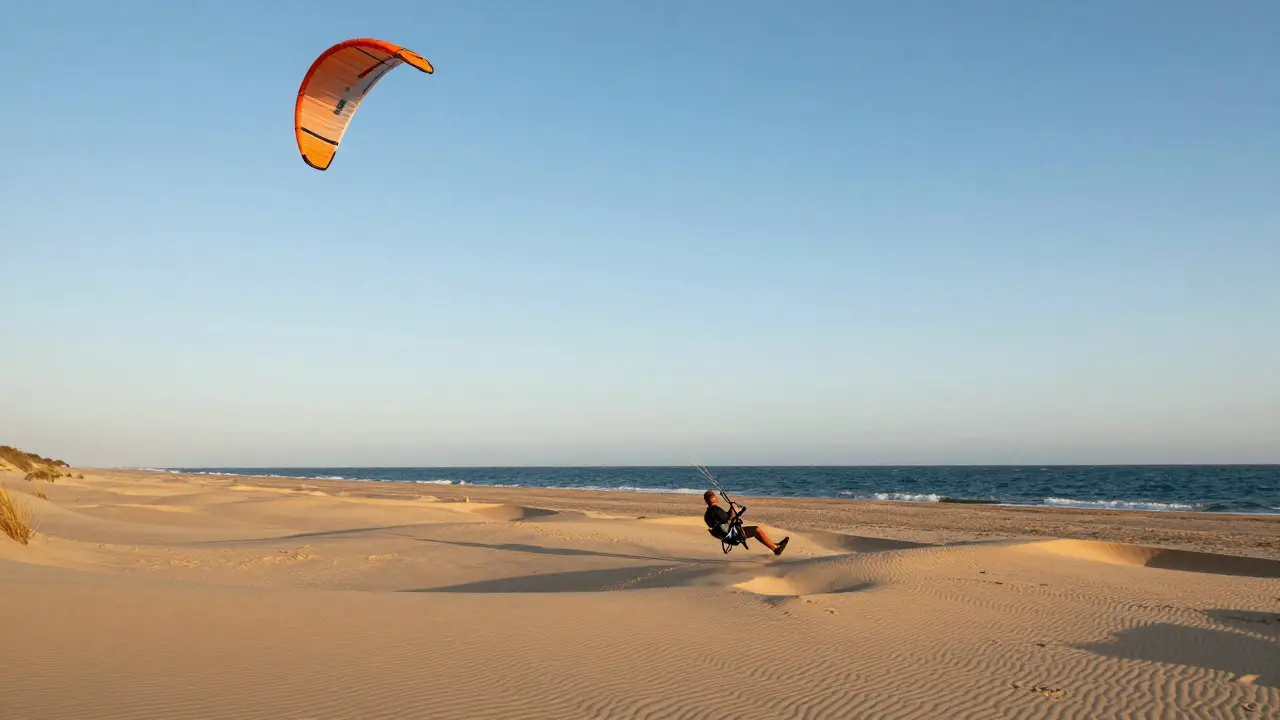
Imagine standing on a beach, feeling the wind pull you off your feet, and hovering thirty meters above the sand without an engine humming or fuel burning. That is the reality of man-lifting kites is a category of large aerodynamic systems designed to generate enough lift to carry a person's weight using only wind power. Unlike traditional recreational kites that stay tethered to the ground, these specialized rigs use advanced materials and control mechanisms to achieve stable, controlled flight for humans. As of 2026, this niche has moved from experimental physics labs into the hands of adventure enthusiasts and engineering firms, offering a silent, zero-emission alternative to paragliding and hang gliding.
The core appeal isn't just novelty; it's efficiency. A well-tuned man-lifting kite can generate lift with significantly less drag than a wing suited for powered flight. This makes it ideal for specific environments where noise pollution is a concern, such as wildlife reserves or quiet coastal zones. However, safety remains the primary hurdle. The physics are unforgiving: if the wind shifts abruptly or the line snaps, the consequences can be severe. Understanding how these systems work, who uses them, and how they differ from other aerial sports is essential for anyone considering this unique form of flight.
How Man-Lifting Kites Generate Lift
To understand why these kites work, you have to look at the difference between static and dynamic lift. Most people think of kites as objects that simply sit in the wind. But man-lifting kites operate more like wings. They utilize a concept called "dynamic soaring" or "crosswind flying." Instead of facing directly into the wind, the pilot flies in a figure-eight pattern across the wind direction. This motion creates apparent wind velocity that is higher than the actual ambient wind speed, generating the necessary lift force to overcome gravity.
The structure of these kites usually falls into two main categories: soft-wing and rigid-wing systems.
- Soft-wing kites: These resemble large parachutes or ram-air canopies. They are made of fabric stretched over internal ribs. They are lighter and easier to pack but require consistent wind speeds to maintain shape.
- Rigid-wing kites: These feature a solid frame, often made of carbon fiber or aluminum, covered in lightweight synthetic material. They offer better structural integrity in gusty conditions and can fly in lower wind speeds due to their fixed airfoil shape.
Both types rely on precise tension management. The pilot controls altitude not by flapping wings, but by adjusting the angle of attack through steering lines. Pulling one line tightens the curve of the kite, increasing lift on that side and causing the system to bank and climb. Releasing the line allows the kite to fall back, reducing lift. This delicate balance requires significant skill, much like piloting a sailboat in choppy waters.
Safety Mechanisms and Pilot Control
Safety is the non-negotiable factor in any human-carrying aerial device. In man-lifting kites, the primary risk is loss of control due to wind variability. To mitigate this, modern systems incorporate several redundant safety features. First, there is the emergency release mechanism. Pilots wear a harness equipped with a quick-release buckle that disconnects the pilot from the kite instantly. While this sounds terrifying, it is actually the safest option in many scenarios because it allows the pilot to free-fall under a backup parachute rather than being dragged by an uncontrolled kite.
Second, electronic monitoring plays a growing role. Many 2026-era kits include GPS trackers and anemometers (wind speed sensors) integrated into the harness. If the wind speed drops below a safe threshold or exceeds a maximum limit, the system alerts the pilot via vibration or sound. Some advanced setups even have automatic brake lines that deploy if the kite reaches a critical altitude, preventing the pilot from drifting too high into turbulent air layers.
Training is another critical safety layer. You cannot just buy a man-lifting kite and go fly. Certification programs, similar to those for paragliding, require hours of instruction in neutral buoyancy tanks or low-altitude tethers before solo flight is permitted. This ensures pilots understand how to react to sudden lulls or gusts, which are the most common causes of accidents in this field.
Comparison with Other Human Flight Methods
Why choose a man-lifting kite over a paraglider or hang glider? The answer lies in the trade-offs between cost, complexity, and environmental impact. Paragliders are generally more accessible and have a larger community, but they rely heavily on thermals (rising warm air) for sustained flight. Without thermals, a paraglider must land quickly. Man-lifting kites, however, can fly in steady winds regardless of thermal activity, making them viable in coastal areas or mountain passes where constant wind flow exists.
| Feature | Man-Lifting Kite | Paraglider | Hang Glider |
|---|---|---|---|
| Primary Lift Source | Wind (Dynamic) | Thermals/Wind | Gravity/Wind |
| Noise Level | Silent | Silent | Airflow Noise |
| Equipment Cost | $3,000 - $8,000 | $1,500 - $4,000 | $2,000 - $5,000 |
| Learning Curve | Steep (Physics-based) | Moderate | Steep (Balance-based) |
| Ideal Environment | Coastal/Mountainous Wind Zones | Hills with Thermals | Mountain Launch Sites |
Cost-wise, man-lifting kites sit in the middle. They are more expensive than entry-level paragliders because of the specialized rigging and safety electronics, but cheaper than powered ultralight aircraft. The learning curve is steeper because the feedback loop is immediate. In a paraglider, you have time to adjust your body position. In a kite system, a small error in line tension can result in a rapid altitude change within seconds. This demands heightened situational awareness and physical strength to manage the loads on the harness.
Key Components of a Modern System
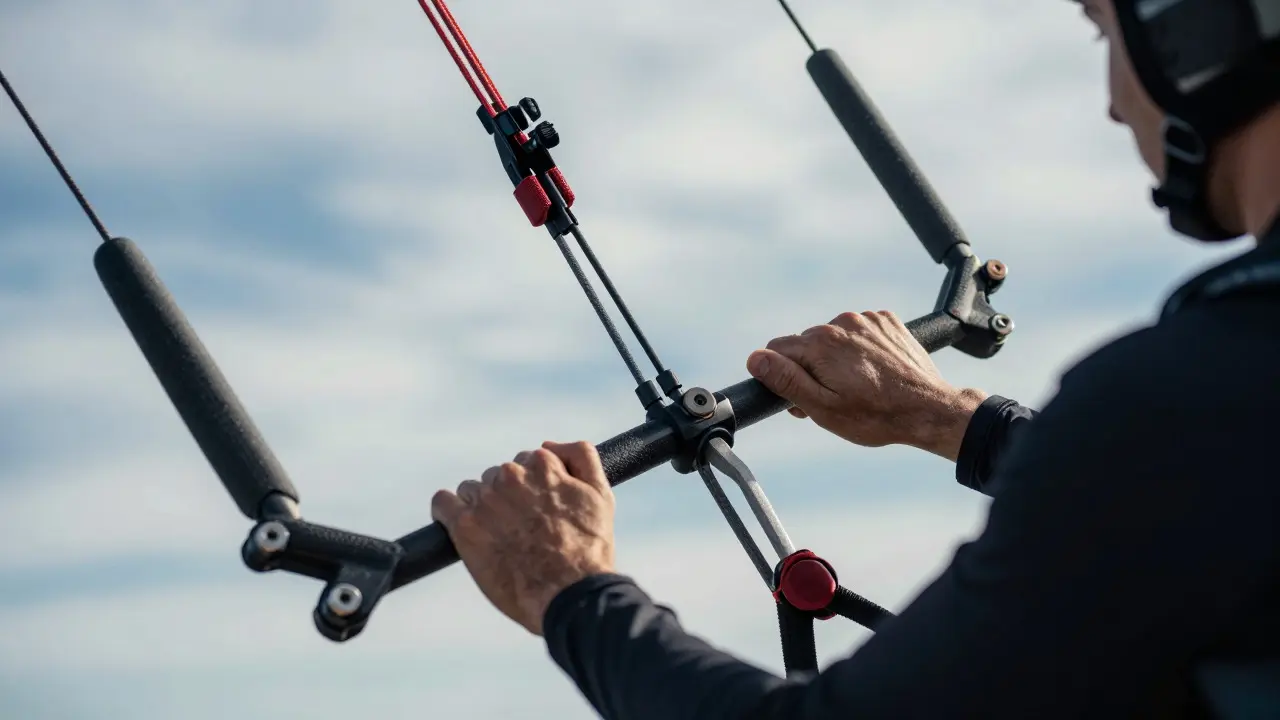
A complete man-lifting kit consists of four main parts: the kite itself, the line system, the pilot harness, and the control interface.
- The Kite Wing: Typically ranges from 15 to 30 square meters in surface area. Larger wings provide more stability but require stronger winds. Smaller wings are more agile but harder to control in light air.
- Line System: Made from Dyneema or similar high-strength synthetic fibers. These lines are incredibly thin yet capable of holding thousands of pounds of tension. They are usually color-coded for easy identification during flight.
- Pilot Harness: A specialized seat suspended from the lines. It includes padding for comfort during long flights and attachment points for safety gear. Weight distribution is critical here; a poorly balanced harness can cause the pilot to tilt dangerously.
- Control Interface: This can be manual (steering bars) or electronic (joysticks with servos). Manual systems are simpler and fail-safe, while electronic systems allow for finer adjustments and automated safety checks.
Each component interacts with the others. For example, if the line system stretches slightly over time, the control interface may need recalibration to account for the changed geometry. Regular maintenance checks are mandatory to ensure no fraying or fatigue occurs in the load-bearing parts.
Regulations and Where to Fly
Flying a man-lifting kite is not as simple as taking it to a local park. Regulations vary widely by country and region. In many places, these kites are classified as "unmanned aerial vehicles" or "free-flight devices," subject to specific airspace restrictions. You typically need to file a flight plan with local aviation authorities, especially if flying near airports or populated areas.
Altitude limits are also a key regulatory factor. Most jurisdictions cap recreational flight at 400 feet (120 meters) above ground level. Exceeding this requires special permission. Additionally, wind speed limits apply; flying in winds above 25 knots (approx. 29 mph) is often discouraged or prohibited due to increased risk of line breakage or loss of control.
Popular locations for man-lifting kite flying include coastal cliffs in Europe, such as the coast of Brittany in France, and mountain passes in New Zealand. These sites offer consistent wind patterns and wide open spaces for safe landing zones. Always check local zoning laws, as some beaches prohibit large structures or tethered activities.
Future Trends and Innovations
The technology behind man-lifting kites is evolving rapidly. One major trend is the integration of AI-assisted flight controls. Sensors on the kite and harness feed data to a small onboard computer that predicts wind shifts milliseconds before they happen, automatically adjusting line tension to keep the pilot stable. This reduces the cognitive load on the pilot, allowing them to focus on navigation rather than micro-adjustments.
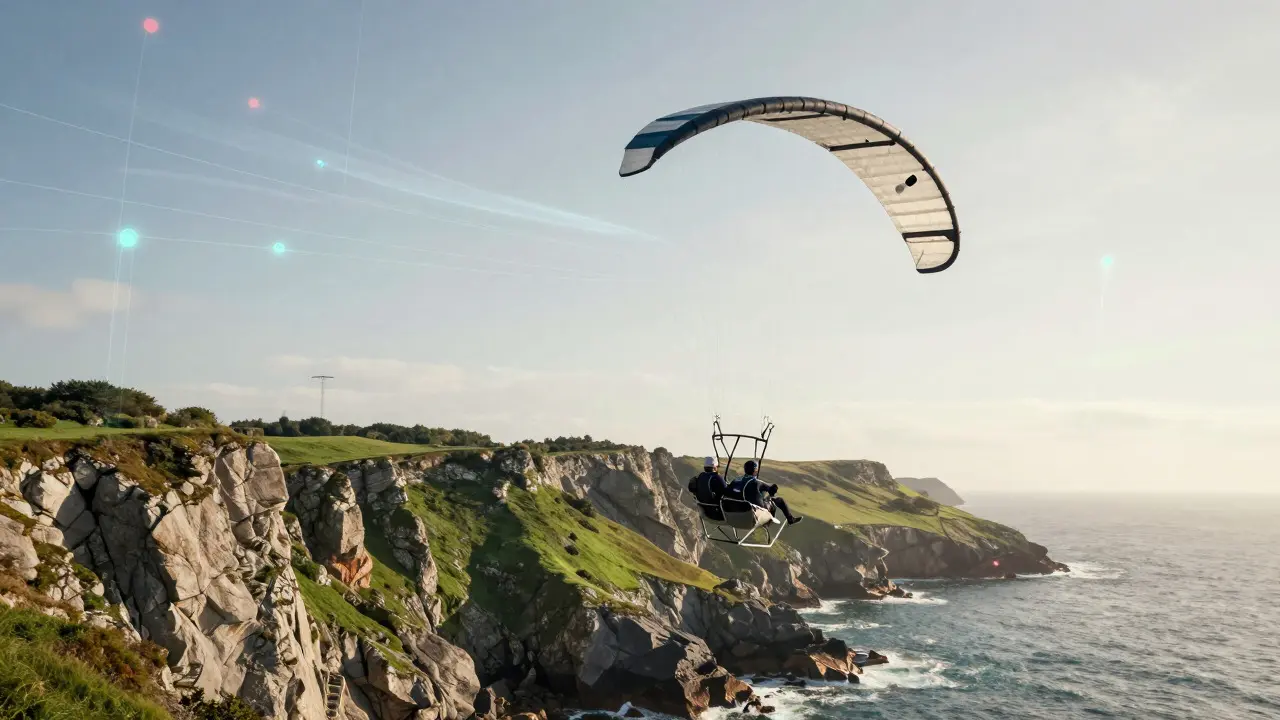
Another development is the rise of tandem kites. These larger systems are designed to carry two people simultaneously, opening up possibilities for guided tours and shared experiences. Tandem configurations require more robust frames and higher energy inputs, but they make the sport more accessible to beginners who want professional guidance.
Sustainability is also driving innovation. Manufacturers are experimenting with biodegradable fabrics and recycled composites for the kite frames. Since these kites are used in natural environments, reducing their ecological footprint aligns with the values of the community. As battery technology improves, hybrid systems that combine kite lift with electric propulsion for takeoff and landing are also emerging, offering the best of both worlds.
Frequently Asked Questions
How fast can a man-lifting kite travel?
Speed depends on wind conditions and kite design. In moderate winds of 15-20 knots, typical forward speeds range from 20 to 35 miles per hour. In strong winds, speeds can exceed 50 mph, but control becomes more challenging.
Do I need a license to fly a man-lifting kite?
Requirements vary by location. In many countries, no specific pilot license is required for recreational flight, but you must comply with general aviation regulations regarding altitude and airspace. Private clubs often require certification from recognized training organizations before allowing solo flight.
What happens if the wind stops suddenly?
If the wind lulls, the kite loses lift, and the pilot begins to descend. A trained pilot will use the remaining momentum to steer toward a safe landing zone. If the descent is too steep, the emergency release mechanism can be activated to deploy a backup parachute.
Can man-lifting kites be used for cargo transport?
Yes, the same principles apply to cargo. Unmanned versions of these kites are increasingly used for delivering supplies to remote areas. The technology is scalable, meaning larger kites can carry heavier payloads, making them efficient for logistics in hard-to-reach regions.
How much does a full man-lifting kite setup cost?
A basic recreational setup costs between $3,000 and $5,000. High-end systems with electronic controls, GPS tracking, and premium materials can range from $8,000 to $15,000. Training courses typically add another $1,000 to $2,000 to the initial investment.