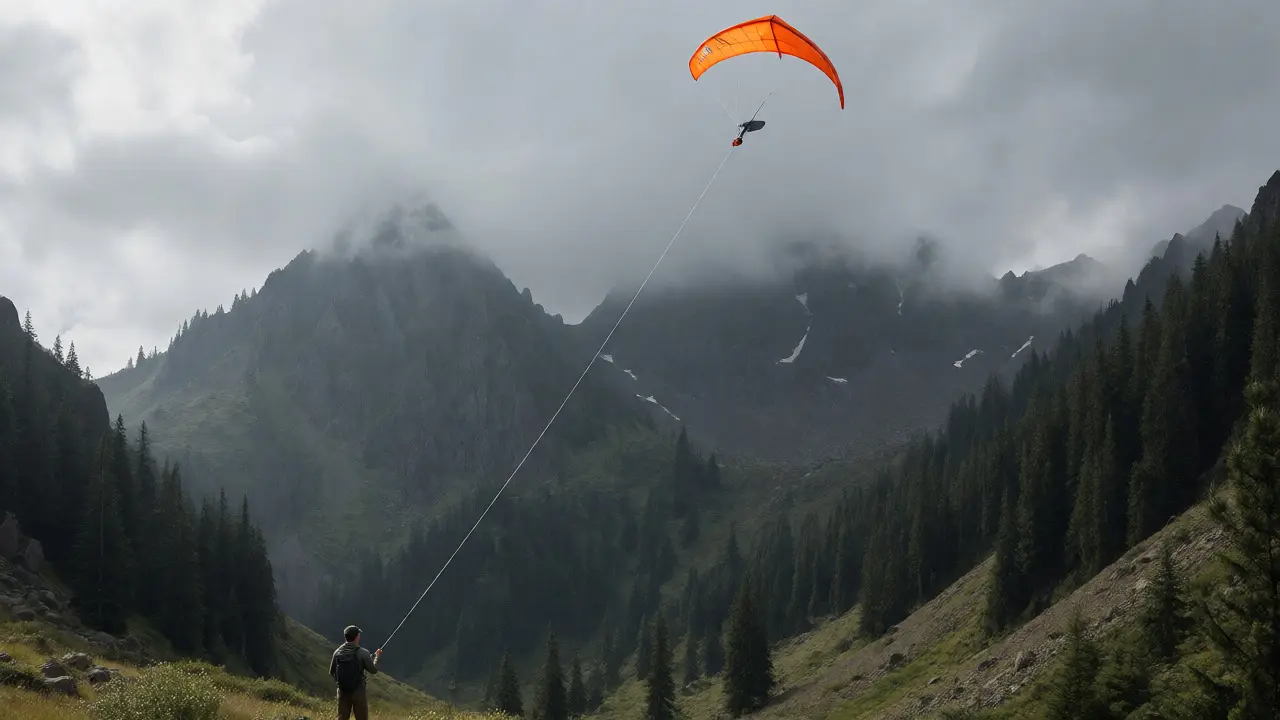
Imagine you are three days deep into the backcountry of Oregon’s Cascade Range. Your phone is a brick. The nearest cell tower is forty miles away over jagged peaks. You need to send a simple text message-maybe just "We're okay"-to your family or a ranger station. You don’t have a $1,000 satellite messenger. But you do have a strong nylon line, a lightweight drone-grade motor, and a small radio transceiver. This isn't science fiction; it's the practical reality of kite-borne radio relays, a low-cost method for creating temporary communication networks in remote areas where infrastructure fails or doesn't exist.
Most people think of kites as toys. In the world of amateur radio (ham radio) and emergency preparedness, they are serious tools. By lifting an antenna high above the terrain using wind power, operators can extend their radio range from a few miles to dozens of miles without running heavy coaxial cables up a mountain. It solves a physics problem that has plagued wireless communication since its inception: line-of-sight limitations.
The Physics of Height and Signal Propagation
Radio waves, particularly in the Very High Frequency (VHF) and Ultra High Frequency (UHF) bands used by handheld radios, travel in straight lines. They don't bend well around mountains or dense forests. If you stand in a valley, your signal hits the ridge behind you and stops. A kite-borne antenna system works on a simple principle: get the antenna above the obstacles. By flying a kite 50 to 100 feet up, you clear the immediate tree line and local terrain bumps. This increases the Fresnel zone-the elliptical area between transmitter and receiver that must be mostly free of obstructions for a strong signal.
This isn't about magic. It’s geometry. Raising an antenna from 6 feet to 60 feet can increase the horizon distance significantly. For a typical VHF handheld, this might mean the difference between a static-filled whisper and a crystal-clear voice contact with a repeater 30 miles away. The kite acts as a mobile mast, cheaper and lighter than a tripod or a vehicle-mounted pole, especially when you’re hiking in.
Choosing the Right Kite and Line
You can’t just grab any toy kite from a gas station. The wind conditions in remote areas are unpredictable. You need stability. Most successful setups use delta kites or parafoils because they generate lift efficiently and handle gusts better than flat diamond kites. Parafoils, similar to paragliders, require no rigid spars, making them packable into a backpack.
The line is critical. Standard polyester braided line is strong but conductive if wet, which can detune your antenna. Many operators prefer Dyneema or Spectra lines. These synthetic fibers are incredibly strong, light, and non-conductive, ensuring that the electrical properties of your antenna remain stable regardless of humidity. A common rule of thumb: use a line rated for at least ten times the maximum expected wind load. If you expect 20 mph winds, don't skimp on a line that snaps at 5 pounds of tension.
| Kite Type | Lift Efficiency | Wind Range | Packability | Stability |
|---|---|---|---|---|
| Delta Kite | Moderate | 5-20 mph | Medium | High |
| Parafoil | High | 8-30 mph | Excellent | Moderate |
| Diamond | Low | 5-15 mph | Low | Low |
| Rokkakku | Moderate | 5-25 mph | Medium | Very High |
Building the Antenna System
The heart of the system is the antenna. You aren't just hanging a wire; you're constructing a balanced dipole or a vertical monopole that needs to stay oriented correctly while swaying in the breeze. A popular design is the "end-fed half-wave" antenna made from thin copper wire or even flexible speaker wire. It’s lightweight enough not to drag the kite down too much.
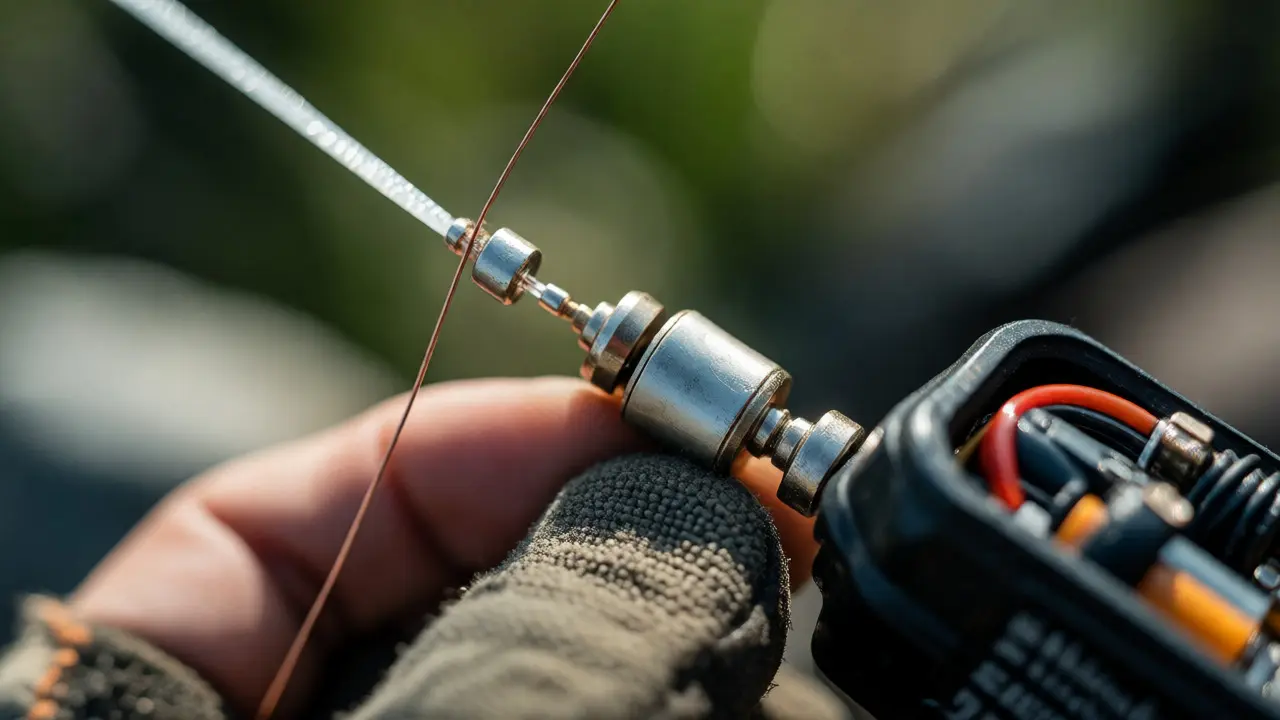
Here is where many beginners fail: impedance matching. As the kite flies higher, the length of the feedline changes relative to the ground. This alters the standing wave ratio (SWR). If your SWR spikes above 2:1, your radio might shut down to protect itself. To combat this, use a choke balun at the feed point. This prevents the coaxial cable from acting as part of the antenna, which can cause erratic performance. Keep the connection between the kite and the first section of the antenna short and secure. Vibration will shake loose connections faster than you think.
Powering the Network
A radio relay needs power. If you are only transmitting, a battery pack attached to the ground end is fine. But if you want a true relay-receiving signals from one location and retransmitting them to another-you need power up in the air. This is where solar micro-panels come in. Small, flexible panels weighing under 50 grams can trickle-charge a lithium-polymer battery housed in a waterproof pod attached to the kite string near the antenna.
For more advanced setups, operators use Wi-Fi bridges. Instead of analog voice, they fly a small Raspberry Pi Zero W or an ESP32 module with a Wi-Fi antenna. This creates a hotspot. Hikers within a mile can connect their phones to this airborne node, sending data packets down the line to a base station connected to the internet via satellite or cellular backhaul. This turns a kite into a floating router, bridging the digital divide in real-time.
Operational Challenges and Safety
Flying a kite isn't just about fun; it’s a safety operation. Lightning is the obvious enemy. Never fly a kite-borne antenna during a thunderstorm. Even if the storm is distant, the electric field buildup can be deadly. Always have a quick-release mechanism on your line so you can drop the kite instantly if weather turns.
Another issue is line management. A 100-foot line looks like nothing until it wraps around a tree branch or gets tangled in brush. Use a reel with a friction brake. Never wrap the line around your bare hand; if the kite surges, it will cut deep into your skin. Wear gloves. Also, consider visibility. Attach small LED lights to the kite for night operations, and mark the line with flags if you are in a high-traffic area or near flight paths.
Regulations matter too. In the US, the Federal Aviation Administration (FAA) generally allows recreational kite flying below 400 feet without special permission, provided it doesn't interfere with manned aircraft. However, attaching electronics moves you into a gray area of "tethered unmanned aerial systems." While enforcement is rare for small ham radio projects, always check local airspace rules. If you are in a national park, specific permits may apply for launching devices.

Real-World Applications Beyond Hobbyists
While hobbyists pioneered these techniques, organizations like the Red Cross and FEMA have tested similar concepts. During disasters, cell towers often go down due to power loss or physical damage. A fleet of large helium balloons or heavy-lift kites equipped with LTE small cells can restore basic connectivity for first responders. Unlike drones, which run out of battery in 20 minutes, kites and balloons can stay aloft for hours or days, providing persistent coverage.
In rural agriculture, farmers use kite-relayed LoRaWAN sensors to monitor soil moisture across vast fields without installing expensive cellular gateways every mile. The kite lifts the gateway antenna above the crop canopy, extending the range of the low-power wide-area network. This saves thousands of dollars in infrastructure costs per season.
Troubleshooting Your Airborne Network
If your signal drops when the kite goes up, check your grounding. A kite-borne antenna lacks the solid earth ground of a rooftop setup. Adding a counterpoise-a horizontal wire extending from the antenna’s ground plane-can stabilize the radiation pattern. If the kite won't rise, check your weight-to-lift ratio. Every gram counts. Remove unnecessary connectors, use thinner wire, and ensure your kite isn't waterlogged from morning dew.
Interference is another hurdle. Power lines, metal fences, and even wet trees reflect radio waves. Position your launch site away from large metallic structures. If you hear noise, try changing the polarization of your antenna. Switching from vertical to horizontal (or vice versa) can sometimes eliminate specific sources of interference.
How high do I need to fly the kite for it to make a difference?
Generally, getting the antenna 30 to 50 feet above ground level clears most immediate obstructions like bushes and cars. For significant range extension over hilly terrain, aiming for 100 to 200 feet is ideal. Beyond 300 feet, diminishing returns set in unless you are dealing with very long-distance contacts.
Can I use a regular smartphone as the radio unit?
Not directly for traditional radio relays. Smartphones lack the external antenna ports needed to connect to a kite-borne dipole easily. However, you can use a Bluetooth adapter or a specialized case to connect a phone to a small Wi-Fi or LoRa module flown on the kite, effectively turning the kite into a data bridge rather than a direct voice radio link.
What happens if the kite falls?
The line will go slack, and the antenna will drop to the ground. If you have a reel, you can quickly retrieve it. To prevent losing the equipment entirely, attach a bright flag or reflective tape to the kite. Some operators also use a secondary retrieval line or a GPS tracker tag on the antenna housing.
Is it legal to fly a kite with a radio antenna?
Yes, in most jurisdictions, including the US, as long as you follow general aviation guidelines. You must yield to manned aircraft and keep the kite within visual line of sight. Check local ordinances regarding tethered objects, especially near airports or military zones.
Do I need a ham radio license to use this system?
If you are transmitting on amateur radio frequencies (like 2m or 70cm bands), yes, you need a Technician class license or higher. If you are using unlicensed ISM bands (like 915 MHz for LoRa or 2.4 GHz for Wi-Fi), no license is required for transmission, though you must adhere to power limits.