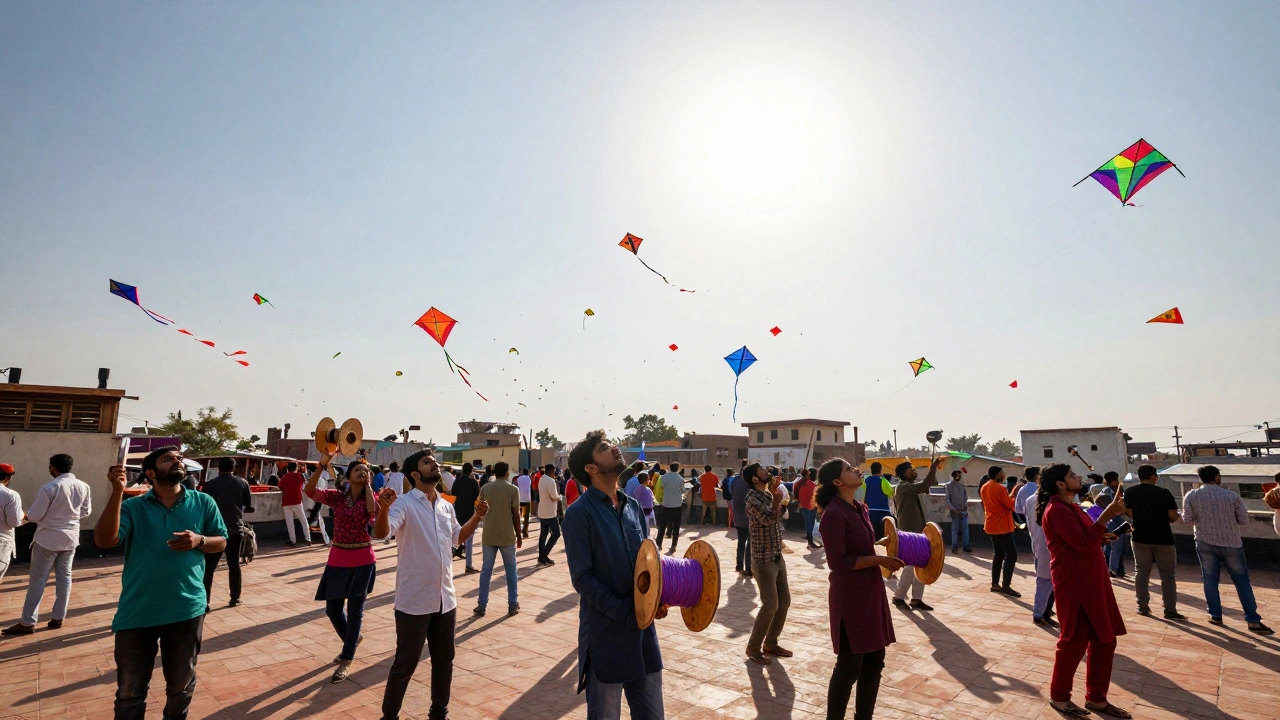
Imagine a sky so thick with colorful shapes that the sun disappears behind a moving mosaic. That is Makar Sankranti, India's largest national kite flying festival. It happens every year on January 14th. Millions of people climb onto rooftops across northern and western India. They hold spools of thread and launch paper kites into the winter air. For outsiders, it looks like chaos. For locals, it is a precise, loud, and joyful battle for dominance in the sky.
You might wonder why this specific day matters. It marks the transition of the sun into Capricorn (Makara). This signals the end of winter solstice and the start of longer days. Farmers celebrate the harvest. But the real spectacle is the aerial war. If you want to understand Indian culture, you have to look up during Makar Sankranti. Here is how the festival works, how to make your own gear, and what you need to know if you plan to join the fun.
The Battle for the Sky: Rules and Rituals
This is not just casual play. There is a hierarchy. The goal is to cut the string of another person's kite. When you succeed, you shout "Kai Po Che!" which translates roughly to "Go away!" or "I got you!" The crowd cheers. You feel a rush of adrenaline. The loser loses their kite, which drifts down to the street below. People rush to catch these fallen kites. Catching one is considered lucky. It is called "manjha collection."
The equipment is specialized. Regular toy store kites will fail here. You need a Patang, a traditional diamond-shaped kite made of thin paper and bamboo. These kites are lightweight but durable. They respond quickly to wind changes. The string is the weapon. It is coated with a mixture of starch and ground glass. This abrasive coating helps saw through opponents' strings. In some states, this practice is now regulated due to safety concerns, but the tradition remains central to the event.
The social aspect is huge. Neighbors compete against neighbors. Entire buildings become teams. Older mentors teach younger kids the art of reading the wind. It is a community bonding event disguised as a competition. You share sweets, specifically til-gul (sesame seed jaggery), while watching the skies. The saying goes, "Til-gul ghya, godi boli," meaning eat sesame and jaggery and speak sweetly. It promotes harmony even amidst the aggressive kite cutting.
How to Build a Traditional Patang Kite
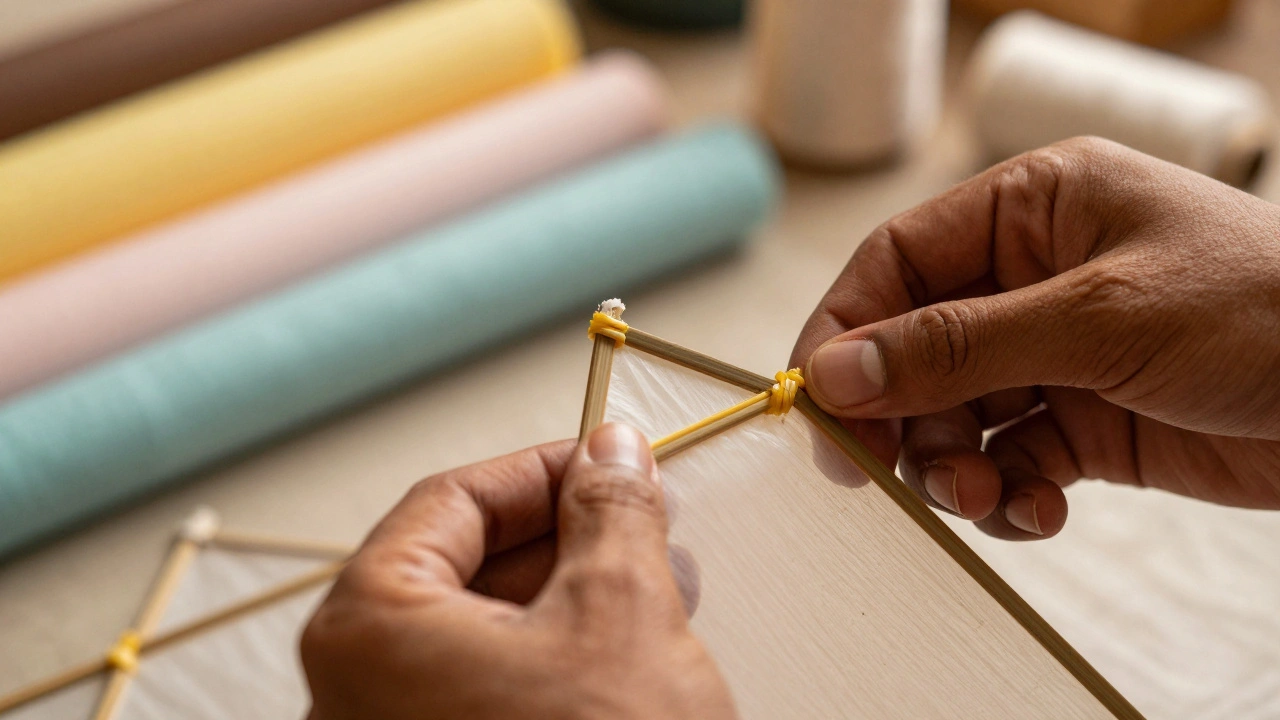
If you want to participate authentically, buying a pre-made kite misses half the experience. Making a Patang kite, handcrafted diamond kite using rice paper and bamboo sticks is a craft in itself. It requires patience and precision. Here is the basic process used by artisans in cities like Jaipur and Ahmedabad.
- Gather materials: You need thin bamboo strips (for the frame), rice paper or tissue paper (for the sail), natural gum (like tamarind paste), and cotton thread.
- Build the frame: Cut two bamboo sticks. One should be slightly longer than the other. Tie them together in a cross shape using fine thread. The vertical stick should be about 70% of the total length. Ensure the center of gravity is balanced.
- Attach the paper: Stretch the rice paper over the frame. Apply glue sparingly. Too much glue makes the kite heavy. Too little causes wrinkles. Smooth it out carefully. Let it dry completely.
- Add the tail: Attach a long strip of paper or ribbon to the bottom. The tail stabilizes the kite in turbulent winds. Adjust its length based on wind speed. Longer tails for stronger winds.
- Tie the bridle: This is crucial. Use two points on the vertical bamboo to attach your flying line. The angle determines how the kite climbs. Experiment with different angles to find the sweet spot for lift.
Once built, test your kite in open areas before the festival. Learn how it behaves in gusts. A well-made Patang can stay aloft for hours without drifting uncontrollably.
Regional Variations Across India
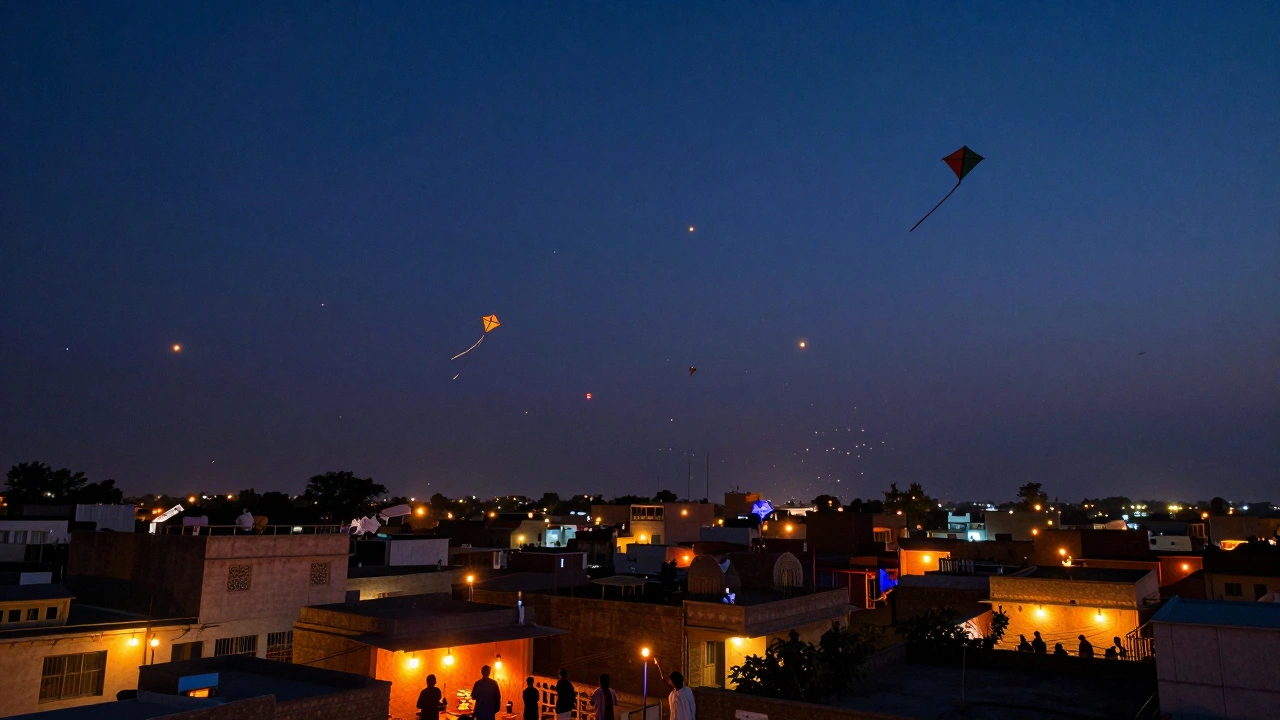
While Makar Sankranti is nationwide, the intensity varies. In Gujarat and Rajasthan, it is known as Uttarayan. This is the epicenter of kite flying. Cities like Ahmedabad turn off main lights to let the illuminated kites shine. The government organizes international competitions. Thousands of visitors flock there. The sky becomes a neon canvas after sunset.
In Punjab and Haryana, it is celebrated as Maghi. The focus shifts slightly more towards religious prayers and farm festivals, but kite flying remains popular. In Maharashtra, it is called Makar Sakranti. Here, the emphasis is on the exchange of til-gul laddoos. Kite flying happens, but it is less aggressive than in the west.
In southern India, such as Tamil Nadu, it is Pongal. Kite flying is minimal. Instead, families cook rice in pots until it overflows (Pongal means 'to boil over'). They decorate cattle and visit temples. So, if you are looking for the massive aerial battles, head north or west. If you prefer cultural rituals and food, the south offers a different flavor.
| Region | Local Name | Kite Intensity | Key Tradition |
|---|---|---|---|
| Gujarat/Rajasthan | Uttarayan | Very High | International Kite Festivals, Night Flying |
| Punjab/Haryana | Maghi | High | Temple Visits, Bhangra Dancing |
| Maharashtra | Makar Sakranti | Medium | Exchanging Til-Gul Sweets |
| Tamil Nadu | Pongal | Low | Cooking Pongal Dish, Cattle Worship |
Safety Concerns and Modern Regulations
Tradition meets modernity with friction. The use of glass-coated strings (manjha) has caused serious injuries. Birds get tangled and die. People suffer cuts from falling lines. Authorities in many cities have banned metal or glass-coated threads. They promote nylon or plastic strings instead. However, enforcement is difficult. Many participants still use the old methods secretly.
If you are visiting, wear eye protection. Keep your hands covered with gloves when handling lines. Never fly near power lines. Respect local bans. Some hotels provide safe zones for guests to watch without participating. Check local news before arriving. The spirit of the festival is joy, not harm. Adapting to safer practices ensures the tradition survives for future generations.
Planning Your Visit: Tips for Travelers
To experience Makar Sankranti fully, timing is everything. Arrive a few days early. Rooftop access can be restricted. Negotiate with building managers for viewing spots. Bring sunscreen and water. Winter days are sunny and dry. Hydration is key.
Stay in areas known for kite flying. In Ahmedabad, the old city areas offer the best views. In Delhi, Connaught Place and surrounding neighborhoods come alive. Book accommodations early. Prices surge during this week. Consider staying in heritage havelis that offer rooftop experiences. It adds to the authenticity.
Learn basic Hindi phrases related to kites. Saying "Badhiya!" (Great!) when someone cuts a kite earns you smiles. Engage with locals. Ask about their techniques. Most are happy to share stories. Avoid criticizing the noise or mess. It is part of the celebration. Embrace the energy.
The Environmental Impact
Millions of kites mean millions of pieces of waste. Paper, bamboo, and plastic end up on streets and in drains. Post-festival cleanup is a major challenge. NGOs organize drives to collect debris. They promote biodegradable materials. As a participant, you can help. Dispose of your broken kites properly. Support vendors who use eco-friendly glues and papers. Small actions reduce the footprint.
Bird conservation groups highlight the danger to migratory birds. The sharp strings act like invisible wires. Awareness campaigns encourage lower flying heights. Balancing tradition with ecology is an ongoing conversation. It reflects broader global challenges faced by cultural festivals.
When exactly does Makar Sankranti happen?
It falls on January 14th every year. Occasionally, it may shift to January 15th depending on the solar calendar alignment. Always check the local Hindu calendar for confirmation.
Can foreigners participate in kite flying?
Yes, absolutely. Locals welcome enthusiastic beginners. Just be respectful of space and safety rules. Buying a ready-made kite is easier for tourists. Joining a local group enhances the experience.
Is it dangerous to watch from the street?
It can be. Falling kites and taut strings pose risks. Wear sunglasses and avoid standing directly under active flying zones. Rooftop viewing platforms are safer and offer better perspectives.
What food should I try during the festival?
Try Til-Gul laddoos in Maharashtra and Gujarat. In Punjab, enjoy Sarson da Saag with Makki di Roti. These seasonal foods symbolize warmth and sweetness for the coming year.
Where is the best place to see the festival?
Ahmedabad in Gujarat hosts the International Kite Festival. It is the most organized and vibrant location. Jaipur in Rajasthan also offers spectacular views with its historic architecture backdrop.