You’ve probably seen that bright diamond shape dancing against the clouds, but have you ever wondered if it’s actually legal? For most of us, kite flying is a recreational activity involving a tethered object flown in the wind. It feels harmless. But to the Federal Aviation Administration (FAA), your hobby might look like an unregistered aircraft. The difference between a fun afternoon and a fine on your doorstep usually comes down to knowing where the invisible lines are drawn.
The rules aren’t just bureaucratic red tape; they exist because kites share airspace with planes, helicopters, and drones. If you ignore the basics, you risk more than just losing your tail. You could face fines, liability for property damage, or even criminal charges if you interfere with commercial flight. This guide breaks down exactly what the law says about heights, restricted areas, and when you need permission to launch.
Understanding the Legal Definition of a Kite
Before we talk about where you can fly, we need to agree on what counts as a kite legally. Under U.S. Federal Aviation Regulations, specifically 14 CFR Part 91, a kite is defined as a tethered aerodynamic device. This definition matters because it distinguishes kites from model airplanes and unmanned aerial vehicles (UAVs), which have different rulebooks.
The key distinction is the tether. If your craft stays connected to the ground by a line, it’s generally treated as a kite. If it flies free and returns via radio control, it’s a model airplane. If it flies autonomously without a physical line, it’s likely a drone. Confusing these categories is a common mistake that leads to enforcement actions. A large stunt kite flown at a beach is still a kite, even if it weighs 50 pounds. However, if you attach a camera and try to film a movie while keeping it tethered, you might step into commercial operation territory, which has stricter oversight.
Height Limits and Airspace Boundaries
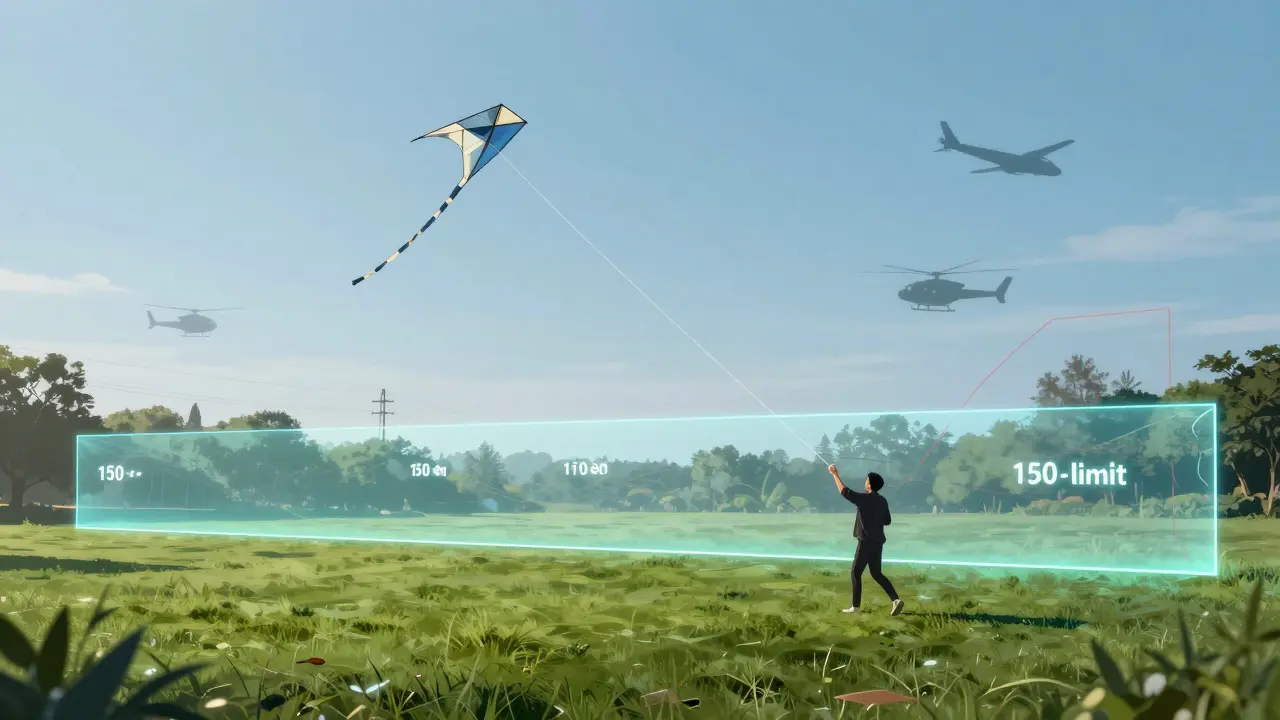
This is where most casual flyers get tripped up. The FAA sets a general ceiling for kite flying: 150 feet above ground level (AGL). This limit applies to most recreational kites flown in uncontrolled airspace. Why 150 feet? It’s a buffer zone below the lowest altitude at which small aircraft typically operate during takeoff and landing phases in many rural and suburban areas.
However, "above ground level" isn’t always obvious. If you’re flying from a hillside, the 150-foot limit starts from the top of the hill, not the valley floor. If you’re flying near a building, measure from the roofline. Exceeding this height doesn’t automatically mean you’re breaking the law everywhere, but it significantly increases your risk profile. In Class E airspace, which covers much of the United States, controlled airspace begins at 700 feet or 1,200 feet AGL depending on the location. While you’re technically allowed to fly below these ceilings, staying under 150 feet keeps you safely out of the way of traffic patterns.
For larger kites, such as parafoils or traction kites used for surfing, the rules are similar but the stakes are higher. These kites often require more space to maneuver, so local ordinances may impose lower limits or specific designated areas. Always check your local municipal code, as cities like Portland, Oregon, have specific parks department guidelines that can be stricter than federal law.
Identifying No-Fly Zones and Restricted Areas
Some places are off-limits entirely, regardless of how low you fly. These are known as no-fly zones or restricted airspace. The most critical ones include:
- Airports and Heliports: Within five miles of any airport, heliport, or seaplane base, you need caution. While not all airports ban kites outright, many do within their immediate vicinity. Check with the local air traffic control tower or airport authority. Interfering with an aircraft here can lead to serious liability.
- National Parks and Wildlife Refuges: Many national parks prohibit kites to protect wildlife from entanglement and to preserve the natural soundscape. Some allow them only in designated picnic areas. Always read the specific park regulations before packing your gear.
- Military Reservations: Active military bases often have strict no-fly zones due to security concerns. Even if you’re on public land nearby, radar tracking might flag your kite as a potential threat.
- High-Voltage Power Lines: While not a formal "no-fly zone" in the aviation sense, flying near power lines is dangerous and often prohibited by utility companies. A kite string touching a live wire can cause outages, fires, or electrocution.
There’s also the issue of private property. Flying over someone else’s yard without permission can lead to trespassing claims, especially if the kite crashes into their garden or pool. This isn’t an FAA regulation, but it’s a civil matter that can cost you money in repairs or medical bills.
When Do You Need a Permit?
Do you need a license to fly a kite? For pure recreation, usually no. The FAA does not issue "kite licenses." However, permits become necessary in specific scenarios:
- Commercial Use: If you’re using a kite for advertising, filming a paid production, or selling rides, you’re operating commercially. This requires coordination with the FAA and potentially local business licenses.
- Large Scale Events: Hosting a kite festival or competition usually requires a permit from the city or county. This ensures crowd control, insurance coverage, and airspace coordination.
- Special Airspace Operations: If you plan to fly in controlled airspace (like near an airport) or above 150 feet, you may need an Air Traffic Control (ATC) waiver. This is rare for hobbyists but essential for professional stunt teams or large-scale displays.
In Portland, Oregon, for example, flying in Washington Park is generally permitted for recreation, but organized events require a reservation through the Parks Department. This simple step protects both the flyer and the city from liability issues.
Safety Standards and Liability Risks
Even if you’re following the letter of the law, you’re responsible for the consequences of your actions. Kite strings can cut skin, tangle trees, and startle horses or dogs. If a kite crashes into a car window, who pays? Usually, the flyer.
Here’s a quick checklist to minimize risk:
- Use breakaway lines if flying near crowds or animals.
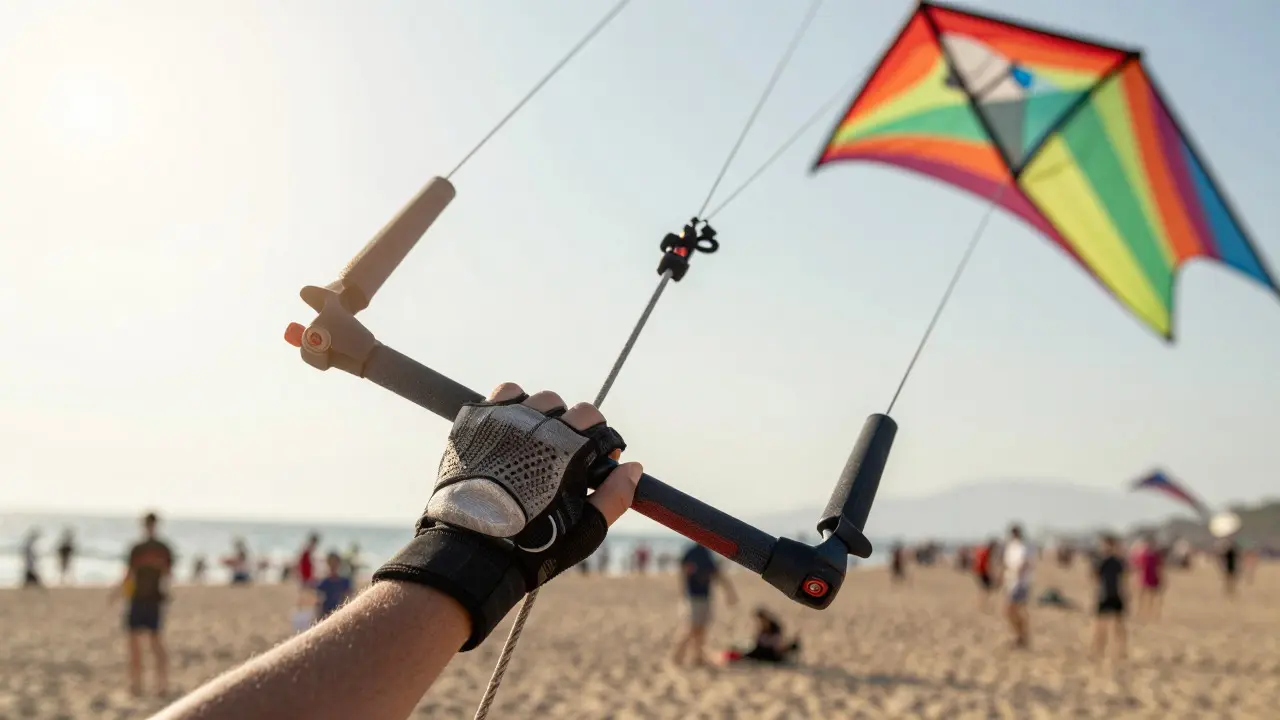
- Wear gloves to prevent rope burns and cuts.
- Check the weather forecast for sudden gusts or lightning.
- Keep a clear view of the entire flight path.
- Have a backup plan for retrieving the kite if it gets stuck high up.
Liability insurance is another layer of protection. Most homeowner’s policies cover kite-related accidents, but some exclude "recreational sports" unless explicitly added. If you fly frequently or use large kites, consider adding a rider to your policy. It’s cheap insurance against expensive lawsuits.
Local Variations and State-Specific Rules
Federal law sets the baseline, but state and local governments can add their own restrictions. This means the rules in New York City differ from those in rural Montana. In dense urban areas, noise complaints and pedestrian safety often drive local ordinances. Some cities ban kites in certain parks during peak hours to reduce conflicts with joggers and cyclists.
Always check three sources before your first flight in a new area:
- The FAA’s Sectional Aeronautical Chart (available online) for airspace classes.
- Your city’s municipal code for park regulations.
- Local news or community forums for recent enforcement trends.
For instance, in coastal areas, lifeguards often monitor kite activity near beaches. They don’t enforce FAA rules, but they can tell you if a particular stretch of sand is crowded or if there are underwater hazards that make kite flying risky.
| Aspect | Recreational Flying | Commercial/Event Flying |
|---|---|---|
| Permit Required | No (usually) | Yes (City/County + FAA Waiver) |
| Max Height | 150 feet AGL | Varies (ATC Approval Needed) |
| Insurance | Recommended | Mandatory |
| Liability Risk | Low-Moderate | High |
| Reporting Requirement | None | Incident Reports to FAA/Local Authority |
Frequently Asked Questions
Is it illegal to fly a kite in the city?
Not necessarily. Most cities allow recreational kite flying in public parks and open spaces, provided you stay under 150 feet and avoid no-fly zones. However, some downtown areas or historic districts may have specific bans. Check your local municipal code for exceptions.
What happens if my kite hits a plane?
If your kite interferes with an aircraft, you could face civil liability for damages. In severe cases, it might be considered obstruction of navigation, a federal offense. The FAA encourages reporting all mid-air incidents, even minor ones, to improve safety data.
Do I need a pilot's license to fly a large kite?
No, kites do not require a pilot's license. However, if you are using a kite for commercial purposes or in controlled airspace, you may need to coordinate with Air Traffic Control, which involves filing a waiver rather than obtaining a license.
Can I fly a kite near a highway?
It is generally discouraged and often prohibited by state transportation departments. Kites can blow onto the roadway, creating hazards for drivers. Stick to parks, beaches, or fields away from active traffic lanes.
Are there age restrictions for kite flying?
There are no federal age restrictions. However, parents should supervise young children, especially near water or roads. Local parks may have rules about unsupervised minors in certain areas.