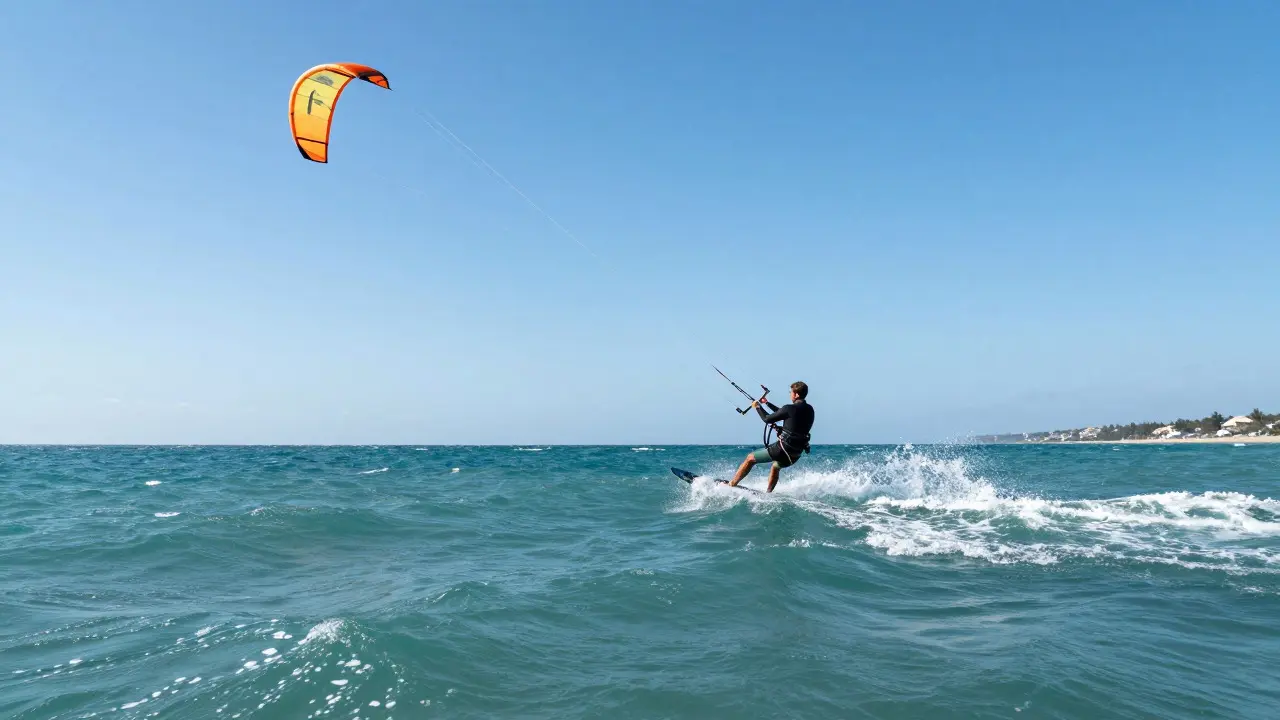
Ever stood on the beach watching the flags snap violently while wondering if it’s too windy to go out? Or maybe you’ve been stuck in a lull for two hours, waiting for the breeze to pick up enough to get your kite into the air. The difference between a session that feels like magic and one that feels like a fight often comes down to two things: how fast the air is moving and where it’s coming from. Kiteboarding is a water sport that uses a controllable power kite to propel a rider across the surface of the water. It relies entirely on the atmosphere. Unlike surfing, which depends on ocean swells, or windsurfing, which has its own sail area limitations, a kite can generate massive amounts of lift with relatively small wing surfaces. This makes wind condition selection critical. Get it wrong, and you might not even get airborne. Get it right, and you’ll feel like you’re flying. This guide breaks down exactly what numbers matter, why direction changes everything about your safety, and how to read the sky before you even pack your bag.
Understanding the Numbers: What Is Ideal Wind Speed?
Wind speed is measured in knots (kt) or kilometers per hour (km/h). For most riders, the "sweet spot" isn't a single number but a range based on your weight, skill level, and gear size. For an average adult weighing between 70kg and 85kg (154lbs - 187lbs), the ideal wind window usually falls between 12 and 25 knots. * **Light Wind (10-15 kt):** Perfect for beginners learning to launch and land. You need a larger kite (13-15m) to generate enough pull. The ride is smooth, forgiving, and less likely to crash you if you make a mistake. * **Medium Wind (16-22 kt):** The progression zone. Most intermediate riders live here. You can use mid-sized kites (9-12m) and start hitting jumps. The energy is consistent without being overwhelming. * **Strong Wind (23-30+ kt):** Expert territory. You’ll be using smaller kites (5-8m). The air feels thick, and every input requires precision. If you’re new, this range can be dangerous because the kite reacts instantly to your bar pressure. A common mistake is judging wind by how it feels on your face. Standing still, 15 knots feels breezy. But once you start moving at 20 knots on your board, the apparent wind increases significantly. Apparent wind is the combination of true wind and your forward speed. This means a 15-knot day can feel like a 25-knot day when you’re planing. Always account for this when choosing your kite size. If you are unsure, err on the side of a slightly larger kite; it’s easier to depower a big kite than to try to control a tiny one in light air.Why Wind Direction Matters More Than Speed
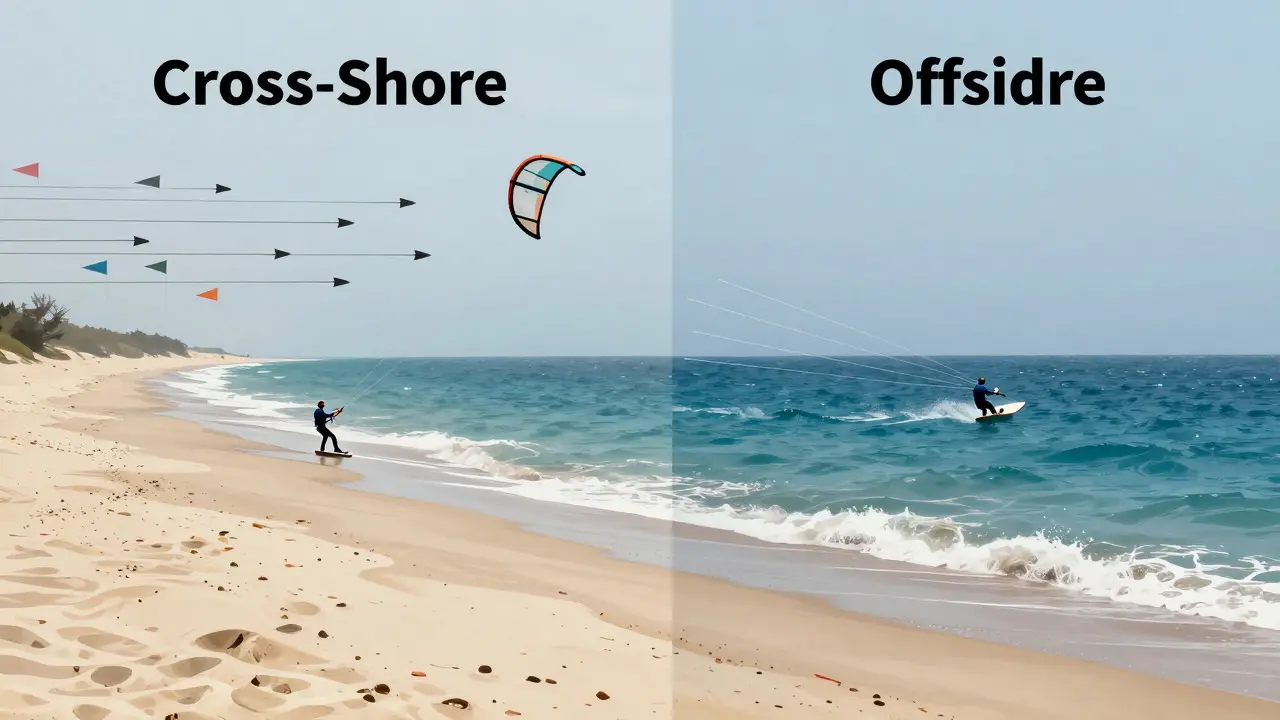
You could have perfect 18-knot winds, but if they’re blowing straight off the beach toward you, your session will be miserable-or worse, dangerous. Direction determines your exit route, your landing zone, and how the waves interact with the wind. There are three main directions to consider:- Cross-Shore (Onshore): The wind blows perpendicular to the shoreline, pushing you toward the beach. This is generally considered the safest direction for beginners because if you lose control, the wind pushes you back to shore. However, it can be tricky in choppy water because the wind creates waves that break directly on top of you. It also limits your riding space, as you constantly have to turn back toward the sand.
- Offshore: The wind blows parallel to the shore, away from the beach. This is the dream scenario for experienced riders. You can ride far out, catch long lines, and stay in the open water for hours. The danger? If your kite crashes or you get tangled, the wind carries you further from help. Offshore winds require strict discipline, buddy systems, and reliable equipment. Never go offshore alone.
- Cross-Onshore / Cross-Offshore: These are diagonal winds. They offer a balance. A cross-offshore wind allows you to ride out but keeps a path back to shore. This is often the best all-around condition for mixed-skill groups because everyone can find a comfortable distance from the beach.
Reading the Sky: Visual Cues vs. Forecast Apps
Forecast apps like Windguru or KiteForecast are powerful tools, but they aren’t always accurate on the ground. Microclimates exist. A ridge nearby can funnel wind, making it stronger than predicted. A dense forest can block it, creating a dead zone. Before you trust the app, look at these visual indicators:- Flags and Banners: Look at the height of the flagpole. A flag flapping horizontally indicates strong wind. A flag hanging limp means no wind. Check multiple poles at different heights to gauge consistency.
- Tree Movement: Leaves rustling gently suggests 5-10 kt. Small branches bending suggests 15-20 kt. Large trees shaking violently suggests 25+ kt. Trees near the water often react differently than those inland due to lack of friction.
- Water Surface Texture: Calm water with small ripples indicates light wind. Whitecaps forming everywhere suggest strong wind. If the water looks like a washing machine, the wind is likely gusty and chaotic.
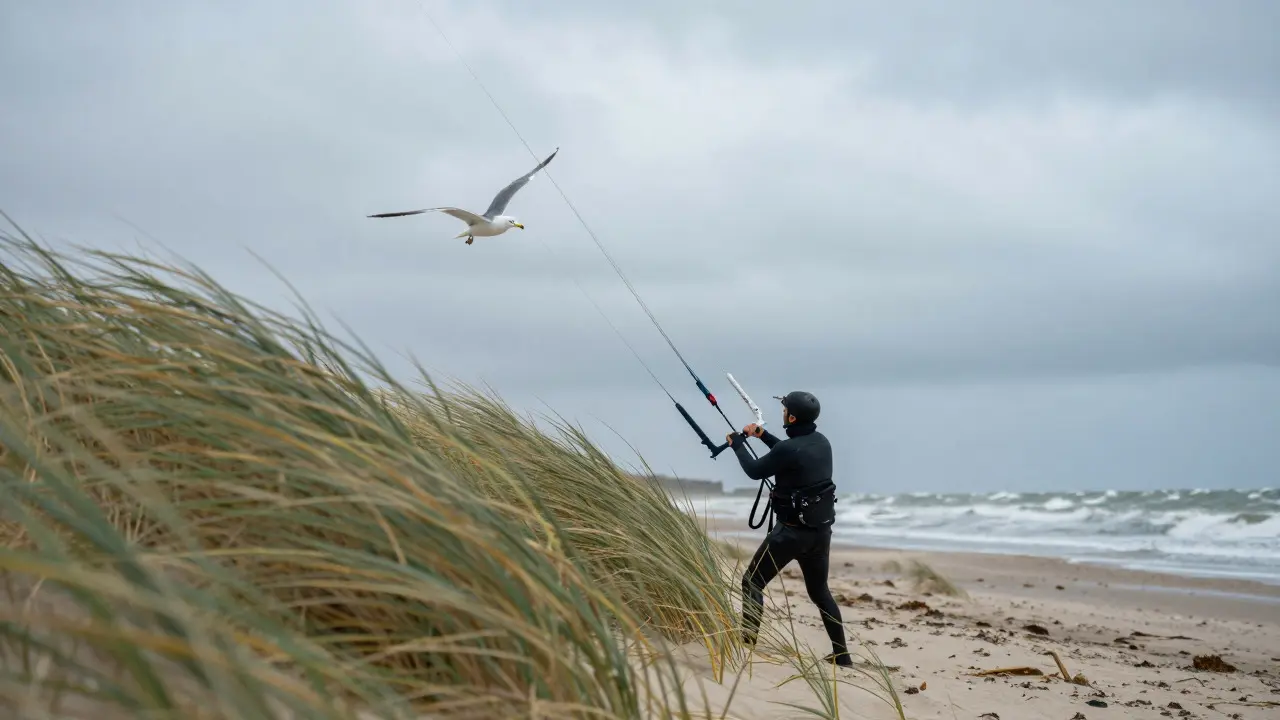
- Gulls and Birds: Seagulls often fly low and struggle against headwinds. If they are hovering in place, the wind is steady. If they are diving deep into the water, the air is calm.
Gusty Winds: The Silent Killer of Sessions
Steady wind is predictable. Gusty wind is not. A gust is a sudden increase in wind speed lasting seconds. In kiteboarding, gusts can double the force on your kite in an instant. How do you tell if wind is gusty? * Watch the grass or dunes. If it moves in pulses rather than a constant flow, it’s gusty. * Listen to the sound. Steady wind makes a constant whoosh. Gusty wind sounds like intermittent roaring. * Check the forecast for "Gusts" specifically. Many apps show average wind speed separately from peak gusts. A 15 kt average with 25 kt gusts is very different from a steady 15 kt. Riding in gusty conditions requires a larger kite and a more relaxed bar pressure. You need to let the kite depower naturally during peaks. If you hold onto the bar tightly during a gust, you risk over-loading the line and losing control. Beginners should avoid days with high gust variance until they master depowering techniques.Safety First: Matching Conditions to Skill Level
Your skill level dictates your safe operating envelope. Here is a practical breakdown:| Skill Level | Ideal Wind Speed (kt) | Preferred Direction | Kite Size Range | Key Focus |
|---|---|---|---|---|
| Beginner | 12 - 18 | Cross-Shore | 12 - 15 m | Launch/Land, Body Drag |
| Intermediate | 15 - 22 | Cross-Offshore | 9 - 12 m | Upwind Riding, Jumps |
| Advanced | 18 - 28 | Offshore | 6 - 9 m | Freestyle, Big Air |
| Expert | 20 - 35+ | Any (with caution) | 4 - 7 m | Wave Riding, Extreme Maneuvers |
Common Mistakes Riders Make With Wind Assessment
Even experienced riders fall into traps. Avoid these:Ignoring the Thermal Cycle: In coastal areas, wind often dies down in the early morning and picks up in the afternoon as the land heats up. If you arrive at 8 AM expecting 20 kt, you might only get 10 kt. Wait until midday for the thermal push.
Chasing the Gusts: Sometimes, the average wind is too light, but the gusts are strong. Chasing these brief bursts leads to inconsistent sessions. It’s better to wait for a day with steady base wind than to struggle through sporadic puffs.
Underestimating Water Temperature: Cold water reduces your tolerance for long sessions. If the wind is marginal (e.g., 12 kt) and the water is cold, you’ll tire faster. Factor in your physical comfort when deciding whether to go out.
How to Prepare Your Gear Based on Wind Forecasts
Once you’ve confirmed the wind conditions, adjust your setup accordingly.- Select the Right Kite: Use the size chart above. If you’re on the border between two sizes, choose the larger one for safety.
- Check Line Length: Standard lines are 22 meters. In very light wind (<12 kt), some riders use longer lines (26-28 meters) to reach higher altitude where wind is stronger. In strong wind (>25 kt), shorter lines (18-20 meters) give more control.
- Inspect Harness: Strong winds put more strain on your harness. Ensure it fits snugly but comfortably. A loose harness causes chafing and loss of power transfer.
- Pack a Backup: Always carry a spare kite or at least a repair kit. If you’re going offshore, bring a throw bag and a whistle. Visibility drops quickly in heavy spray.
Frequently Asked Questions
What is the minimum wind speed for kiteboarding?
The absolute minimum is around 8-10 knots for very light riders using large kites (15m+). However, for a stable and enjoyable session, most riders prefer at least 12 knots. Below 10 knots, launching becomes difficult, and staying airborne requires constant effort.
Is offshore wind safe for beginners?
Generally, no. Offshore wind pushes you away from the beach, making self-rescue harder. Beginners should stick to cross-shore or cross-onshore winds where the wind naturally brings them back to shore if they lose control. Offshore riding is recommended only after mastering self-rescue techniques and having a buddy system.
How do I know if the wind is too strong for my kite?
If you cannot keep the kite in the lower half of the window without holding the bar fully depowered, the wind is likely too strong. You should be able to maintain control with moderate bar pressure. If you’re constantly fighting the kite or getting pulled into the water unexpectedly, switch to a smaller kite.
Does wind direction affect wave riding?
Yes, significantly. For wave riding, you want wind to blow in the same direction as the waves (onshore or cross-onshore) to create steep, well-formed faces. Offshore wind can flatten waves but creates smoother, longer walls suitable for freestyle maneuvers. Cross-wind can create messy, choppy conditions that are hard to predict.
What is the best time of day for kiteboarding?
In most coastal locations, the afternoon offers the strongest and most consistent winds due to thermal heating. Morning winds are often lighter and more variable. However, this varies by location. Some spots are known for strong morning sea breezes. Check local historical data for your specific spot to determine the optimal time window.