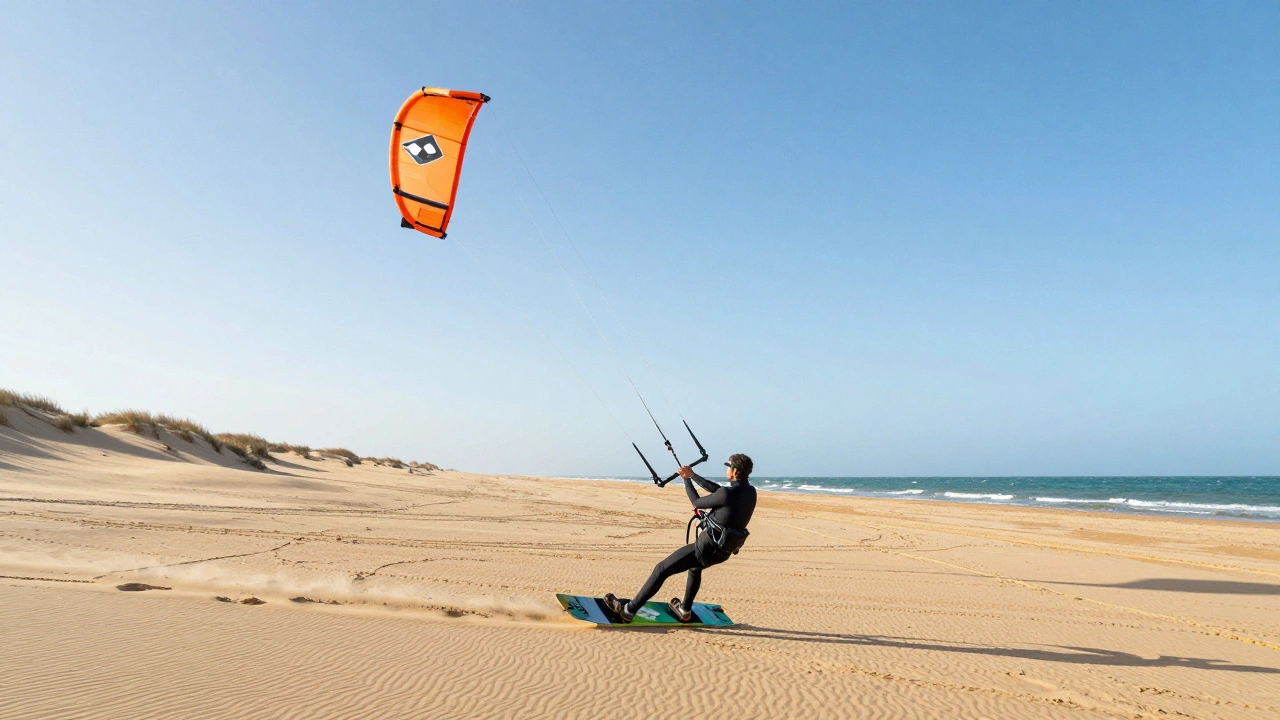
You feel it before you see it. The pull of the sand under your toes gives way to the rush of cold Pacific water as you lean back. That specific moment when you stop fighting the wind and start surfing against it-your first Kiteboarding upwind ride-is what keeps everyone coming back to the beach. But getting there isn't just luck. It takes a structured path through safety checks, water confidence, and precise steering.
Many people quit before they ever leave the shore because they miss the foundational steps. A solid progression plan bridges the gap between holding the bar in the parking lot and carving lines across the bay. Here is exactly how you move from being dragged around by the kite to controlling your own trajectory.
The Foundation: Land-Based Kite Control
Before touching the water, you must understand the Wind Window. This invisible cone determines where your power comes from. When the kite sits directly overhead at the zenith, you have zero power. Move it toward the horizon, and tension spikes. Your first task is learning to fly the kite in a figure-eight pattern on land with a trainer kite or a small setup.
This builds muscle memory for steering. You need to instinctively know that sending the kite left sends the power right. Practice the 'power zone' discipline. If you are learning alone, never go past the 9 o'clock or 3 o'clock positions without mastering the sheeting out technique. This prevents the kite from pulling you down unexpectedly when the wind gusts.
- Fly the kite in a full loop without losing lift.
- Practice depowering the kite instantly using the chicken loop release.
- Ensure you can relaunch the kite flat on the ground while kneeling.
If you skip this phase, you'll panic in the water. Panic leads to holding onto the bar too tight, which causes dangerous accidents. Spend two sessions just on the sand until flying feels second nature.
Water Confidence: Mastering Body Dragging
Once you are comfortable on land, you head into shallow water. Your goal here isn't to stand on the board yet. It is to learn Body Dragging. This is a survival skill. If you fall far from shore, you cannot swim home; you must drag yourself using the kite's power.
To body drag upwind, turn your chest toward the direction you want to go. Send the kite forward to the wind window edge, then steer it back. You should slide along the surface of the water rather than sinking. Keep your feet together for stability. If the wind shifts, adjust your position immediately.
| Type | Kite Position | Movement Direction |
|---|---|---|
| Upwind Drag | Arc over your shoulder | Towards shore |
| Downwind Drag | Square overhead | Out towards open water |
| Cross-Wind Drag | Alternating sides | Lateral movement |
Most beginners fail here because they fight the kite instead of moving with it. Think of yourself as a sled being pulled. Lean back to engage your Harness, not your arms. Your arms should just hold the Control Lines; the harness handles the heavy lifting. This saves energy for the actual riding later.
The Transition: Board Start Mechanics
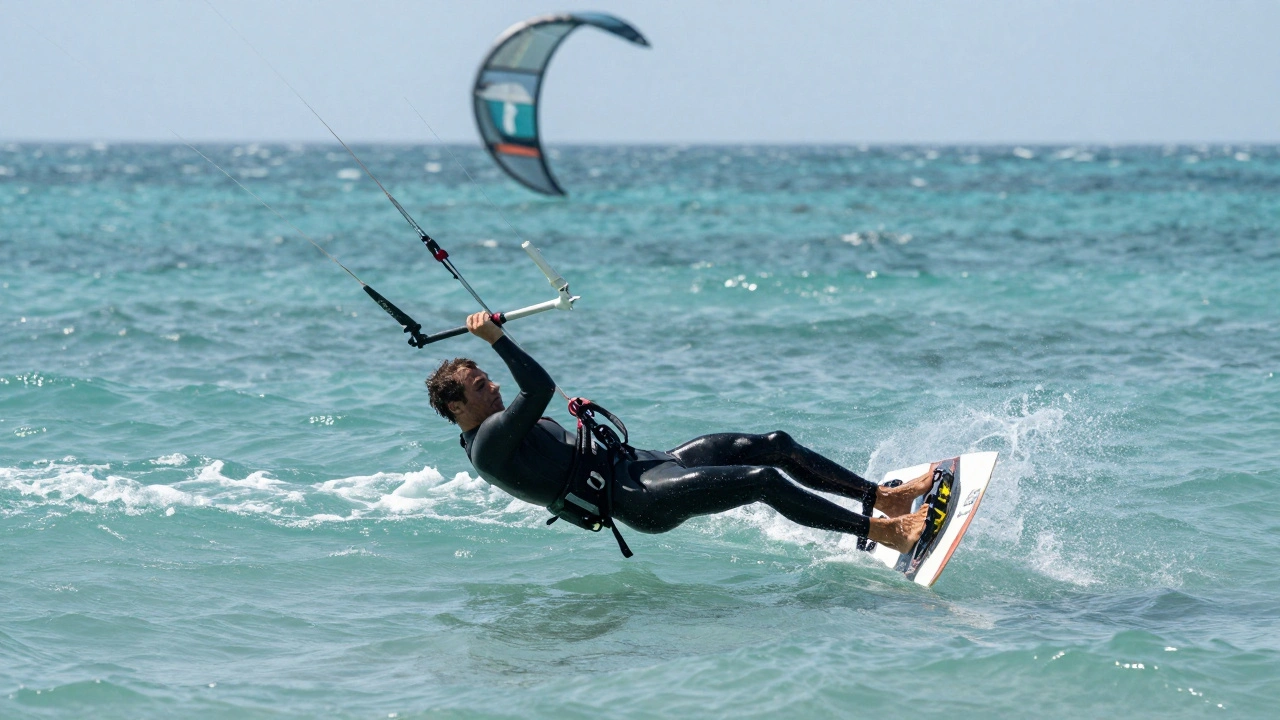
You are now ready for the board. Do not try to jump straight into riding. Focus on the board start technique. Lay the board flat in the water perpendicular to the wind line. Put one foot in a strap, usually the front foot. Pull the kite to power so your body lifts slightly off the water.
As soon as you feel the board tip rising, slide your back foot onto the board quickly. If you hesitate, you sink again and have to restart. This timing is critical. You want the board to pop out of the water cleanly. Once both feet are strapped, sheet the lines hard to lock the board position before shifting weight to your heels.
Common mistakes include putting feet in backwards or starting with the kite in the zenith. Always start with the kite high for maximum leverage. As you get consistent starts, practice staying stationary. Hold the board above the water using edge pressure until you can balance for 10 seconds without falling.
Steering the Goal: First Upwind Ride
This is the milestone. To achieve your first Upwind Ride, you need to combine all previous skills. Start your board, then steer the kite toward the power zone gently. Apply heel pressure to carve an edge. The board needs to dig into the water to gain speed.
Look where you want to go, not at the waves or the kite. Your eyes lead your body. If you stare down, you stall. Look at the shoreline. Maintain tension. If the boat feels like it’s slowing down, pump the kite slightly to regain speed, then trim the lines to depower for stability.
Don't chase distance immediately. Even reaching 10 meters upwind proves you understand the mechanics. You are essentially sailing against the wind vector. Remember to switch edges smoothly. Sudden jerks break the plane and cause falls. Gradual shifts allow you to maintain momentum.
Safety Systems and Weather Awareness
No progression plan works without respecting the environment. Check the forecast specifically for wind speed ranges suitable for your kit size. Generally, lighter boards require stronger winds, while larger kites work in light breeze. In Portland area bays, wind direction changes rapidly due to thermal gradients.
Always wear a Leash attached to your harness. This ensures the kite doesn't become a free-floating hazard if you lose control. Furthermore, use a quick-release safety system on your bar. If the wind gusts dangerously, the ability to disconnect completely is vital.
- Check your gear daily for frayed lines or worn clips.
- Never ride alone without a spotter watching for swimmers or boats.
- Know the local exit points where you can run the kite ashore.
Riding responsibly means knowing when to pack up. If the wind exceeds your comfort level, do not force the session. It is better to return tomorrow than risk injury today. Consistent progress beats aggressive attempts that lead to burnout.
Frequently Asked Questions
How long does it take to learn basic kiteboarding?
Most dedicated students reach stable upwind riding within 5 to 10 hours of instruction. However, proficiency depends heavily on how often you practice. Weekly sessions usually yield faster retention than sporadic visits.
What wind speed is best for beginners?
Ideally, steady winds between 15 to 20 knots are perfect for learning. Lighter winds make control difficult, while gusty strong winds increase the risk of power surges that overwhelm new riders.
Can I learn without an instructor?
While possible, it is highly discouraged. An instructor ensures you avoid developing bad habits that limit your potential speed and safety. They also manage liability if something goes wrong in deep water.
Is body dragging enough to reach shore?
Yes, provided the wind is blowing somewhat toward land. In offshore conditions, body dragging becomes nearly impossible without significant swimming knowledge or assistance from other riders.
What gear do I need for my first session?
You need a kite appropriate for your weight, a board, a harness, a wetsuit for temperature protection, and a helmet. Renting gear initially helps determine what size equipment fits your personal style.