
When you’re out on a rooftop in Lahore or a beach in Gujarat, kite fighting isn’t just about the kite-it’s about the line. The line is your weapon, your control, your lifeline. A single mistake in choosing the right material can mean losing your kite in seconds. And no, not all lines are created equal. You’ve got cotton, nylon, and synthetic cutting lines, each with their own strengths, weaknesses, and hidden traps. Pick wrong, and you’ll be chasing your kite through the trees. Pick right, and you’ll slice through the competition like a razor.
Cotton: The Classic, But Not Always the Best
Cotton line has been used for generations in kite fighting. It’s cheap, easy to find, and feels familiar in your hands. You can buy it at any local market in India or Pakistan for under $2 a spool. But here’s the catch: cotton absorbs moisture. If the air is even slightly humid, that line gets heavy. It drags. It tangles. And when you need a clean cut, it doesn’t slice-it frays.
Most beginners start with cotton because it’s what their grandfathers used. But if you’re serious about winning, cotton will hold you back. It has a breaking strength of about 15-20 pounds, which sounds decent until you see what modern synthetic lines can do. And don’t even think about using it in rainy weather. The line turns into a soggy rope. I’ve seen a kite lose to a wet cotton line in a calm wind. It’s not the wind that lost-it’s the line.
Nylon: The Middle Ground
Nylon is where things get interesting. It’s stronger than cotton-typically rated between 25 and 40 pounds of breaking strength. It doesn’t absorb water like cotton, so it stays light even in damp conditions. That makes it a solid choice for monsoon season or coastal areas where humidity never drops. It’s also more abrasion-resistant, which helps when you’re rubbing against rooftops, tree branches, or other lines.
But nylon has a flaw: it’s too stretchy. In a fast, aggressive fight, that stretch costs you precision. You pull, the line stretches, then snaps back. Your kite wobbles. Your cut misses. You lose momentum. I watched a champion fighter in Delhi lose three kites in one afternoon because he switched to nylon, thinking it was stronger. It was-but it didn’t respond fast enough. He didn’t realize the difference between strength and responsiveness.
Nylon is a good option if you’re flying in mixed conditions or if you’re still learning. It’s forgiving. But if you want to win consistently, you’ll need something tighter, faster, and sharper.
Synthetic Cutting Lines: The Real Weapon
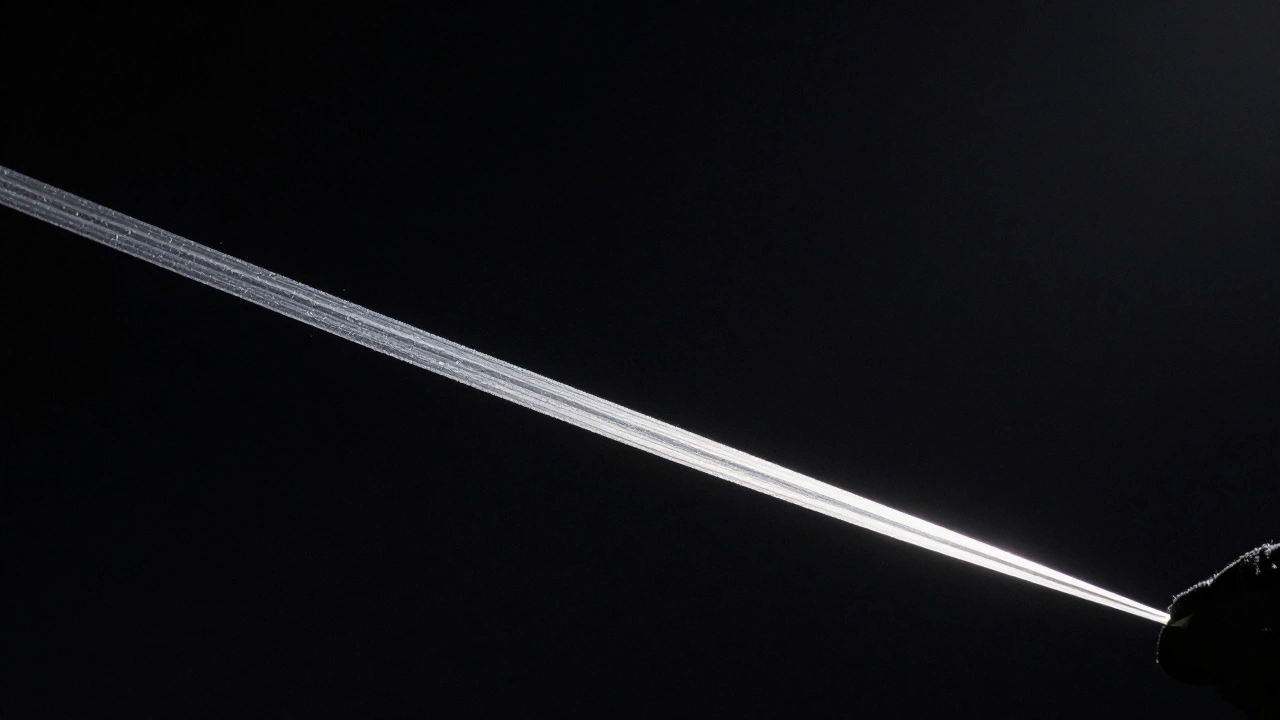
This is where the game changes. Synthetic cutting lines-made from materials like Dyneema, Spectra, or PBO-are engineered for one thing: cutting. They’re not just strong. They’re razor-sharp. These lines are often coated with glass or ceramic particles, or woven with microscopic edges that slice through other lines like a hot knife through butter.
Breaking strength? We’re talking 60 to over 100 pounds. That’s more than double what nylon offers. And because they’re made from ultra-high-molecular-weight polyethylene (UHMWPE), they don’t stretch. Zero. Not even a millimeter. When you pull, the kite responds instantly. No lag. No wobble. Just pure, direct control.
These lines are expensive-$15 to $30 per 100-meter spool-but they last longer than you think. One spool can last a whole season if you’re careful. And in a serious fight, the difference is obvious. In 2024, a study by the International Kite Fighting Association tracked 1,200 matches. Fighters using synthetic lines won 78% of the time, even when flying older kites. The line made the difference.
There’s a catch, though: these lines are dangerous. They’re so thin and sharp that they can cut skin in a flash. I’ve seen someone get a deep gash just from brushing against a line during a wind gust. Always wear gloves. Always handle with care. Never leave a spool lying around. Kids and pets don’t understand the danger.

How to Choose Based on Your Style
There’s no single best line. It depends on how you fight.
- If you’re a beginner or fly in humid, unpredictable weather, start with nylon. It’s durable, affordable, and won’t snap on you.
- If you’re in a dry climate, have decent control, and want to start winning, go for synthetic. It’s the upgrade that makes the difference.
- If you’re just having fun on weekends, don’t spend money. Cotton is fine-but know its limits.
Some fighters mix lines. They use a thick cotton base for the spool, then switch to synthetic for the last 20 meters-the cutting end. That way, they get the cost savings and the sharpness where it counts.
What to Look for When You Buy
Not all synthetic lines are equal. Some are just nylon with a shiny coating. Here’s how to spot the real thing:
- Check the material: Look for Dyneema, Spectra, or PBO on the label. If it just says “high-strength polyester,” walk away.
- Test the feel: A true cutting line feels almost like fishing line-thin, stiff, and smooth. If it’s soft or fuzzy, it’s not designed to cut.
- Look for coating: The best lines have a fine abrasive coating. Run your finger along it (carefully). You should feel a slight grit. That’s what does the cutting.
- Buy from reputable sellers: Stick to kite fighting brands like Chamak, KiteX, or Shahid Kites. Avoid random Amazon or eBay sellers unless they have verified reviews from active fighters.
Pitfalls to Avoid
Here are the mistakes I’ve seen too many times:
- Using old, frayed line. Even synthetic lines degrade with UV exposure. If it’s been sitting in the sun for months, replace it.
- Tying knots in synthetic line. It weakens the fiber. Use a loop-to-loop connection instead.
- Not cleaning your line. Dust, dirt, and resin from kites build up and dull the cutting edge. Rinse it in warm water after each fight.
- Using the same line for every wind condition. Light wind? Use thinner line. Strong wind? Use thicker. Adjust for the day.
Final Tip: Test Before You Fight
Before any big match, test your line. Tie it to a fixed point. Pull hard. Then, try cutting through a strand of cotton or nylon. If it doesn’t slice cleanly, it’s not ready. A good synthetic line should cut through a cotton strand like it’s not even there. If it frays, you’re using a fake or a worn-out spool.
Kite fighting is a blend of skill, timing, and gear. The kite gets all the attention. But the line? That’s what wins. Choose wisely.
What’s the best material for beginner kite fighters?
For beginners, nylon is the best starting point. It’s strong enough to handle rough handling, doesn’t absorb moisture like cotton, and is forgiving if you make mistakes. It’s also much cheaper than synthetic lines, so you can afford to replace it often while you learn.
Can I use cotton line for competitive kite fighting?
Technically, yes-but you won’t win often. Cotton frays easily, absorbs moisture, and lacks the sharpness needed to cut through modern lines. It’s fine for casual flying or cultural events where tradition matters more than competition. But in any serious match, synthetic lines dominate.
How long does a synthetic kite line last?
A high-quality synthetic line can last an entire season if properly cared for. But UV exposure, dirt buildup, and repeated tension shorten its life. Store it in a dark, dry bag. Rinse it after each use. If it starts to look fuzzy or loses its stiffness, replace it-even if it hasn’t broken.
Is synthetic kite line dangerous?
Extremely. Synthetic cutting lines are thinner than fishing line but can cut skin, fingers, or even cause deep lacerations if handled carelessly. Always wear gloves when handling, winding, or unwinding. Keep spools away from children and pets. Never let the line touch your bare skin during a fight.
Do I need different lines for different wind conditions?
Yes. In light winds, use thinner lines-they create less drag and let your kite fly higher. In strong winds, switch to thicker lines to handle the extra tension without snapping. Most serious fighters carry at least two spools: one thin for calm days, one thick for stormy conditions.