
Imagine this: your marketing department is stuck in a creative rut. The usual conference room brainstorming sessions have turned into echo chambers where everyone agrees just to go home on time. You need a reset button, but hiking trails are too isolating, and escape rooms feel like high-pressure exams. Enter kite flying, a surprisingly effective outdoor activity that forces teams to coordinate movement, communicate non-verbally, and rely on shared physical feedback. It sounds whimsical, maybe even childish, but don’t let the toy-like appearance fool you. When executed correctly, kite flying becomes a powerful metaphor for alignment, trust, and synchronized effort.
Why does this work? Because kites don’t fly themselves. They require constant adjustment, tension management, and awareness of external forces like wind. These are exactly the dynamics present in any high-performing team. A kite flying session at a corporate retreat isn’t just about getting people outside; it’s about visualizing abstract concepts like "market volatility" or "internal friction" in real-time. If one person pulls too hard, the kite crashes. If they let go, it falls. Balance is everything.
Why Choose Kites Over Traditional Team Building?
Most corporate exercises fail because they are artificial. Trust falls feel forced. Scavenger hunts often reward individual speed rather than collective strategy. Kite flying, however, offers a unique set of benefits that align directly with modern workplace needs. First, it levels the playing field. Your CEO might be intimidating in a boardroom, but if they can’t get a delta kite off the ground while an intern laughs, the hierarchy softens. This vulnerability builds psychological safety faster than any icebreaker game.
Second, it provides immediate, tangible feedback. In software development or sales, results are often delayed by weeks or months. With a kite, you know instantly if your coordination was good. Did the tail spin wildly? You were out of sync. Did it hover steadily? You found the sweet spot. This rapid feedback loop helps teams understand their communication styles without needing a consultant to interpret them.
Third, it engages different types of learners. Visual thinkers see the kite’s path. Kinesthetic learners feel the pull on the line. Auditory learners listen to the wind and the instructions. By engaging multiple senses, you ensure that the lesson sticks long after the retreat ends.
The Physics of Collaboration: Core Concepts
To run a successful exercise, you need to frame the activity through a lens that resonates with business logic. Think of the kite as the project deliverable. The wind represents market conditions-unpredictable and outside your control. The string is your company culture and processes-it connects you to the result but can also restrict it if too tight or loose. The pilot is the project manager, and the rest of the team are the support crew who must launch, stabilize, and retrieve.
| Kite Component | Business Equivalent | Team Lesson |
|---|---|---|
| The Wind | Market Conditions | You cannot control it, only adapt to it. |
| The String | Company Culture/Process | Too much tension breaks things; too little loses control. |
| The Pilot | Leadership | Requires situational awareness, not micromanagement. |
| The Tail | Stability Mechanisms | Small adjustments prevent chaotic outcomes. |
This mapping allows facilitators to debrief effectively. Instead of saying "we need better communication," you can point to a specific moment when the string went slack and ask, "What caused that drop in tension? Was it a lack of clarity, or did we lose focus?" It turns vague feelings into concrete observations.
Exercise 1: The Blind Launch
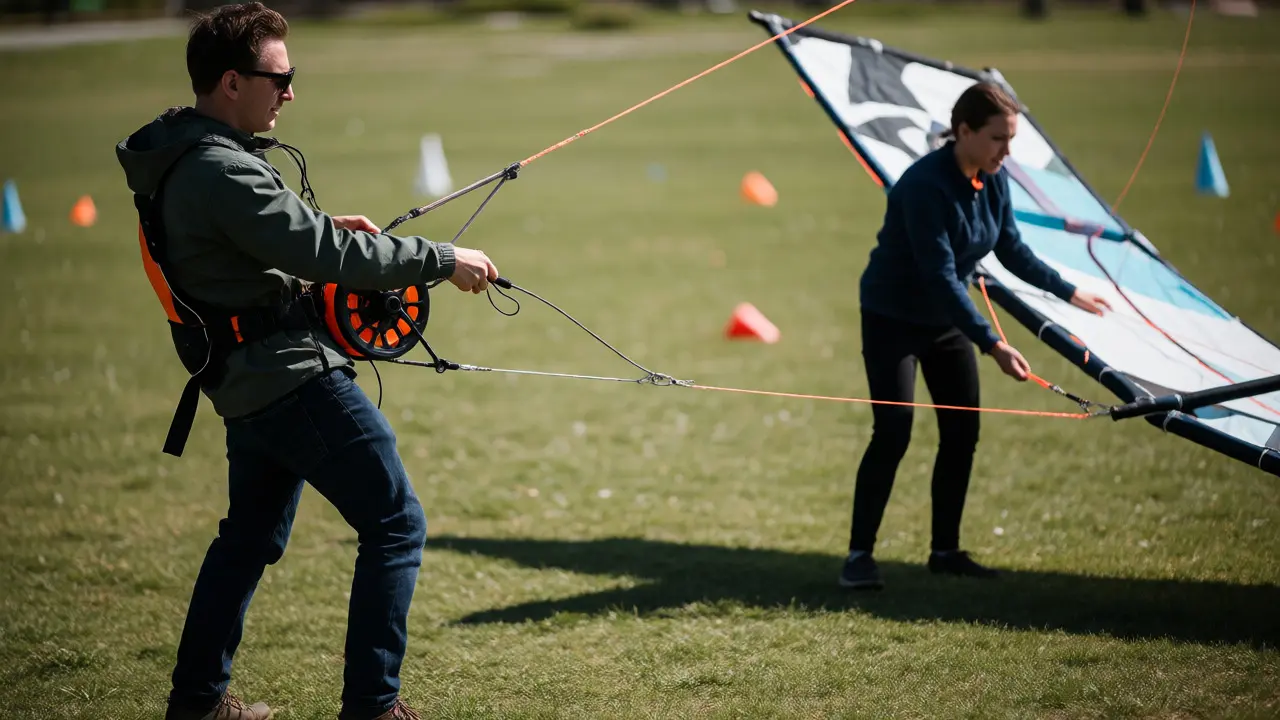
This exercise tests communication under pressure. Divide participants into pairs. One person is the "Pilot" holding the reel, and the other is the "Launcher" holding the kite. The twist? The Launcher must stand 50 feet away from the Pilot, facing away from them. The Pilot cannot move from their spot. They must guide the Launcher using only verbal commands to position the kite correctly relative to the wind so it launches successfully.
Why it works: It eliminates visual cues. Teams often rely on body language or eye contact to fill in gaps in verbal instructions. Removing those forces precise language. You’ll hear phrases like "tilt left 15 degrees" instead of just "move it." It highlights how ambiguous our normal instructions really are. Debrief by asking the Pilots what was hardest to convey and the Launchers what was most confusing.
Exercise 2: The Human Chain Relay
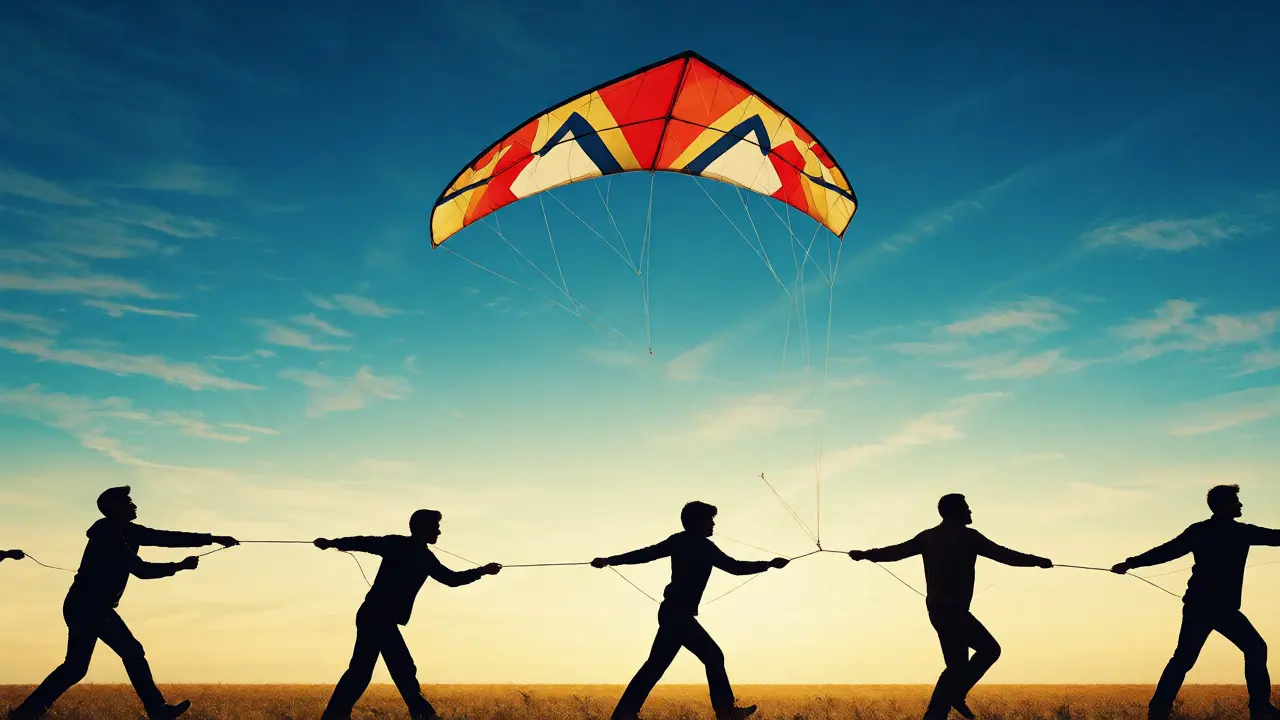
For larger groups, try a relay race where the goal isn’t speed, but stability. Form teams of five. Each team gets one large stunt kite. The first person holds the handle. The second person stands ten feet behind, holding the middle of the line. The third holds the next section, and so on. The last person holds the kite itself.
The challenge: The team must walk forward together, keeping the line taut but not pulling the kite down, while navigating a simple obstacle course (cones). If the line goes slack, the kite drops. If someone runs ahead, the line snaps or the kite dives. Everyone must match the pace of the slowest member. This mirrors cross-functional projects where Marketing, Sales, and Engineering must move at a unified pace. If Sales sprints ahead with promises Engineering can’t keep, the whole system collapses.
Exercise 3: Design and Build Challenge
Sometimes, the process matters more than the flight. Provide teams with raw materials: bamboo sticks, plastic sheeting, string, tape, and markers. Give them 45 minutes to design and build a kite that meets specific criteria: it must fly, carry a small payload (like a tennis ball), and reflect their team’s brand values visually.
This shifts the focus from execution to innovation and resource management. Teams will argue over design choices. Some will prioritize aerodynamics; others will prioritize aesthetics. Watch how they negotiate trade-offs. Do they prototype quickly or plan endlessly? Who takes the lead? Who executes? This exercise reveals working styles that rarely surface in meetings. Plus, seeing a poorly built kite crash is a great icebreaker for discussing failure tolerance.
Logistics and Safety Tips for Organizers
Don’t underestimate the logistical hurdles. Kite flying requires space. A standard office parking lot won’t cut it unless you’re flying tiny handheld kites. Aim for a park, beach, or open field with minimal trees or power lines. Check local regulations-some parks prohibit kites during bird nesting seasons.
- Wind Speed: Ideal wind is between 5 and 25 mph. Too little, and nothing flies. Too much, and you risk injury or broken equipment. Have a backup indoor activity ready.
- Equipment: Rent or buy durable dual-line stunt kites. Single-line kites are easier but offer less interactive control. Ensure you have enough spares; strings snap.
- Attire: Encourage closed-toe shoes. Running backward while looking up is a recipe for twisted ankles.
- Inclusivity: Not everyone can run. Assign roles like "Line Manager" or "Spotter" for participants with mobility issues. Make sure no one feels sidelined.
Weather is your biggest variable. Always check the forecast. Rain ruins paper kites and makes fields muddy. Sunburn is another risk-provide sunscreen and hats. And remember, frustration spikes when kites crash repeatedly. Keep the mood light. Celebrate the crashes as much as the successes. After all, every crash is a data point for improvement.
Debriefing: Turning Fun Into Strategy
The activity is only half the battle. The debrief is where learning happens. Don’t skip it. Gather the group in a circle immediately after the session while emotions are fresh. Use open-ended questions to guide the discussion.
Ask: "When the kite crashed, who spoke up first? Why?" This reveals leadership dynamics. Ask: "Did anyone feel ignored when suggesting a fix?" This addresses inclusion. Ask: "How did the changing wind affect your strategy?" This parallels adapting to market changes.
Connect these observations back to daily work. If a team struggled with the Blind Launch, discuss how remote work affects communication clarity. If the Design Challenge revealed poor planning, talk about sprint retrospectives. The goal is to make the connection explicit so employees can apply the lessons Monday morning.
Do participants need prior experience to join?
No. Most corporate kite exercises use simple, forgiving equipment designed for beginners. The focus is on teamwork, not technical piloting skills. Facilitators typically provide a brief tutorial before starting.
What is the ideal group size for these activities?
Teams of 4 to 8 people work best. Larger groups should be split into smaller units to ensure everyone has an active role. If you have 50+ attendees, consider running parallel stations with different kite types.
Is kite flying suitable for winter retreats?
It depends on the temperature and wind chill. Cold air is denser, which actually helps lift, but extreme cold reduces dexterity and comfort. For very cold climates, consider indoor drone racing as a tech-heavy alternative, or stick to mild winter days with proper thermal gear.
How do I handle competitive teams?
Introduce scoring metrics beyond height or duration. Award points for "Best Communication," "Most Creative Design," or "Best Recovery from Crash." This encourages collaboration over pure dominance and keeps the atmosphere positive.
What if there is no wind?
Have a backup plan. You can switch to a static design challenge or use fans to create artificial wind for smaller kites. Alternatively, pivot to a discussion-based workshop using the kite metaphor without actual flying.