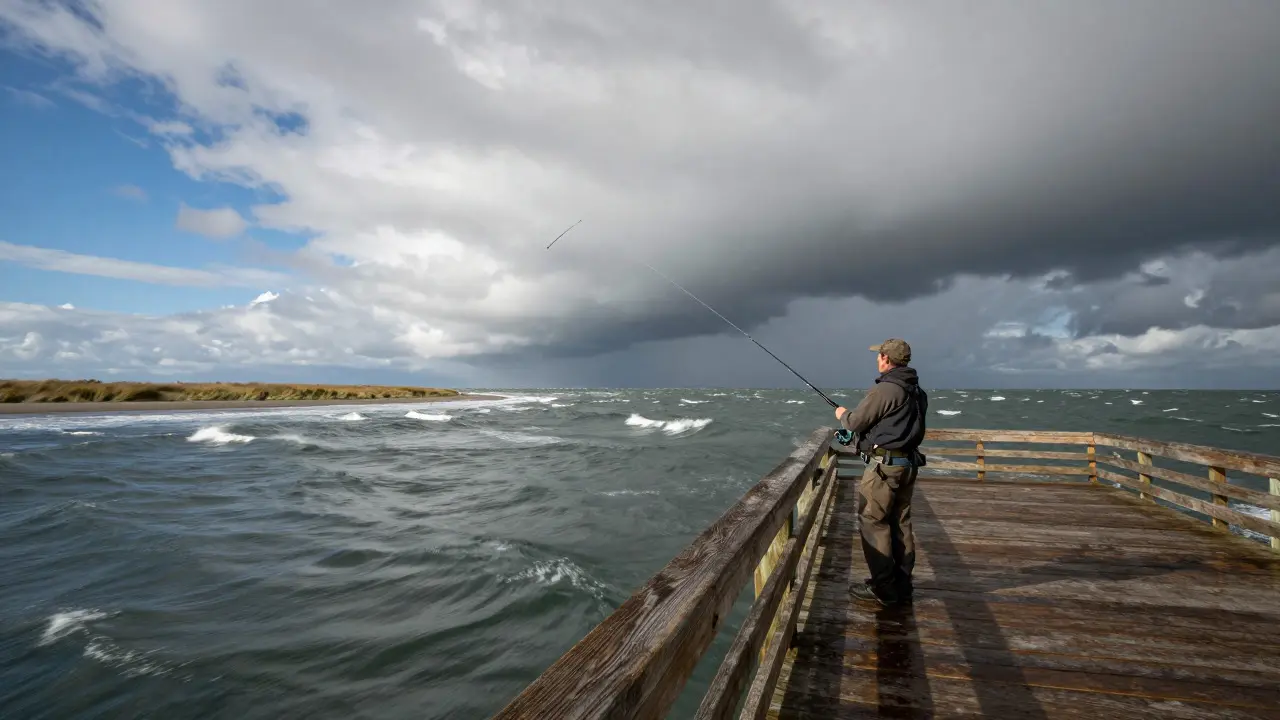
Standing on a dock in Portland, watching the sky turn from bright blue to a threatening grey, is every kite fisher’s worst nightmare. But here is the secret most pros won’t tell you: wind isn't your enemy; it's your engine. Without it, your kite stays grounded, and without the right strategy, a sudden gust can snap your line or drag your bait into the rocks. Mastering how to read the air and adjust your gear turns chaotic weather into consistent catches.
This guide breaks down exactly how to handle four distinct weather scenarios: light winds, steady breezes, gusty chaos, and high-speed storms. We will look at specific kite sizes, line materials, and body positioning tricks that keep you safe and productive when conditions change faster than you can react.
Reading the Sky Before You Cast
You cannot manage wind if you don't understand what is happening above you. The atmosphere over water behaves differently than it does over land. Water has less friction, so wind speeds are often 10-20% higher just offshore than they are on the beach or pier. This means a 10 mph breeze on the shore might feel like 15 mph where your kite is flying.
Before you even unpack your gear, check three things:
- Wind Direction: Is the wind coming from the sea (offshore) or blowing toward the land (onshore)? Offshore wind keeps your kite stable and pulls you away from hazards. Onshore wind pushes the kite toward cliffs or trees, making recovery difficult.
- Gust Factor: Look at the flags or grass. If they are snapping violently, the gusts are strong. A steady flag indicates laminar flow, which is ideal for controlled flight.
- Cloud Patterns: Cumulus clouds indicate fair weather with moderate thermal updrafts. Stratus clouds suggest steady, heavy air mass movement, often bringing sustained high winds.
If you see ripples on the water surface but no whitecaps, you are likely in the 8-12 mph range. Once you see whitecaps forming, expect 15+ mph. These visual cues are your primary tools when anemometers aren't available.
Light Winds: The 5-10 MPH Challenge
Many beginners think light wind is easy. It is not. In 5-10 mph conditions, standard kites struggle to generate enough lift to stay airborne, especially if they carry weight from fishing lines and lures. The goal here is maximum efficiency.
Dual-Line Kites are superior in this scenario because they allow you to steer the kite precisely into the strongest pockets of air. Unlike single-line kites, which drift unpredictably, dual-line setups let you "chase" the wind by adjusting the angle of attack.
For light winds, choose a kite with a larger wing area. A 4-meter square kite generates significantly more lift than a 3-meter delta in the same air density. However, larger kites are harder to control if the wind suddenly picks up. A good compromise is a 3.5-meter parafoil kite, which offers a wide aspect ratio and stable flight characteristics even in marginal conditions.
Technique Tip: Keep your kite low. Flying at eye level reduces drag and makes it easier to maintain tension. If the kite starts to stall, pull the lines gently to increase speed rather than letting it drop out of the airflow.
Steady Breezes: The 10-20 MPH Sweet Spot
This is the golden zone for Offshore Kiting. With consistent 10-20 mph winds, you have predictable lift and manageable power. Most commercial fishing kites are designed to perform optimally in this range.
In these conditions, focus on line management. As your kite flies further out, the distance between you and the bait increases, creating a longer lever arm. This amplifies any sudden changes in wind speed. Use a Spool Reel with a smooth drag system. Friction-based reels can jam during rapid pay-outs, leading to tangles or broken lines.
When casting, launch the kite perpendicular to the wind direction. This allows you to swing the kite across the arc, maximizing the distance covered without fighting the wind directly. As the kite reaches its apex, release the brake lines slightly to let it climb, then lock them in to hold position while you set your hook.
Always monitor the Line Tension. If the line goes slack, the kite may lose altitude. If it becomes taut, you risk overloading the structure. Aim for a slight curve in the line, indicating healthy tension without excessive strain.
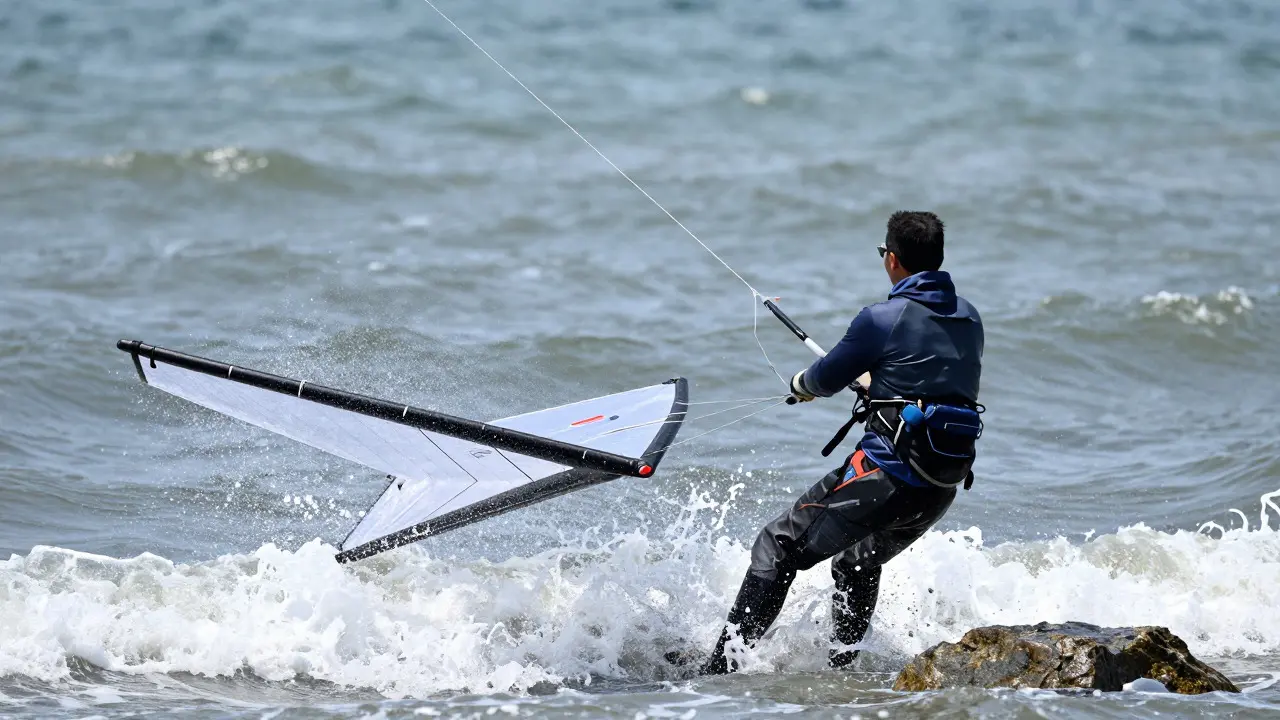
Gusty Conditions: Managing 20-30 MPH Chaos
Gusts are unpredictable. One moment you have 15 mph, the next a 30 mph burst hits. This variance puts immense stress on your equipment. The key strategy here is reducing the surface area exposed to the wind.
Switch to a smaller kite, ideally 2.5 to 3 meters. Smaller wings respond faster to wind changes, allowing you to correct course before a gust snaps the line. Avoid large, box-shaped kites that act like sails in turbulent air. Instead, opt for streamlined delta or parafoil designs that shed excess energy quickly.
Body positioning matters. Stand facing the wind, not sideways. This allows you to use your legs as shock absorbers. When a gust hits, bend your knees and let the kite pull you forward slightly, absorbing the impact through your joints rather than your arms. If you stand rigidly, the force travels straight up your arms and into the kite frame, increasing breakage risk.
Use a Barrel Spool with a thick braided line. Braided lines have less stretch than monofilament, giving you better feedback on tension changes. However, they also transmit shock waves more directly, so pair them with a shock leader made of fluorocarbon to protect your knot integrity.
High Winds: Surviving 30+ MPH Storms
Fishing in 30+ mph winds is risky, but possible with the right setup. At this speed, the kite becomes a powerful tool that can tow heavy rigs far offshore. However, safety is paramount. Always wear a harness rated for at least 500 lbs of pulling force.
Use a Single-Line Kite for simplicity and quick deployment. Dual-line systems become cumbersome in high winds due to the complexity of managing two lines simultaneously. A single-line kite with a self-stabilizing tail is easier to launch and recover.
Keep the kite close to the ground. High-altitude flight in storm conditions exposes the kite to stronger, more erratic winds. Flying at 10-15 feet minimizes exposure to upper-air turbulence. Use a short lead line, no more than 50 feet, to keep the bait within reach if the kite crashes.
Monitor the Sea State. High winds create choppy water, which can splash onto your gear and corrode metal parts. Apply a silicone lubricant to your reel bearings and swivels after each session to prevent rust.
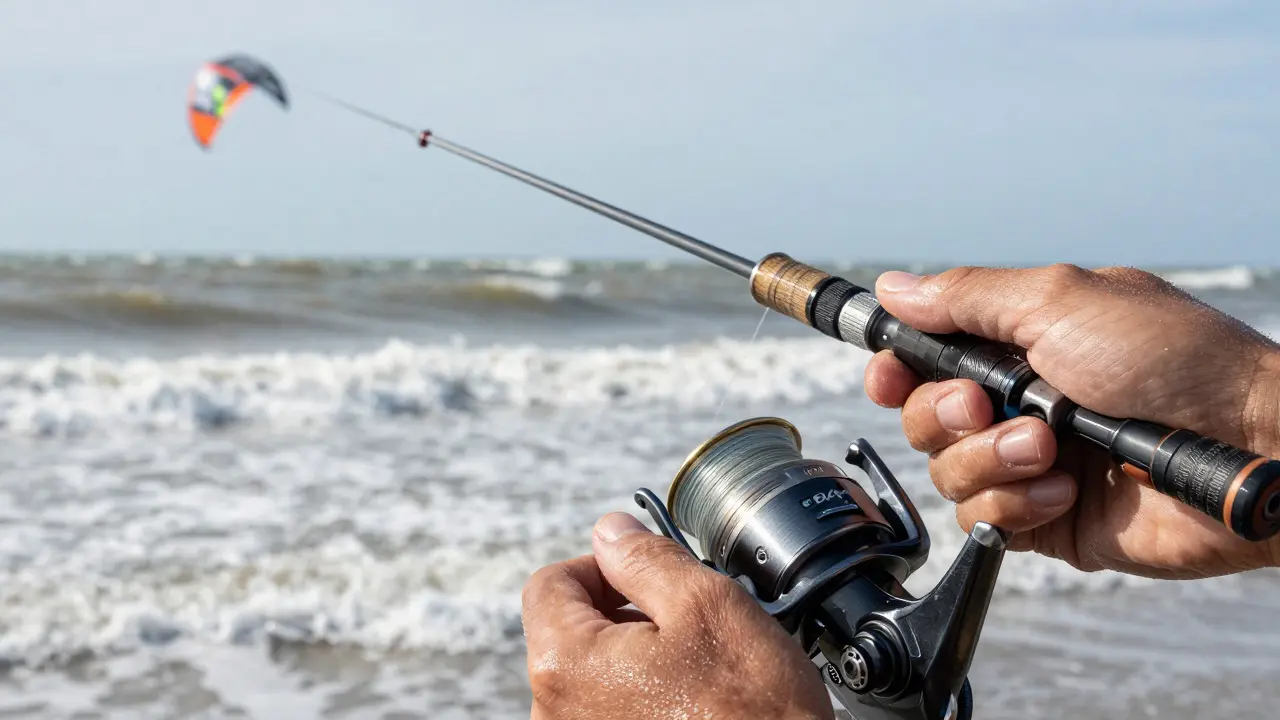
Equipment Comparison by Wind Condition
Selecting the right gear depends entirely on the forecast. Here is a quick reference table to help you match your equipment to the weather.
| Wind Speed (MPH) | Kite Type | Size Recommendation | Line Material | Key Strategy |
|---|---|---|---|---|
| 5-10 | Dual-Line Parafoil | 3.5 - 4.0 Meters | Braided + Fluoro Leader | Chase wind pockets, fly low |
| 10-20 | Square or Delta | 3.0 - 3.5 Meters | Braided | Swing across arc, monitor tension |
| 20-30 | Streamlined Delta | 2.5 - 3.0 Meters | Thick Braided + Shock Leader | Reduce surface area, absorb shock |
| 30+ | Single-Line Stabilized | 2.0 - 2.5 Meters | Heavy Duty Braided | Stay close to ground, use harness |
Safety Protocols for Every Scenario
No matter the wind speed, safety should never be compromised. Kite fishing involves long lines and significant pulling forces. A snapped line can whip back with lethal speed.
- Clear the Area: Ensure no one is standing in the potential crash zone of your kite. Mark boundaries with cones or flags if fishing in public areas.
- Check Your Harness: Inspect webbing for fraying and buckles for cracks before every session. A failed harness in high wind can throw you off balance or into the water.
- Have a Backup Plan: Know where the nearest shelter is. If lightning is visible, stop fishing immediately. Metal lines and kites attract strikes.
- Communicate: If fishing alone, leave a note with your location and expected return time. Inform a friend about your plan.
Weather changes fast. A calm morning can turn into a windy afternoon within hours. Stay flexible, pack multiple kite sizes, and always prioritize observation over assumption. The best kite fishers are those who listen to the wind, not fight it.
What is the best kite size for beginner kite fishing?
A 3-meter dual-line kite is ideal for beginners. It offers a balance between lift and controllability, allowing you to practice steering and line management without excessive power. Start with lighter lures to minimize load on the kite frame.
How do I know if the wind is too strong for my kite?
If the kite feels uncontrollable or strains against your harness, the wind is likely too strong. Look for whitecaps on the water; if they are frequent and large, reduce your kite size or wait for conditions to improve. Never push limits with expensive gear.
Can I use a single-line kite for all weather conditions?
Single-line kites are best for high winds and simple setups. They lack the precision of dual-line kites, making them less effective in light or variable winds where precise steering is needed to stay airborne. For versatility, carry both types.
What type of line is best for kite fishing in saltwater?
Braided line is preferred for its strength and low stretch, providing better sensitivity. However, it must be paired with a fluorocarbon leader to prevent corrosion and abrasion from salt and teeth. Rinse all gear with fresh water after use.
How far can I cast with a kite in moderate winds?
In 10-20 mph winds, you can typically cast 100-200 feet depending on line length and kite performance. Longer casts require careful management of line tension to prevent tangling or breaking. Always start shorter and extend as confidence grows.