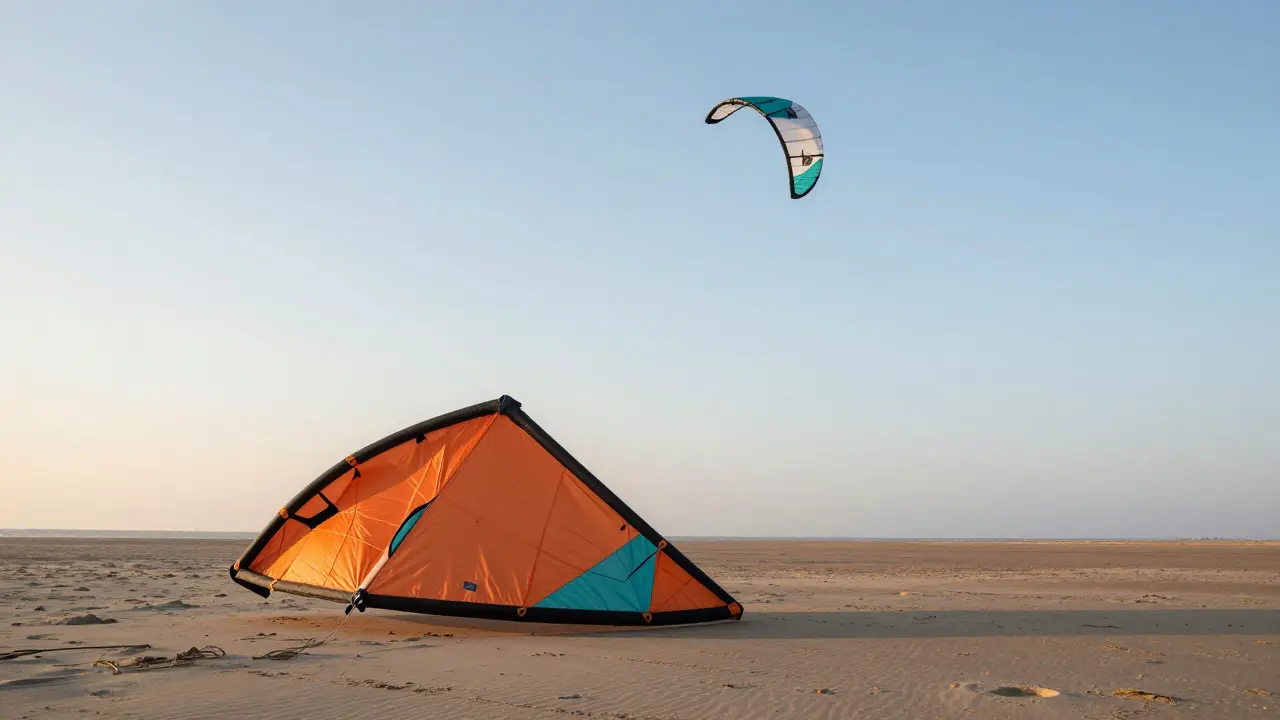
Ever stood on the beach with a powerful-looking kite that refuses to lift off, while your friend’s smaller model soars effortlessly? It isn’t just about size or brand. The real culprit is often hidden in the math of airflow: the kite drag coefficient. This single number dictates how much resistance a kite creates against the wind, directly determining whether you need a gentle breeze or a gale to keep it airborne.
Understanding this concept transforms you from someone guessing at launch conditions to someone who can predict performance before stepping onto the sand. Whether you are flying a traditional diamond kite, a modern foil, or a power kite for kitesurfing, the principles remain the same. Let’s break down why some designs demand more wind and how you can use this knowledge to pick the right gear for your local weather patterns.
What Is the Drag Coefficient in Kite Physics?
Kite Drag Coefficient is a dimensionless number that quantifies the drag force an object experiences as it moves through a fluid like air. In simple terms, it measures how "draggy" your kite is. A low coefficient means the kite slices through the air efficiently, generating lift with minimal resistance. A high coefficient means the kite fights the wind, creating turbulence and energy loss.
This value isn't static; it changes based on the angle of attack (how the kite faces the wind) and the Reynolds number (which relates to air density and speed). However, for most recreational flyers, we care about the average drag profile across the usable range of angles. A well-designed racing kite might have a drag coefficient of 0.05, while a bulky stunt kite could sit at 0.15 or higher. That difference matters when you are trying to fly in light winds.
The Relationship Between Drag, Lift, and Wind Speed
Here is where the physics gets practical. To stay aloft, a kite must generate enough lift to counteract its weight plus the tension in the line. The lift force depends on air density, velocity squared, wing area, and the lift coefficient. But drag acts as a tax on that system. High drag requires more wind speed to generate sufficient total force to overcome both gravity and air resistance.
Think of it like driving a car. A streamlined sports car (low drag) cruises efficiently at highway speeds. A boxy SUV (high drag) needs more horsepower to maintain the same speed. Similarly, a high-drag kite needs stronger wind to achieve the same flight stability as a low-drag design. If the wind drops below a certain threshold, the high-drag kite stalls because there isn't enough kinetic energy in the air to push it forward fast enough to generate lift.
- Low Drag Kites: Efficient in light winds, requiring less power to maintain altitude.
- High Drag Kites: Stable in strong winds but difficult to launch in breezes under 8-10 mph.
- Wind Threshold: The minimum wind speed required for sustained flight varies directly with the square root of the drag-to-lift ratio.
How Kite Design Impacts the Drag Coefficient
Design choices make or break a kite's wind range. The shape of the frame, the material of the sail, and even the bracing lines all contribute to the final drag profile. Foil kites, which rely on internal bladders to create an airfoil shape, generally offer better lift-to-drag ratios than rigid delta kites. This is why foils are popular for kitesurfing in moderate winds-they extract more energy from the air per unit of speed.
Rigid kites, on the other hand, often have higher structural drag due to spars and cross-bracing. However, they offer predictable handling and easier repair. If you live in a windy coastal area like Portland, Oregon, where gusts can be erratic, a rigid kite with a moderate drag coefficient might actually be safer and more controllable than an ultra-efficient foil that reacts too sharply to sudden lulls.
| Kite Type | Typical Drag Coefficient | Minimum Wind Speed (mph) | Ideal Use Case |
|---|---|---|---|
| Delta Kite | 0.10 - 0.15 | 6 - 8 | Recreational flying, learning |
| Foil Kite | 0.04 - 0.07 | 5 - 7 | Kitesurfing, snowkiting, light wind |
| Diamond Kite | 0.12 - 0.18 | 7 - 9 | Traditional fun, stable flight |
| Box Kite | 0.08 - 0.12 | 5 - 6 | Aerial photography, steady winds |

Why Light Wind Performance Matters More Than You Think
Many beginners assume that if a kite flies in 15 mph winds, it will work in 10 mph. That is rarely true. The relationship between wind speed and lift is non-linear. Halving the wind speed quarters the dynamic pressure available for lift. If your kite has a high drag coefficient, that quartered pressure might not even cover the basic forces needed to keep the nose up.
This is why manufacturers specify a "wind range." A kite rated for 12-25 mph is significantly different from one rated for 8-18 mph. The lower end of that range is determined almost entirely by the drag-to-lift ratio. If you frequently find yourself waiting for the wind to pick up, check your kite's specifications. You might be using a high-performance, high-drag model designed for storm chasing, not casual park days.
Practical Tips for Choosing Based on Drag
You don't need a wind tunnel to apply these principles. Start by observing your local conditions. In my experience flying along the Willamette River, mornings often bring light, laminar flow winds, while afternoons develop turbulent thermals. For those calm mornings, a low-drag foil or a lightweight delta with minimal bracing works best. For the gusty afternoons, a kite with slightly higher drag provides damping, smoothing out the jerks and making steering easier.
Consider these steps when selecting your next kite:
- Check the Aspect Ratio: Longer, narrower wings generally have lower induced drag than short, wide ones.
- Examine the Sail Material: Porous fabrics increase drag; tight-weave ripstop reduces it.
- Look at the Bracing: Excessive bracing lines add surface area and turbulence points.
- Match to Your Environment: Coastal users should prioritize stability (moderate drag), while inland users might benefit from efficiency (low drag).
Common Misconceptions About Kite Performance
One big myth is that bigger kites always fly in lighter winds. While larger surface area does help catch more air, it also increases weight and often comes with complex structures that raise the drag coefficient. A large, heavy stunt kite might struggle in 8 mph winds, while a small, efficient trainer kite flies happily in 5 mph. Size alone doesn't guarantee light-wind capability; aerodynamic efficiency does.
Another misconception is that adding tail length improves light-wind performance. Tails primarily add stability by increasing drag at the rear of the kite. While this helps prevent spinning in strong winds, excessive tail drag can actually reduce the net lift available for climbing. In very light winds, a shorter or no-tail configuration often performs better because it minimizes unnecessary resistance.
Testing Your Kite's Wind Range Safely
If you're unsure about your current setup, try a controlled test. Find a flat, open area with consistent wind. Launch the kite and note the lowest wind speed at which it maintains altitude without stalling. Then, gradually reduce the effective wind exposure by angling the kite into the wind (increasing drag) until it stops climbing. This gives you a rough estimate of your operational limits. Always keep a safety margin-don't push right to the stall point unless you have a clear recovery plan.
Remember, the goal isn't just to get the kite in the air. It's to enjoy the flight. A kite that demands perfect conditions every time becomes frustrating quickly. By understanding the role of the drag coefficient, you can choose equipment that matches your local climate, ensuring more flying days and fewer disappointed waits on the shoreline.
Does a higher drag coefficient mean a worse kite?
Not necessarily. Higher drag can provide stability and damping in gusty winds, making the kite easier to control for beginners. It just means the kite requires stronger winds to achieve the same level of lift and agility as a low-drag design.
Can I modify my kite to reduce its drag coefficient?
Yes, minor modifications like trimming excess bracing lines, replacing porous sails with tighter-weave materials, or removing unnecessary tails can reduce drag. However, significant changes may affect stability, so proceed cautiously.
Which type of kite has the lowest drag coefficient?
Foil kites typically have the lowest drag coefficients among common recreational types, thanks to their smooth, curved airfoil shapes that minimize turbulence. Racing kites with optimized aspect ratios can also achieve very low drag values.
How does wind direction affect the effective drag of a kite?
Crosswinds can increase apparent drag by disrupting the smooth airflow over the sail. Headwinds allow the kite to operate at its designed angle of attack, minimizing drag. Flying perpendicular to the wind usually results in less efficient performance due to increased turbulence.
Is the drag coefficient constant for a specific kite?
No, it varies with the angle of attack and wind speed. At very low angles, drag is minimal. As the angle increases toward stall, drag rises sharply. Manufacturers usually provide an average value for the typical operating range, but real-world values fluctuate constantly during flight.