
You know that feeling when you’re standing in a field, holding a line attached to something dancing three hundred feet up, and suddenly someone walks by and says, "Is that a box delta?" That moment is why we fly. It’s not just about the wind; it’s about the people who understand the tension in your hands and the specific way you trim your bridle. If you’ve ever wondered where all those other enthusiasts are hiding between seasons, the answer is at kite conventions and local meetups.
Flying solo is great for meditation, but flying with others teaches you faster than any YouTube tutorial. Whether you are into sport kites, stunt lines, or traditional Japanese Rokkus, there is a tribe waiting for you. This guide breaks down how to find these gatherings, what actually happens at them, and how to get the most out of your first big event without feeling like an outsider looking in.
The Big Picture: Festivals vs. Local Meetups
Not all kite gatherings are created equal. Understanding the difference between a massive festival and a casual club meetup will save you time and money. A festival is usually a public spectacle designed to draw crowds, sell food, and put on a show. A meetup is often private, technical, and focused on skill exchange.
| Feature | Kite Festival | Club Meetup | Convention/Expo |
|---|---|---|---|
| Primary Goal | Public entertainment & visibility | Skill sharing & socializing | Education, sales & networking |
| Audience | Families, tourists, general public | Local hobbyists, beginners to pros | Dedicated practitioners, vendors |
| Cost | Often free entry, paid parking | Free or small donation | Ticket required ($50-$150) |
| Best For | Inspiration & seeing new designs | Learning tricks & fixing gear | Buying specialized gear & workshops |
If you want to see the biggest, weirdest, and most colorful kites in the world, go to a festival. Places like the Washington State International Kite Festival or the Dieppe International Kite Festival in France are legendary. But if you want to learn how to repair a rip in your sail using heat sealing tape properly, or figure out why your dual-line kite keeps nosediving, a local club meetup is infinitely more valuable.
How to Find Events Near You
The kite community is surprisingly digital. While word-of-mouth still works, most organization happens online. Start with the American Kite Association (AKA), which serves as the central hub for many North American clubs. Their website maintains a directory of affiliated clubs, complete with meeting times and locations. Even if you aren’t in the US, look for your country’s national equivalent-like the British Kite Society or the Australian Kite Federation.
Social media groups are another goldmine. Search Facebook for "[Your City] Kite Flying" or "[Region] Sport Kiting." These groups are active year-round. People post photos of their latest builds, complain about lack of wind, and announce impromptu sessions. Don’t be shy about posting in these groups. Ask, "Hey, anyone flying this weekend near Portland Park? I’m trying to fix my single-line traction kite." You’ll likely get three replies and a new friend within an hour.
- Check local parks: Many city parks have designated "kite zones" where signs indicate hours when kites are allowed. Note the times people are actually there.
- Vendor networks: Visit local hobby shops that sell kites. They often pin flyers for upcoming events on their bulletin boards.
- Global calendars: Websites like KiteLife.net or dedicated festival aggregators list major international events months in advance.
What Actually Happens at a Convention?
If you decide to attend a larger convention or expo, expect a structured day. These events are less about chaotic flying and more about curated experiences. The schedule usually revolves around three pillars: workshops, demos, and trade shows.
Workshops are the secret weapon of these events. You might pay an extra $20 to sit in a room while a master builder explains the aerodynamics of soft kites versus framed kites. Or, you could take a hands-on class on how to cut and sew your own diamond kite. Instructors here are often the designers behind popular commercial kits. Getting face-to-face advice from someone who has built hundreds of kites is worth the ticket price alone.
Demonstrations are visually stunning but also educational. Watch closely during a demo of a quad-line stunt kite. Notice how the pilot uses subtle wrist movements rather than large arm swings. At festivals, demos are choreographed to music. At conventions, they are often raw and technical, showing off the limits of specific equipment. Vendors will bring prototypes that haven’t hit store shelves yet. You can ask them directly about durability issues or material choices.
Packing List for the Serious Flyer
Going to a meetup isn’t like going to a picnic. You need to be prepared for variable conditions and long hours. Here is a checklist based on years of getting stuck in fields with no wind and broken lines.
- Multiple kites: Bring one for light wind (under 8 mph), one for medium (8-15 mph), and one for strong gusts. Nothing kills momentum faster than having only one kite that doesn’t work in current conditions.
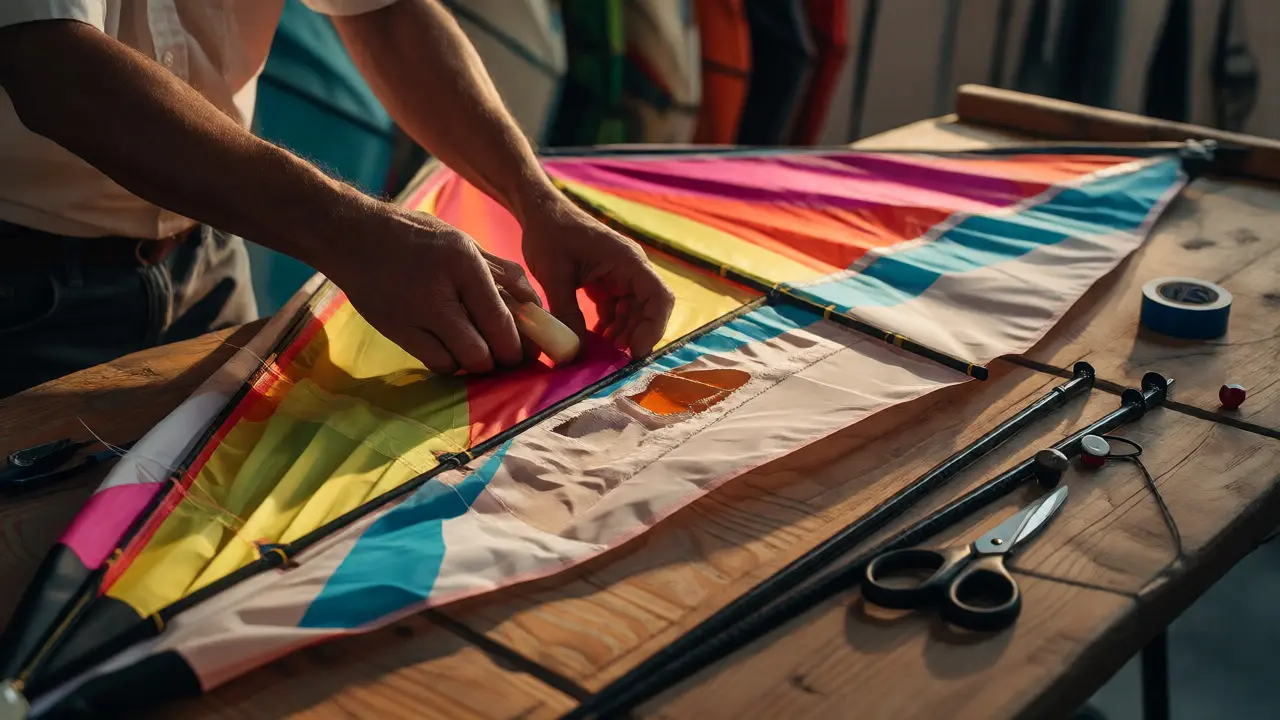
- Repair kit: Duct tape, spare spars, line connectors, and scissors. You *will* break something. Being able to fix it on the spot makes you invaluable to the group.
- Proper footwear: Grass fields get muddy. Sand dunes shift. Wear boots or shoes you don’t mind ruining.
- Hydration and snacks: Running after a crashed kite burns calories. Water stations are rarely nearby.
- Camera or phone: You’ll want to capture the sky. Also, you might want to record a pro’s technique to slow down later.
Etiquette and Community Norms
Kite flying has unwritten rules. Violating them marks you as a newbie instantly. First, never fly over a crowd unless you are part of an organized display. Accidents happen, and nobody wants a nylon sail smacking them in the face.
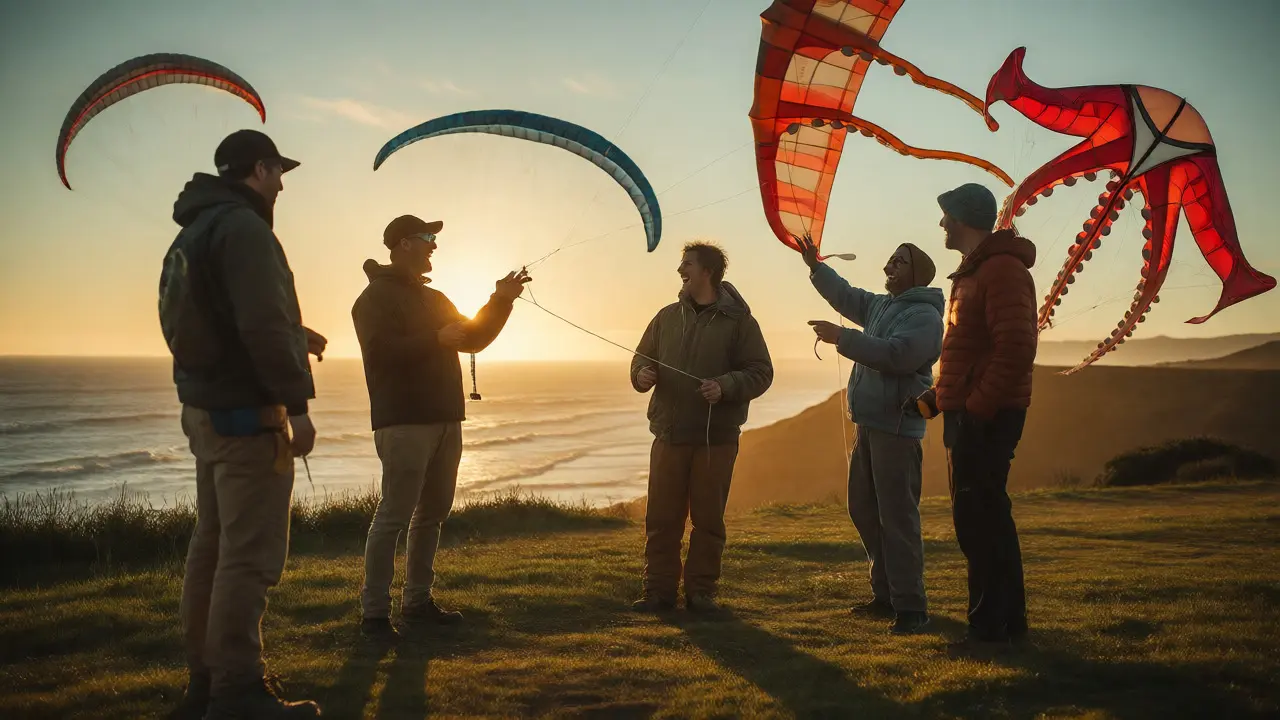
Second, respect the airspace hierarchy. Generally, stunt kites (which move fast and require precise control) have right-of-way over static display kites (which hang relatively still). If you are flying a giant octopus that takes ten minutes to launch, don’t park it in the middle of the high-wind zone where stunt pilots need clear air.
Third, ask before touching. If you see a unique kite on the ground, ask the owner if you can hold it or inspect the construction. Most builders love talking about their work. It’s the fastest way to make friends. Conversely, don’t offer unsolicited advice unless asked. There’s a fine line between helpful coaching and being annoying.
Why You Should Join a Club
Attending one-off events is fun, but joining a club provides continuity. Clubs often have shared resources. Some maintain a library of kite plans. Others have bulk-buying agreements for materials like Mylar film or carbon fiber rods, saving you 20% compared to retail prices.
Clubs also provide mentorship. As a beginner, you might struggle with basic launching techniques for two years before realizing you were holding the handles too close together. A club member would correct that in five seconds. Plus, clubs organize trips. Imagine carpooling with four other enthusiasts to a remote beach known for consistent coastal winds. The drive is half the fun.
For those in Portland, Oregon, the local scene is vibrant due to the Pacific Northwest’s reliable breezes. Look for groups that meet at places like Marine Park or Tom McCall Waterfront Park. The diversity of kites there ranges from simple children’s toys to complex parafoil power kites used for landboarding.
Next Steps: Getting Started
Don’t wait for the next big festival to start connecting. Here is your action plan for the next month:
- Week 1: Identify three potential meetup spots near you using social media searches.
- Week 2: Visit one spot during prime wind hours (usually late afternoon). Just observe. Talk to one person.
- Week 3: Register for the next local club meeting. Bring your best-looking kite.
- Week 4: Sign up for one workshop or demo at an upcoming regional event.
The kite community is smaller than you think, but it is deeply passionate. Show up with curiosity, a willingness to crash, and a smile, and you’ll find your people quickly.
Do I need expensive gear to attend a kite meetup?
No. Most meetups welcome all levels. A basic single-line diamond kite is perfectly acceptable. Enthusiasts care more about your interest and safety awareness than the price tag on your equipment. However, having a functional kite that flies reliably helps you participate in group activities.
Are kite conventions suitable for families with young children?
It depends on the type of event. Large public festivals are very family-friendly with kid zones and easy viewing areas. Technical conventions or serious club meetups can be intense, with fast-moving stunt kites and technical jargon that might bore or overwhelm young kids. Check the event description for "family-friendly" tags before bringing toddlers.
What should I do if I don't know anyone at a meetup?
Stand near the edge of the flying area where people gather to watch or rest. Have your kite ready to fly. When someone compliments it or asks about it, strike up a conversation. Asking questions like "How did you get started?" or "What's the best place to buy replacement lines?" opens doors immediately. People love sharing their expertise.
Can I sell kites at these gatherings?
At informal meetups, usually no, unless the organizer allows a swap meet section. At formal conventions or expos, yes, but you typically need to register as a vendor and pay a booth fee. Always check the event guidelines beforehand. Selling homemade kites at a club meetup without permission can sometimes annoy organizers who have arrangements with official vendors.
How far in advance should I book travel for a major kite festival?
For major international festivals like the one in Weifang, China, or Berkeley, California, book hotels 6-9 months in advance. Rooms fill up quickly because many attendees travel with families. For local or regional meetups, booking 2-4 weeks ahead is usually sufficient, but always verify lodging availability early if the event is in a rural area with limited options.