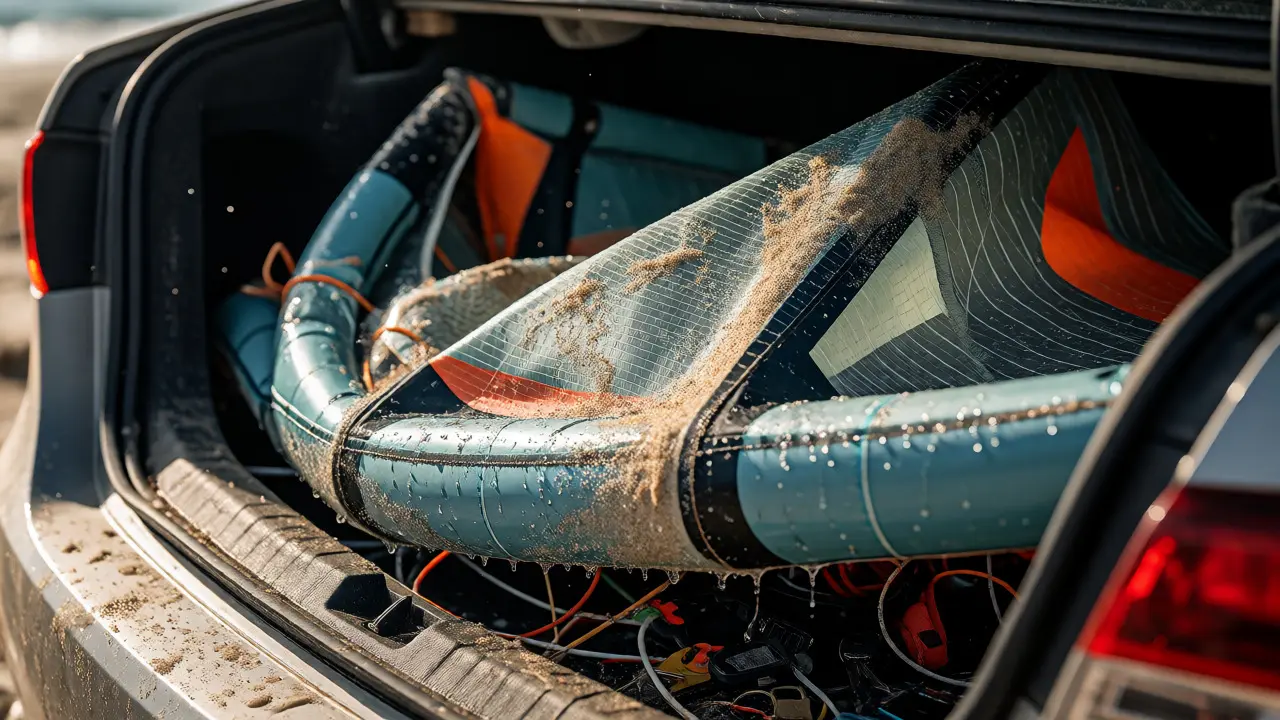
You just got back from the beach. Your kite is dripping wet, covered in sand, and tangled with lines that seem to have a life of their own. You toss it into the trunk of your car, only to find out two weeks later that the fabric has developed a weird smell or, worse, a small tear you didn't notice before. Sound familiar? It happens to almost every kite flyer at some point. The difference between a kite that lasts five years and one that dies in eighteen months often comes down to how you store it when you aren't flying. That's where kite bags come in.
Think of a good bag not just as a sack to throw things in, but as a piece of active protection. Whether you are into kitesurfing, power kiting, or traditional recreational flying, the right case shields your investment from UV rays, moisture, abrasion, and accidental impacts. But with so many options on the market-from cheap duffels to high-end hard shells-how do you pick the one that actually fits your needs? Let's break down what really matters.
Why Your Kite Needs More Than Just a Toss in the Trunk
Kite materials are surprisingly sensitive. Most modern kites use ripstop nylon or polyester fabrics coated with polyurethane for strength and water resistance. While tough, these materials degrade under specific conditions. Ultraviolet (UV) radiation is the silent killer. Leaving a kite exposed to direct sunlight for hours breaks down the fibers and fades the colors, making the fabric brittle over time. A proper protective case blocks this exposure completely.
Then there's the issue of physical damage. If you're driving to a launch spot, your kite might slide around in the back seat. Keys, buckles, or even the zipper of another bag can snag the leading edge bladder or the canopy. Sand is another enemy. It acts like fine-grit sandpaper. If you pack a sandy kite into a tight space without a barrier, that grit grinds against the fabric every time the vehicle moves. A dedicated bag keeps the debris contained and away from other gear, preventing cross-contamination and wear.
Moisture management is critical too. Packing a damp kite into a non-breathable plastic bag creates a greenhouse effect. Mold and mildew start growing within 48 hours if the material stays wet and dark. This doesn't just smell bad; it eats away at the coating and weakens the stitches. High-quality bags often feature mesh panels or breathable fabrics that allow air circulation while still protecting the gear from external dirt.
Anatomy of a Quality Kite Bag
Not all bags are created equal. When you look at product specs, ignore the flashy graphics and focus on construction details. Here is what separates a toy from a tool:
- Fabric Durability: Look for denier ratings. 600D (Denier) polyester is the industry standard for decent durability. Anything lower, like 420D, feels flimsy and tears easily. For heavy-duty travel, 900D or Cordura® nylon offers superior abrasion resistance.
- Zippers: YKK zippers are the gold standard. They rarely jam and withstand saltwater corrosion better than generic brands. Check if the main compartment has a double zipper for security.
- Padding: Does the bag have foam padding? Even a thin layer of closed-cell foam protects the inflatable bladders from punctures caused by sharp objects in your car.
- Straps and Handles: Padded shoulder straps make carrying a 15kg setup bearable. Reinforced grab handles at both ends help you lift the bag out of deep trunks without straining your back.
- Separation: Internal dividers keep your bar and lines separate from the kite. Tangling lines inside the same compartment as the kite canopy is a recipe for frustration and knots.
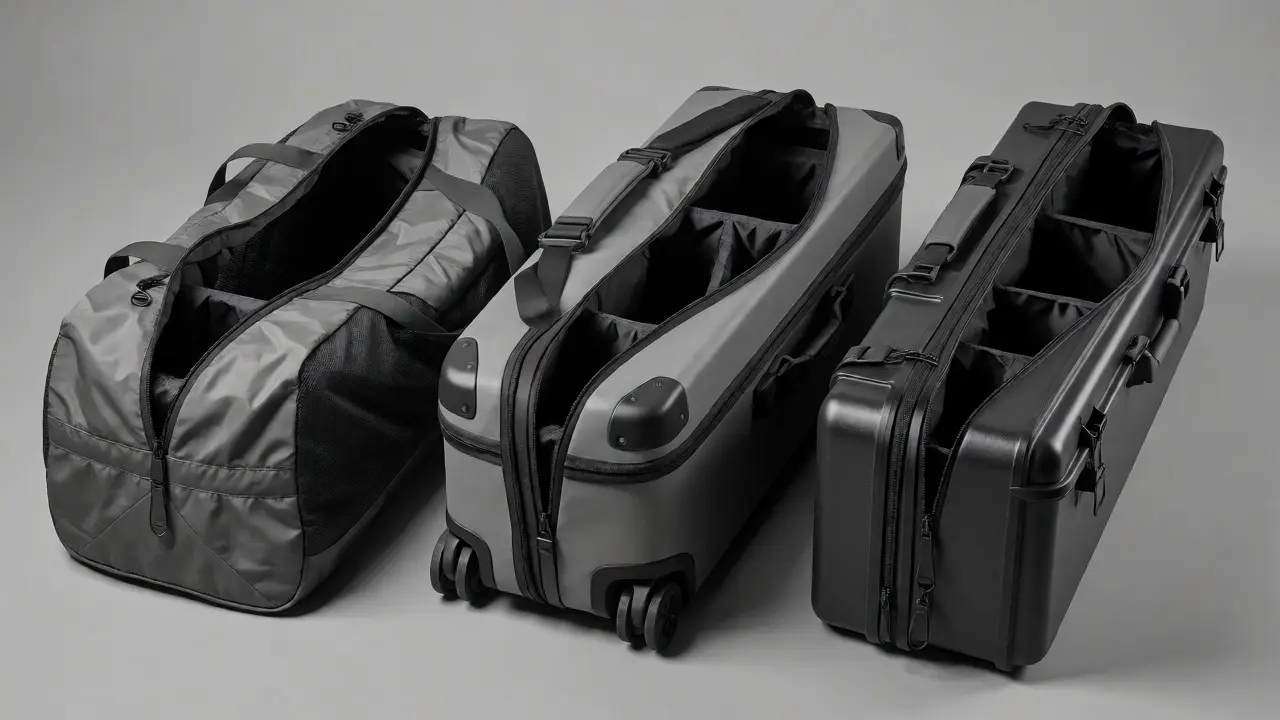
| Feature | Soft Duffel | Wheeled Travel Case | Hard Shell Case |
|---|---|---|---|
| Protection Level | Low-Medium | Medium-High | Very High |
| Weight | Light (1-3 kg) | Moderate (4-7 kg) | Heavy (8+ kg) |
| Best For | Local sessions, casual flyers | Air travel, multi-day trips | Professional athletes, extreme weather |
| Price Range | $50 - $150 | $150 - $400 | $400+ |
| Packability | High (collapses flat) | Low (fixed shape) | Low (rigid structure) |
Choosing the Right Size and Type for Your Flying Style
Your choice depends heavily on how you fly. A weekend warrior who drives 20 minutes to a local lake has different needs than someone flying a twin-tip board across oceans.
If you are a kitesurfer, you likely carry a large kite (12m-17m), a control bar, a harness, and maybe a wetsuit. You need volume. A soft duffel with wheels is usually the sweet spot. It holds everything together and rolls through airports or parking lots. However, ensure the interior dimensions fit your largest kite folded properly. Some bags claim "universal fit" but fail when you try to squeeze a bulky 17m kite plus a thick wetsuit.
For power kiting enthusiasts, the gear is smaller but denser. You might have multiple kites, long lines, and powerful bars. A backpack-style bag or a compact rolling suitcase works well here. Since you often walk further from your car to the field, comfort is key. Look for ergonomic back panels and hip belts that distribute weight evenly.
Traditional stunt kite flyers face a unique challenge: precision. Their kites are delicate, with carbon spars that snap easily. A generic duffel is risky because the spars can poke through or get crushed. Instead, opt for a slim, rigid tube case or a padded sleeve specifically designed for stunt kites. These cases keep the wings straight and prevent the spar tips from bending.
Material Matters: Fabric, Coatings, and Breathability
The outer shell takes the beating, but the inner lining does the real work. Many cheap bags use thin nylon linings that offer zero cushioning. Better models use plush fleece or soft polyester linings to prevent micro-scratches on shiny kite surfaces. If your kite has printed graphics, a soft lining prevents those designs from rubbing off during transport.
Consider the coating. Polyurethane (PU) coatings are common and affordable, offering basic water resistance. However, they can stiffen in cold temperatures and crack over time. PVC coatings are heavier but more durable and easier to clean. If you live in a rainy climate like Portland, Oregon, where I write this from, you want a bag that sheds water quickly. Look for hydrophobic treatments that cause water to bead up and roll off rather than soak in.
Breathability is often overlooked. A fully sealed bag traps humidity. If you ever pack a slightly damp kite, you need vents. Mesh pockets are great for drying out gear, but they let dust in. The best compromise is a bag with zippered ventilation ports. You can open them after a session to let steam escape, then close them for transport.
Care and Maintenance Tips to Extend Gear Life
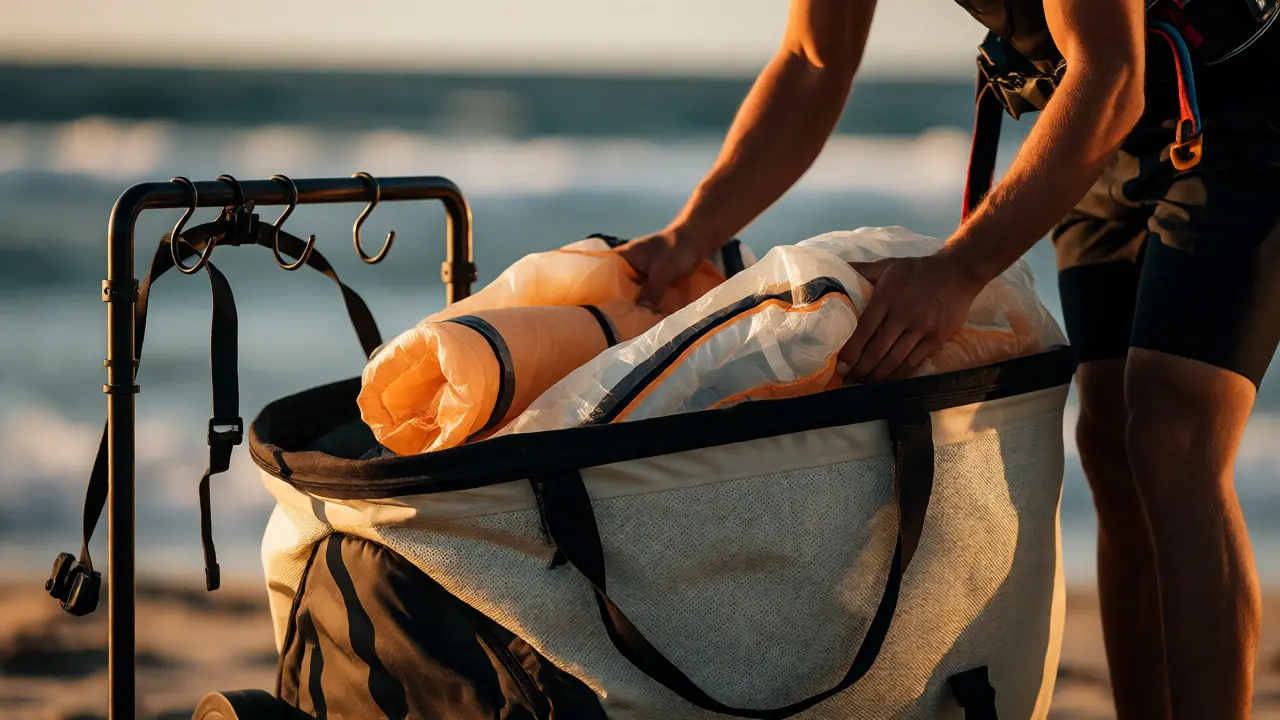
Owning a great bag doesn't mean you can be lazy. How you use it determines its lifespan. First, never pack a soaking wet kite directly into a closed bag for more than an hour. Rinse it with fresh water first to remove salt crystals, which are abrasive and corrosive. Salt accelerates metal fatigue in your bar and line connectors.
Store your bag in a cool, dry place. Avoid leaving it in a hot car trunk for days. Heat degrades adhesives used in seams and can warp plastic components. If you see mold spots forming, clean the bag immediately with a mixture of warm water and mild soap. Avoid bleach, as it weakens synthetic fibers. For stubborn odors, sprinkle baking soda inside the empty bag, let it sit overnight, and vacuum it out.
Check the zippers regularly. Sand gets into zipper teeth and jams them. Rinse the zipper tracks with fresh water after beach trips. Lubricate them occasionally with a silicone spray to keep them sliding smoothly. A stuck zipper in the middle of a windy launch site is a nightmare you don't want to experience.
Common Mistakes When Buying Kite Storage
Don't buy based on brand loyalty alone. Just because a bag says "Pro Series" doesn't mean it fits your specific kite model. Measure your kite when packed. Manufacturers provide recommended sizes, but folding techniques vary. If you fold your kite tightly, you might save space; if you fold loosely, you'll exceed the capacity.
Another mistake is ignoring the harness. Many people shove their harness into the kite bag. Harnesses have metal hooks and rigid waist pads that can scratch the kite canopy. Use a separate small pouch or a dedicated harness hook outside the main compartment. Some advanced bags include external loops or net pockets specifically for this purpose.
Finally, consider airline regulations if you travel. Hard-shell cases are safer for checked luggage but count as oversized baggage more often. Soft bags can sometimes be squeezed under seats or treated as regular luggage if they stay under certain dimensions. Always check your airline's sports equipment policy before purchasing a bulky case.
Can I wash my kite bag in a washing machine?
It depends on the material. Most polyester and nylon bags can be hand-washed or gently machine-washed on a cold cycle. Remove any loose dirt first. Avoid hot water and harsh detergents, as they can strip water-resistant coatings. Always air dry; tumble drying can melt synthetic fabrics or shrink linings.
Do I need a special bag for foil kites?
Yes, ideally. Foil kites have complex internal cells that can collapse and deform if compressed too tightly. A soft, flexible bag allows the kite to retain its shape better than a rigid box. Look for bags with ample vertical height to accommodate the depth of foil kites without crushing the cells.
How do I prevent mold in my kite bag?
Ensure your kite is completely dry before packing. Store the bag in a ventilated area, not a damp basement. If you suspect moisture buildup, open the bag and let it air out for 24 hours. Using silica gel packets inside the bag can also absorb excess humidity.
Are wheeled kite bags worth the extra cost?
If you travel frequently or have back issues, yes. Wheels reduce strain significantly when moving heavy gear over pavement. However, they add weight and bulk. For short car trips, a simple duffel with strong handles is lighter and cheaper. Choose based on your typical transport method.
What size bag do I need for a 12m kite?
Most manufacturers recommend a bag with a capacity of at least 100-120 liters for a 12m kite plus a bar and harness. However, always check the internal dimensions (length x width x height). A tall, narrow bag might fit a folded kite better than a wide, shallow one. Test-fit your gear before buying if possible.