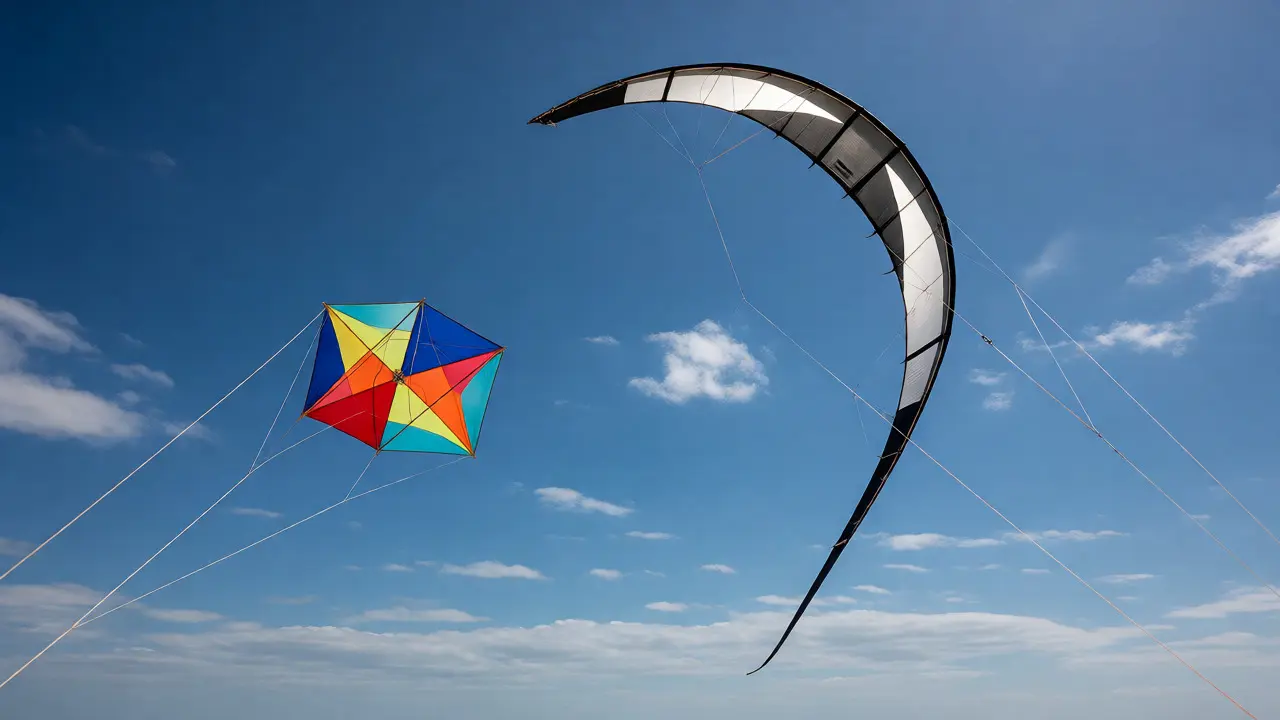
You’re standing on the beach, watching two kites fly side-by-side. One is a square box kite, stable but lazy. The other is a sleek, high-aspect-ratio foil that slices through the air like a bullet, pulling hard enough to make your arms ache. Why does one float gently while the other fights you? It’s not magic; it’s physics. Specifically, it’s kite aspect ratio.
If you’ve ever wondered why race kites look like long, thin wings while beginner trainers look like squares, this guide breaks down exactly how wing proportions change everything about flight. We’ll skip the dense textbook jargon and focus on what actually happens when you hold the lines: how shape dictates glide, stability, and raw power.
What Is Kite Aspect Ratio?
Let’s get the definition out of the way so we can talk about flying. Aspect Ratio (AR) is a geometric measure of how long and narrow a wing is compared to its width. In simple terms, it’s the span squared divided by the area. For a rectangular kite, you just divide the length of the leading edge by the height of the wing. A square kite has an AR of 1.0. A racing glider might have an AR of 8.0 or higher.
Think of it like a bird. A hawk has long, pointed wings for soaring efficiently over miles. A pigeon has shorter, broader wings for quick turns and hovering in city spaces. Neither is "better"-they’re built for different jobs. Your kite is no different. The aspect ratio determines which job it performs best.
Why does this number matter to you? Because it directly controls two forces you feel every time you fly: induced drag and lift efficiency. High aspect ratios reduce induced drag, letting the kite glide farther for every foot of altitude lost. Low aspect ratios create more induced drag but offer better control authority at low speeds.
The Physics of Lift and Drag
To understand why proportions matter, you need to know where the energy goes. When a kite flies, it pushes air down to stay up (Newton’s third law). This downward push creates lift, but it also creates a byproduct called induced drag. Imagine the tip of a kite wing. Air from the high-pressure bottom curls around the tip to the low-pressure top, creating a vortex. This vortex wastes energy and slows the kite down.
Here’s the rule of thumb: the longer and thinner the wing, the smaller the tip vortices relative to the total lift produced. That means less wasted energy. A high-aspect-ratio kite spends less energy fighting itself and more energy moving forward. This is why sailplanes and albatrosses have such skinny wings.
| Feature | Low Aspect Ratio (Square/Box) | High Aspect Ratio (Foil/Racer) |
|---|---|---|
| Typical AR Value | 1.0 - 3.0 | 4.0 - 9.0+ |
| Glide Performance | Poor. Drops quickly if wind stops. | Excellent. Soars on thermals and light breezes. |
| Stability | Very High. Self-corrects easily. | Lower. Requires active pilot input. |
| Turn Rate | Fast. Good for tricks and loops. | Slow. Wide turning circles. |
| Wind Range | Narrow. Needs steady breeze. | Wide. Works in gusty or light winds. |
How High Aspect Ratio Enhances Glide
If you want your kite to stay aloft with minimal effort, go high. A high-aspect-ratio Foil Kite acts like a miniature aircraft wing. It generates lift very efficiently because the pressure difference between the top and bottom surfaces is maintained across a large span without leaking away at the tips as drastically as in shorter wings.
In practical terms, this means a high-AR kite can find lift in rising air columns (thermals) that a box kite would ignore. If you are into landboarding or snowkiting, this is crucial. You don’t want to be dragging yourself across the ground waiting for a gust. You want a kite that pulls consistently even when the wind is barely breathing. High AR gives you that consistency.
However, there is a trade-off. These kites are less forgiving. Because they rely on precise airflow over a long surface, they stall more abruptly if you pull too hard or steer too sharply. They also require more skill to launch. A square kite will flop onto the sand and bounce back up. A delicate high-AR foil might tear if you crash it into the dirt during a botched launch.
Why Low Aspect Ratio Wins on Power and Control
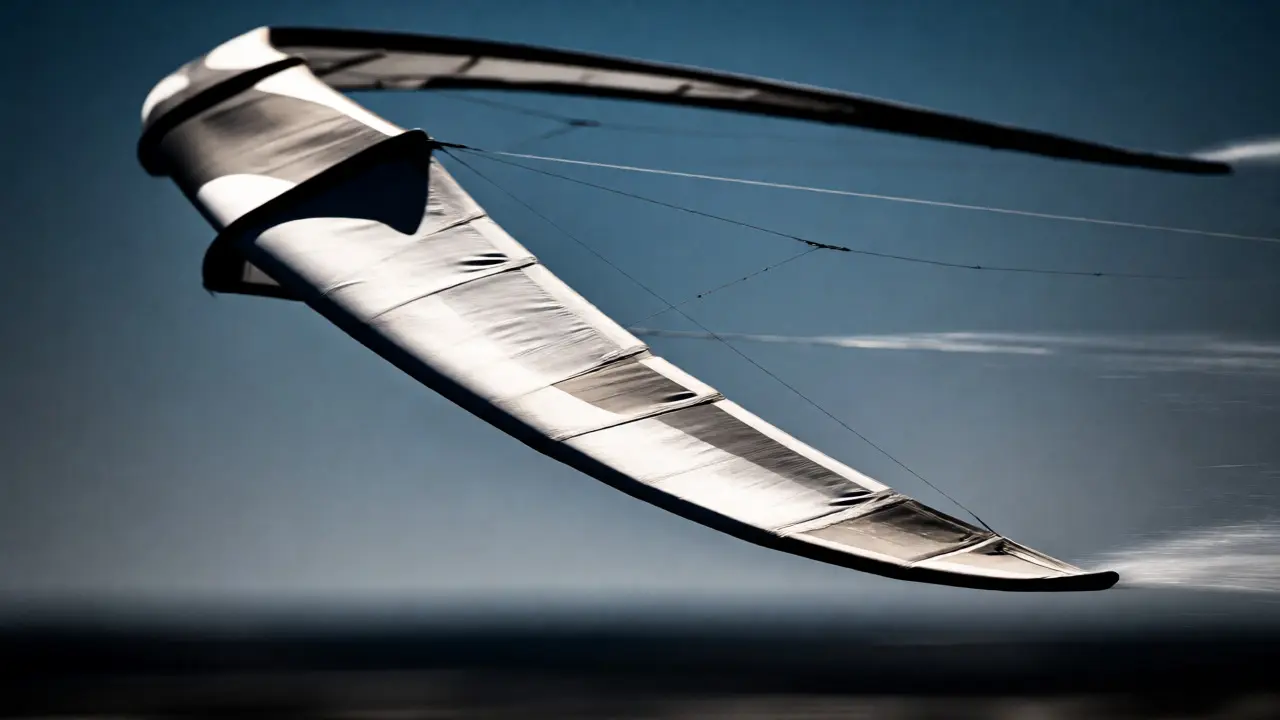
Don’t dismiss the square kite. While it lacks the elegance of a racer, it offers something high-AR designs struggle with: immediate, powerful response. Low aspect ratio kites generate significant drag, which sounds bad, but in certain contexts, drag equals grip.
Consider a stunt kite used for precision maneuvers. Pilots often prefer moderate-to-low AR designs because the extra drag allows for sharper braking and tighter turns. When you yank the lines, the kite doesn’t just turn; it stops and pivots. This is essential for competitive sport flying where hitting specific marks in the sky matters more than covering distance.
Furthermore, low-AR kites are incredibly stable. The broad surface area resists yawing (swinging left and right). If a sudden gust hits a box kite, it might wobble, but it rarely dives out of control. For beginners, this stability is a safety feature. You aren’t fighting the kite to keep it in the window; it stays there naturally.
Choosing the Right Shape for Your Activity
So, which one should you buy? It depends entirely on what you plan to do. Here is a quick decision tree:
- For Casual Beach Flying: Stick to a Delta or Box kite (AR 1.5-2.5). They are easy to launch, stable in variable coastal winds, and fun for kids and adults alike. You won’t care about glide ratios here; you care about not crashing.
- For Snowkiting or Landboarding: Look for a high-performance Foil (AR 4.0-6.0). You need consistent pull to move over friction-heavy surfaces like grass or snow. The efficiency helps you maintain speed when the wind drops slightly.
- For Competitive Racing: Go extreme. Race foils often hit ARs of 7.0 or higher. Every bit of drag reduction translates to knots of speed. But be warned: these kites demand expert handling. One mistake and you’re tangled in lines.
- For Aerial Photography: Mid-range AR (3.0-4.5) is ideal. You need stability to keep the camera steady, but you also need enough lift to carry the payload without needing a hurricane-force wind.
Common Misconceptions About Wing Proportions
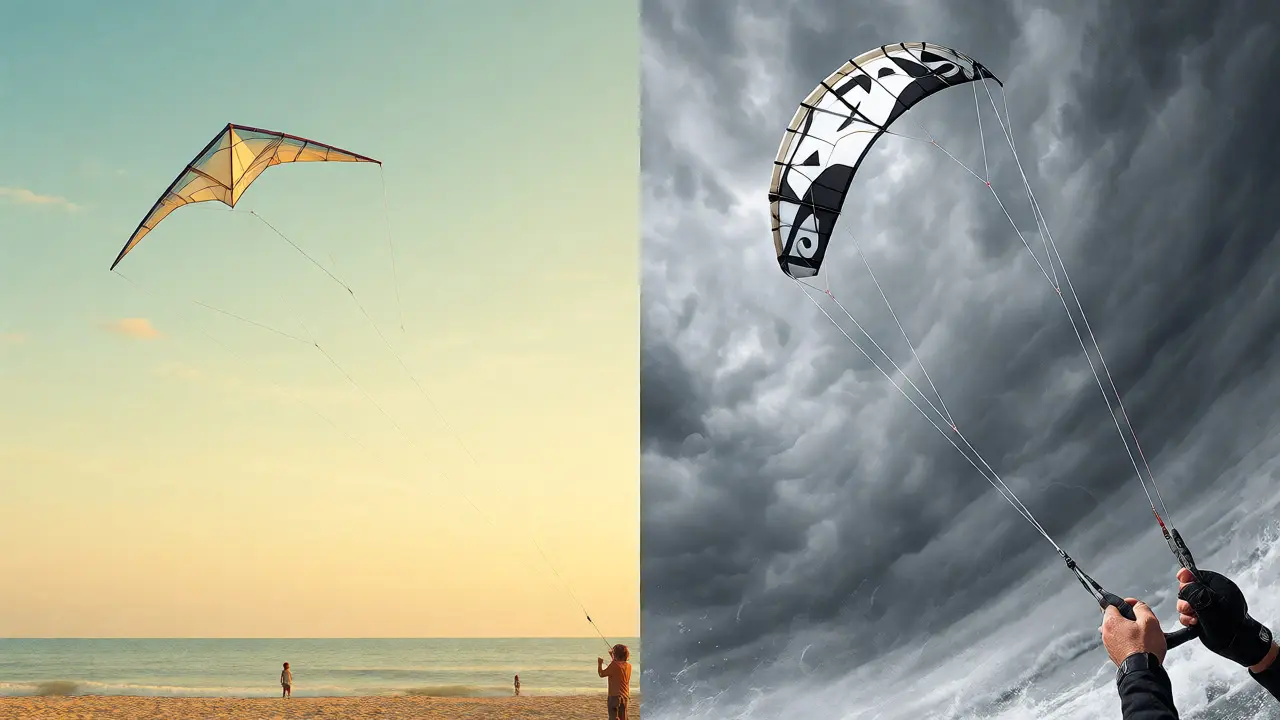
Many people think "higher is always better." That’s false. Higher aspect ratio isn’t a universal upgrade; it’s a specialization. If you take a high-AR racing kite and try to use it in turbulent, chaotic wind near buildings, it will likely become unstable and dangerous. The long wing catches gusts unevenly, causing the kite to buck wildly.
Another myth is that size doesn’t matter, only shape. Size (area) and shape (AR) work together. A huge square kite can pull harder than a tiny high-AR foil simply because it has more surface area to catch the wind. However, pound-for-pound, the high-AR kite is more efficient. If you compare a 5m² square kite to a 5m² high-AR kite, the latter will glide much better and handle light winds more gracefully.
Finally, remember that material stiffness affects perceived aspect ratio. A flexible fabric kite behaves differently than a rigid composite one. Modern materials allow designers to push AR limits further than was possible thirty years ago, making today’s high-AR kites far more user-friendly than their predecessors.
Troubleshooting Flight Issues Based on AR
If your kite isn’t behaving, check its design profile first:
- Kite keeps stalling and falling: Likely high AR. You may be steering too aggressively or flying in wind that is too turbulent. Try relaxing your inputs or switching to a lower AR trainer.
- Kite feels sluggish and won’t turn: Likely high AR again. Long wings have high inertia. Give it time to react, or shorten your line lengths to increase responsiveness.
- Kite dives violently in gusts: Could be low AR with poor bridle tuning, or high AR in excessive wind. Check your wind rating. If you’re using a light-wind foil in a gale, the high tension on the long spans can cause structural flexing that leads to collapse.
- Kite wanders all over the sky: Usually a sign of a high-AR kite in crosswinds. The tips are catching different wind speeds. Lower the AR or adjust the tow point to stabilize the center of pressure.
Understanding aspect ratio transforms you from a passive observer to an informed pilot. You stop blaming the wind for crashes and start choosing the right tool for the conditions. Whether you’re chasing speed, seeking stability, or just wanting a relaxing afternoon, the proportions of your kite are the silent architect of your experience.
Does a higher aspect ratio mean a faster kite?
Generally, yes, but only in steady winds. High aspect ratio reduces induced drag, allowing the kite to achieve higher speeds for the same amount of energy. However, in gusty or turbulent conditions, a high-AR kite may slow down due to instability and the pilot's need to constantly correct course.
Can I modify my kite's aspect ratio?
Not easily. Aspect ratio is determined by the physical cut of the sail and the frame structure. To change it, you would need to rebuild the kite entirely. Some modular stunt kites allow minor adjustments to wingtip extensions, which can slightly alter the effective AR, but the core geometry remains fixed.
Why do beginner kites have low aspect ratios?
Beginner kites prioritize stability and ease of relaunch. Low aspect ratio kites are more resistant to stalling and tend to self-stabilize in the wind window. They are also structurally simpler and more durable against crashes, which are common during the learning phase.
How does line length affect aspect ratio perception?
Line length doesn't change the physical aspect ratio, but it changes the apparent angle of attack and the leverage you have on the kite. Longer lines give a high-AR kite more room to stabilize and build speed, making its efficiency advantages more noticeable. Shorter lines make any kite feel more responsive but can exacerbate the instability of high-AR designs.
Is a delta kite high or low aspect ratio?
Most standard delta kites fall into the low-to-moderate aspect ratio category (typically 1.5 to 2.5). This makes them excellent general-purpose flyers that balance stability with reasonable maneuverability, suitable for both casual flying and basic tricks.