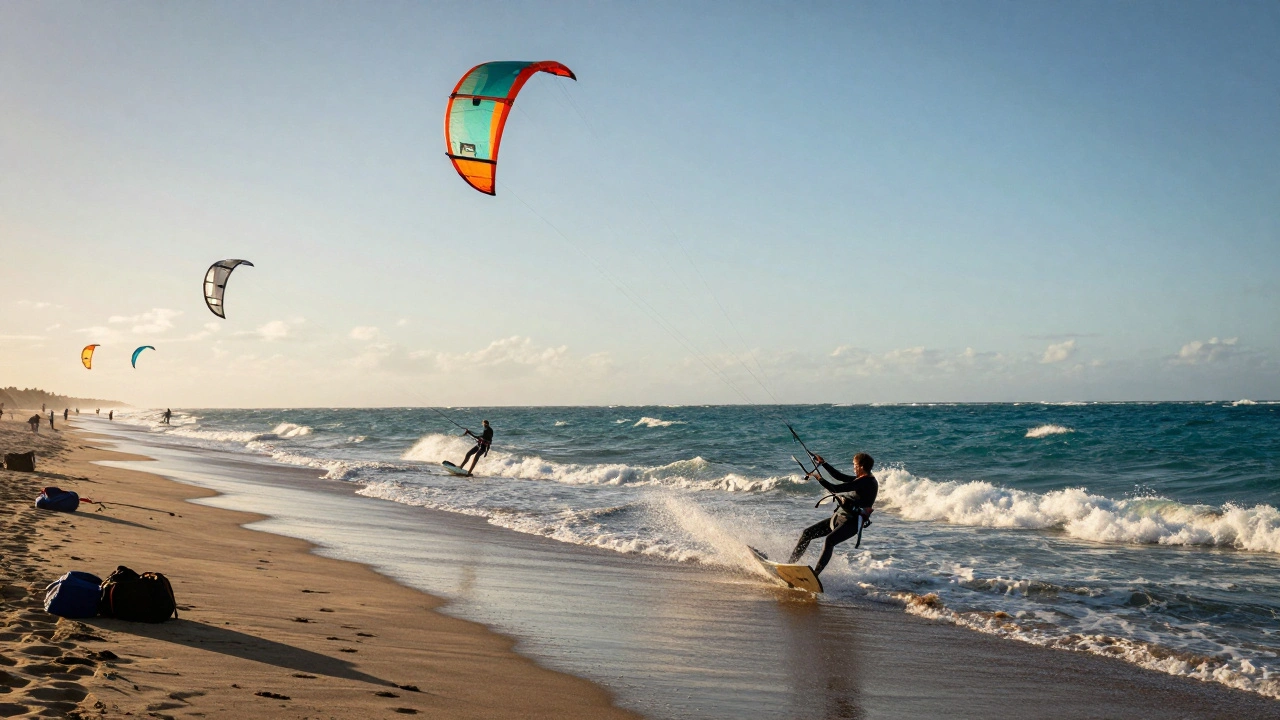
You stand on the windy coast, watching others zip across the surface. You’ve decided to join them, but the gear choices are confusing. There are two main families of kites in this world: foil kites and LEI kites. Picking the wrong one can leave you struggling on the beach while everyone else rides away. This guide cuts through the jargon so you know which machine suits your goals.
Foil Kites: Understanding the Soft Design
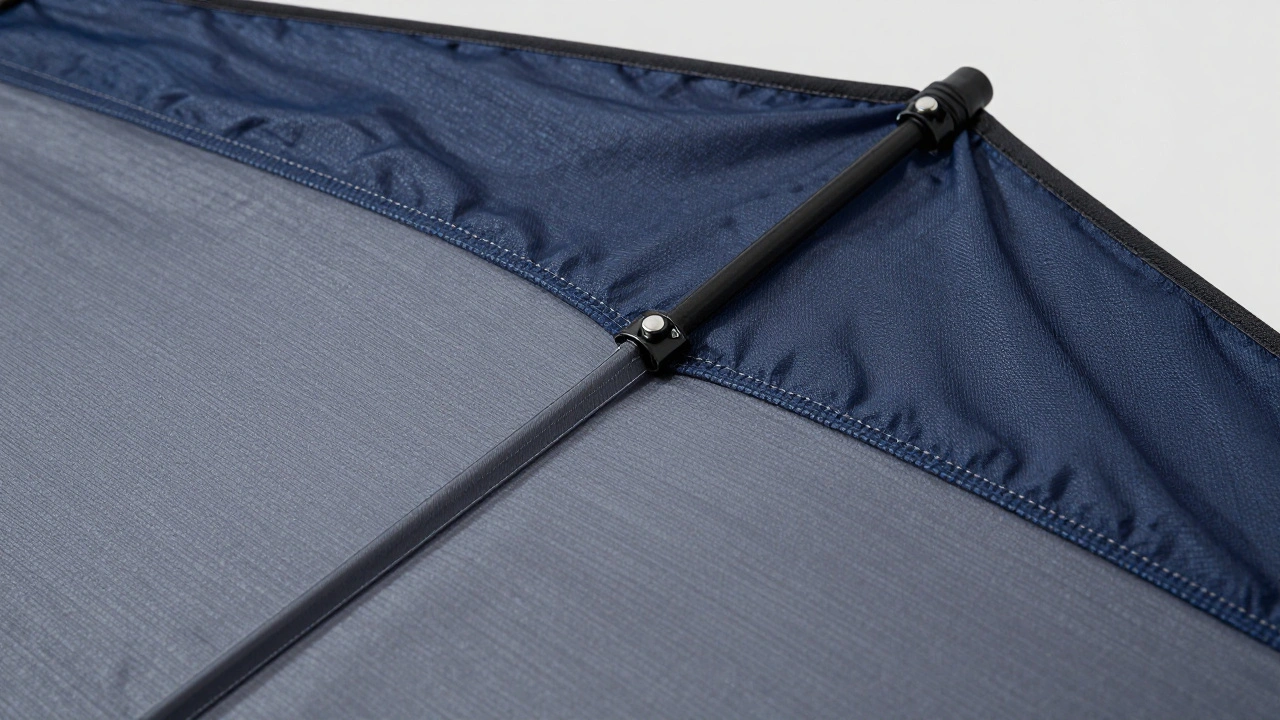
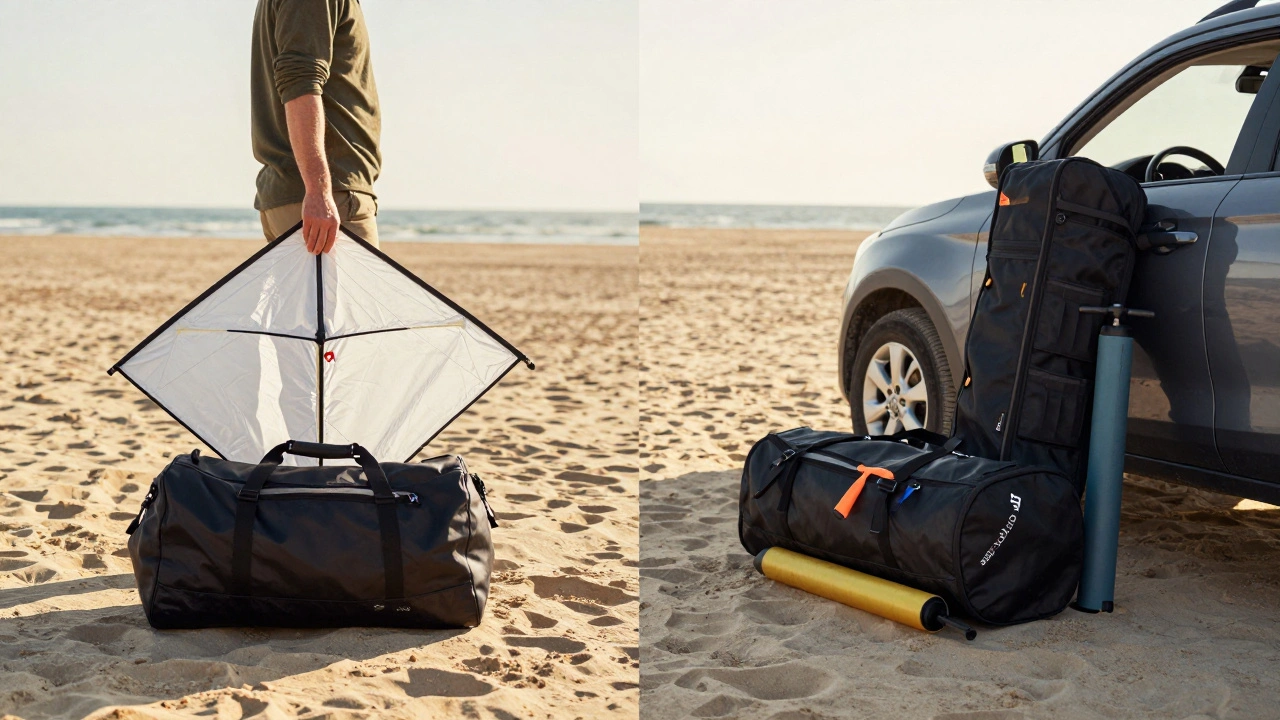
Foil Kites are constructed entirely from flexible, porous fabric without rigid internal structures. Think of them as high-performance parachutes designed to catch wind rather than drop people safely. They rely on air pressure alone to hold their shape against the wind. Because they have no hard parts, they pack down incredibly small. You can stuff a full-sized riding kite into a standard duffel bag that fits under an airline seat.
The primary advantage here is portability. If you travel light or live where storage space is tight, a foil wins hands down. When packed away, they take up almost zero volume. They also lack bladder seams, meaning there are fewer places for air to leak out over time. However, they do suffer from aerodynamic drag when flying idle. Without the internal support of an inflatable tube, the wing can lose tension more easily in very light winds compared to stiff alternatives.
Safety mechanisms differ too. Most foils use a "drifter" system where lines pull the kite to leeward, killing power instantly. Some advanced models allow you to redirect the bridle lines manually. While safer in some scenarios, learning to handle the drift correctly requires practice. A loose line can send the kite drifting hundreds of meters offshore before you catch it.
LEI Kites: The Inflatable Standard
LEI Kites (Leading Edge Inflatable) feature a rigid leading edge filled with air bladders that maintain structural integrity. These are the classic kites you see on most beaches today. The inflation process turns the nylon canopy into a semi-rigid airframe that holds its profile even when the wind lulls completely. You need a pump to get going, which adds bulk to your travel kit, but once inflated, the performance is superior for many riders.
The biggest selling point for LEI designs is their ability to stay powered in lighter breeze conditions. The rigid tubes force the wind over the surface efficiently, creating lift faster. They also offer a wider apparent angle of attack, making them less likely to stall during sharp maneuvers. Furthermore, most modern LEIs come with a dedicated leash attachment or safety release mechanism that physically detaches the rider from the power source if you drop the bar.
Maintenance involves checking for leaks regularly. A single puncture in a strut can ground the whole setup until you find the hole. Travel is harder; you must deflate and fold carefully to avoid creasing the valves. But for pure power delivery and stability, especially for those just learning to waterstart, the LEI platform remains the industry benchmark.
Performance Comparison and Ride Characteristics
Choosing between these setups depends heavily on your intended activity. Are you hitting big ocean waves, practicing freestyle tricks, or dragging a sled across dryland?
- Light Wind Range: LEI Kites generally perform better below 10 knots because their stiff structure maintains lift profile even when slack occurs. Foil kites can collapse if the wind drops suddenly.
- Overpower Protection: In gusty conditions, Foil Kites depower significantly better. You can dump the power completely by sheeting out the lines. LEI Kites might retain enough lift to keep pulling even when you think you've bled the power.
- Launch and Relaunch: From a flat surface, both launch easily. But if you are lying in deep water waiting for help, relaunching a LEI is notoriously difficult in low wind. Foil kites are much more forgiving in wet environments for recovery.
- Durability: LEI bladders age and eventually crack due to ozone and UV exposure, typically lasting 3-5 years before replacement. Foil fabric tears easier against rocks or sharp debris but doesn't degrade chemically as fast.
| Attribute | Foil Kites | LEI Kites |
|---|---|---|
| Internal Structure | Air Pressure Only | Rigid Inflatable Tubes |
| Packing Size | Very Small | Bulky Bag |
| Setup Time | Under 2 Minutes | 10-15 Minutes |
| Relaunch Ease | High | Low to Medium |
| Maintenance | Cleaning Fabric | Checking Valves |
Consider your local environment. If you are based near rocky shores or dense vegetation where landing spots are scarce, the portability of the foil is unmatched. Conversely, if you ride in sheltered lagoons with consistent wind and easy beach access, the inflated rigidity offers a more predictable feel. Riders focusing on jumping prefer LEI because the stiffness stores energy during the power stroke before releasing it for height. Cross-country travelers might prioritize the foil for its compact nature, allowing them to hike to remote locations with their equipment on their back.
Cost Considerations and Long-Term Value
Budget plays a massive role in this decision. Entry-level Foil Kites are often cheaper upfront. Since they lack the engineering complexity of bladders and specialized valves, manufacturing costs are lower. However, the lifespan varies by material quality. High-end foils use reinforced ripstop layers that resist abrasion better than budget models.
LEI Kites command a higher price tag due to the complex sewing patterns required for the bladders. When you factor in shipping logistics, heavy bags add significant cost to international travel. Over five years, an LEI owner might spend extra money repairing bladders or buying new ones as seals fail. A foil owner might replace the whole unit if a tear compromises safety, as patching large holes affects flight symmetry.
Inflation tools matter here too. An electric pump reduces effort significantly for LEIs but needs batteries or power sources. Manual pumps are reliable backup. Foil users skip this step entirely, saving ten minutes per session. That saved time adds up over a season. If you plan to rent kites frequently, foils often have lower rental fees because they wear out slower in terms of structural failure, though fabric rips still happen.
Choosing Your Next Step
If you are unsure, look at the pros and cons relative to your lifestyle. For pure beginners, the market suggests starting with a beginner-friendly LEI for stability and resale value. Second-hand markets saturate with older LEI models, making upgrades cheaper later. Once you master the basics, experimenting with a foil opens up new terrain possibilities.
Remember to test before you buy. Many shops offer demo days. Feel the weight in the control bar. Notice how quickly the kite powers up on the screen. Your physical connection to the equipment determines your enjoyment level far more than technical specs. Trust your instincts on handling preference.
Are foil kites safe for beginners?
Yes, foil kites are generally considered safer for beginners due to their depower capabilities. If you let go of the bar, the kite drops power immediately. However, you must learn the specific safety leash placement to prevent the kite from running wild.
Do LEI kites require more maintenance?
Yes, inflatables need regular valve checks and bladder inspections. Salt buildup can corrode valves, and sun damage degrades rubber over time. You should rinse your LEI thoroughly after every saltwater session.
Can I fly foil kites in light wind?
It depends on the aspect ratio. Modern high-aspect foils can perform well in breezes, but traditional low-aspect foils struggle below 12 knots compared to similar sized inflated kites.
Which kite type travels easier?
Foil kites win on travel convenience. They pack small enough for carry-on luggage on planes, whereas LEI kites require checked bags or special oversized baggage fees.
How do I clean my kite fabric?
Use fresh water and mild soap for cleaning. Avoid high-pressure washes on seams. Dry the kite naturally away from direct sunlight to prevent UV degradation of the ripstop coating.