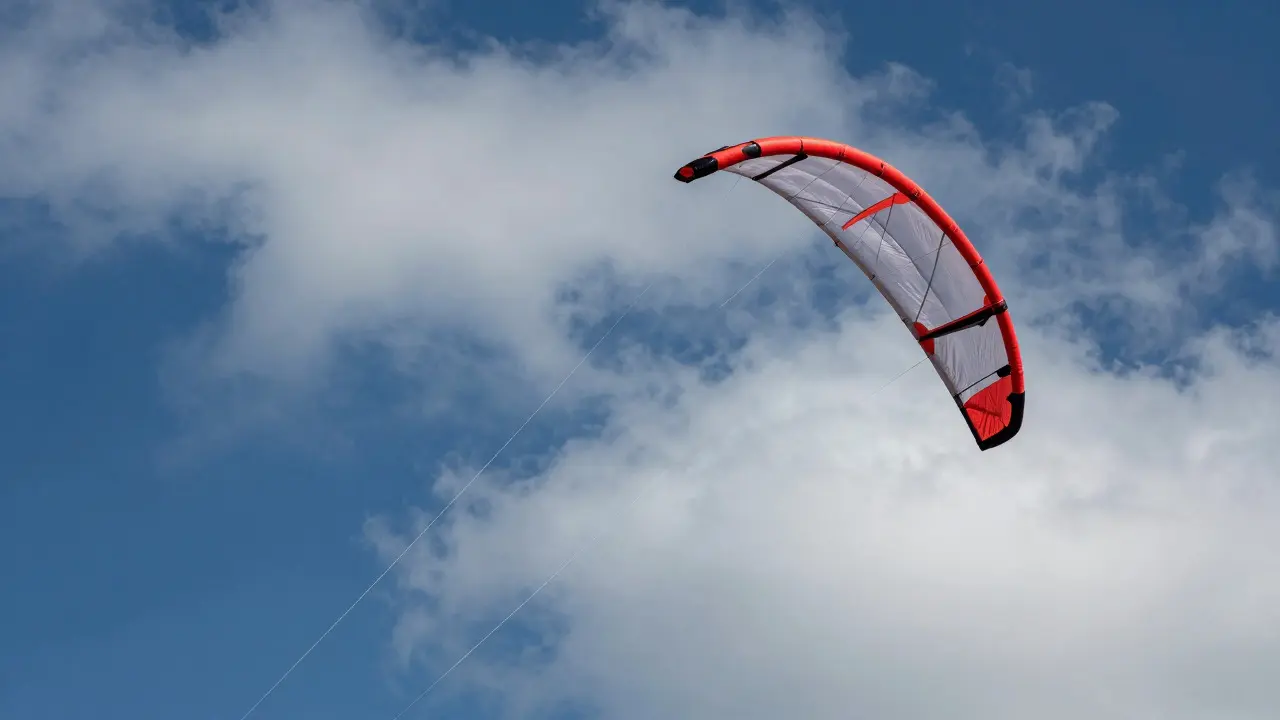
Most people think kites are just toys for kids on the beach. But if you look at the math behind a single square of nylon catching the wind, you’re looking at complex fluid dynamics that engineers still study today. Kite aerodynamics is the branch of physics that explains how flat surfaces generate lift and stability in moving air. It’s not magic; it’s vector geometry and pressure differentials working together.
We often associate kites with ancient festivals or backyard fun, but they were actually one of the first tools humans used to harness wind energy systematically. Understanding how a kite stays up isn’t just about nostalgia-it’s a masterclass in basic physics that applies to everything from airplane wings to wind turbines. Let’s break down the science, step by step, so you can see exactly why that string never lets go.
The Core Physics: Why Kites Don't Fall
To understand the timeline of kite science, we have to start with the present-day mechanics. A kite flies because of two main forces: Lift and Drag. Lift acts perpendicular to the wind direction, while drag acts parallel to it. For a kite to stay aloft, the vertical component of the lift must exceed the weight of the kite itself.
This might sound counterintuitive. We usually think of lift as pointing straight up. But for a kite, the angle of attack-the angle between the kite’s surface and the oncoming wind-determines the direction of the resultant force. When you tilt a kite into the wind, you create a pressure difference. The air flowing over the curved or angled surface moves faster, creating lower pressure on that side, while the air on the backside moves slower, creating higher pressure. This pressure differential pushes the kite forward and upward.
Bernoulli's Principle is often cited here, stating that as fluid speed increases, pressure decreases. However, Newton's Third Law also plays a huge role. The kite deflects air downward and backward. According to Newton, for every action (deflecting air), there is an equal and opposite reaction (pushing the kite up and forward). Both principles are valid; they are just two ways of describing the same physical reality. In practice, both lift and drag contribute to keeping the kite in the sky, but the balance between them determines stability.
Ancient Origins: From War to Play
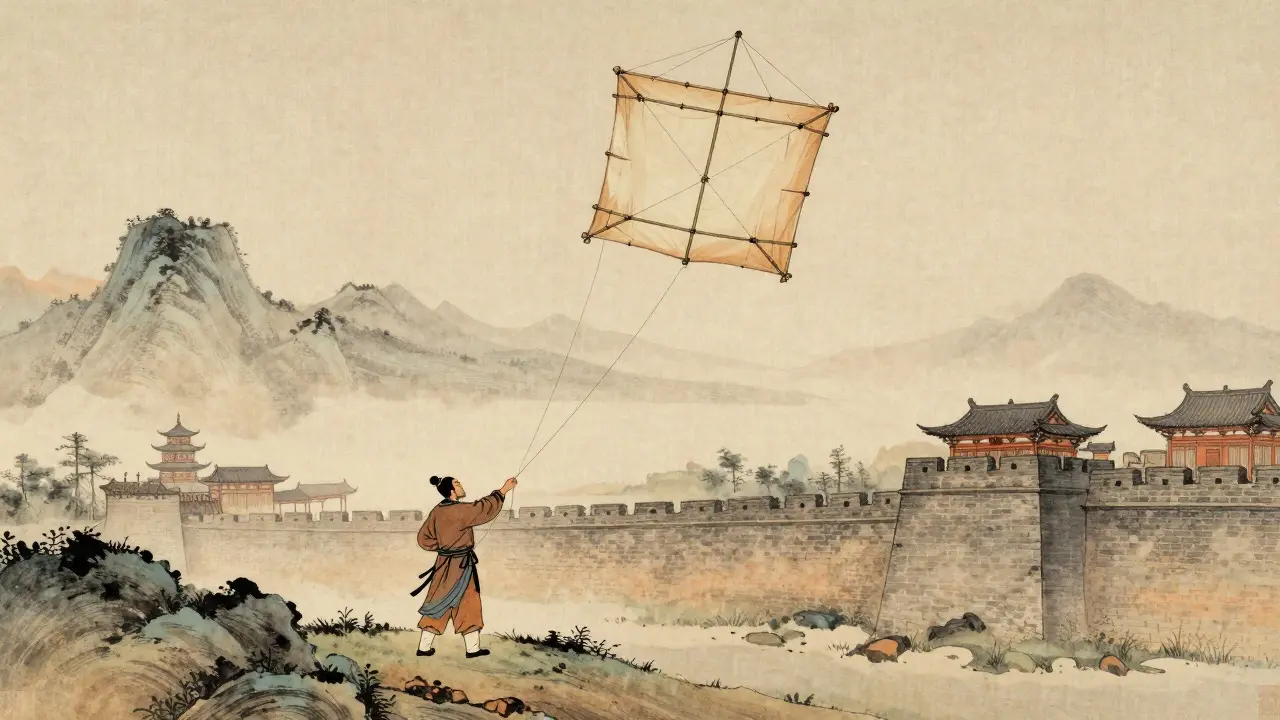
The story of kite aerodynamics starts thousands of years ago. Historical records suggest that the first kites appeared in China around 500 BC. These early designs weren’t for leisure; they were practical tools. General Han Xin reportedly used a large kite to measure distances during military campaigns. He would fly the kite, count the number of knots in the string until it reached its maximum altitude, and use that data to estimate the distance to enemy fortifications. That’s essentially using aerodynamic stability as a ranging tool.
By the time of the Tang Dynasty (618-907 AD), kites had evolved. They began incorporating paper and bamboo frames, which allowed for lighter structures and more efficient lift generation. The shift from heavy silk to lightweight paper was a critical engineering breakthrough. It reduced the weight-to-lift ratio, meaning less wind was needed to keep the kite aloft. This period marked the transition from experimental flight to controlled aerodynamics.
The Scientific Awakening: Measuring the Wind
For centuries, kites remained largely cultural objects. But in the 18th century, European scientists started taking them seriously. In 1749, George Adams used a kite to carry instruments into the upper atmosphere to measure temperature and humidity. This was one of the first times a kite was used specifically for scientific data collection rather than war or play.
Then came Benjamin Franklin. Everyone knows the famous lightning experiment, but what’s often overlooked is the aerodynamic insight he gained. Franklin realized that kites could be used to study atmospheric electricity because they could reach altitudes where thunderclouds formed. His success proved that kites could operate reliably in strong, turbulent winds. This era established the kite as a legitimate scientific instrument, bridging the gap between folklore and empirical physics.
Modern Engineering: From Toys to Power Generation
In the 20th century, kite aerodynamics took a turn toward high-performance applications. The development of dual-line kites in the 1970s and 1980s changed everything. Traditional single-line kites relied on passive stability. Dual-line kites, however, allowed pilots to actively control the angle of attack. By pulling one line tighter than the other, a pilot could steer the kite left or right, changing its trajectory and power output instantly.
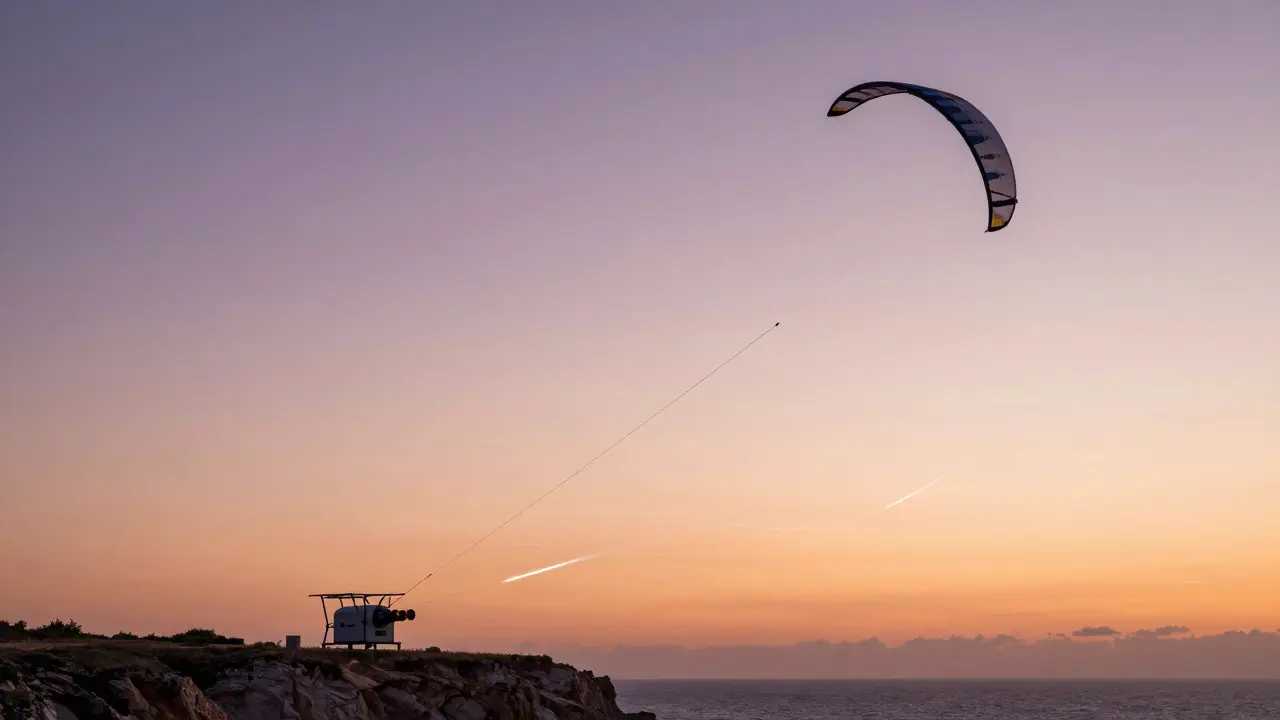
This active control paved the way for Kite Power Systems. Companies like Makani Power and KiteGen began experimenting with kites to generate electricity. The concept is simple: instead of building massive towers to reach high-altitude winds, you launch a kite from the ground. High-altitude winds are stronger and more consistent. A kite tethered to a ground-based generator can harvest this energy efficiently. The aerodynamic challenge here is immense. The kite must maintain stable flight in gusty conditions while generating enough tension to spin the turbine below. This requires precise modeling of unsteady aerodynamics and real-time feedback control.
| Period | Key Development | Aerodynamic Impact |
|---|---|---|
| 500 BC - 200 AD | Bamboo and Silk Frames (China) | Established basic lift-to-weight ratios |
| 1749 - 1800 | Scientific Instrumentation | Proved stability in turbulent flows |
| 1970s - 1990s | Dual-Line Control | Enabled active steering and dynamic lift modulation |
| 2000s - Present | Power Generation Kites | Focus on efficiency and automated flight paths |
The Role of Stability and Tension
One of the most misunderstood aspects of kite flight is stability. A kite doesn’t just need lift; it needs to resist oscillation. If a kite wobbles too much, it loses efficiency and can crash. Engineers solve this through center of pressure placement. The center of pressure is the point where the total aerodynamic force acts. For a stable kite, this point must be ahead of the center of gravity (or in the case of a tethered kite, aligned with the tether attachment point).
If the center of pressure is too far back, the kite will rotate nose-up, increasing drag and potentially stalling. If it’s too far forward, the kite will dive. Modern kites use tail fins or asymmetric shapes to adjust this balance dynamically. This is similar to how an aircraft uses trim tabs. Understanding this relationship allows designers to create kites that are self-correcting, requiring minimal input from the pilot to stay in the air.
Practical Implications for Enthusiasts
You don’t need a PhD to benefit from understanding these principles. If you’re flying a kite, knowing about angle of attack helps you choose the right wind speed. Too little wind, and the lift coefficient drops below the threshold needed to overcome gravity. Too much wind, and the drag becomes excessive, putting dangerous tension on the line. Most recreational kites are designed to operate optimally in wind speeds between 10 and 25 miles per hour. Outside this range, the aerodynamic balance shifts, making flight difficult or impossible.
Also, consider the material. Nylon and ripstop polyester are standard for modern kites because they offer a good strength-to-weight ratio. Heavier materials like canvas require stronger winds to achieve the same lift. This is a direct application of the lift equation: Lift = 0.5 × ρ × v² × A × Cl. Where ρ is air density, v is velocity, A is area, and Cl is the lift coefficient. You can increase lift by increasing any of these variables, but wind speed (v) has the biggest impact because it’s squared.
Frequently Asked Questions
What is the main force that keeps a kite in the air?
The main force is lift, generated by the pressure difference between the top and bottom surfaces of the kite. However, drag also plays a crucial role in providing the forward momentum necessary to maintain airflow over the kite’s surface.
Why do kites need tails?
Tails provide stability by shifting the center of drag rearward. This creates a restoring moment that prevents the kite from rotating or wobbling excessively in turbulent winds, ensuring the center of pressure remains aligned with the tether point.
How does wind speed affect kite flight?
Wind speed directly impacts lift, which increases with the square of the velocity. Doubling the wind speed quadruples the lift. However, it also increases drag significantly, which can make the kite harder to control and put more stress on the tether.
Can kites be used for electricity generation?
Yes, airborne wind energy systems use kites to harness high-altitude winds. These kites fly in figure-eight patterns or tethers to generate continuous tension, which drives a ground-based generator. This method is more efficient than traditional wind turbines in certain locations because it accesses stronger, steadier winds without needing tall towers.
What is the difference between single-line and dual-line kites?
Single-line kites rely on passive stability and cannot be steered easily. Dual-line kites allow the pilot to control the angle of attack by adjusting the tension on each line independently. This enables active steering, turning, and precise power management, making them suitable for sports and advanced aerodynamic applications.