
Ever tried to launch a dual-line stunt kite alone on a crowded beach? It’s tough. You’re wrestling with lines, checking wind direction, and trying not to tangle your gear while other people walk their dogs right into your flight path. That’s why kite clubs exist. They aren’t just social meetups; they are support networks that turn a solitary hobby into a shared experience. If you’ve been flying solo for a while, or if you’re brand new and intimidated by the technical side of line handling, finding a local group is the fastest way to level up your skills and make friends who actually get why you’re excited about a 12 mph breeze.
Why Join a Group Instead of Flying Solo?
Think about the last time you struggled with a tangled bridle or couldn’t figure out why your parafoil wouldn’t stay airborne. Now imagine having someone standing next to you who has seen that exact mistake fifty times. That’s the immediate value of a kite flying community. Members often share specific knowledge about local wind patterns, which can vary wildly even within the same city. In Portland, for example, the wind at Willamette Park behaves differently than at Powell Butte due to terrain and tree cover. A club member knows exactly where the thermals rise in the afternoon and where the gusts hit hardest in the morning.
Beyond technical help, there’s the safety factor. Kites can be dangerous when they crash into power lines or other kites. Experienced flyers know how to read airspace etiquette-like who has right-of-way when two kites cross paths. When you join a group, you learn these unwritten rules quickly. Plus, there’s a communal joy in seeing dozens of kites fill the sky simultaneously. It’s a visual spectacle that’s hard to replicate alone, and it creates a sense of belonging among people who might otherwise never interact.
How to Find Local Kite Groups
You don’t need a map of every national organization to find people near you. Start digital, then go physical. Most active groups maintain a presence on social media platforms like Facebook or Meetup.com. Search for terms like "kite flying [Your City]" or "stunt kite club." Look for groups with recent activity-not just posts from three years ago. Check the comments. Are people asking questions and getting answers? Is someone posting photos from last weekend’s session? That engagement signals an active, healthy community.
If digital searches come up empty, try old-school methods. Visit local parks known for open spaces and ask the regular dog walkers or joggers if they’ve seen anyone flying kites. Often, small informal groups form without any online footprint. Another great tactic is to check bulletin boards at local hobby shops or outdoor gear stores. Sometimes the most dedicated flyers are older enthusiasts who prefer face-to-face interaction over apps. Don’t underestimate the power of simply showing up at a popular flying spot on a windy Saturday. Bring a colorful kite. It’s a natural conversation starter. People will stop to look, and you’ll likely strike up a chat with another enthusiast.
Types of Communities You Might Encounter
Not all kite groups are the same. Understanding the different flavors helps you choose the right fit for your personality and goals. Some groups are strictly competitive, focusing on precision stunts and judging criteria. Others are purely recreational, where the goal is relaxation and family fun. Then there are the festival organizers, who focus on large-scale events with hundreds of participants.
| Club Type | Primary Focus | Skill Level Needed | Social Vibe |
|---|---|---|---|
| Stunt Teams | Precision flying, competitions, synchronized routines | Intermediate to Advanced | Focused, disciplined, supportive but serious |
| Casual Flyers | Relaxation, socializing, teaching beginners | All levels welcome | Laid-back, inclusive, family-friendly |
| Festival Organizers | Event planning, logistics, large displays | Varies (organizers vs. flyers) | High-energy, volunteer-driven, chaotic fun |
| Historical Groups | Traditional designs, cultural heritage, craftsmanship | Beginner to Expert | Educational, respectful of tradition, quiet |
If you’re new, start with a Casual Flyer group. The pressure is low, and the learning curve is gentle. Once you’re comfortable launching and landing, you might find yourself drawn to Stunt Teams if you enjoy the challenge of mastering complex maneuvers. Historical groups are fascinating if you care about the engineering behind box kites or diamond shapes used centuries ago.
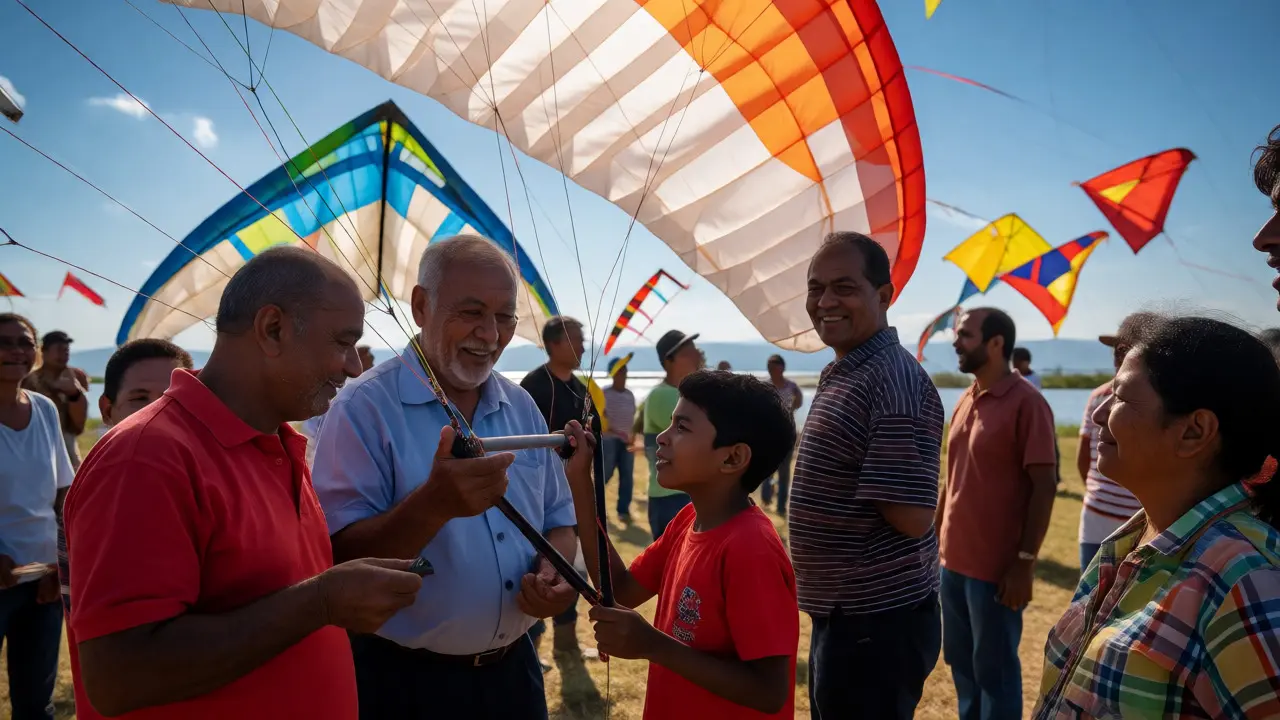
What to Expect at Your First Meeting
Nerves are normal. Walking into a park full of strangers holding strings attached to nylon wings can feel awkward. But here’s the secret: kite flyers love talking about kites. If you show up with a basic single-line kite, someone will likely offer to help you set it up. If you bring a dual-line stunt kite, expect questions about what model it is and where you bought it.
- Bring your own gear: Even if it’s simple. Having something in hand makes you part of the activity rather than just an observer.
- Ask questions: Don’t worry about sounding novice. Questions like "Is this wind too strong for my kite?" are welcomed because everyone remembers being unsure.
- Respect space: Watch where others are flying. Keep your lines clear of their flight paths. This shows respect and builds trust immediately.
- Stay for a bit: Give it at least 30 minutes. Initial interactions can be brief, but as the session progresses, conversations deepen.
Most clubs have a designated meeting area marked by flags or signs. Look for those. If you don’t see anyone, wait ten minutes. Wind conditions change fast, and some members might be waiting for a lull or a gust before launching. Patience pays off.
Overcoming Barriers to Entry
Some people hesitate to join because they think they need expensive equipment. Wrong. A $15 delta kite flies just as well as a $150 one in moderate winds. The community cares about enthusiasm, not price tags. Another barrier is the fear of judgment. Will experts laugh at my tangled lines? Rarely. Most experienced flyers remember their early struggles vividly. They’re more interested in helping you untangle than critiquing your technique.
Time commitment is another concern. You don’t need to attend every weekly meetup. Showing up once a month keeps you connected without overwhelming your schedule. Also, consider weather limitations. If you live in a rainy region, winter months might mean fewer outdoor sessions. Many clubs switch to indoor workshops during bad weather, focusing on kite building or maintenance. This keeps the community active year-round.

The Benefits Beyond Flying
Joining a local kite group opens doors you didn’t expect. You might discover nearby parks you never visited. You could meet retirees who teach you about traditional Asian kite designs or engineers who explain aerodynamics using everyday analogies. These connections often extend beyond the park bench. Group members frequently organize potlucks, gear swaps, or trips to larger festivals like the Reno Air Races or international kite conventions.
There’s also a mental health benefit. Watching a kite soar against a blue sky induces a state of calm similar to meditation. Doing this socially amplifies the effect. You’re sharing the moment, pointing out cloud formations, and laughing when a kite nosedives unexpectedly. It’s a low-stakes environment where failure is funny, not fatal. If a kite crashes, you just reel it in and try again. No consequences, no stress-just play.
FAQ
Do I need expensive kites to join a club?
No, absolutely not. Most clubs welcome beginners with any type of kite, including simple single-line models. Enthusiasts appreciate your interest more than your budget. Many members are happy to lend spare kites for your first few visits so you can test the waters before investing.
What if I don't know how to fly a stunt kite?
That’s perfect! Clubs are great places to learn. Many groups have mentors willing to teach basics like launching, turning, and landing. You don’t need prior experience; you just need patience and a willingness to practice. Watching others fly is also a valuable learning tool.
Are kite clubs only for adults?
While many organized clubs skew toward adult participants, families are often very welcome. Some groups specifically host "family days" or youth programs. If you have kids, call ahead to ask if they’re suitable for children. Safety around long lines and fast-moving kites is always the priority, so supervision is required.
How do I find a club if I live in a rural area?
Rural areas might not have formal clubs, but they often have informal gathering spots. Check local library notice boards, farm supply stores, or community centers. Online forums can also connect you with nearby flyers who drive an hour to meet. Sometimes, starting your own small group is easier than you think-one flyer becomes two, then four.
What should I bring to my first meetup?
Bring your kite, a water bottle, sunscreen, and a positive attitude. If you have extra line spools or tools, bring them-they’re useful for troubleshooting. Wearing shoes with good grip is important since you’ll be walking on grass or sand. Don’t forget a hat; you’ll be looking up at the sky for hours!