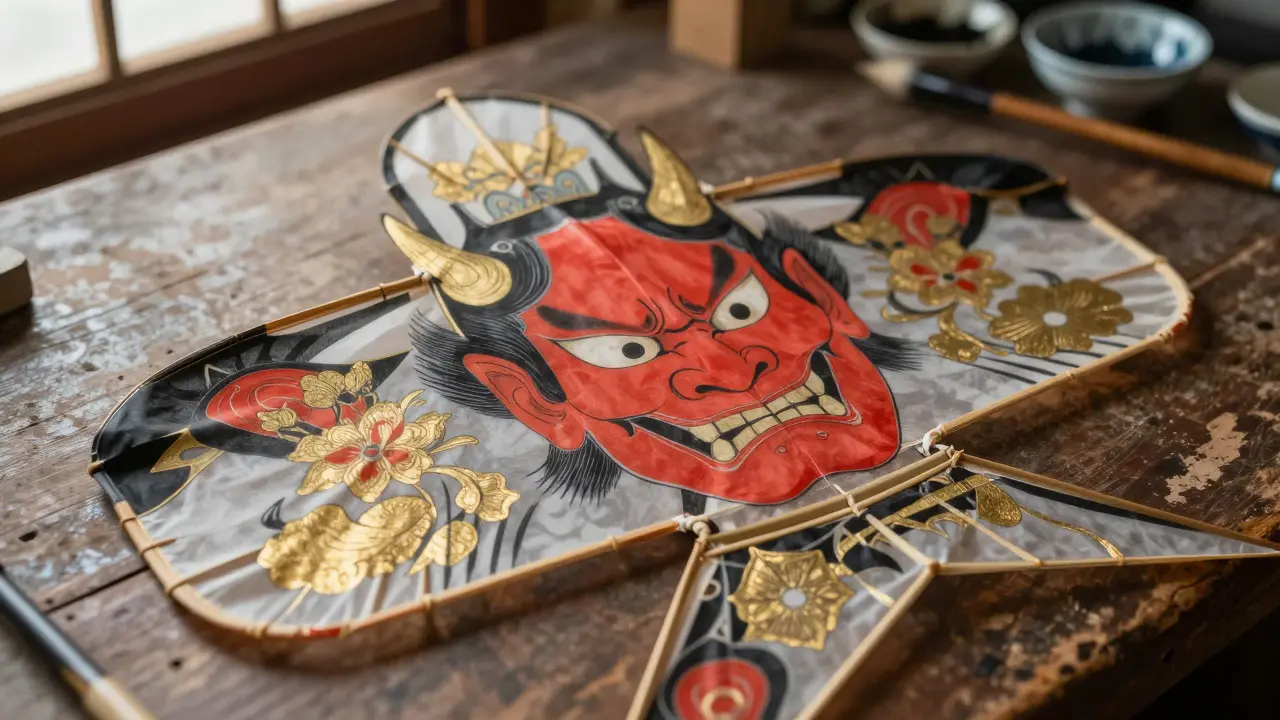
Imagine a sky filled not with drones or commercial ads, but with giant, hand-painted paper figures dancing in the wind. This is the world of Japanese kites, known locally as takobozu (octopus) or more broadly as takumi. While modern recreational kites are often lightweight plastic, traditional Japanese kites are heavy, structural works of art that require significant skill to fly. They are not just toys; they are cultural artifacts that reflect history, religion, and local identity.
For centuries, these kites served specific purposes. Some were used to pray for good harvests, others to ward off evil spirits, and some, like the massive Rokkaku kites, were literally weapons of war. Understanding this heritage requires looking past the simple diamond shape we see in parks today. It means diving into the brushstrokes of Edo-period painters, the strategic mechanics of aerial battles, and the distinct dialects of kite-making found across different prefectures.
The Artistic Roots: Edo Period Paintings and Design
To understand why Japanese kites look the way they do, you have to look at the woodblock prints of the Edo period (1603-1867). During this time, urban culture flourished in cities like Tokyo (then Edo) and Osaka. Kites became popular leisure items for the merchant class, who had the money but no need for land ownership.
Artists began painting kites with intricate designs that mirrored the ukiyo-e (pictures of the floating world) aesthetic. You will frequently see motifs from Kabuki theater, Buddhist deities, and seasonal flowers. For example, a kite might feature the face of a famous actor or a fierce demon from folklore. These weren't random decorations; they were believed to carry spiritual power. A kite painted with a dragon was thought to bring rain, while one with a phoenix symbolized longevity.
The construction method also evolved during this era. Traditional Japanese kites use a framework of bamboo laths, which provides flexibility rather than rigid stiffness. This allows the kite to bend in strong winds without breaking. The surface is made from mulberry paper (washi), which is stronger and more water-resistant than standard Western paper. When you hold an authentic Edo-style kite, you feel the weight and texture immediately-it feels less like a toy and more like a scroll painting that happens to fly.
Rokkaku Kites: The Aerial Battles of History
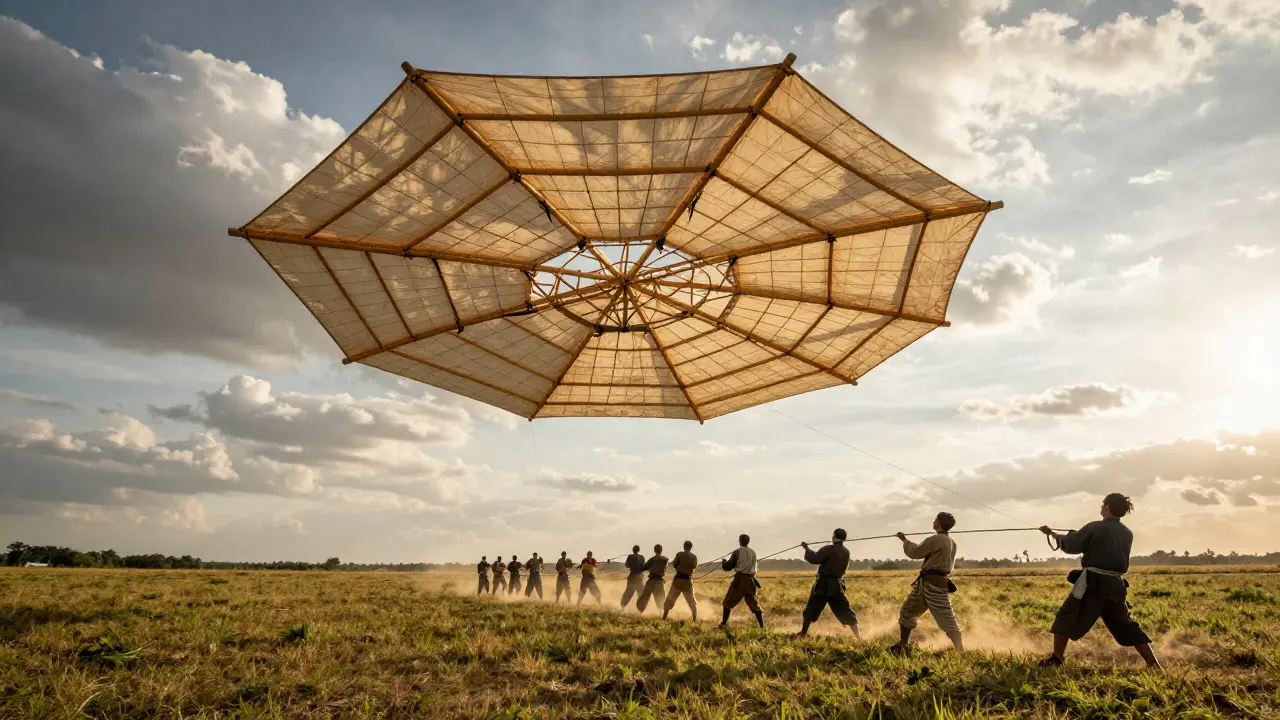
If standard kites are artistic expressions, Rokkaku kites are tactical instruments. The word rokkaku translates to "six-sided," referring to the hexagonal shape of the frame. Historically, these kites were used in military conflicts, particularly during the Sengoku period (1467-1568) and later in the Meiji era.
The primary purpose of a Rokkaku kite was not entertainment but warfare. They were designed to be large enough to carry payloads. In ancient times, warriors would attach ropes to the kites and launch them over enemy fortifications. Once the rope reached the ground on the other side, soldiers could pull it taut and cross it to attack enemies who thought their walls were safe. Later, they were used to drop incendiary devices or simply to disrupt enemy formations by blocking the sun or creating noise.
Flying a Rokkaku kite is significantly harder than flying a standard diamond kite. Because of its size and complex bracing, it requires a steady, strong wind. Today, enthusiasts gather in open fields to recreate these historical flights. The experience is communal; it often takes several people to launch a single large Rokkaku. Watching one ascend is a humbling reminder of the engineering ingenuity required before modern aerodynamics existed.
Regional Styles: From Kyoto to Hokkaido
Japan is an archipelago with diverse climates and cultures, and this diversity is reflected in its kite traditions. There is no single "Japanese kite"; instead, there are distinct regional styles that vary in shape, material, and symbolism.
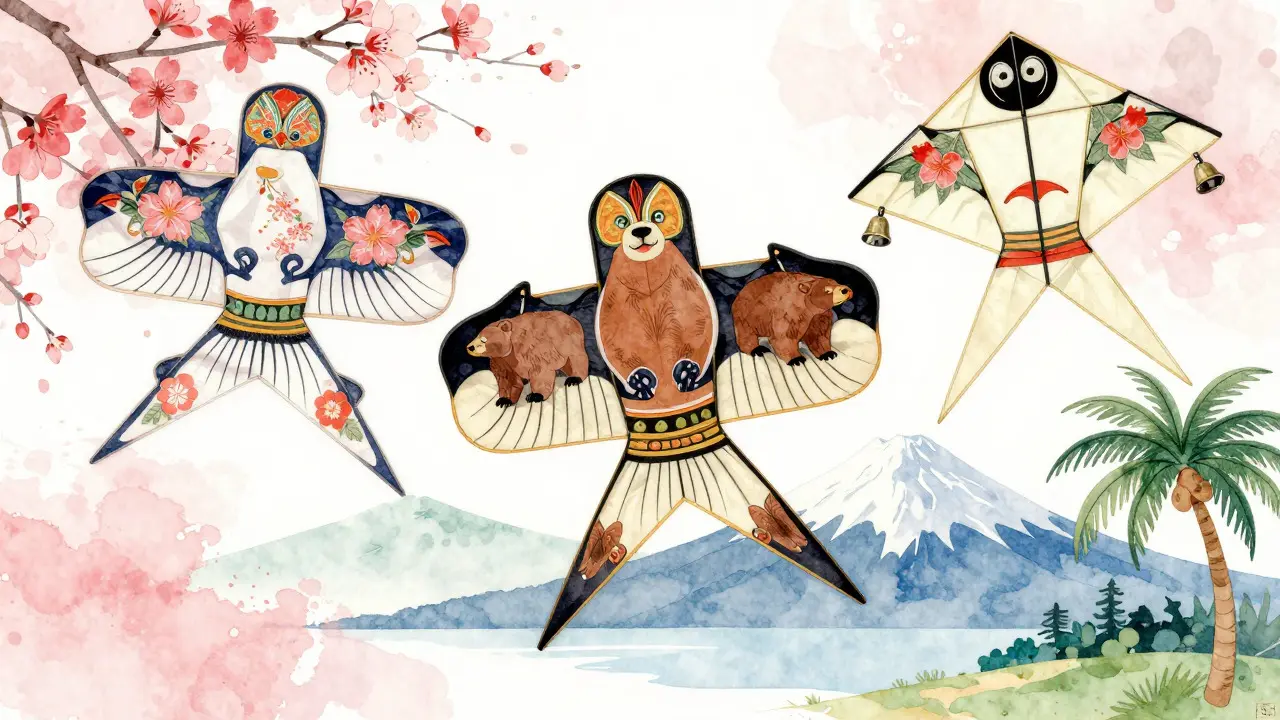
- Kyoto Style: Known for elegance and fine detail. These kites often feature delicate floral patterns and are associated with the imperial court's aesthetic preferences. They tend to be smaller and more refined.
- Hokkaido Style: Due to the colder climate and stronger winds, kites here are built for durability. They are often larger and sturdier, designed to withstand harsh winter conditions. The designs may include local wildlife like cranes or bears.
- Okinawa Style: Okinawan kites, known as mabui, are unique because they often incorporate musical elements. Some designs include small bells or strings that create sound when the wind blows, turning the kite into an instrument.
- Tokyo (Edo) Style: As mentioned earlier, these focus heavily on theatrical and mythological themes. They are bold, colorful, and often feature exaggerated facial expressions.
Each region has its own festivals where specific kite types are flown. For instance, in some areas, kites are flown specifically during the New Year to drive away bad luck. In others, they are part of summer festivals celebrating the arrival of warm weather. Knowing the regional context helps you appreciate the subtle differences in craftsmanship and intent.
Construction Techniques: Bamboo, Washi, and Glue
Making a traditional Japanese kite is a multi-step process that requires patience. It is not something you can rush. The core materials are bamboo, mulberry paper, and natural glue (often made from fish skin or plant starch).
- Frame Preparation: Bamboo strips are soaked, bent, and dried to achieve the desired curvature. The joints are tied with silk thread, which is strong yet flexible.
- Paper Application: Mulberry paper is cut and glued to the frame. The paper must be applied evenly to avoid air leaks that could destabilize the kite.
- Painting: Artists use ink and mineral pigments to paint the design. The colors are vibrant but durable, chosen to stand out against the blue sky.
- Stringing: The bracing pattern is critical. Incorrect stringing can cause the kite to spin or crash. Master artisans spend years perfecting their tension calculations.
This process highlights the difference between mass-produced recreational kites and traditional ones. A store-bought kite might take five minutes to assemble. A traditional Japanese kite can take weeks to make. That time investment is what gives the object its value-not just monetary, but cultural and spiritual.
Modern Relevance: Preserving a Living Tradition
You might wonder if these kites are still relevant in the age of smartphones and electric planes. The answer is yes, but the context has shifted. Today, Japanese kites are primarily preserved through festivals, museums, and dedicated hobbyist groups. Organizations like the Japan Kite Association work to document techniques and train new artisans.
For hobbyists, flying a traditional kite offers a meditative break from digital life. The process of preparing the kite, checking the wind, and watching it climb requires full attention. There are no apps to tell you if your angle is correct; you have to feel the line in your hands. This tactile connection is something many modern flyers miss.
Additionally, the art of kite painting has influenced contemporary graphic design and illustration. Many modern artists cite Edo-period kite designs as inspiration for their work. So, even if you never fly one, the visual language of Japanese kites continues to permeate global pop culture.
| Feature | Traditional Japanese Kite | Modern Recreational Kite |
|---|---|---|
| Material | Bamboo, Mulberry Paper | Aluminum/Fiberglass, Nylon/Ripstop |
| Weight | Heavier (requires strong wind) | Lighter (flies in light breeze) |
| Assembly Time | Hours to Days | Minutes |
| Cultural Significance | High (ritual, artistic, historical) | Low (purely recreational) |
| Durability | Fragile (paper tears easily) | Robust (resistant to wear) |
Getting Started: Tips for Enthusiasts
If you are interested in experiencing this heritage yourself, start small. You don't need to build a full-scale Rokkaku kite on day one. Look for kits that provide pre-cut bamboo frames and printed washi paper. This allows you to practice the gluing and stringing techniques without the pressure of sourcing raw materials.
When choosing your first kite, consider the wind conditions in your area. If you live in a breezy coastal city, a slightly larger kite with a sturdy frame will work well. If you are in a sheltered valley, stick to smaller, lighter designs. Always check the forecast; traditional kites perform best in consistent winds of 10-15 mph. Gusts can be dangerous for fragile paper surfaces.
Finally, join a community. Local kite clubs or online forums dedicated to traditional flying can offer invaluable advice. Sharing stories about your flights and repairs connects you to a lineage of makers that stretches back centuries. Whether you are an artist, a historian, or just someone who loves the outdoors, there is a place for you in this enduring tradition.
What is the main difference between a Rokkaku kite and a standard diamond kite?
A Rokkaku kite is hexagonal (six-sided) and historically used for military purposes like carrying ropes or payloads. A standard diamond kite is typically four-sided and used for recreation. Rokkaku kites are generally larger and require more complex bracing to maintain stability in high winds.
Why are traditional Japanese kites made of paper?
Mulberry paper (washi) is used because it is strong, lightweight, and translucent, allowing light to pass through painted designs. It was historically more accessible and affordable than synthetic fabrics, which did not exist. Additionally, paper has a cultural significance in Japanese art and ritual.
Can I fly a traditional Japanese kite in light winds?
It is difficult. Traditional kites are heavier due to their bamboo frames and paper surfaces. They typically require steady winds of at least 10 mph to lift off. In very light winds, they may stall or fall. Modern lightweight kites are better suited for calm days.
Where can I find authentic Japanese kite paintings?
You can find authentic or reproduction kite paintings in specialized craft shops, museum gift stores in Japan, or through online marketplaces specializing in Asian antiques. Look for sellers who specify the use of washi paper and traditional pigments to ensure authenticity.
Do Japanese kites have religious significance?
Yes. Many kites are flown during Shinto rituals to purify the air or pray for blessings. Designs often feature deities or protective symbols. Flying a kite is seen as a way to connect the earthly realm with the divine, sending prayers upward with the wind.