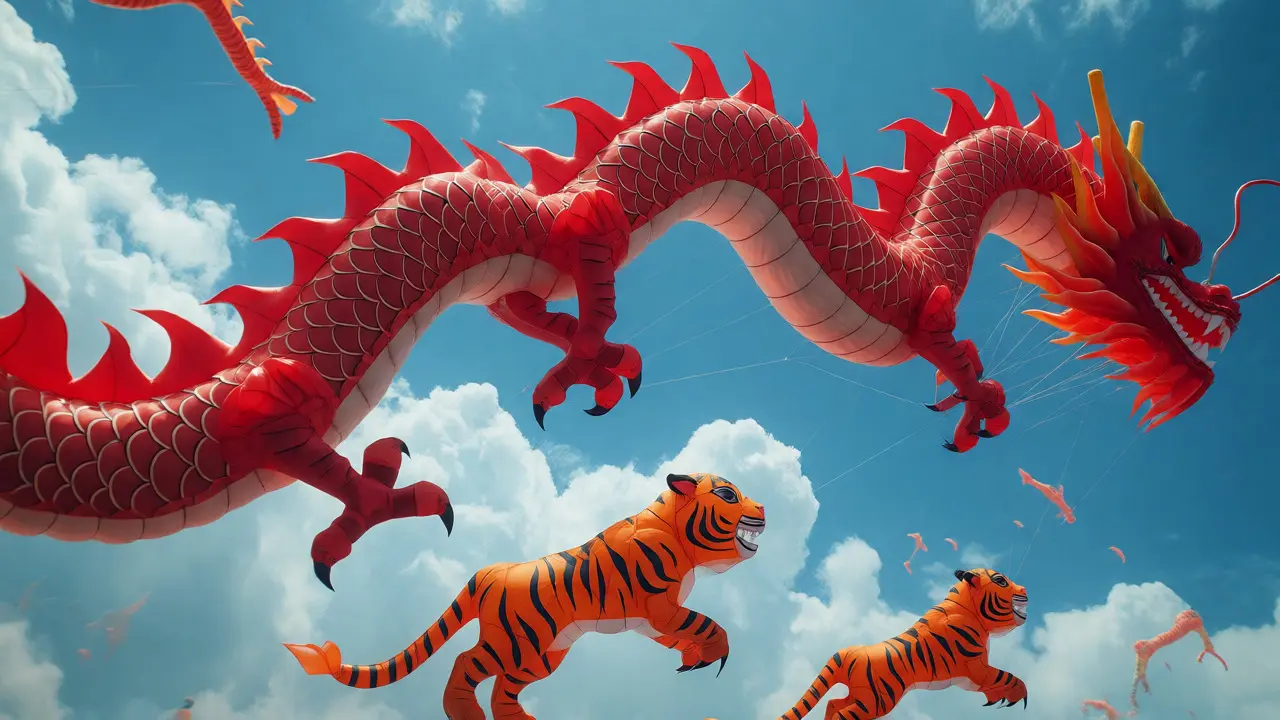
You’re standing in a field, looking up. The sky is dotted with color, but it’s not just random shapes floating on the wind. That massive red figure soaring above you? It’s a dragon. The fierce orange beast chasing it? A tiger. And those delicate silhouettes darting between them? Eagles or phoenixes. If you think kites are just toys for windy afternoons, you’re missing half the story. For centuries, these objects have been cultural carriers, broadcasting myths, wishes, and warnings through the air.
Why do certain animals dominate kite designs across Asia and beyond? Why does a tiger mean luck in one culture but danger in another? This isn’t about aerodynamics; it’s about semiotics. When a maker chooses a motif, they are choosing a message. Whether you’re a collector, a flyer, or just someone who appreciates the art form, understanding what these symbols mean changes how you see the sky.
The Dragon: Power, Rain, and Imperial Authority
Start with the biggest presence in the sky: the Dragon. In Western mythology, dragons are often hoarders of gold, breathing fire and terrorizing villages. But look East, specifically at Chinese and Vietnamese traditions, and the narrative flips completely. Here, the dragon is a benevolent ruler of water and weather. It controls the rains, which means it controls the harvest. A dragon kite isn’t just decoration; it’s a prayer for agricultural abundance.
In imperial China, the dragon was strictly tied to the Emperor. The number of claws mattered. Five-clawed dragons were reserved for the throne; four-clawed versions might appear on nobility’s robes. While commoners couldn’t fly five-clawed dragons without risking punishment, they flew simplified versions to invoke protection. Today, when you see a long, serpentine dragon kite undulating in the wind, you’re watching a representation of fluid power. The movement of the kite mimics the dragon swimming through clouds. It’s kinetic storytelling.
But it’s not just about rain. In many festivals, like the Weifang International Kite Festival in China, releasing a dragon kite symbolizes letting go of bad luck and inviting good fortune. The length of the tail often represents longevity. If the kite crashes, some believe the bad luck stays on the ground, while the spirit soars. It’s a tangible interaction with abstract concepts of fate.
The Tiger: Warding Off Evil and Asserting Strength
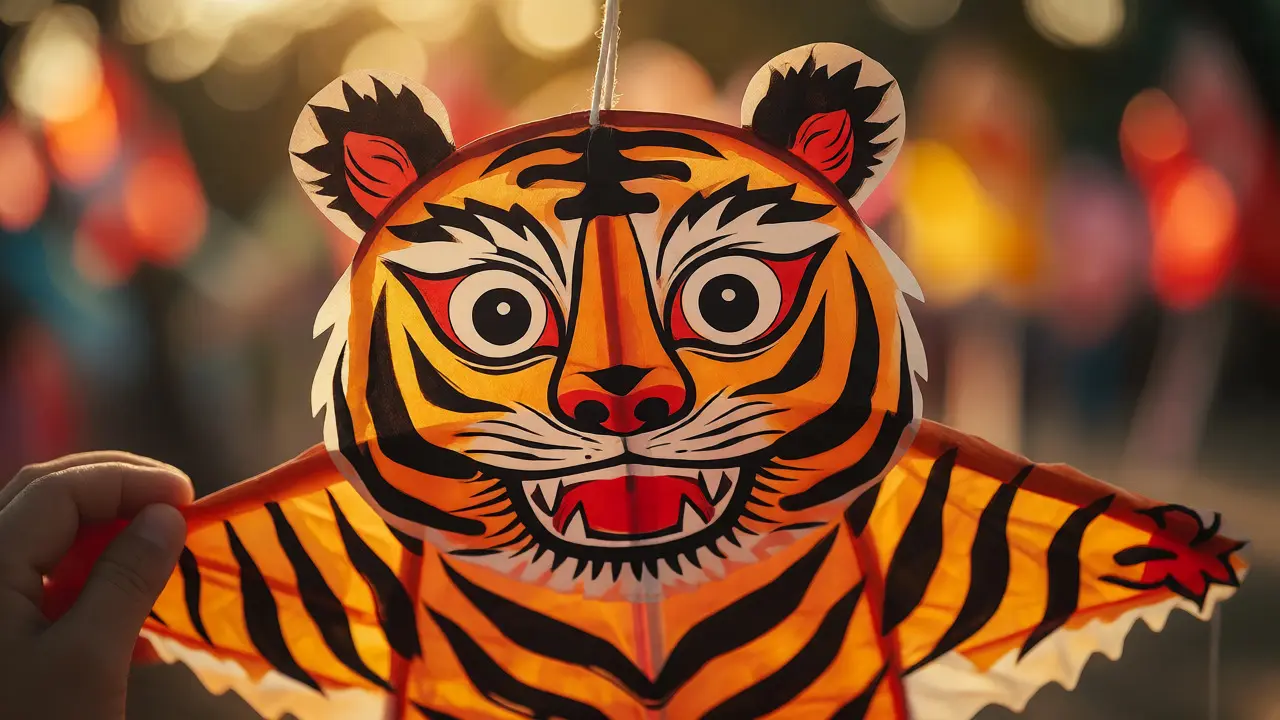
If the dragon rules the heavens, the Tiger guards the earth. In East Asian folklore, particularly in China, Korea, and Japan, the tiger is the king of beasts, possessing yang energy that drives away yin spirits and evil ghosts. You’ll often see tiger motifs on children’s kites. Why? Because kids are considered vulnerable to spiritual harm. Flying a tiger kite acts as a protective amulet, asserting dominance over unseen threats.
Notice the design details. Traditional tiger kites rarely depict the animal sleeping or passive. They are usually shown mid-roar, eyes wide, muscles tense. This aggression is intentional. It’s meant to intimidate malevolent forces. In Korean tradition, the tiger is also associated with mountain spirits (Sansin). A tiger kite flying high connects the earthly realm with the mountain deities, asking for their blessing on the family below.
There’s a practical layer here too. Historically, tigers were real threats to rural communities. By depicting them on kites, people engaged in a psychological conquest. Taming the image of the predator gave them a sense of control over their environment. It’s a fascinating example of how art serves as coping mechanism. When you fly a tiger kite, you aren’t just playing; you’re participating in a ritual of protection that dates back millennia.
Birds: Freedom, Hierarchy, and Divine Messengers
Birds are the most versatile category in kite symbolism because they share the same medium as the kite itself: the air. However, not all birds carry the same weight. The specific species chosen dictates the message.
Eagles represent authority, vision, and masculine strength. In many cultures, the eagle is the messenger of the chief god. Flying an eagle kite signifies ambition and the desire to rise above mundane problems. It’s a status symbol in the sky.
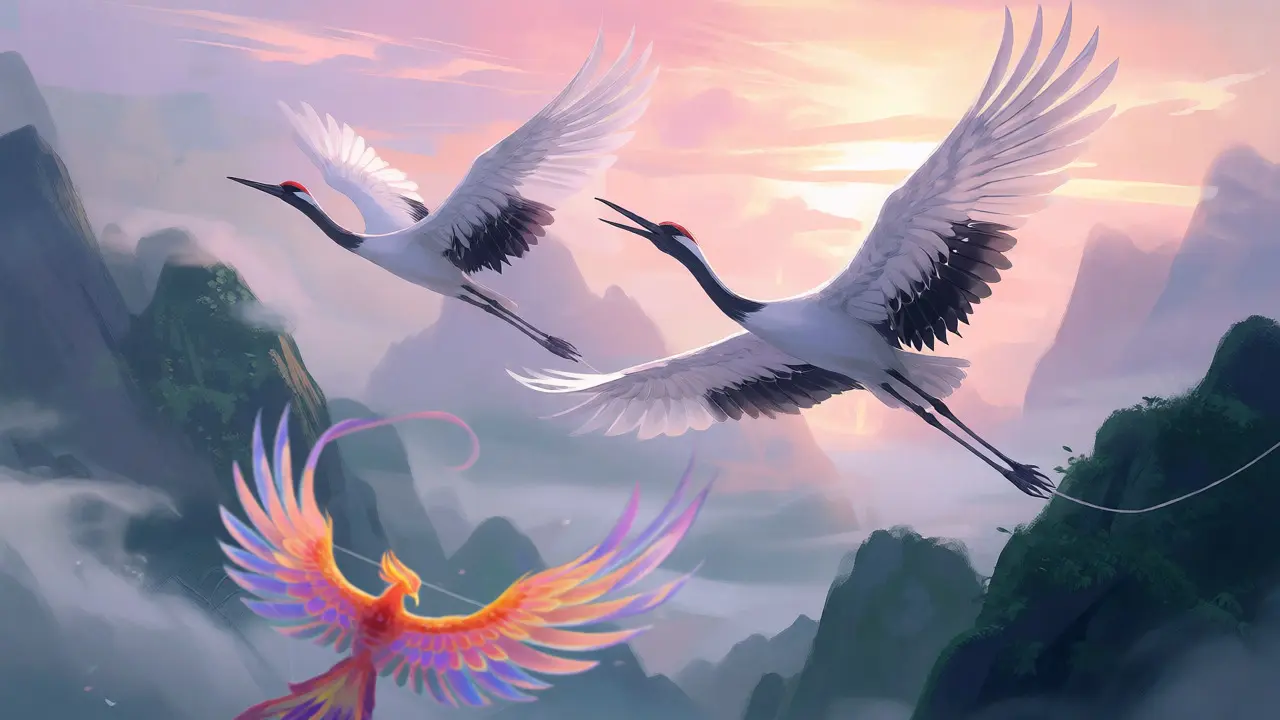
Then there’s the Crane. In Japanese and Chinese art, the crane symbolizes longevity and peace. Legend says cranes live for a thousand years. Therefore, a crane kite is a common gift for elders or a wish for long life. Its graceful, slow flight pattern reinforces this meaning-it doesn’t rush; it endures.
And we can’t ignore the Phoenix. Unlike the Western phoenix that burns and rises, the Eastern Fenghuang is a symbol of virtue, grace, and the union of yin and yang. Often paired with the dragon (dragon for the emperor, phoenix for the empress), a phoenix kite represents harmony and high moral character. It’s frequently seen in wedding contexts or celebrations of new beginnings.
Comparing the Big Three: What Do They Signal?
It helps to break down these motifs side-by-side to understand why a maker might choose one over the other. Are you looking for protection? Or are you seeking prosperity? The intent shifts the choice.
| Motif | Primary Cultural Origin | Core Symbolism | Typical Use Case |
|---|---|---|---|
| Dragon | China, Vietnam, Thailand | Rain, Imperial Power, Good Fortune | Festivals, Agricultural Prayers, Status Display |
| Tiger | China, Korea, Japan | Protection, Yang Energy, Courage | Children’s Kites, Warding off Evil, New Year |
| Eagle | Global (Indigenous Americas, Europe, Asia) | Ambition, Vision, Divine Connection | Competitions, Personal Achievement, Spiritual Rituals |
| Crane | Japan, China | Longevity, Peace, Grace | Greetings for Elders, Peace Festivals, Artistic Flights |
| Phoenix | China, Japan | Rebirth, Virtue, Harmony | Weddings, New Beginnings, Royal Ceremonies |
Regional Nuances: Same Animal, Different Message
Context is everything. A tiger in India has different connotations than a tiger in China. In Hindu mythology, the tiger is the vehicle (vahana) of Durga, the goddess of power. So, in parts of South Asia, a tiger motif might invoke divine feminine power rather than just brute strength. Similarly, the eagle in Native American traditions is a sacred connection to the Creator, often requiring specific protocols for handling feathers used in decorations. Using an eagle motif without understanding this respect can feel tone-deaf.
Even within China, regional styles vary. Beijing kites tend to be more ornate and symmetrical, reflecting imperial aesthetics. Tianjin kites are known for their "hard wing" structures and intricate painting, often focusing on literary figures or historical scenes alongside animals. Shandong kites are simpler, focusing on flight performance and bold colors. When you buy or build a kite, knowing its origin adds a layer of authenticity to its symbolism.
Consider the butterfly. While not in our "big three," it’s worth noting that in Chinese culture, butterflies represent love and joy, stemming from the famous legend of Liang Shanbo and Zhu Yingtai. In contrast, in some Mexican traditions, monarch butterflies arriving during Day of the Dead signal the return of ancestors’ souls. Same insect, entirely different emotional resonance based on geography.
How to Choose Your Next Kite Based on Meaning
So, how do you apply this knowledge? If you’re buying your first decorative kite, don’t just pick the prettiest one. Ask yourself what you want to project or invite into your space.
- For Protection: Go for a Tiger or a mythical Beast (like the Pixiu). Hang it near the entrance or fly it during times of stress.
- For Career Success: An Eagle or Dragon is appropriate. These symbols align with rising power and visibility.
- For Family Health: A Crane or Tortoise motif works best. These emphasize endurance and stability.
- For Romance: Look for Mandarin Ducks or Phoenixes. These are classic symbols of paired happiness.
If you’re making your own kite, research the specific cultural background of the animal you choose. Don’t mix symbols haphazardly. A dragon and a tiger together can signify a battle between elements, which might not be the vibe you want for a peaceful afternoon. Usually, harmonious pairs work better-like a Dragon and Phoenix, or two Cranes.
Preserving Tradition in Modern Design
Modern kite makers are blending traditional symbolism with contemporary materials. You’ll see carbon fiber frames holding up silk-painted dragons, or LED-lit tigers flying at night. Does this dilute the meaning? Not necessarily. The core intent remains. As long as the maker respects the history behind the motif, innovation keeps the culture alive. Static museum pieces gather dust; kites move. They interact with the wind, the crowd, and the light. That dynamism is part of their symbolic power.
Next time you see a kite festival, pause before you cheer for the highest flyer. Look closer. Is that a tiger protecting a child’s dream? Is that a dragon calling for rain? The sky is a canvas, and these motifs are the brushstrokes of human hope. Understanding them makes the view infinitely richer.
Why are dragons so popular in kite designs?
Dragons are central to East Asian cosmology, representing control over water and weather. Since agriculture depended on rain, flying dragon kites was originally a ritual to ensure good harvests. Over time, it evolved into a broader symbol of power, luck, and imperial authority, making it a dominant motif in kite culture.
What does a tiger kite symbolize?
In many Asian cultures, the tiger is a guardian against evil spirits and bad luck due to its strong yang energy. Tiger kites are often flown for children to protect them or during New Year festivals to ward off negative influences for the coming year.
Are bird kites only about freedom?
No, the meaning depends on the specific bird. Eagles represent ambition and divine messengers, cranes symbolize longevity and peace, and phoenixes denote rebirth and virtue. Each species carries distinct cultural attributes that influence the kite's intended message.
Can I mix different animal symbols on one kite?
You can, but it requires care. Traditionally, certain pairings are auspicious (like Dragon and Phoenix for harmony), while others might imply conflict (like Dragon and Tiger battling). Researching traditional combinations ensures your kite sends a coherent message rather than a chaotic one.
Do kite symbols change meaning by region?
Yes, significantly. A tiger might mean protection in China but relate to a deity's vehicle in India. An eagle may symbolize national pride in the US but hold spiritual significance in Indigenous cultures. Always consider the cultural context of the design if you value authenticity.