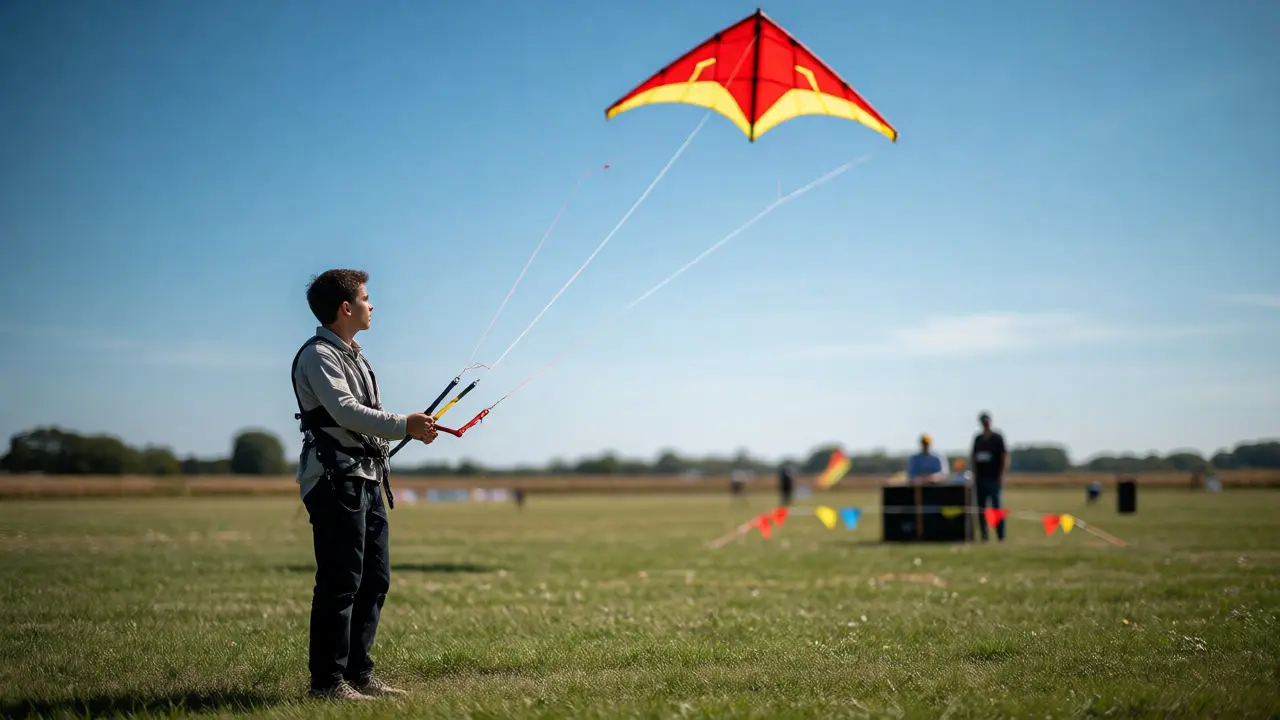
You’ve mastered the figure-eight. You can land your dual-line stunt kite on a dime. But when you show up to an International Sport Kite Association (ISK) event, you might feel like you walked into a different universe. The wind is steady, the lines are taut, and everyone else seems to know exactly what they’re doing while you’re wondering if that guy just got disqualified for breathing wrong.
The truth? ISK rules aren’t as arcane as they look. They’re designed to keep things fair, safe, and fun. Once you understand the basic framework-classes, judging criteria, and time limits-you’ll see that the complexity is mostly in the execution, not the rulebook. This guide breaks down exactly how sport kite competitions work so you can stop guessing and start scoring.
Understanding the Core Classes
Before you worry about scoring, you need to know where you fit. The ISK divides competitors into specific categories based on equipment and pilot count. Showing up with the wrong gear or in the wrong class is the fastest way to get penalized before you even launch.
| Class Name | Equipment | Pilot Count | Key Focus |
|---|---|---|---|
| Dual Line Precision | One dual-line stunt kite | 1 Pilot | Accuracy, symmetry, and control |
| Dual Line Freestyle | One dual-line stunt kite | 1 Pilot | Creativity, music sync, difficulty |
| Quad Line Precision | One quad-line stunt kite | 1 Pilot | Advanced maneuvers, static holds |
| Team Flying | Multiple kites (usually 4-8) | 2+ Pilots | Synchronization and formation |
| Novice | Dual line only | 1 Pilot | Basic skills, no prior wins |
If you’re new, start with Novice. It’s strictly for pilots who haven’t won a medal at a major ISK event yet. This keeps the playing field level. If you’ve been flying for ten years but never competed, you’re still eligible for Novice. Don’t let your ego push you into Open Dual Line Precision too early; you’ll be competing against people who have drilled their routines for thousands of hours.
The Anatomy of a Routine
In precision classes, you don’t just fly around looking cool. You perform a specific sequence of moves called a "routine." Think of it like a gymnastics floor routine. There are required elements, and there are optional elements. Missing a required element is a hard penalty-it doesn’t matter how pretty your loop looked if you skipped the mandatory landing.
Most precision routines last between 3 and 5 minutes. The judges have a scorecard. They aren’t watching the whole sky; they are ticking boxes. For example, in Dual Line Precision, you might have a section for "Symmetry." If you do a left-hand axel and then a right-hand axel, the judge compares them. Did the second one drift? Was it slower? That’s a deduction.
- Required Moves: These are non-negotiable. Check the current year’s rulebook because these change slightly every season.
- Optional Moves: Here’s where you earn points. High-difficulty moves like "statics" (holding the kite perfectly still in the air) or complex reversals yield higher scores if executed cleanly.
- The Landing: This is critical. In many classes, the routine ends with a specific landing technique. Failing to land within the designated zone or crashing during the final seconds can wipe out half your score.
Freestyle is different. There are no required moves. Instead, you choreograph a routine to music. Judges look for creativity, use of space, and synchronization with the beat. You can drop the kite, restart it, and keep going without losing all your points, provided you recover gracefully. It’s more forgiving in terms of structure but harder to master artistically.
How Judging Actually Works
People often ask, "Is judging subjective?" Yes, but it’s structured subjectivity. Most ISK events use a panel of three to five judges. They score independently, and the highest and lowest scores are sometimes dropped (depending on the specific event rules) to remove outliers. Then the remaining scores are averaged.
Judges look at four main pillars:
- Execution: Did you do the move correctly? Was the line tension proper? Did the kite wobble?
- Difficulty: How hard was the move? A simple circle is worth less than a double-spin reversal.
- Artistry (Freestyle only): Does the movement match the music? Is the flow logical?
- Time Management: Did you finish within the time limit? Going over time usually results in automatic deductions per second.
Here’s a pro tip from the field: Judges sit in a specific zone. If you fly outside the "flying box"-an imaginary rectangle defined by the wind direction and distance from the judges-you lose points. It’s not about being fancy; it’s about staying visible and controlled within their view.
Wind and Weather: The Invisible Opponent
Kite flying is entirely dependent on wind. ISK rules account for this, but they don’t guarantee perfect conditions. Events typically run in winds between 6 mph and 15 mph. Below 6 mph, most stunt kites won’t generate enough lift. Above 15 mph, the lines cut through the air too fast, making precise control nearly impossible for standard setups.
If the wind drops below the minimum threshold, organizers may pause the event. If it gusts wildly, they might cancel the round. Why? Because fairness matters more than speed. If one pilot gets a lucky gust and another flies in dead air, the scores become meaningless. As a competitor, bring multiple kites. A light-wind kite for those breezy mornings and a heavy-frame kite for afternoon gusts. Being unprepared for wind changes is a self-inflicted wound.
Team Flying: Synchronicity Under Pressure
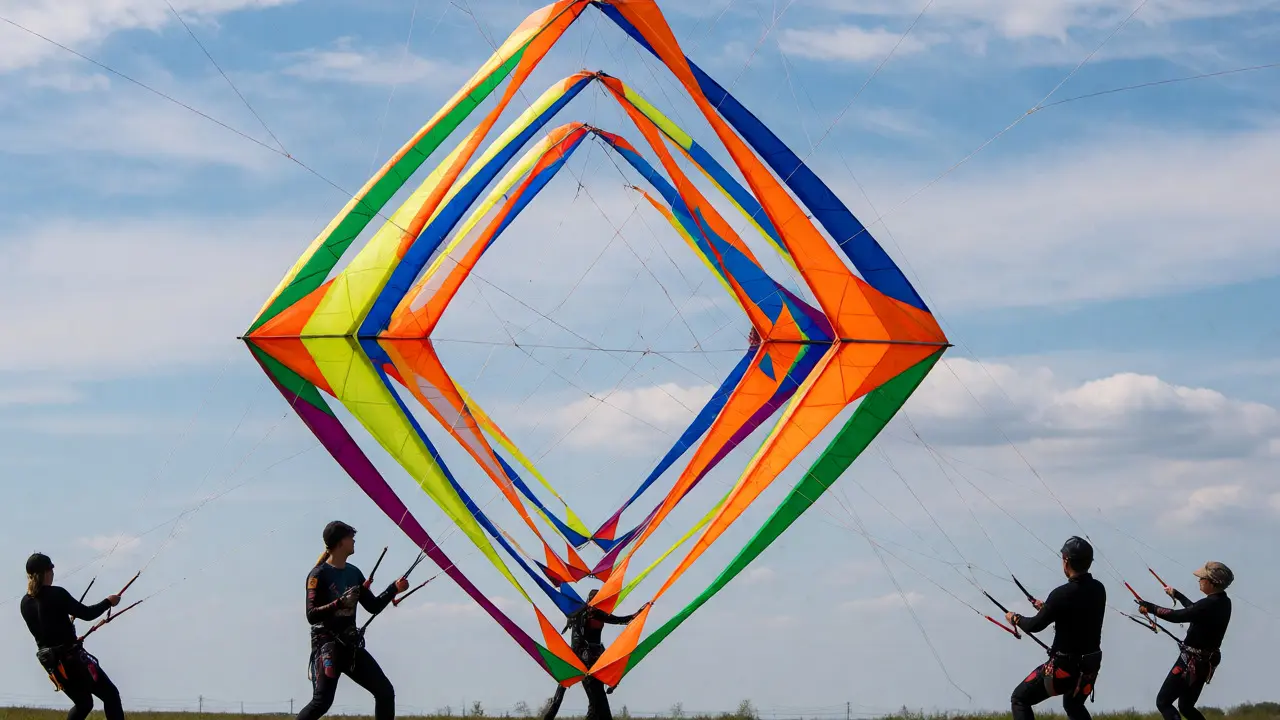
Team flying is arguably the most visually stunning part of sport kite competitions. Usually involving four to eight pilots, teams fly identical or complementary kites in formation. The rules here focus heavily on spacing and timing.
If two kites collide, both teams usually take a penalty. If one pilot crashes, the entire team’s score suffers because the formation breaks. Practice isn’t just about individual skill; it’s about communication. Teams often use hand signals or verbal cues to coordinate turns. Remember, you’re not just flying a kite; you’re managing a moving object in a shared airspace. Respect the other pilots’ space. Cutting someone off mid-maneuver is a quick way to make enemies and lose points.
Penalties and Disqualifications
Nothing kills momentum like a disqualification. Most DQs happen for preventable reasons. Here are the big ones to watch out for:
- Line Tangling: If your lines tangle during the routine, you usually have to stop, untangle, and restart. This eats up time and looks sloppy.
- Out of Bounds: Flying past the designated boundary markers. Keep your eyes on the flags.
- Wrong Equipment: Using a modified kite that doesn’t meet class specs. For example, adding extra weight to a frame without approval.
- Assistance: In solo classes, no one can touch your kite or lines once the timer starts. Not even to help you launch. If your friend hands you the handles, that’s a penalty.
Crashing isn’t always fatal. In freestyle, you can crash and recover. In precision, a crash usually means zero points for that specific maneuver, but you can continue if you regain control quickly. However, repeated crashes suggest a lack of control, which drags down your overall execution score.
Preparing for Your First Competition
So, you’re ready to sign up. What should you do next? First, read the current year’s ISK Rulebook. It’s free online and updated annually. Second, practice under pressure. Fly your routine while someone watches you. The nerves hit differently when there’s an audience.
Bring spare parts. Lines snap. Handles break. Wind tears spars. Have a repair kit taped to your bag. Also, arrive early. Setup takes time. You need to check your wind window, test your lines, and calm your nerves. Rushing leads to mistakes.
Finally, talk to other competitors. The sport kite community is incredibly welcoming. Ask veterans about their kite choices for current wind conditions. They’ll tell you if your setup is too light or too heavy. This social aspect is half the fun. You’re joining a group of people who obsess over the aerodynamics of ripstop nylon. Embrace it.
What happens if I miss a required move in my routine?
If you skip a required move, you receive a significant point deduction, often resulting in a score of zero for that specific section of the routine. You cannot go back and redo it once you've moved past it. Always double-check your routine card before launching.
Can I use any type of music for freestyle?
Yes, but it must be appropriate for a general audience. Avoid explicit lyrics or extremely loud volumes that drown out the ambient noise. Some events require you to submit your audio file beforehand to ensure compatibility with their sound system.
Are quad-line kites harder to fly than dual-line kites?
Generally, yes. Quad-lines offer more control and stability in high winds but require independent control of four lines, which demands greater coordination. Many pilots start on dual-lines before transitioning to quads for advanced precision classes.
How long does a typical ISK competition day last?
A full day of competition usually runs from 9 AM to 5 PM, depending on the number of entrants and weather delays. Qualifying rounds happen in the morning, with finals in the afternoon. Be prepared to stand outside for several hours.
Do I need to wear specific clothing?
There is no strict uniform code, but most competitors wear athletic clothing suitable for outdoor activity. Bright colors are recommended so judges and spectators can easily track your position relative to the kite. Comfortable shoes are essential since you'll be standing on grass or sand for long periods.