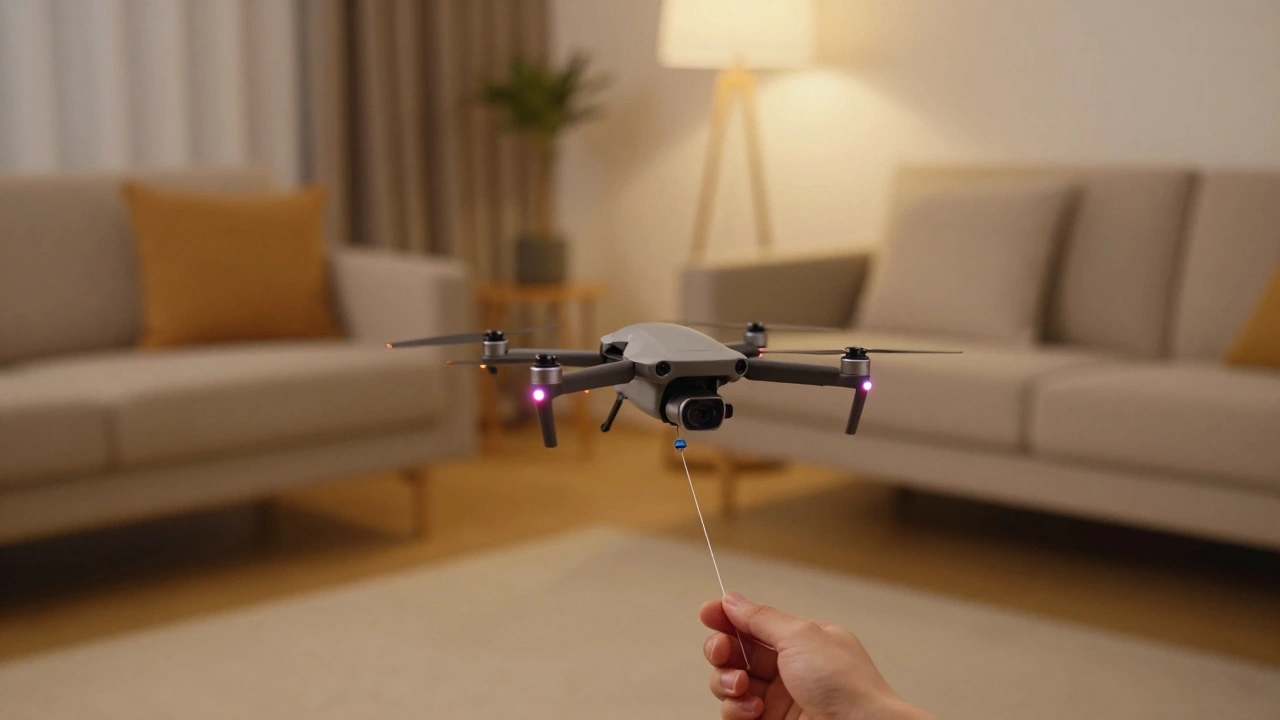
You stand in the middle of your living room, holding a colorful diamond shape attached to a spool. You run across the carpet. Nothing happens. The kite just drags behind you like a dead leaf. This is the frustrating reality of trying to fly traditional outdoor kites indoors. But there is a whole category of flying toys designed specifically for this exact scenario. They don't need a breeze. They don't need a storm. They work in absolute stillness.
We are talking about indoor zero-wind kites. These aren't just smaller versions of park kites. They operate on completely different physics. If you want to fill your home with soaring shapes without opening a single window, you need to understand how these devices generate lift when the air refuses to move.
The Physics of Lift in a Vacuum
To understand why your outdoor kite fails inside, you have to look at Bernoulli's principle. Traditional kites rely on wind speed to create a pressure difference between the top and bottom of the wing. Fast air over the top means low pressure; slow air under the bottom means high pressure. That pressure push lifts the kite. Indoors, that wind speed is zero. Therefore, lift is zero.
Zero-wind kites solve this by generating their own airflow or using mechanical propulsion. There are two main ways they achieve flight in still air:
- Propulsion-Driven Lift: These devices have small electric motors that spin propellers. The spinning blades force air downward, pushing the device upward according to Newton's third law. Every action has an equal and opposite reaction.
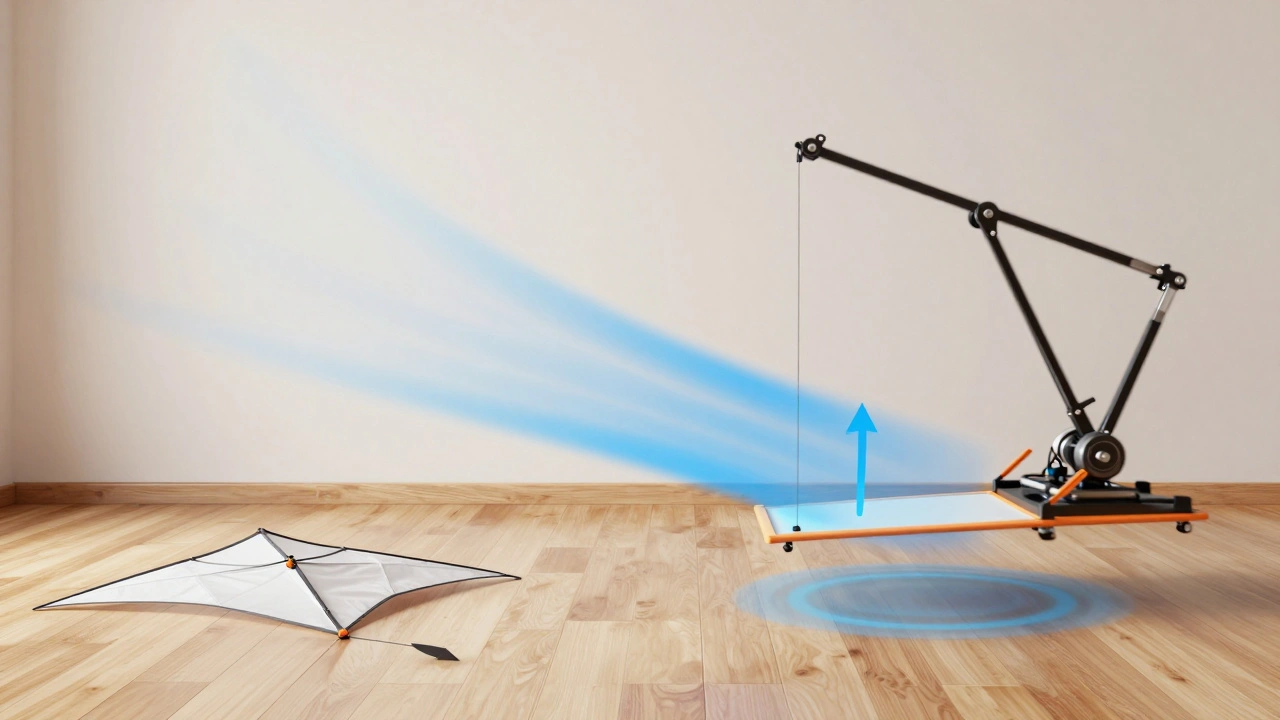
- Centrifugal Force Systems: Some mechanical systems use a rotating arm to swing a lightweight frame around. The centrifugal force pulls the kite outward and upward, creating tension on the line that mimics wind resistance.
Most modern indoor options fall into the first category. They are essentially mini-drones tethered to a string. This distinction matters because it changes how you handle them. You are not fighting the wind; you are managing battery life and motor heat.
Types of Indoor Flying Devices
Not all indoor flyers are created equal. When shopping or building, you will encounter three distinct types. Each serves a different purpose and skill level.
| Type | Power Source | Skill Level | Best For |
|---|---|---|---|
| Tethered Micro-Drones | Lithium Battery | Beginner | Quick fun, kids, parties |
| Mechanical Swing Arms | Manual Crank/Motor | Intermediate | Demonstrations, education |
| DIY Fan-Powered Frames | USB/External Power | Advanced | Custom designs, engineering projects |
Tethered Micro-Drones are small, quadcopter-style devices connected to a wrist strap or fixed point via a thin cable. These are the most common "zero-wind kites" sold today. Brands like Ryze and DJI make similar tech, but specialized indoor brands focus on durability and safety. They hover steadily, allowing you to walk around while they stay at eye level.
Mechanical swing arms are less common but fascinating. Imagine a ceiling fan blade, but instead of a solid blade, it holds a lightweight kite frame. As the arm spins, the kite flies in a circle. This setup is great for classrooms because it visually demonstrates centrifugal force. It requires no batteries for the kite itself, only for the base motor.
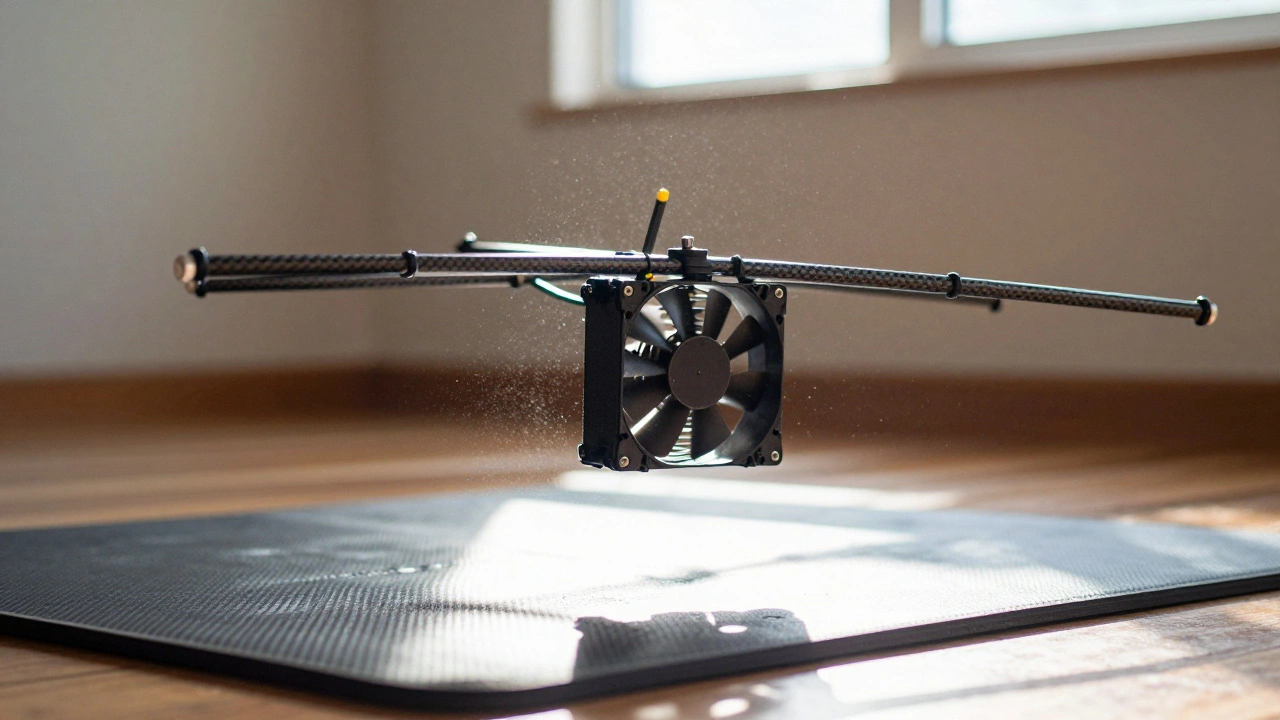
For the tinkerers, DIY fan-powered frames offer the most creativity. You can build a lightweight carbon fiber frame and attach a small computer cooling fan. By adjusting the angle of the fan, you control the pitch and yaw. This approach turns kite flying into an engineering challenge.
Choosing the Right Gear for Your Space
Your living room is not a neutral testing ground. It is a minefield of obstacles. Choosing the right gear depends heavily on your ceiling height and furniture layout.
If you have standard 8-foot ceilings, avoid large propellers. A 5-inch propeller diameter is usually the maximum safe size. Larger props create more downwash, which can knock over lamps, vases, and unsuspecting pets. Look for devices with protective propeller guards. These plastic cages add weight, yes, but they save your decor.
Battery life is the silent killer of indoor sessions. Most micro-drones last between 10 to 15 minutes per charge. Plan accordingly. Buy extra batteries if you want a continuous show. Heat buildup is also a concern. Motors working hard to hold position in still air generate heat. Let the device cool down between flights.
The tether itself matters. Traditional kite line is too thick and heavy for indoor micro-drones. Use ultra-thin fishing line or specialized drone tethers. The line should be strong enough to catch the device if it glitches, but light enough not to drag it down. A 10-meter (33-foot) length is ideal. It gives you enough range to maneuver without tangling around corners.
Setting Up Your Indoor Flight Zone
Flying indoors requires discipline. Unlike outdoors, where the sky is infinite, your boundaries are walls. Before you power up, prepare your space.
- Clear the Floor: Remove rugs that might cause tripping. Clear low tables and chairs. You need a clear radius of at least 6 feet from your standing position.
- Protect the Ceiling: Install a soft landing pad or hang a net if possible. Even with stabilizers, crashes happen. A white ceiling shows every scuff mark.
- Manage Light: Many indoor flyers use optical flow sensors to stabilize position. These sensors need good lighting to "see" the floor. Dim rooms confuse the sensors, causing drift. Ensure your flight zone is well-lit.
- Secure Pets and Kids: Propellers hurt. Keep cats away. They see the hovering object as prey. Supervise children closely. Teach them to keep hands away from the rotors until the device is powered off.
Start with a low-power setting. Most devices have a "beginner mode" that limits speed and altitude. Use it. Get a feel for how the device responds to tilt inputs. In still air, any movement you make with the controller translates directly to motion. There is no wind to dampen errors.
Troubleshooting Common Issues
Even with zero wind, things go wrong. Here are the most frequent problems and how to fix them.
The Device Drifts Sideways: This usually indicates a calibration issue. The internal gyroscope may be misaligned. Place the device on a flat, level surface and perform a sensor calibration before each flight. Check the manufacturer's app for recalibration instructions.
Excessive Vibration: Vibration confuses the stabilization system. Check for loose screws on the propeller mounts. Ensure the propellers are balanced. If one prop is heavier than the other, the device will wobble. Replace damaged props immediately.
Line Tangling: The tether can wrap around the body of the drone during sharp turns. Practice smooth, gradual maneuvers. Avoid rapid 180-degree spins. If the line gets tangled, land immediately. Do not try to free it while airborne.
Weak Lift: If the device struggles to rise, check the battery. Low voltage reduces motor power. Also, check for obstructions near the intake vents. Dust buildup restricts airflow, reducing efficiency.
Safety First: Protecting People and Property
Indoor flying is fun, but it carries risks. A spinning propeller at close range can cause eye injuries. Always wear safety glasses if you are performing maintenance or if the device is unstable. Keep a fire extinguisher nearby if you are experimenting with custom battery setups. Lithium-ion batteries can vent flames if punctured or overheated.
Respect noise levels. Electric motors whine. In a quiet house, this sound can be annoying to neighbors or family members. Choose devices with brushless motors, which are quieter than brushed ones. Limit flight times to reasonable durations.
Never fly near water sources. Spills happen. Water and electronics do not mix. Keep your flight zone away from kitchens and bathrooms.
Next Steps for Enthusiasts
Once you master the basics, you can expand your skills. Try filming with a GoPro mounted on the tethered drone. The stable platform provides unique aerial perspectives of your home. Experiment with different tether lengths. Longer lines allow for wider circles and more dynamic movements.
Join online communities dedicated to indoor FPV (First Person View) flying. These groups share tips on tuning controllers and modifying hardware. You might discover new techniques for maintaining stability in tight spaces.
Consider building your own zero-wind kite. Kits are available online that provide the frame and motor, leaving you to assemble and customize. This hands-on approach deepens your understanding of the mechanics involved.
Can I fly a regular outdoor kite indoors?
No. Regular kites require significant wind speed to generate lift. Indoors, the air is still, so a traditional kite will simply fall. You need a propulsion-based device like a tethered drone or a mechanical swing system to fly indoors.
How long do indoor zero-wind kites last?
Flight time typically ranges from 10 to 15 minutes per battery charge. The lifespan of the device itself depends on usage and care. With proper maintenance, such as checking propellers and storing batteries correctly, these devices can last several years.
Are indoor flying kites safe for children?
They can be, with supervision. Look for models with full propeller guards. Teach children to keep their hands away from moving parts. Always power off the device before handling it. Safety glasses are recommended for younger users.
Do I need a remote control?
Most tethered micro-drones come with a remote control for precise maneuvering. However, some basic models are auto-stabilizing and can be flown by simply holding the tether and letting the device hover. Remotes offer better control for tricks and positioning.
What is the best ceiling height for indoor flying?
A minimum ceiling height of 8 feet is recommended. Higher ceilings provide more room for error and maneuvering. If you have lower ceilings, choose smaller devices with shorter propellers to reduce the risk of collisions.
Can I modify my indoor kite to carry a camera?
Yes, but carefully. Adding weight affects lift and battery life. Use lightweight action cameras like a GoPro Session. Ensure the mount is secure and does not interfere with the propellers. Test with short flights first to assess stability.
Why does my indoor kite drift even in still air?
Drifting is often caused by uncalibrated sensors or uneven weight distribution. Recalibrate the gyroscope on a flat surface. Check for loose components. Sometimes, subtle air currents from HVAC systems or open doors can affect performance, so ensure the room is truly still.