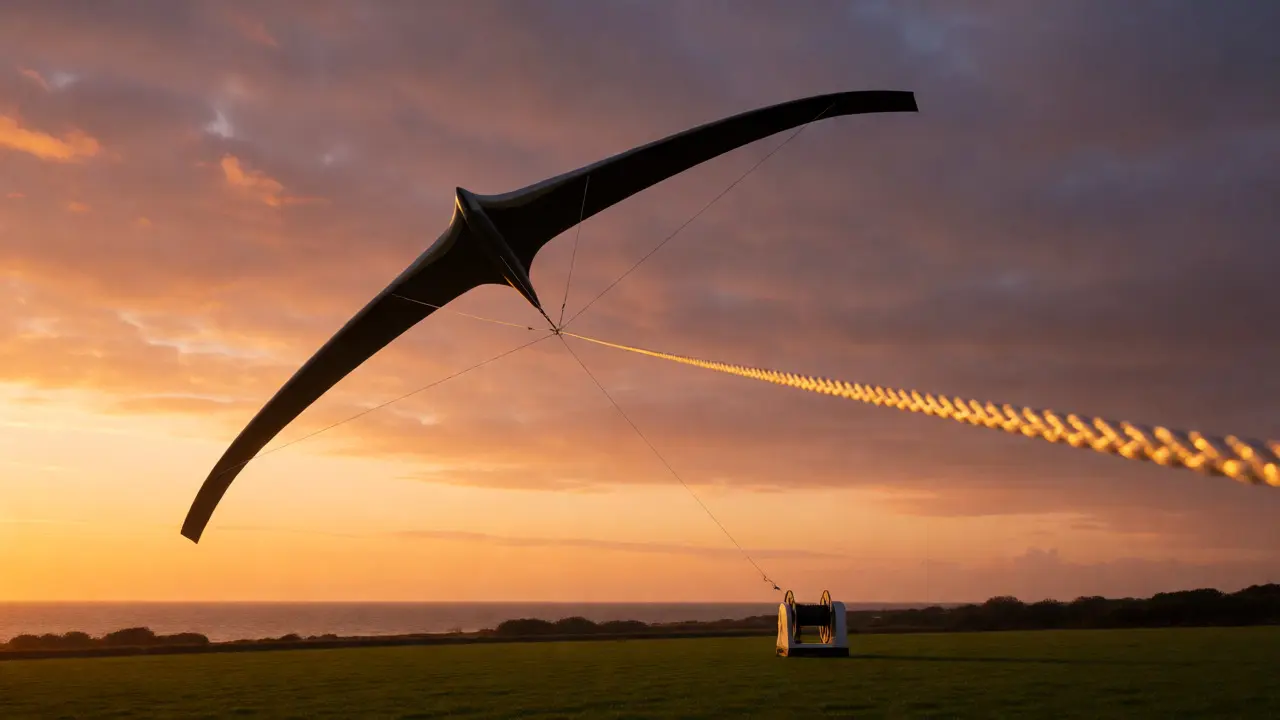
Imagine a 50-meter wing screaming through the sky at 100 kilometers per hour, generating power from winds that traditional turbines can’t even touch. Now imagine that same wing snapping its tether and becoming a high-speed projectile heading toward your backyard. This isn't science fiction; it’s the primary risk profile of Airborne Wind Energy (AWE)systems that harvest wind energy using flying devices such as kites or tethered aircraft. As this technology moves from experimental prototypes to commercial reality, understanding the triad of safety-tether integrity, system redundancy, and airspace compliance-is no longer optional for engineers, regulators, or early adopters.
You might wonder why we don’t see more kites in the sky if they are so efficient. The answer lies in the complexity of keeping them safe. Unlike a static wind turbine on a tower, an AWE system is dynamic. It flies, maneuvers, and interacts with a shared, chaotic environment: the lower atmosphere. If you’re considering deploying one, or just curious about how these giants stay grounded when things go wrong, here is what actually keeps them safe.
The Tether: More Than Just String
Most people picture a kite string when they think of airborne energy. In reality, the tetherthe physical link connecting the airborne unit to the ground station, transmitting both mechanical force and electrical power/data is a marvel of materials engineering. It has to withstand massive tensile loads while being light enough not to drag the wing down. Typically, these tethers are made from synthetic fibers like Dyneema or Kevlar, often reinforced with conductive elements for data transmission.
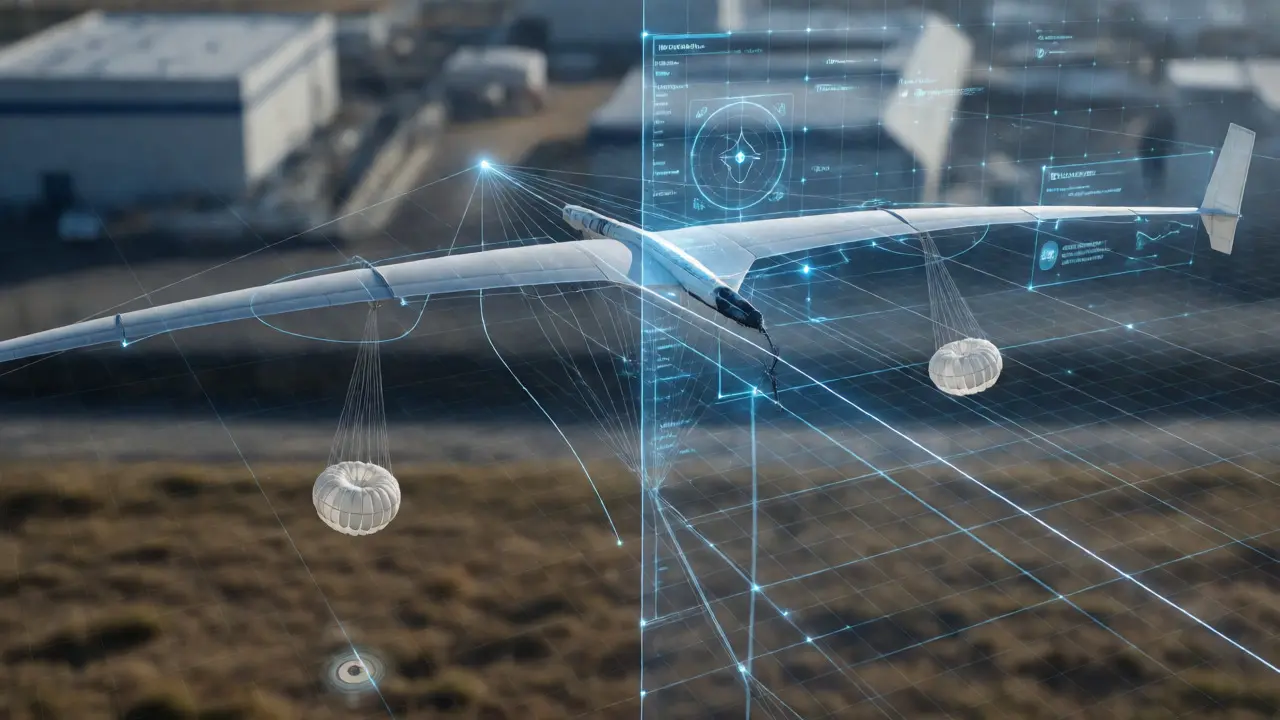
The biggest threat to a tether isn’t usually wear and tear-it’s abrasion and fatigue. Imagine a kite rubbing against a tree branch or a bird striking the line. To mitigate this, modern systems use automated reel-out and reel-in mechanisms that keep tension optimal. But what happens if the tether snaps? In older designs, a snapped tether meant chaos. Today, sophisticated ground stations detect sudden changes in tension instantly. Within milliseconds, the system triggers a fail-safe mode, often deploying parachutes or forcing the wing into a controlled descent path away from populated areas.
Redundancy: Building in Multiple Layers of Defense
If there’s one rule in aviation-derived engineering, it’s that single points of failure are unacceptable. Redundancythe inclusion of extra components which are not strictly necessary to functioning, in case of failure of other components in AWE systems operates on three levels: hardware, software, and structural.
- Hardware Redundancy: Critical sensors, like GPS units and inertial measurement units (IMUs), are duplicated. If one sensor gives erratic data due to electromagnetic interference, the flight computer compares readings and discards the outlier.
- Software Fail-Safes: The flight controller runs multiple algorithms simultaneously. If the primary navigation algorithm loses lock on the wing’s position, a backup algorithm takes over based on dead-reckoning or visual cues.
- Structural Integrity: Wings are designed with damage tolerance. A small tear in the fabric shouldn’t cause immediate collapse. Instead, the aerodynamics degrade gracefully, allowing the system to land itself rather than crash.
Consider the difference between a hobbyist kite and a commercial AWES. A hobbyist kite fails and falls. A commercial system detects the anomaly, cuts power to the winch, and initiates an emergency landing sequence. This proactive approach reduces the kinetic energy impact by up to 80% compared to a free-fall scenario.
Navigating the Airspace Maze
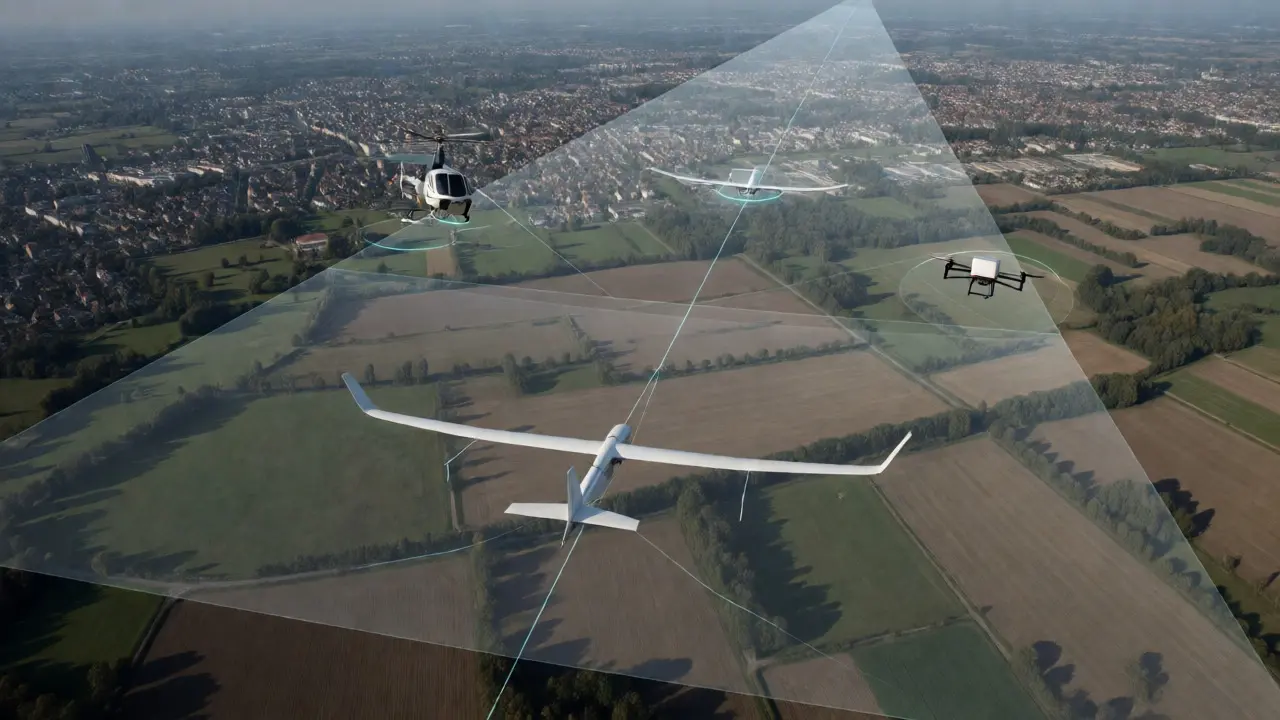
Flying a machine that stays within a few hundred meters of the ground sounds simple until you realize who else is flying there. Drones, helicopters, crop dusters, and birds all share this low-altitude corridor. Airspace integrationthe process of ensuring AWE systems coexist safely with other air traffic and comply with aviation regulations is arguably the hardest non-technical challenge.
Regulators like the FAA in the US and EASA in Europe have strict rules. Generally, AWE systems must remain below specific altitude limits (often under 400 feet for uncontrolled operations) unless granted special waivers. They also require detect-and-avoid capabilities. Modern systems integrate ADS-B transponders, the same tech used by manned aircraft, broadcasting their position to nearby pilots. Some advanced prototypes even use radar or LiDAR to scan for incoming threats autonomously.
| Feature | Traditional Wind Turbine | Airborne Wind Energy System |
|---|---|---|
| Failure Mode | Blade fracture, tower collapse | Tether snap, loss of control, collision |
| Detection Method | Vibration sensors, manual inspection | Real-time telemetry, AI anomaly detection |
| Emergency Response | Brake engagement, yaw alignment | Parachute deployment, emergency reel-in |
| Airspace Risk | Low (static structure) | High (dynamic, moving object) |
| Redundancy Level | Moderate | High (multi-layered) |
Environmental Hazards and Mitigation Strategies
Wind isn’t the only thing blowing around up there. Lightning, ice accumulation, and extreme gusts pose significant risks. A tethered wing acts like a lightning rod. Without proper grounding, a strike could fry the electronics or weaken the tether fibers. Engineers address this by incorporating conductive paths along the tether that direct current safely to the ground station’s earth grid.
Ice is another silent killer. It adds weight and changes the wing’s aerodynamic profile, potentially causing a stall. Advanced systems monitor temperature and humidity, automatically de-icing wings using heated surfaces or simply bringing the unit down before conditions become critical. During severe storms, the best safety feature is often the simplest: park the kite. Grounding the system during extreme weather events eliminates the risk entirely.
Community Acceptance and Noise Concerns
Safety isn’t just about physics; it’s about perception. Residents near potential sites often worry about noise. While AWE systems lack the large blades of traditional turbines, the whine of the winch and the hum of the tether vibrating in the wind can be annoying. Low-frequency noise, in particular, travels long distances and can feel intrusive.
To combat this, developers are designing quieter winches and optimizing tether geometry to reduce "singing" in high winds. Transparent communication with local communities about safety protocols helps alleviate fears. Showing residents exactly where the emergency landing zones are-and proving those zones are clear of houses and schools-builds trust faster than any technical brochure.
Regulatory Landscape in 2026
As of 2026, the regulatory framework is maturing but remains fragmented. The International Civil Aviation Organization (ICAO) has issued guidelines for remotely piloted aircraft, which many countries adapt for AWE. However, specific standards for tethered power generation are still evolving. Operators must navigate a patchwork of local zoning laws, aviation authority requirements, and environmental permits.
For instance, in the United States, Part 137 of the Federal Aviation Regulations governs agricultural aircraft, but AWE often falls under experimental categories requiring individual waivers. In contrast, some European nations have created specific "kite power" licenses that streamline the approval process for certified systems. Staying compliant means constant monitoring of regulatory updates, as rules change frequently with technological advancements.
Future Trends: AI and Autonomous Landing
The next leap in safety comes from artificial intelligence. Current systems rely on pre-programmed responses. Future systems will use machine learning to predict failures before they happen. By analyzing millions of flight hours of data, AI can identify subtle patterns-like a slight vibration frequency shift-that indicate impending tether fatigue or motor wear.
Autonomous landing capabilities are also improving. Instead of a simple parachute drop, future wings may glide to precise landing pads using onboard cameras and GPS. This precision minimizes the footprint of emergency landings, making it safer to deploy AWE systems in denser environments closer to cities and industrial hubs.
What happens if the tether breaks?
If the tether breaks, the system immediately detects the loss of tension. Most modern Airborne Wind Energy Systems (AWES) are equipped with emergency parachutes or automatic reel-in mechanisms. These features slow the descent and guide the wing to a controlled landing area, minimizing the risk of injury or property damage. The ground station also shuts down power transmission instantly to prevent electrical hazards.
Are airborne wind turbines noisy?
They are generally quieter than traditional wind turbines because they lack large rotating blades near the ground. However, the winch mechanism and the tether vibrating in the wind can produce audible noise. Modern designs focus on acoustic dampening to reduce this hum, especially for installations near residential areas. Low-frequency noise is managed through careful site selection and equipment shielding.
How do AWE systems avoid collisions with drones?
Many AWE systems integrate ADS-B transponders, which broadcast their location to nearby aircraft, including drones equipped with receivers. Additionally, operators establish geofenced airspace around the installation. Some advanced systems use radar or optical sensors to detect intruders and automatically initiate avoidance maneuvers or emergency landings if a drone enters the protected zone.
Can lightning damage an airborne wind energy system?
Yes, lightning is a significant risk. To mitigate this, tethers often include conductive strands that channel electricity directly to the ground station’s earthing system. Sensors monitor atmospheric conditions, and if a storm approaches, the system automatically lowers the wing to the ground to eliminate exposure. This proactive grounding prevents damage to sensitive electronics and structural weakening of the tether.
What is the typical altitude limit for AWE systems?
Altitude limits vary by country and regulation. In many regions, uncontrolled operations are limited to 400 feet (approximately 120 meters) above ground level. Higher altitudes require special waivers from aviation authorities like the FAA or EASA. These restrictions ensure separation from manned aircraft traffic and simplify airspace management for tethered devices.