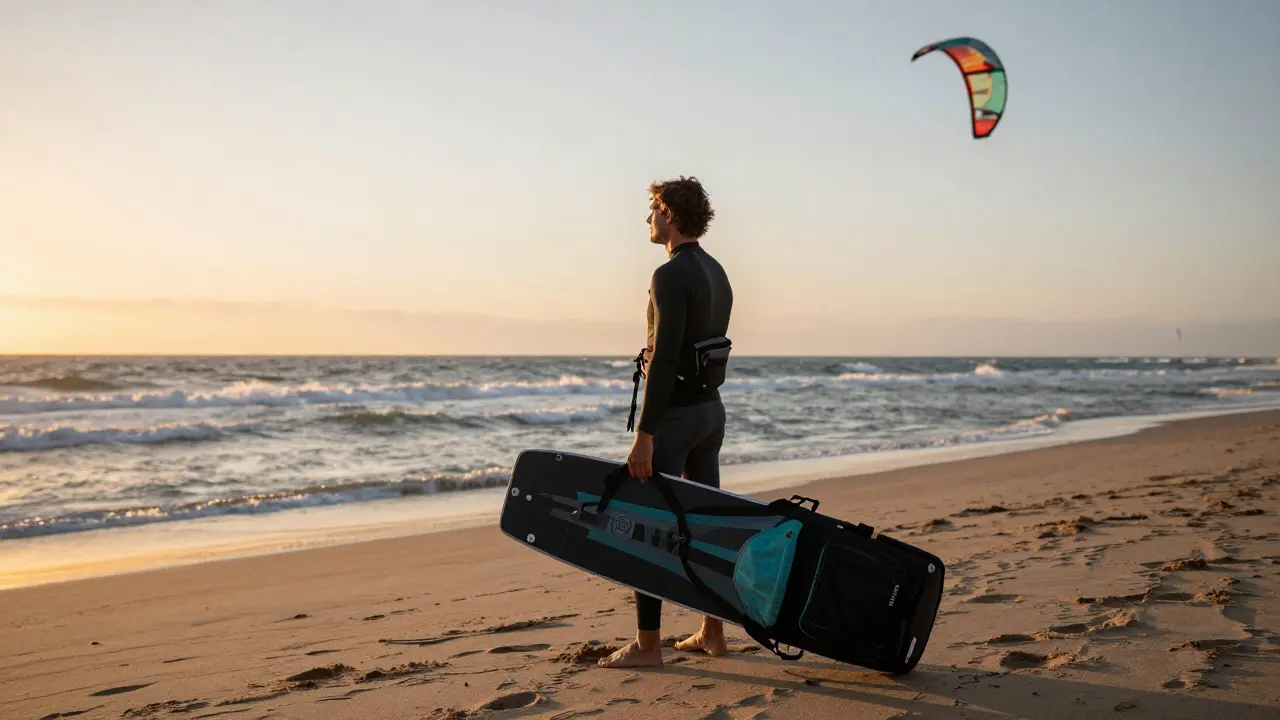
Standing on the beach with your kite packed, you check your phone. The app says "15 knots," but the water looks flat, the wind feels lumpy, and the tide is turning against you. This is the classic disconnect between a simple number and actual rideable conditions. Kiteboarding forecasts are not just about wind speed; they are a puzzle of three interacting forces: wind direction and consistency, ocean swell energy, and tidal movement. Mastering how these elements combine determines whether you get a smooth session or a chaotic struggle.
Most beginners look at the wind arrow and ignore the rest. Advanced riders know that a 20-knot breeze can be unrideable if it’s choppy from a cross-shore angle during high tide. Conversely, a light 12-knot day can be perfect if the wind is aligned and the tide is pushing in. This guide breaks down the specific data points you need to read, where to find them, and how to interpret them for real-world decision-making.
Understanding Wind Models and Directional Consistency
Wind is the engine of kiteboarding, but raw speed is misleading. What matters most is consistency and direction. When looking at weather models like GFS (Global Forecast System) or ECMWF (European Centre for Medium-Range Weather Forecasts), you are looking at grid points that represent averages over large areas. These models don't tell you about local gusts or thermal shifts.
You need to focus on two specific metrics:
- Average Wind Speed: The sustained speed over an hour. For most riders, 12-25 knots is the sweet spot. Below 10 knots, you’ll be pumping constantly. Above 30 knots, it becomes physically demanding and dangerous for many gear setups.
- Gust Factor: If the forecast shows 15 knots average with 25-knot gusts, expect lumpy air. A consistent 18-knot breeze is far better than a 15-knot average with wild spikes. Look for a low difference between average and gust speeds (ideally less than 5 knots).
Direction is equally critical. Cross-shore winds (blowing straight onto or off the beach) create heavy chop and make landing difficult. Cross-onshore winds (blowing parallel to the shore) provide clean water and safe landings. Always visualize the wind arrow relative to the coastline orientation. If the arrow points directly at the beach, be cautious. If it points along the sand, you’re in luck.
Decoding Swell Data: Size, Period, and Direction
Swell is often misunderstood by non-surfers. In kiteboarding, swell isn’t just about wave height; it’s about the period (the time between waves) and the direction relative to the wind.
A common mistake is assuming bigger swells are always worse. Actually, long-period swells (12+ seconds) move slowly and gently, creating a rolling motion that is easy to manage. Short-period swells (under 8 seconds) are steep, quick, and choppy, making it hard to see the water surface and control your board.
| Parameter | Low Impact (Good) | High Impact (Challenging) | Why It Matters |
|---|---|---|---|
| Height | < 1 meter | > 2 meters | Higher swells require more power to stay upwind and increase crash risk. |
| Period | > 10 seconds | < 7 seconds | Long periods = smooth rolling. Short periods = steep, choppier water. |
| Direction vs. Wind | Aligned or Cross | Opposing | If swell comes from the opposite direction of the wind, it creates standing waves and heavy chop. |
Always check the swell direction against the wind direction. If the wind is blowing from the North and the swell is coming from the South, you have opposing systems. This creates a messy, steep chop that drains your energy quickly. If the swell is coming from the same direction as the wind, the water will be smoother, even if the swell height is moderate.
The Role of Tides in Rideable Conditions
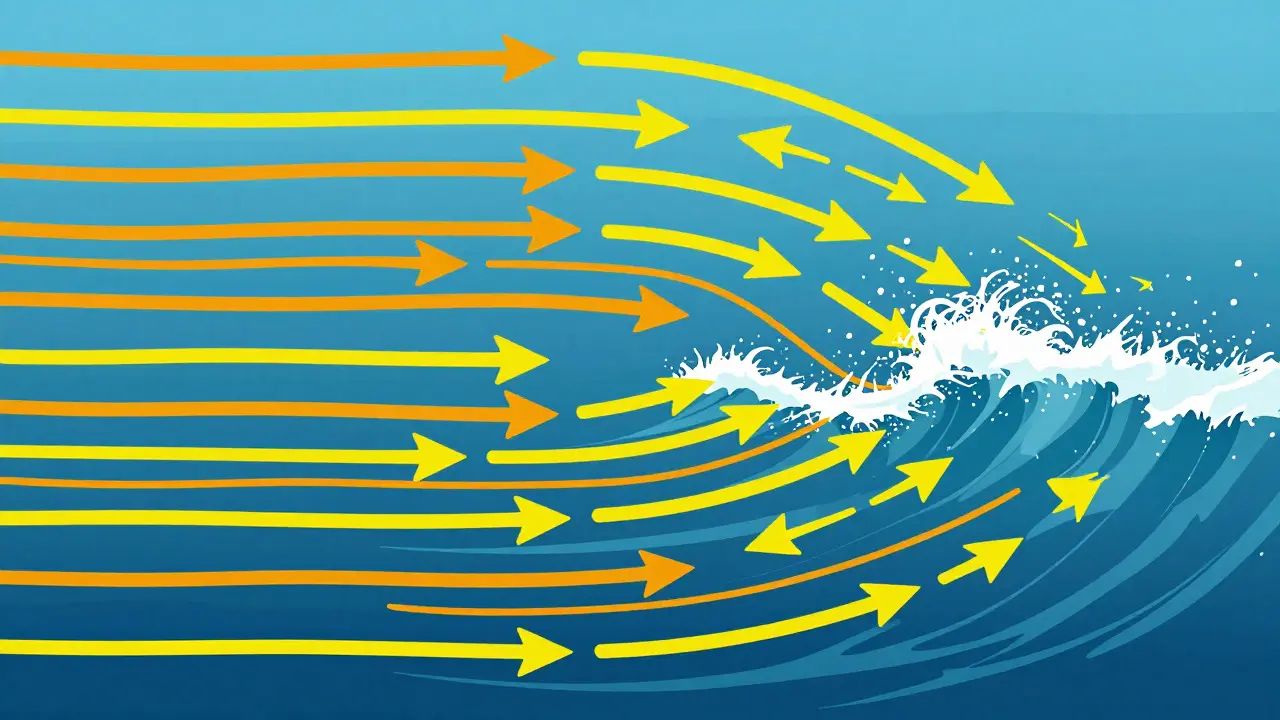
Tides are the silent killer of good sessions. Many riders forget to check the tide chart until they arrive at the spot, only to find the water too shallow or the current too strong. Tides affect three things: water depth, current strength, and effective wind feel.
Water Depth: Shallow water increases drag on your board and makes it harder to relaunch after a crash. If you are riding a twin-tip, you generally need at least 1.5-2 meters of water at low tide for comfortable progression. Wave riders need even deeper water to avoid hitting rocks or sandbars.
Currents: Strong currents can push you out of position or make upwind progress impossible. Check the tide chart for the rate of change. A rapid rise or fall indicates strong currents. If the current is flowing against the wind, it can create a "dead zone" where the wind feels weaker because the water is moving against it.
Effective Wind Feel: When the tide is coming in (flood tide), the water moves toward the shore. If the wind is also onshore, the combined effect can make the wind feel stronger than the model predicts. Conversely, if the tide is going out (ebb tide) and the wind is offshore, the water moving away can reduce the perceived wind speed, making a 15-knot day feel like 10 knots.
Combining the Three Factors: A Decision Framework
Now that you understand each element, here is how to combine them into a go/no-go decision. Use this simple checklist before packing your bag:
- Check Wind Consistency: Is the average speed within your gear range? Are the gusts manageable (less than 5 knots above average)?
- Verify Wind Direction: Is it cross-shore or cross-onshore? Avoid strong cross-shore winds unless you are experienced and the spot has a safe escape route.
- Analyze Swell Period: Is the period long (smooth) or short (choppy)? If short, expect a harder session.
- Compare Swell and Wind Directions: Are they aligned, cross, or opposing? Opposing directions create the worst chop.
- Review Tide Time: When is high/low tide relative to your planned session? Aim for mid-tide if possible, avoiding extreme lows (shallow) and peak ebb/flood currents (strong flow).
For example, a forecast showing 18 knots average, 22-knot gusts, wind from the West, swell from the Southwest (6-second period, 1.5 meters), and a rising tide is a solid day for intermediate riders. The wind is consistent, the swell is somewhat choppy but manageable, and the rising tide provides depth and adds to the wind feel.
Common Mistakes and How to Avoid Them
Even experienced riders make forecasting errors. Here are the most frequent pitfalls:
- Ignoring Local Microclimates: Mountains, buildings, and vegetation can create wind shadows or funnels. A general model might show 20 knots, but the specific bay you’re visiting could be 10 knots due to terrain shielding. Always check local webcam feeds or community reports if available.
- Misreading Gusts: A 15-knot average with 30-knot gusts is not a 15-knot day. It’s a turbulent day. If the gust factor is high, bring a larger kite or choose a sheltered spot.
- Forgetting Tide Timing: Planning a session for 4 PM without checking that low tide is at 5 PM means you’ll be stuck in shallow water for the last hour of your ride. Always align your session window with favorable tide levels.
- Overlooking Wind Shifts: Thermal breezes can shift direction by 30-90 degrees in the afternoon. If you plan a morning session, the wind might be onshore. By afternoon, it could become offshore. Check hourly wind direction changes, not just daily averages.
Tools and Resources for Accurate Forecasting
You don’t need expensive software to read forecasts accurately. Free resources provide all the data you need if you know where to look.
Wind Models: Sites like Windy.com allow you to overlay different models (GFS, ECMWF, ICON). Compare them to see consensus. If all models agree on wind speed and direction, confidence is higher. If they disagree, expect variable conditions.
Swell Data: Magicseaweed or Surfline provide detailed swell buoys and model predictions. Focus on the primary swell set, not secondary sets, which are usually smaller and less impactful.
Tide Charts: NOAA (in the US) or local maritime authority sites offer precise tide tables. Download a PDF or use an app that shows tide curves, not just times. The curve shape tells you the rate of change, which is crucial for current prediction.
Combine these sources in a single workflow: Start with Windy for wind, switch to Surfline for swell, and finish with a tide table. Take notes on what actually happened versus what was predicted. Over time, you’ll develop intuition for how your local spot behaves under different combinations of wind, swell, and tide.
What is the best wind speed for kiteboarding?
For most riders, 12-25 knots is ideal. Beginners should aim for 12-18 knots for stability, while advanced riders can handle 20-30 knots. Consistency matters more than absolute speed; a steady 15-knot breeze is better than a gusty 20-knot wind.
Does tide affect wind speed?
Yes, indirectly. Moving water (currents) can either add to or subtract from the perceived wind speed. If the tide is flowing in the same direction as the wind, the water moves faster, potentially increasing drag and making the wind feel stronger. If the tide flows against the wind, it can dampen the effective wind force on your kite.
Which wind model is most accurate for kiteboarding?
No single model is always best. ECMWF is generally considered the most accurate for global patterns, while GFS is widely used and accessible. Local models like ICON (Europe) or NAM (US) can be more precise for regional details. Compare multiple models to identify consensus trends rather than relying on one source.
How do I know if swell is too big for my skill level?
Assess both height and period. A 1-meter swell with a 12-second period is much easier to manage than a 1-meter swell with a 6-second period. As a rule of thumb, if the swell height exceeds half your kite size in meters (e.g., 1.5m swell for a 3m kite), it becomes challenging for intermediates. Always prioritize long-period swells for smoother rides.
Should I kite during high tide or low tide?
It depends on your spot. Generally, mid-tide offers the best balance of depth and manageable currents. Low tide may expose sandbars or make water too shallow for relaunching. High tide can bring stronger currents and push water onto beaches, reducing launch space. Check your specific location’s geography to determine which tide phase is safer and more rideable.