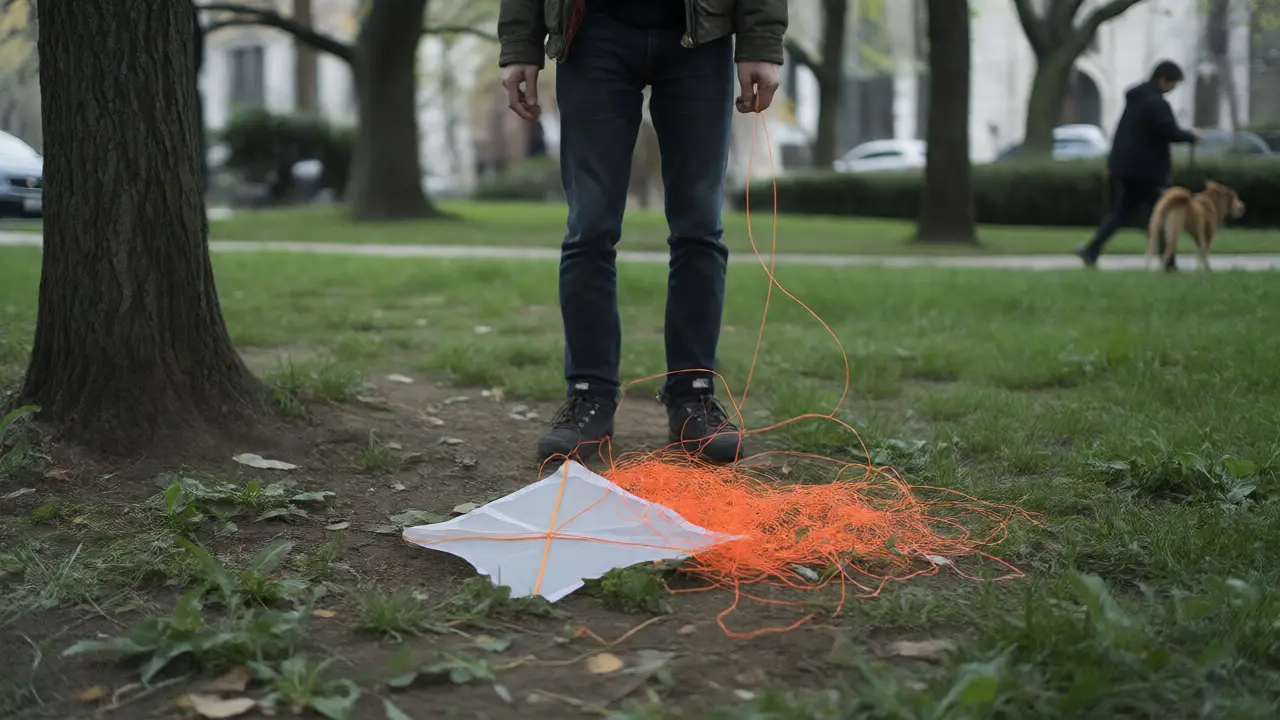
You’re standing in a crowded city park. There’s a tree on your left, a dog walker on your right, and absolutely zero room for the long, sweeping lines you see people using at the beach. You bought a beginner kite that came with short lines, thinking it would be easier to manage. Instead, you’re fighting a tangled mess of string while the kite sits lifeless on the grass. Sound familiar?
Flying a kite in tight spaces isn’t just about having less string; it’s about changing how you move and react. When you use short lines-typically under 15 feet-you lose the buffer zone that lets you correct mistakes slowly. Every twitch matters. But here’s the good news: once you get the hang of it, short-line flying is incredibly responsive and fun. It turns a small patch of grass into an active playground.
Why Short Lines Are Actually Better for Small Spaces
Most beginners assume longer lines equal better flight. In open fields, sure. But in a small park, long lines are a hazard. They tangle with trees, trip passersby, and drag across wet patches of grass. Short lines are typically defined as control lines measuring between 7 and 15 feet. This length forces you to stay engaged. You can’t lean back and let the wind do all the work because the kite reacts instantly to your hand movements.
This immediacy is actually a training advantage. If you plan to move up to sport kites or stunt kites later, starting with short lines builds muscle memory faster. You learn to feel the tension changes immediately rather than waiting three seconds for the signal to travel down a 100-foot line.
| Line Length | Best Environment | Control Style | Risk Factor |
|---|---|---|---|
| Short (7-15 ft) | Dense parks, urban areas | Active, constant adjustment | Low tangling, high responsiveness |
| Medium (20-40 ft) | Open fields, large lawns | Moderate correction time | Medium risk of ground contact |
| Long (50+ ft) | Beaches, wide-open meadows | Passive, slow corrections | High risk of obstacles/people |
Choosing the Right Kite for Tight Quarters
Not every kite plays nice in a confined space. If you grab a massive delta kite designed for light winds, you’ll spend more time untangling it from branches than flying it. For park flying, look for specific attributes:
- Small Surface Area: A wingspan under 4 feet keeps the kite out of nearby trees.
- Stable Frame: Rigid frames (like dowel rods) hold shape better in gusty, turbulent air found near buildings.
- Single-Line vs. Dual-Line: Single-line kites are simpler but harder to steer away from obstacles. Dual-line kites allow you to turn left or right by pulling one handle, making them superior for avoiding collisions.
If you’re brand new, stick to a small single-line diamond or box kite if you want simplicity. If you have steady hands, a small dual-line stunt kite gives you the power to dodge that approaching jogger with precision.
The Launch Technique That Saves Your Sanity
Here is where most people fail in small parks. They try to launch alone, holding the kite up and hoping the wind catches it. With short lines, this rarely works because you don’t have enough line to create the initial lift angle. You need a helper, or you need to master the "ground launch." If you have a friend, ask them to stand 10-15 feet downwind. Hold your handles firmly. Signal them to release the kite gently. Do not throw it. Just let go. As soon as you feel tension, pull both lines evenly. The kite should rise quickly due to the short distance. Flying solo? Lay the kite flat on the grass, nose pointing into the wind. Ensure the tail isn't caught. Pull the lines taut. Wait for a strong gust. Give a sharp, quick tug on both lines simultaneously. The sudden tension combined with the wind pressure should pop the nose up. Once it lifts, keep your hands low and close to your body to maintain leverage.

Mastering the "Wind Window" in Turbulent Air
In a park, the wind isn’t uniform. Buildings, trees, and even hills create turbulence. The area directly behind a tree is often dead calm or swirling chaos. You need to find the wind window is the quarter-sphere area in front of the pilot where the kite generates maximum lift and stability.
With short lines, your wind window is physically smaller. You must position yourself strategically. Stand so that the dominant breeze hits your face. Avoid standing directly under large canopy trees unless there’s a clear gap above you. Move around. If the kite starts dipping left, walk two steps to the right. Often, shifting your body position relative to the wind source solves problems that steering can’t.
Watch the leaves. If they’re fluttering wildly, the air is choppy. Keep the kite lower to the ground where the air might be smoother, or higher up if the turbulence is only at eye level. Experimentation is key here. There is no fixed rule, only observation.
Avoiding Common Park Hazards
Parks are full of things that hate kites. Here is how to navigate them:
- Trees: Never fly within 10 feet of a tree trunk horizontally. If you get snagged, do not yank the line. Walk toward the tree to slacken the line, then gently shake the kite free.
- Dogs: A flying kite looks like a giant bird to many dogs. If a dog approaches, reel the kite in immediately. Don’t wait for the bite.
- Power Lines: Check overhead before launching. Even short lines can reach low-hanging wires if you aren’t careful. Stay at least 30 feet away from any utility pole.
- Crowds: Use your body as a shield. Turn your back to the crowd when landing the kite. This prevents panicked bystanders from stepping on your lines.
One pro tip: always carry scissors. If a line gets hopelessly tangled in a bush or fence, cutting it is better than ruining your kite or getting injured trying to pull it free.
Retrieving and Landing Safely
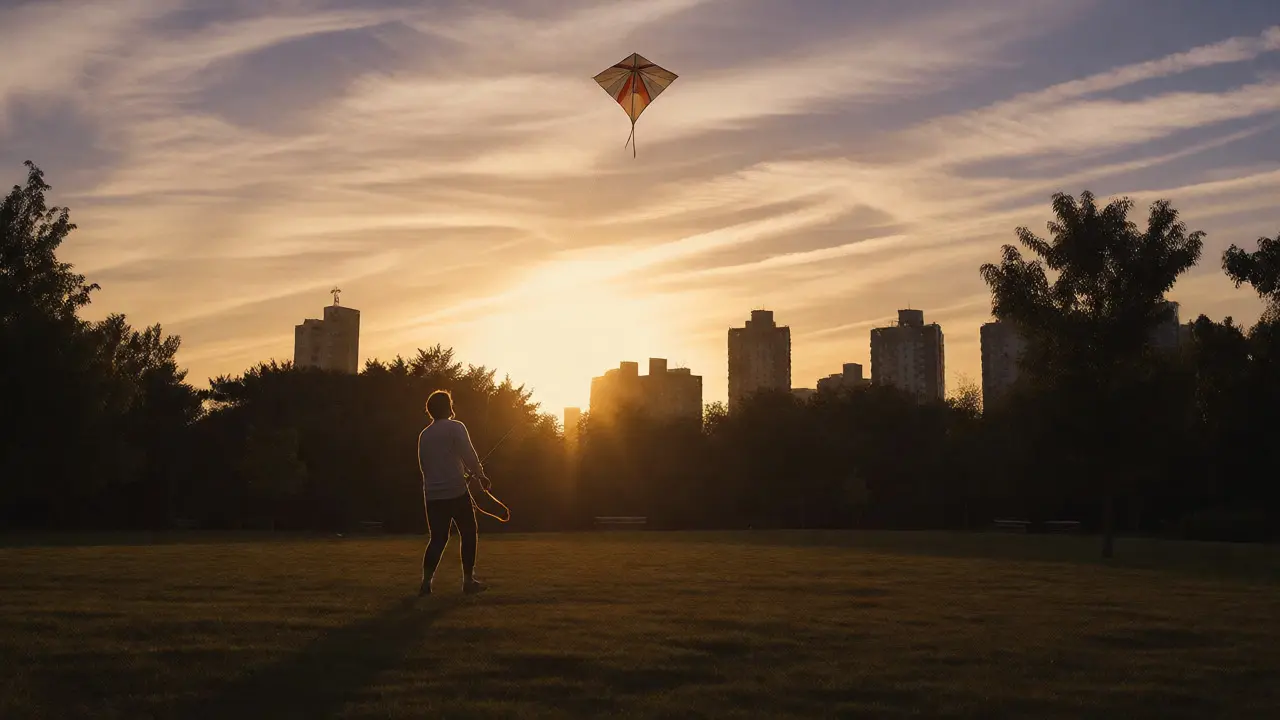
Landing a short-line kite requires finesse. You cannot just drop the handles. Because the lines are short, the kite will dive straight into the ground if you stop controlling it.
To land, walk backward slowly while keeping the kite high in the sky. Gradually reduce the tension on both lines equally. Let the kite drift toward you. As it gets within arm's reach, step forward and catch the frame or the center spine with your hand. Do not grab the lines first; you’ll cut your fingers. Catch the kite, then wrap the lines neatly around your wrist or a spool.
If the wind dies completely, the kite will fall. Be ready to run and catch it. In small parks, you rarely have the luxury of a gentle glide-down.
Troubleshooting Your Flight
Is your kite spinning uncontrollably? Your lines might be uneven. Check the attachment points on the kite. If one side is shorter, the kite will circle endlessly. Adjust the bridle (the strings connecting the kite to the line) until the kite flies straight when held horizontally.
Is the kite diving constantly? You might be holding the handles too high. Lower your hands to waist level. This changes the angle of attack, allowing the kite to climb.
Is the kite stuck in a corner of the wind window? Pull the opposite line. If it’s stuck on the left, pull the right handle. This rotates the kite back to the center where the lift is strongest.
What is the ideal line length for a beginner in a small park?
For most small parks, 10 to 15 feet is the sweet spot. It provides enough control to avoid immediate crashes while keeping the kite safely away from surrounding obstacles like trees and pedestrians.
Can I fly a kite without a helper if I have short lines?
Yes, but it is harder. Use the ground launch method: lay the kite flat, nose into the wind, and give a sharp tug on the lines during a gust. Alternatively, prop the kite against a heavy object or have someone briefly hold it for you.
Why does my kite crash when I turn it?
This usually happens because you turned too aggressively. With short lines, the kite reacts instantly. Make small, gradual adjustments to your hands. Also, ensure you are turning toward the center of the wind window, not toward the edge where lift decreases.
Are dual-line kites better than single-line kites for small spaces?
Generally, yes. Dual-line kites allow you to steer left and right, which is crucial for dodging trees, people, and dogs in a cramped park. Single-line kites only go up and down, leaving you vulnerable to drifting into obstacles.
What should I do if my kite gets tangled in a tree?
Do not pull hard. Walk closer to the tree to create slack in the line. Gently shake the line or the kite to dislodge it. If it is deeply embedded, consider cutting the line and replacing it later to avoid damaging the kite frame.
Next Steps for Your Park Flying Journey
Start small. Pick a quiet Tuesday morning when the park is empty. Practice your launches ten times in a row. Focus on smooth hand movements rather than height. Once you can consistently keep the kite aloft for five minutes without crashing, invite a friend over. The social aspect makes the learning curve much less frustrating.
As you gain confidence, experiment with different wind conditions. Learn what "too windy" feels like in your specific park. Some spots get funnel effects from buildings, creating sudden gusts. Recognizing these micro-climates will make you a better pilot anywhere you go.