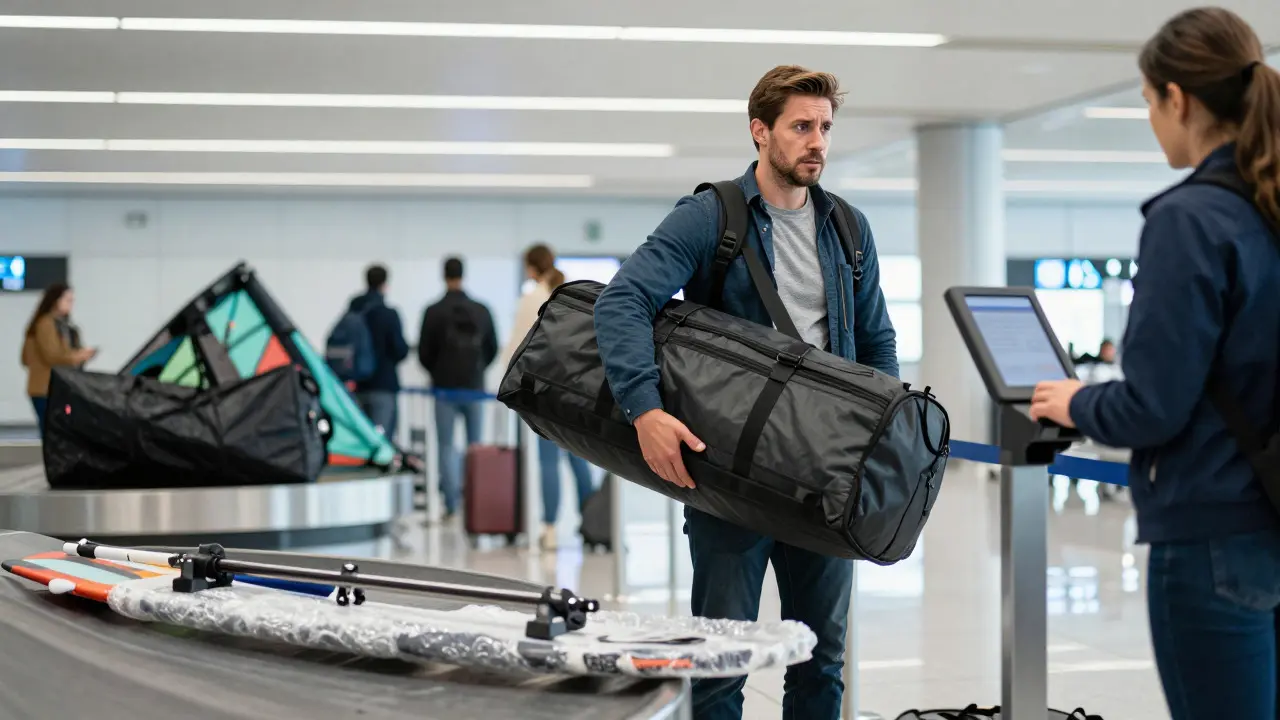
You’re standing in the baggage check line, heart pounding. The guy next to you has a standard suitcase; you have a 12-foot carbon fiber board, a kite that looks like a deflated balloon, and a harness that smells faintly of salt and sweat. Will they charge you an extra $300? Will they break your mast? Or worse, will they lose your foil tips?
Getting your kiteboarding gear is a collection of specialized equipment including kites, boards, foils, and control bars used for wind-powered water sports. from Point A to Point B without losing your mind (or your deposit) is a skill set just as important as riding a gusty day. Airlines treat this stuff differently than skis or surfboards, often because it’s bulkier, sharper, or harder to fit into their overhead bins.
Understanding How Airlines Classify Your Gear
The first mistake most riders make is assuming "sports equipment" is a single category. It isn’t. Airlines usually split this into two buckets: standard checked bags and oversized/specialty sports equipment.
Your board bag is a protective case designed to hold a kiteboard or twin tip, typically measuring between 65 and 80 inches in length. If your board bag exceeds the airline’s linear dimension limit (usually around 62-70 inches depending on the carrier), it gets flagged as oversized. For example, a 14-foot kiteboard in a soft bag might measure 75 inches end-to-end. That’s over the limit. You’ll pay an oversize fee, which can range from $50 to $150 per flight segment.
Your kite bag is a cylindrical or rectangular duffel specifically built to compress and protect kite frames, lines, and steering systems. These are generally lighter and smaller. Unless you’re flying international where carry-on rules are strict, a packed kite bag often fits within standard checked luggage dimensions. However, if you’re bringing multiple kites or a heavy frame, the weight might push it into a premium tier.
Then there’s the foil, which is a hydrofoil system consisting of a wing, fuselage, and front/rear stabilizers that lifts the board above the water surface. Foils are the nightmare scenario. They have sharp edges, long masts, and fragile components. Many airlines classify them as "specialty equipment" similar to golf clubs or hockey sticks. Some carriers allow one free piece of specialty gear, while others charge a flat rate regardless of size. Always check the specific "Sports Equipment" policy page of your airline before booking.
Packing Strategies That Save Money and Space
You don’t need a custom hard case to save money. In fact, rigid cases can sometimes work against you because they take up more volume in the cargo hold. Here’s how to pack smart:
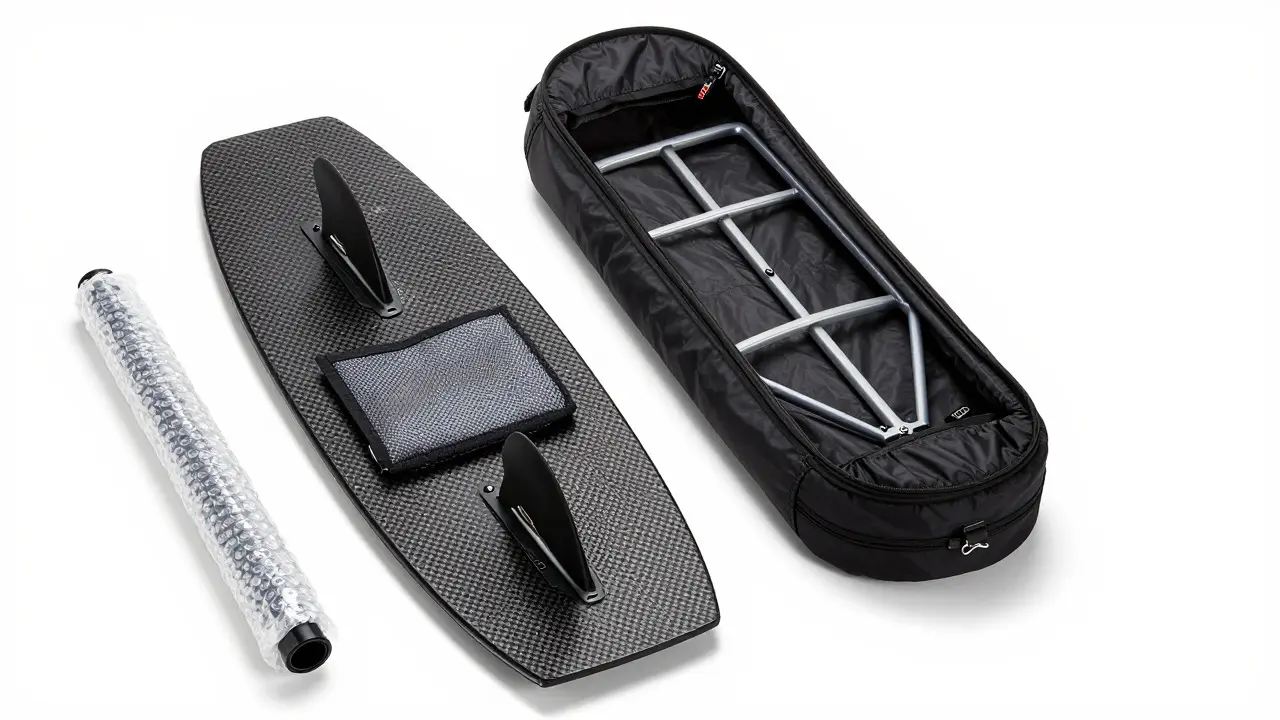
- Use Soft Bags for Boards: A high-quality soft board bag allows you to compress the contents slightly. If you remove the fins (and pack them separately in a small pouch), you can reduce the effective length by 2-3 inches. This trick often keeps you under the 62-inch threshold for domestic flights in the US.
- Split Your Load: Don’t put everything in one giant duffel. Use one bag for the board and one for the kite/harness/lines. If one bag is oversized, you only pay the fee for that one. If you cram it all into a 100-inch monster, you’re paying for maximum excess.
- Weigh Everything at Home: Airlines weigh bags at the counter, but they don’t always announce the exact weight until after the fee is calculated. Weigh your gear at home. If your board bag is 45 lbs and your kite bag is 20 lbs, you’re close to the 65 lb limit for many carriers. Remove heavy items like lead weights or extra straps from the checked bag and wear them or carry them on.
A pro tip: Pack your control bar, which is the steering mechanism connected to the kite via lines, featuring handles and a chicken loop for safety release. in your carry-on if possible. It’s lightweight, compact, and crucial for setup. If it goes missing in the hold, you can’t ride. Most airlines allow one personal item plus one carry-on. The bar fits easily in a backpack or a small dedicated sleeve.
Protecting Fragile Components
Kite gear is expensive. A new kite can cost $1,500+. A foil mast replacement is $300+. You need insurance beyond just the airline’s liability cap (which is often surprisingly low, around $38 per pound for domestic flights).
- Foil Masts: Wrap the mast in bubble wrap and place it inside the board bag’s fin pocket or along the spine of the kite bag. Never let the mast tip touch the bag wall directly. Add a layer of foam or old towels.
- Kite Frame: Ensure the kite is fully deflated. Remove the struts if your kite design allows it (most modern LEI kites do). Compress the canopy tightly. Secure the lines in a separate mesh pocket so they don’t tangle with the frame during transit.
- Harness: This is bulky but flexible. Stuff it with your wetsuit or drysuit. It acts as padding for other items. Make sure the backplate is facing inward to avoid snagging on zippers.
Consider buying travel insurance that covers sporting goods. Standard health/travel policies often exclude "equipment damage." Look for a rider specifically for gear protection. It costs about $10-$15 per trip and can save you thousands if a handler drops your foil.
Airline-Specific Quirks to Know
No two airlines handle sports gear the same way. Here’s a quick breakdown of common approaches based on current practices (always verify before flying):
| Airline Type | Typical Policy | Common Fee Range | Best Tip |
|---|---|---|---|
| Major Legacy Carriers (e.g., Delta, United) | Counts as 1 checked bag if under size limits. Oversize fees apply if >62" or >50 lbs. | $75 - $200 | Check in online to lock in price if possible. |
| Budget Carriers (e.g., Spirit, Frontier) | All sports gear is paid. Often treated as 2 bags due to size. | $150 - $300+ | Pre-purchase bags online; airport prices are double. |
| International Carriers (e.g., Lufthansa, Air France) | Often includes 1 sports bag free in economy/premium. Strict weight limits. | Free - $100 | Keep total weight under 23kg (50 lbs) per bag. |
Note that "linear dimensions" mean Length + Width + Height. A board bag that is 70" x 12" x 6" equals 88" linear. That’s oversized on almost every US domestic carrier. But if you fold the fins and use a tapered bag, you might get it down to 60" x 10" x 5" = 75". Still over. This is why removing fins is critical.
Carry-On vs. Checked: What Stays With You?
There is a debate among kite riders about what should go in the cabin. The consensus is shifting toward keeping critical, fragile, or essential items in the carry-on.
- Must Carry-On: Control bar, leash, quick-release (QR) system, small repair kit (patches, glue, tape), and any electronic devices (GPS, action cameras).
- Can Check: Board, foil (if wrapped well), kite, harness, wetsuit/drysuit, booties.
If you fly frequently, consider investing in a hard-shell carry-on case specifically for your bar and electronics. Brands like Osprey or Pelican make cases that fit these items perfectly. It’s cheaper than replacing a lost bar and safer than risking a cracked QR lever in the cargo hold.
Handling Layovers and Connections
If you have a connection, your gear might be transferred automatically. But if you’re changing terminals or airlines, you’ll likely need to re-check it. This increases the risk of damage or loss.
Always tag your bags with your phone number and email address. Use bright, distinct tags. If you have a foil, mark it clearly as "FRAGILE - SPORTS EQUIPMENT." While handlers don’t read much, the visual cue helps.
For international trips, customs might inspect your gear. Keep your passport accessible. Sometimes officers want to see that you’re not importing commercial quantities of gear. One set of personal equipment is fine. Two sets might raise eyebrows.
Frequently Asked Questions
Do I need a special case for my kiteboard?
No, a high-quality soft board bag is sufficient and often preferred for airline travel. Hard cases are bulky and may trigger oversize fees. Just ensure the soft bag has good padding and durable zippers.
How much does it cost to fly with a kite and board?
On US domestic flights, expect to pay $100-$200 in fees if your gear exceeds standard size limits. On budget airlines, it can be $300+ if pre-purchased. International flights may include one sports bag free, saving you significant money.
Should I pack my foil in the board bag?
Yes, if space allows. Place the foil mast along the length of the board, wrapped in bubble wrap. Use the fin pockets for the wings and stabilizers. This keeps the foil protected and prevents it from bending in the cargo hold.
What happens if my gear is damaged by the airline?
File a claim within 7 days of arrival. Take photos of the damage immediately upon pickup. Airlines have limited liability caps, so having travel insurance with gear coverage is highly recommended for expensive items like foils or high-end kites.
Can I bring my kite in my carry-on?
Usually no, unless it’s a very small trainer kite. Full-size kites are too large for overhead bins. However, you can carry the control bar and lines in a small bag if it fits within personal item dimensions.