Flying a kite indoors sounds impossible until you realize your living room is full of invisible currents. Most people give up when their kite stalls unexpectedly near a window or gets tangled in a ceiling fan. The problem isn't just lack of space; it's managing the air itself. During our rainy seasons, many of us retreat indoors, but the home environment fights the flight we want to enjoy.
To succeed, you need to treat your house like an aerodynamic tunnel rather than a shelter. Understanding how air moves through walls and ducts changes everything. If you ignore these factors, even the best equipment will flop. This guide focuses on controlling the environment so you can actually get lift off the ground.
Understanding Indoor Air Dynamics
Air doesn't behave the same way inside a sealed building as it does outside. Outdoors, the wind is consistent and horizontal. Indoors, air moves vertically due to heat rise and mechanical forces from climate control units. This creates turbulence that kills momentum. When you hold a kite is a tethered aircraft that flies using wind pressure , it relies on steady pressure across its surface. Even a small fluctuation causes a stall.
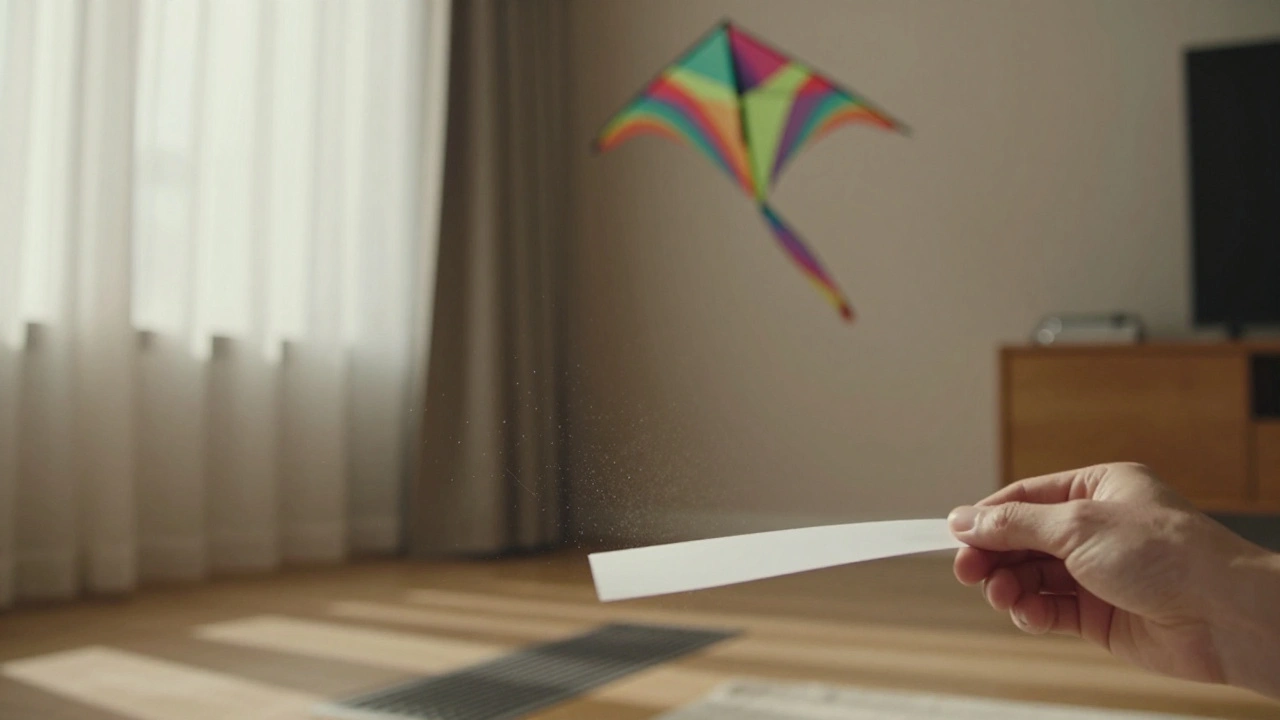
You need to measure where the air is coming from. Most modern homes rely on forced-air heating and cooling systems. These push air out of registers at high velocity. In a typical suburban home, this air travels across the floor and rises near windows. If you stand in that path, your kite will tumble. You can test this with a thin strip of paper. Hold it near the floor by the door. If it waves, you have a draft source active.
The goal is to create a dead zone where air velocity stays below 5 miles per hour. This allows the kite to find equilibrium without fighting gusts. Without this baseline, tension management becomes a guessing game.
Neutralizing Unwanted Drafts
The biggest obstacle is usually your own utility infrastructure. Air conditioning units often run even when set to "cool," creating a constant background breeze. You should switch your system to manual override if possible. Many
- Close Vents: Locate the supply and return registers in your play area. Screw the vanes shut to block the flow entirely.
- Check Windows: Seals often leak cool air down the wall. Place a towel or draft stopper along the bottom track to seal gaps.
- Closet Doors: Keeping closet doors open can create chimney effects. Close them to stabilize the volume of air.
Another issue comes from open doorways between rooms. Air flows from high-pressure zones to low-pressure zones. If one room has a drafty window, it pulls air through the hallway. Closing interior doors isolates these microclimates. Treat the room as a sealed box before adding energy to it.
Don't forget thermal currents. Radiators and fireplaces generate upward pull. Standing directly above a heat source sends your kite diving into the floor. Position yourself parallel to the airflow, not perpendicular to it. If you feel warmth on your legs, move sideways.
Generating Safe Artificial Wind
Sometimes neutralizing drafts removes too much lift. Light kites need movement to stay aloft. Since we can't always rely on natural convection, you must manufacture lift safely. Using standard tools in your garage offers precise control.
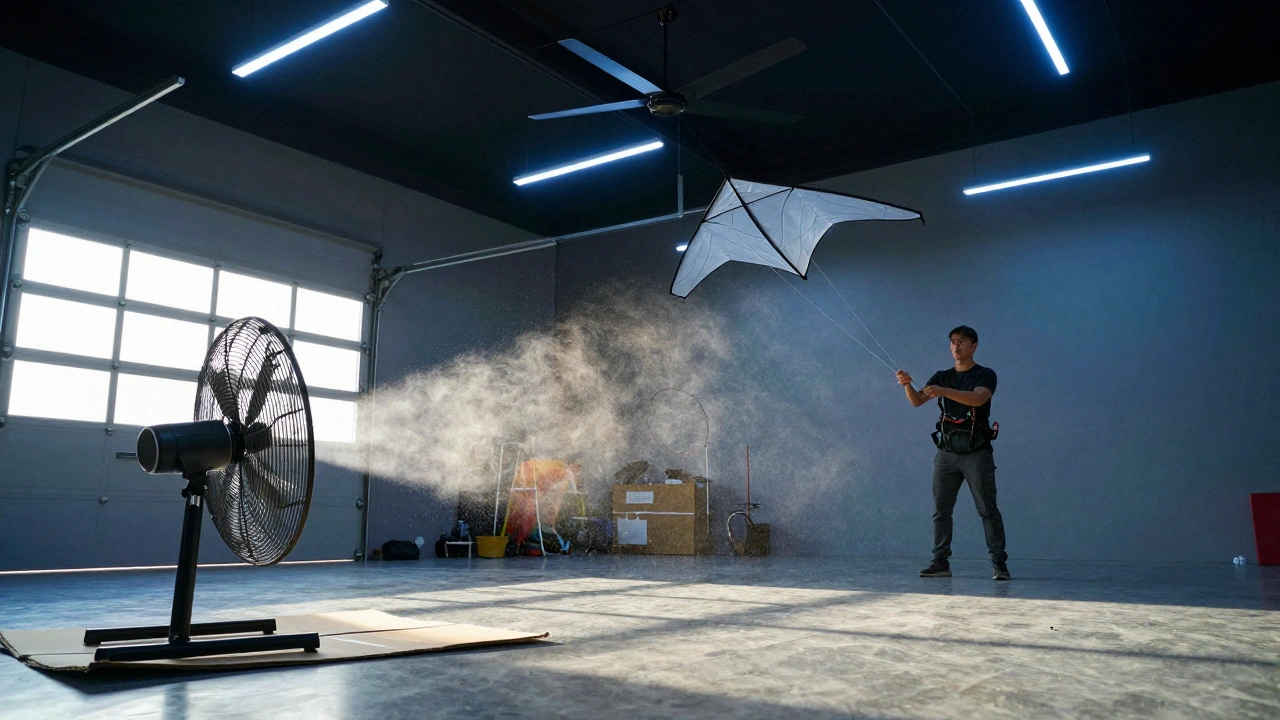
Ceiling Fans are rotating devices used to circulate air in rooms offer a powerful source if set correctly. Never place a kite directly under a spinning blade. Instead, turn the fan to the lowest speed setting and reverse the direction to push air downward gently. Stand several feet away from the rotation radius. Aim the kite's tail toward the fan's center to catch the downwash.
If you don't have a ceiling fan, a box fan on the lowest setting works similarly. Cover the back with cardboard to concentrate the beam. Avoid pointing high-speed fans directly at the pilot's face, which disrupts your own breathing and concentration. The target is a smooth column of air, not a chaotic gust.
Selecting Equipment for Tight Spaces
Not every design works in a 15-foot room. Large traditional kites need wingspan clearance that most hallways lack. You need something responsive but compact. The Delta Kite is a triangular shaped kite known for stability handles tight corners well due to its aerodynamic shape. It resists flipping when pulled quickly by a sudden gust.
Stunt Kites are dual-line kites designed for maneuverability provide even more control. With two lines, you can adjust the angle of attack on the fly. This compensates for uneven air. However, they require more skill. Beginners might prefer single-line designs with bridle points that self-correct.
| Type | Span Limit | Best For |
|---|---|---|
| Parafoil | 3 ft | Low air velocity |
| Sled | 2 ft | Drafty corners |
| Sport Stunt | 4 ft | Skilled pilots |
Look for lightweight frames. Bamboo splines weigh less than fiberglass and react slower to pressure spikes. Soft plastic skins tear easily indoors, so consider rip-stop nylon fabric. These materials handle abrasion from furniture edges better than thin film.
Protecting Your Environment
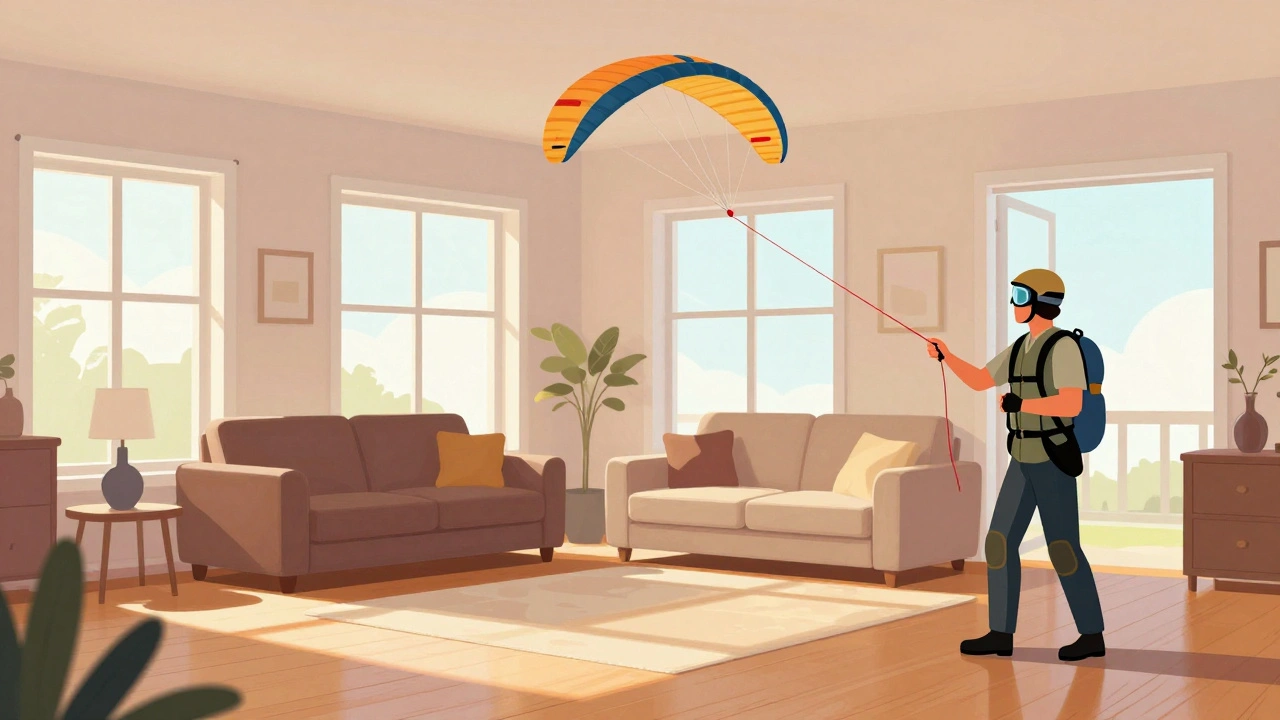
Fly in a large room with few sharp corners first. Living rooms and garages work better than narrow bedrooms. Before launching, walk the perimeter. Remove breakable objects from the flight path. Corded lamps, vases, and glass tables pose significant risks.
Line management matters more indoors. Long lines snare easily on chair legs and door handles. Keep the string short, perhaps 15 feet max. Use a wrist reel so you can drop the spool instantly if control is lost. A hard brake mechanism saves your television screen from becoming a casualty.
Check the height of hanging lights. Chandeliers sit lower in dining rooms. Establish a safe operating altitude limit for the session. Never fly high enough to risk snagging light fixtures. If you feel resistance pulling down, cut the power immediately by stepping on the brake pedal.
Troubleshooting Flight Issues
Even with perfect prep, issues arise. If the kite drops immediately, you lack sufficient wind speed. Turn on the box fan on low. If it dives left repeatedly, the right side of the wing is heavy. Adjust the bridle knot length slightly.
Sudden spins indicate cross-drafts. Check under the carpet for air leaking from a sub-floor vent. Sometimes insulation settles, allowing basement air to enter the main level. Temporarily blocking that spot with a piece of cardboard fixes the drift.
Momentum loss means your kite is too heavy for the current. Switch to a smaller size. Size isn't just about area; it's about weight-to-lift ratio. A smaller kite accelerates faster in weak air than a bulky one.
Safety Guidelines
Always wear eye protection. A loose line snapping back can strike sensitive areas. Also, watch out for other household members who might walk blindly into the path. Announce that you are flying before starting. Children might mistake the flying object for a toy and try to grab it.
Never fly near electrical wiring. High-voltage lines are rare in living spaces, but extension cords carrying loads are common. If the line touches a live socket, severe injury occurs. Inspect your line for fraying before every session. Cut worn sections immediately.
Can I fly kites near an open window?
It is generally unsafe. Windows create strong thermal updrafts. If you must, ensure the frame is sealed and the glass is fully closed to prevent suction effects.
What temperature affects indoor flight?
Temperature alone doesn't matter as much as air density differences. Slight variations cause vertical currents. Maintain room temp stability for best results.
Is running a dehumidifier safe during flying?
Yes, provided the unit exhausts to the outside. Indoor venting adds moisture and heat to the room air, altering density unpredictably.
How long should the string be?
Keep it under 15 feet. Longer lines increase the risk of snagging obstacles hidden by shadows or furniture in low light conditions.
Why does my kite spin wildly?
This usually indicates uneven bridle tension. Shorten one side by half an inch and retest to balance the center of effort.
Mastering the indoor environment turns a rainy weekend into an adventure. By treating the air currents like variables in an equation, you gain reliable flight performance. Start small, monitor the HVAC settings, and protect your gear. Once you learn to read the hidden winds, your home becomes a canvas for endless motion.