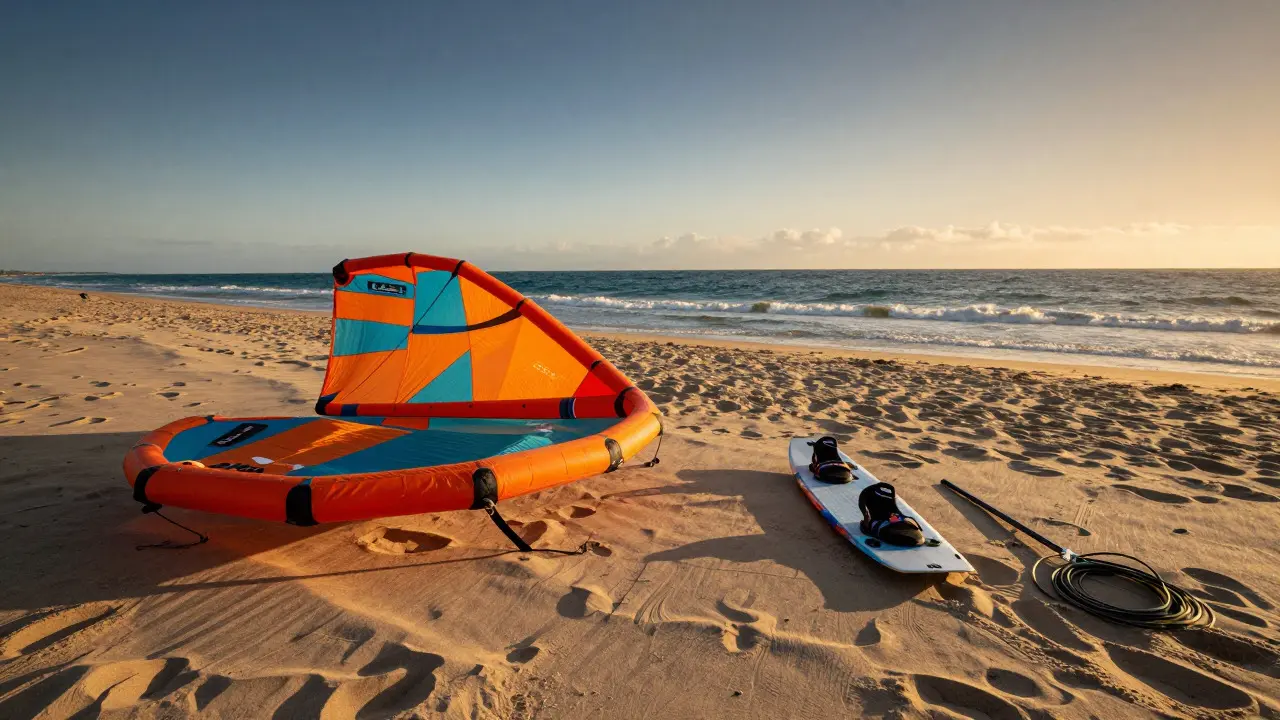
Standing on the beach with a tangled line set and a board that feels too heavy is not the way to start your first session. The right gear doesn't just make riding easier; it determines whether you stay in the water or end up wrestling with a depower system in choppy winds. Whether you are buying your first kit or upgrading an old one, understanding how kiteboarding equipment works together saves money and frustration.
This guide breaks down the core components-kites, boards, bars, and accessories-and explains exactly what matters for your body weight, wind range, and skill level. We will skip the marketing fluff and focus on practical specs, sizing rules, and the small details that separate a safe ride from a dangerous one.
Choosing Your First Kite: Size and Shape Matter
The kite is the engine of your setup. It generates lift, controls speed, and handles safety. For beginners, the most critical factor is the size relative to your all-in weight (body plus wetsuit). A common rule of thumb is that a beginner needs a larger kite than an expert to generate enough power in lighter winds. If you weigh 150 lbs (68 kg), a 12m or 13m kite is usually the sweet spot for learning. Experts might fly a 7m or 8m in the same conditions because they can manage higher apparent speeds and more dynamic pressure.
Kite shapes have evolved significantly over the last decade. Today, you will mostly see two main types: C-hybrid and Depower. C-hybrids offer a balance between direct feel and ease of use, making them popular for freeride and light wind conditions. Depower kites, often called LEI (Leading Edge Inflatable) designs, are forgiving and easy to relaunch, which makes them ideal for beginners and those who prioritize safety. Most major brands like Duotone, Cabrinha, and North Kiteboarding now produce models that blend these characteristics, so the difference is less about rigid categories and more about specific model tuning.
- Light Wind Kites: Sizes 14m-18m. Best for riders under 130 lbs or very low wind days.
- All-Round Kites: Sizes 9m-13m. The most versatile range for average-sized riders.
- Big Wave/Heavy Weight Kites: Sizes 5m-7m. Designed for high wind or heavy riders needing precise control.
Boards: Twin Tips vs. Directional
Your board determines how you move across the water. Most new riders start with a twin-tip board, which is symmetrical and allows you to ride in both directions. This flexibility is crucial when learning to jump, as you don't need to plan your landing direction carefully. As you progress, you might switch to a directional board, which looks like a surfboard but is stiffer and designed for one-way riding. Directional boards excel in wave riding and long-distance cruising because they track straighter and cut through chop better.
When selecting a twin-tip, consider the volume and shape. A wider, thicker board provides more buoyancy, keeping you out of the water longer in light winds. A narrower, thinner board offers more speed and control in strong winds but requires more power to get airborne. Footstrap placement is another key attribute. Beginners should look for boards with adjustable footstraps that allow for a relaxed stance. Pro-level boards often have fixed straps optimized for aggressive jumping, which can be uncomfortable if your technique isn't refined yet.
| Feature | Twin-Tip Board | Directional Board |
|---|---|---|
| Best For | Freestyle, Light Wind, Learning | Waves, Speed, Downwind |
| Riding Direction | Both ways | One way only |
| Volume Requirement | Higher (more float) | Lower (less float needed) |
| Footstraps | Adjustable/Fixed | Fixed/None (fin-based) |
| Learning Curve | Moderate | Steep |
The Control Bar: Your Primary Interface
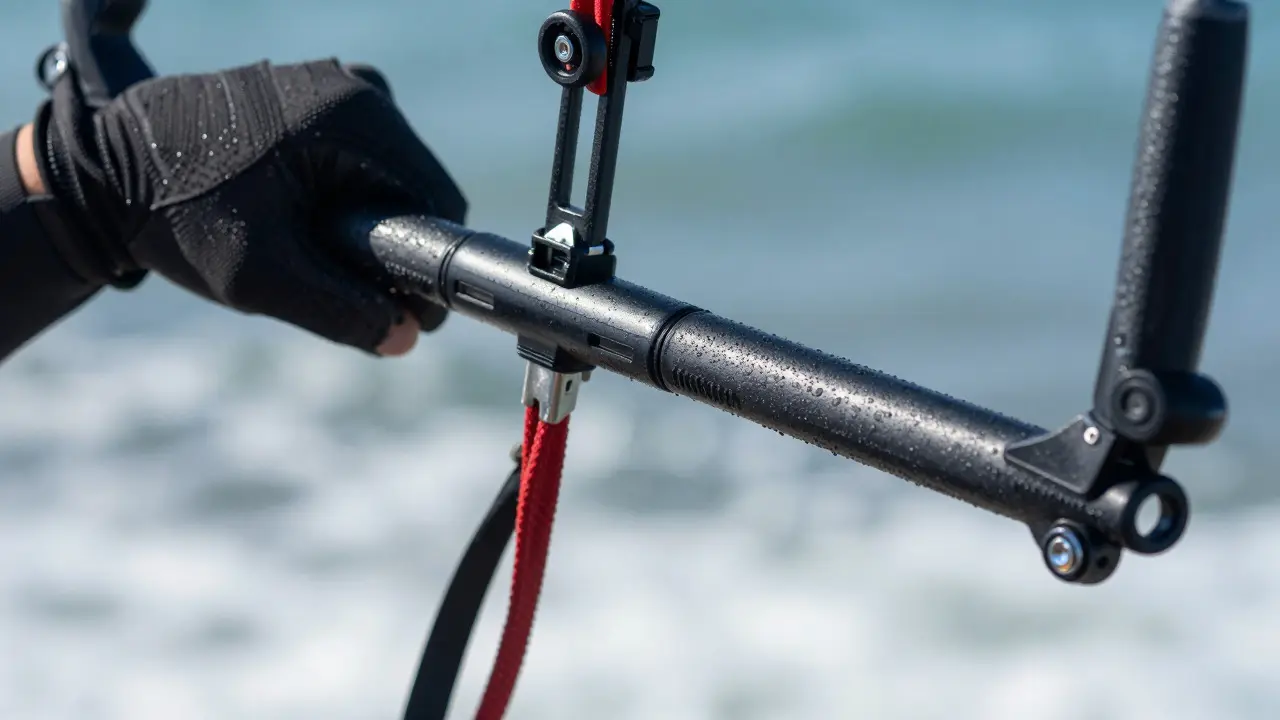
The control bar is the part of the equipment you touch every second of the ride. It translates your hand movements into kite steering and power adjustment. Modern bars typically feature a chicken loop (the handle you hold) and a depower lever (the handle you pull to reduce power). Understanding the geometry of the bar is vital. The length of the bar affects leverage; a shorter bar gives more sensitivity, while a longer bar provides more stability. Most standard bars are around 45-50 cm long, which suits the majority of riders.Safety mechanisms are built directly into the bar system. You will find a quick-release (QR) mechanism on the front lines. In an emergency, pulling the QR releases the tension on the leading edge lines, causing the kite to drift up and out of the power zone. However, the QR does not fully release the back lines, which keeps the kite attached to you via the leash. This design prevents the kite from flying away entirely while allowing it to become powerless. Always practice operating the QR and depower lever on land before entering the water. Muscle memory is your best friend when panic sets in.
Harnesses: Protecting Your Lower Back
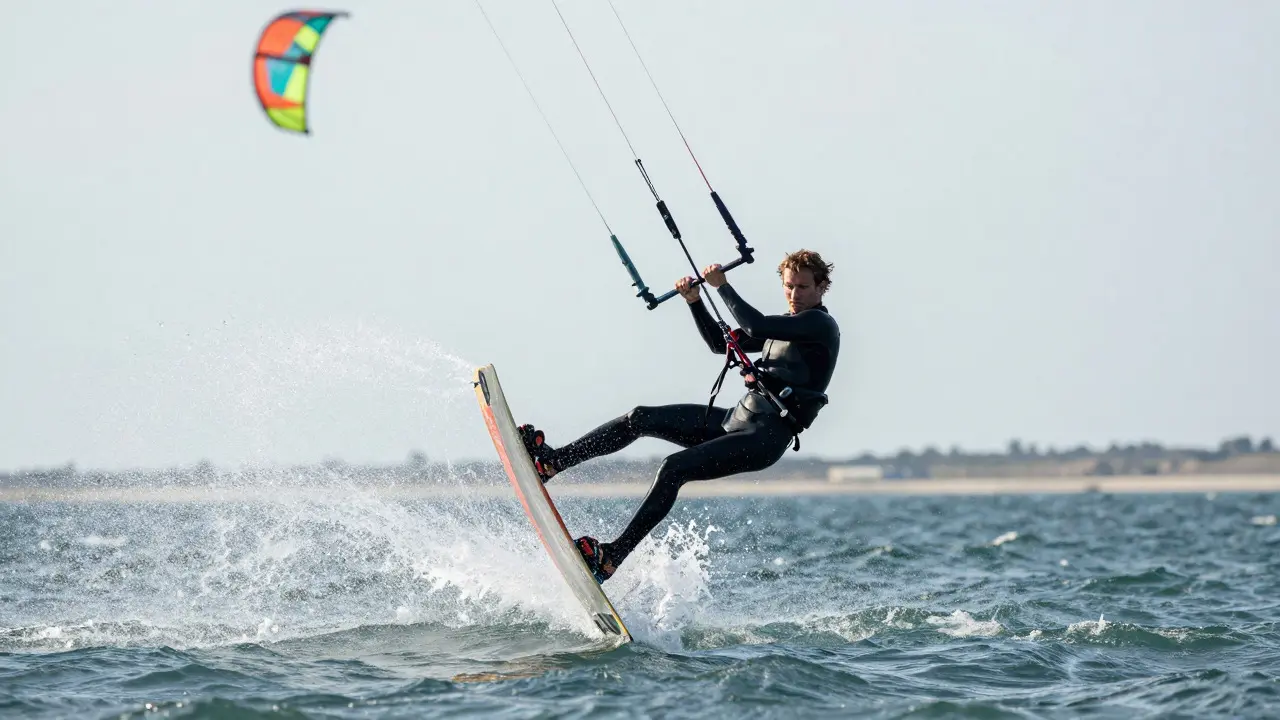
If you spend more than 30 minutes in the air, a harness is non-negotiable. It transfers the load from your arms and shoulders to your lower back, reducing fatigue significantly. There are two main types: seat harnesses and waist harnesses. Seat harnesses wrap around your hips and lower back, offering maximum support and comfort for long sessions. They are the preferred choice for freeride and light wind riders who spend hours in the water. Waist harnesses sit higher on the torso, offering more freedom of movement for jumps and tricks but providing less spinal support.
Fit is everything here. A harness that is too loose will shift during jumps, causing chafing and discomfort. One that is too tight restricts breathing and movement. Look for padding made from neoprene or closed-cell foam, which stays dry and insulating. Also, check the attachment point. Most modern harnesses have a single central attachment point on the back, but some premium models offer dual points for even weight distribution. Ensure the buckle system is robust; plastic buckles can crack over time, especially in saltwater environments.
Critical Accessories and Safety Gear
Beyond the big three (kite, board, bar), several accessories determine your safety and comfort. The first is the impact vest. While not always mandatory by local regulations, it is highly recommended for beginners. It protects against collisions with other riders, rocks, or the bottom of the sea. Next is the helmet. In wave conditions or shallow water, a helmet is essential. Even in flat water, a helmet protects against head strikes during hard landings.
Don't overlook the line management tools. A line comb helps keep the four steering lines separated, preventing tangles that can cause sudden loss of control. A spare line repair kit should be in your bag at all times. Line breaks are rare but catastrophic if unaddressed. Finally, consider your clothing. A wetsuit thickness depends on water temperature, not air temperature. In Portland, Oregon, where we get cool Pacific waters year-round, a 4/3mm suit is standard for summer, while a 5/4mm is necessary for winter. Dry suits are an option for cold-water enthusiasts, but they require more maintenance and cost more.
Common Mistakes When Buying Gear
Many new riders make the mistake of buying the cheapest option available. While budget-friendly kits exist, cutting corners on safety features like the depower system or line quality can lead to expensive repairs or worse. Another common error is ignoring the all-in weight calculation. Remember to add 5-10 lbs for your wetsuit and boots when sizing your kite. Buying a kite that is too small forces you to wait for stronger winds, which limits your riding opportunities. Conversely, a kite that is too large can be overpowering and difficult to control, leading to crashes.
Finally, avoid mixing brands without checking compatibility. While most kites and bars are universal, some specific systems require matching parts. For example, certain brands use proprietary quick-release mechanisms. If you buy a used kite, verify that the bar and harness are compatible with the kite's line layout. Mixing incompatible parts can compromise the safety system, turning a minor issue into a major hazard.
Frequently Asked Questions
What size kite do I need for my weight?
As a general guideline, add 10% to your body weight to estimate your all-in weight. For beginners, choose a kite size that covers a wide wind range. A 12m kite is suitable for riders between 130-160 lbs in moderate winds. Lighter riders may need 14m+ kites, while heavier riders might start with 10-11m kites depending on local wind conditions.
Is a harness really necessary for beginners?
Yes, if you plan to ride for more than 20-30 minutes. Without a harness, the load stays on your arms and shoulders, leading to rapid fatigue and reduced control. A seat harness distributes the force to your lower back, allowing you to focus on steering and balance rather than holding onto the bar tightly.
Can I use any board with any kite?
Technically yes, as connections are universal. However, performance varies. A high-volume board paired with a small, powerful kite can be sluggish. A low-volume board with a large, light-wind kite may be difficult to launch. Match the board's volume and stiffness to the kite's power output for optimal responsiveness.
How often should I replace my kite lines?
Inspect your lines after every season. Look for fraying, UV damage, or stiff spots. Generally, lines last 3-5 years with proper care. Rinse them with fresh water after each saltwater session and store them coiled loosely. If you notice any weak points, replace the entire set immediately to ensure uniform strength.
What is the difference between a C-kite and a Bow kite?
C-kites have a curved trailing edge and no bridles, offering a direct feel and higher power. Bow kites have a straight trailing edge with bridles, making them easier to relaunch and safer in gusts. Modern kites often blend these designs, but bow-style kites remain the standard for beginners due to their forgiving nature.