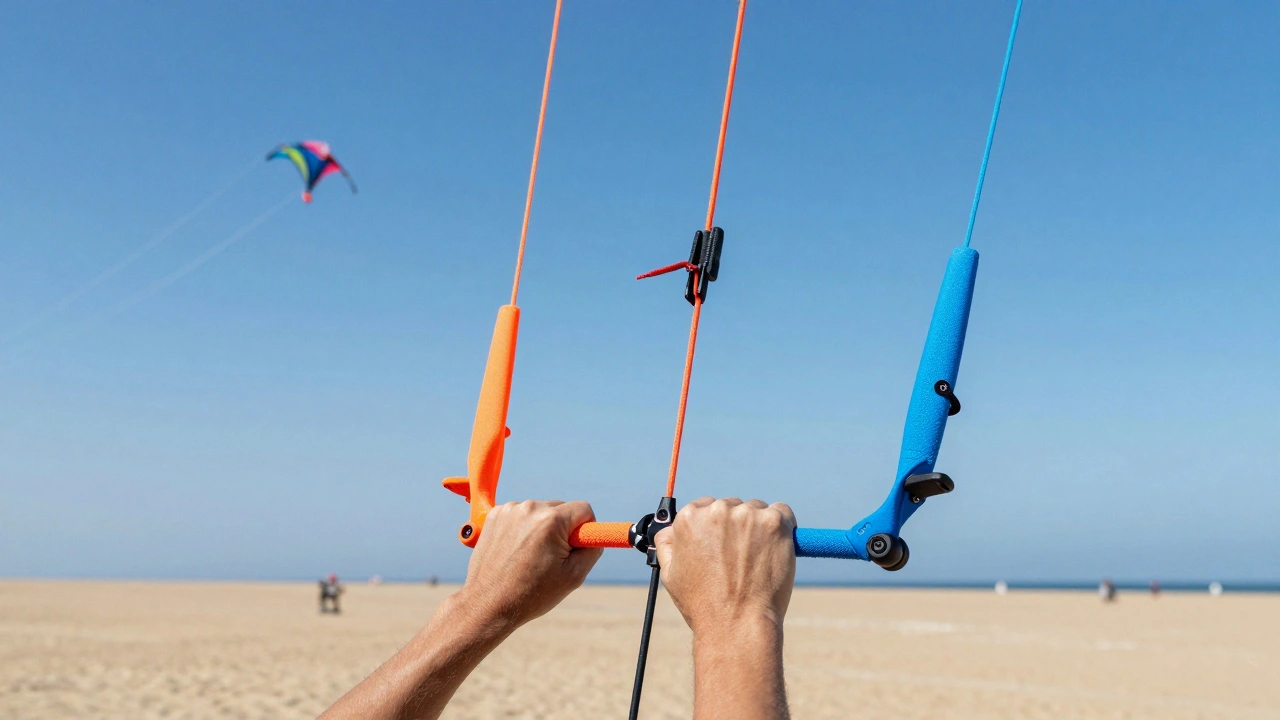
Imagine standing on a crowded beach or a windy hilltop, eyes locked on the sky. You feel the tension in your hands, but for a split second, you lose track of which line is which. In that moment of confusion, your kite might dip dangerously close to another flyer, or worse, crash into a spectator. This isn't just an inconvenience; it's a hazard. The solution lies not in better kites, but in better lines. Specifically, color-coded kite lines are the unsung heroes of safe and enjoyable kite flying.
Many beginners assume that any strong string will do. They buy generic white or clear fishing line because it’s cheap and invisible. But invisibility is exactly the problem. When you fly dual-line stunt kites, power kites, or even large single-line kites in groups, knowing exactly where your lines go is critical. Color coding transforms a chaotic web of strings into a manageable, intuitive system. It helps you maintain orientation, prevents tangles with other flyers, and significantly reduces the risk of injury.
Why Line Visibility Matters More Than You Think
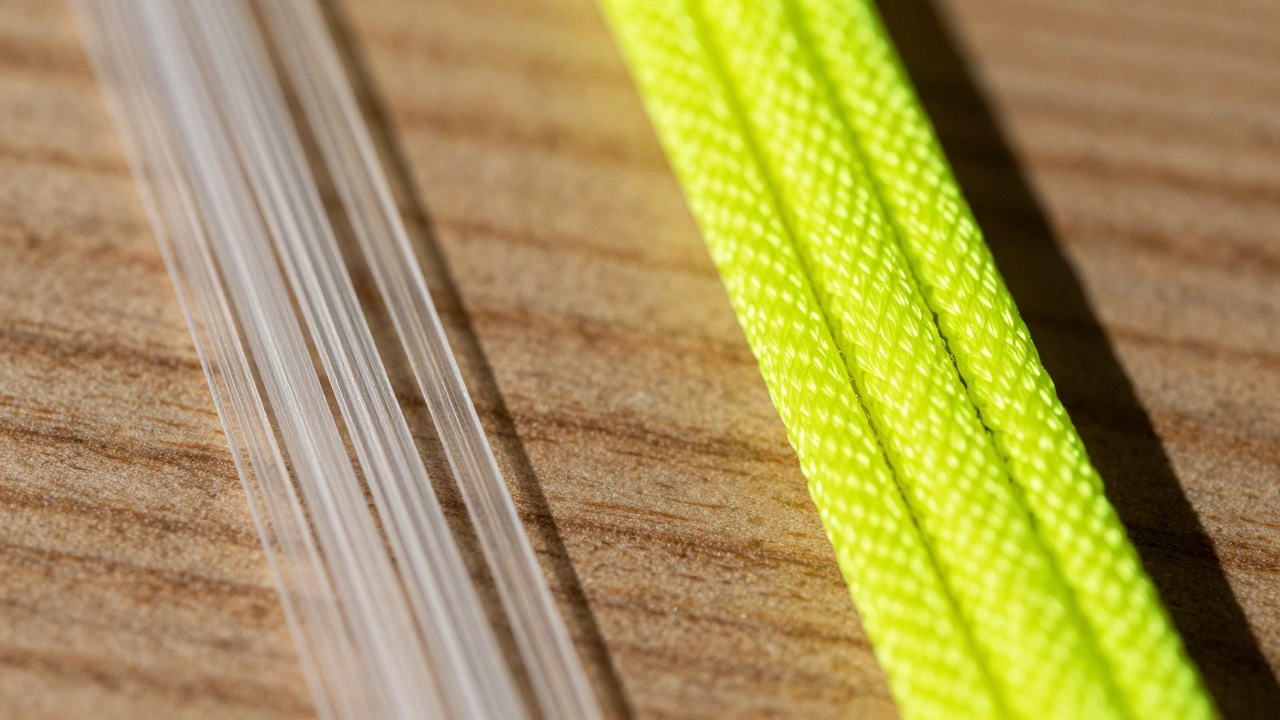
Most people underestimate how hard it is to see thin nylon or Dyneema lines against a bright blue sky or a dark tree line. Human eyes are excellent at detecting contrast, but poor at spotting low-contrast objects moving at high speeds. A white line against a cloudy sky disappears instantly. Even a black line can vanish against dark foliage or water.
When you cannot see your own lines, you rely entirely on muscle memory and the pull in your hands. This works fine until something goes wrong-like a sudden gust of wind or a nearby obstacle. If you don’t know visually where your lines extend, you can’t react quickly enough to avoid collisions. Color-coded lines provide immediate visual feedback. High-visibility colors like neon orange, bright yellow, or electric green stand out against almost any background. This allows you to monitor the entire flight path of your kite, not just the kite itself.
Consider the difference between flying with clear monofilament and a brightly colored braided line. With clear line, you’re essentially flying blind above eye level. With color-coded lines, you create a visible bridge between your hands and the kite. This visual connection is crucial for judging distance and speed, especially when landing or maneuvering near other people.
Maintaining Orientation During Complex Maneuvers
If you fly dual-line stunt kites, orientation is everything. These kites require precise inputs from both left and right lines to perform loops, rolls, and spins. If you mix up your lines, the kite will likely crash or enter an uncontrollable spiral. While experienced flyers develop a strong sense of touch, relying solely on tactile feedback is risky, especially when fatigue sets in or when flying in turbulent air.
Color coding solves this by assigning a specific color to each function. For example, many pilots use red for the left line and blue for the right line. This simple distinction allows you to verify your grip and line position at a glance. You don’t have to think about which hand holds which line; your brain processes the color automatically. This frees up mental energy for focusing on the kite’s movements and the wind conditions.
This principle extends beyond dual-line kites. For quad-line kites used in traction sports or aerial yoga, different colors might indicate brake lines versus steering lines. In team kite battles or synchronized displays, consistent color coding across multiple flyers ensures everyone knows whose lines are whose. This shared visual language prevents accidental entanglements and keeps the flow of the activity smooth and safe.
Safety Benefits in Crowded Environments
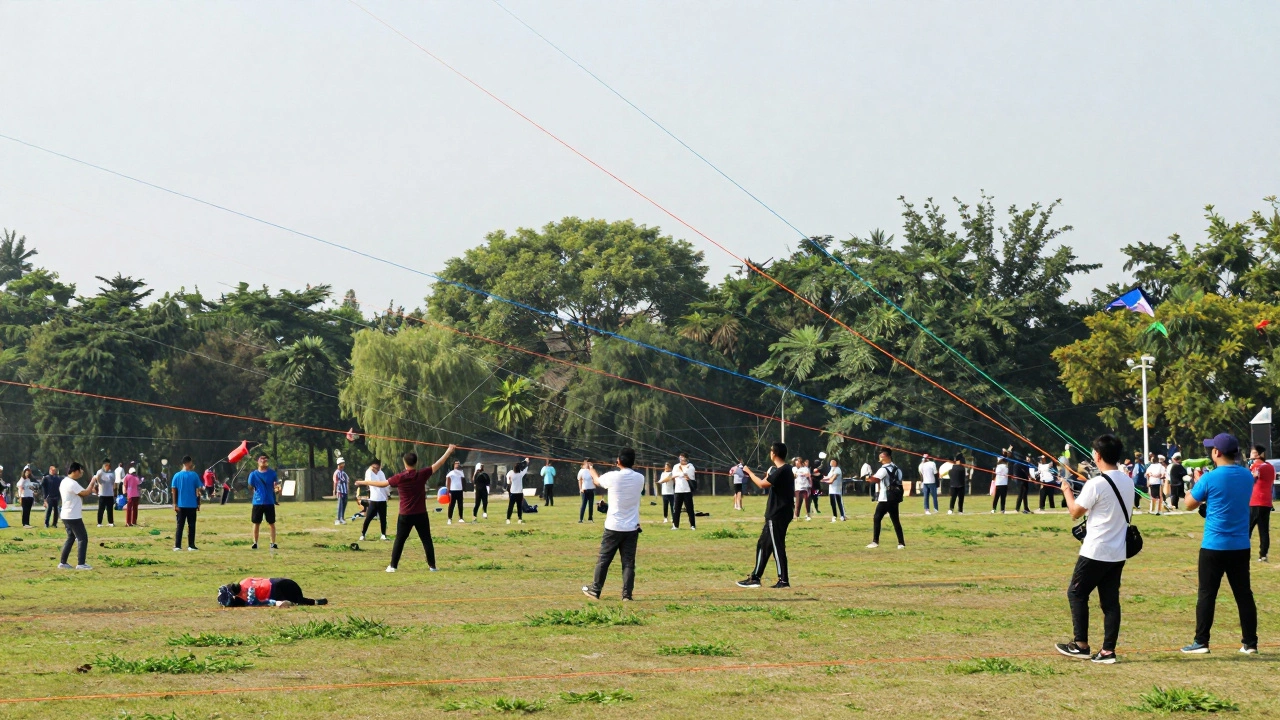
Kite flying is rarely a solitary activity. Beaches, parks, and open fields attract families, hobbyists, and professionals alike. In these crowded spaces, line management becomes a public safety issue. Tangled lines can whip around with surprising force, causing cuts or bruises. Worse, a loose line can become a trip hazard for pedestrians or cyclists.
Color-coded lines act as a warning system. When other people see bright, distinct lines, they recognize them as active equipment rather than random debris. This awareness encourages bystanders to keep a safe distance. It also helps other kite flyers identify potential conflicts before they happen. If you see a red line crossing your path, you know immediately that another flyer is operating nearby and can adjust your position accordingly.
Emergency situations benefit greatly from high-visibility lines too. If a kite gets stuck in a tree or power line (hopefully never the latter), rescuers need to locate the lines quickly to free the kite without damaging property or injuring themselves. Brightly colored lines are much easier to spot and handle than clear or white ones. Additionally, if a line breaks and flies away, a colored segment is more likely to be noticed and retrieved, reducing litter and environmental hazards.
| Color | Best Backgrounds | Visibility Rating | Common Use Case |
|---|---|---|---|
| Neon Orange | Blue sky, Green grass | High | General flying, Left line |
| Bright Yellow | Blue sky, Dark trees | High | Right line, Low light |
| Electric Blue | Green grass, Sand | Medium-High | Contrast with Orange/Yellow |
| White/Clear | Night (with lights) | Low | Aesthetic only, Not recommended for safety |
Choosing the Right Colors for Your Setup
Selecting colors isn’t just about personal preference; it’s about maximizing contrast and consistency. The best color pairings depend on where you fly most often. If you spend time on sandy beaches, avoid beige or tan lines. If you fly in wooded areas, steer clear of brown or dull green. Instead, opt for colors that pop against the dominant background.
For dual-line setups, stick to two contrasting colors. Red and blue is a classic combination because our eyes distinguish these hues easily. Neon orange and neon green offer even higher visibility in daylight. Avoid using similar shades like light blue and dark blue, as they can blur together at a distance. Consistency is key-always use the same color for the same function. This builds muscle memory and reduces cognitive load during flight.
You don’t need to buy pre-colored lines to achieve this effect. Many advanced flyers add color markers to their existing lines. Heat-shrink tubing, colored tape, or specialized line dyes can create distinct sections near the handles or along the entire length. However, factory-colored braided lines are generally more durable and uniform. Look for lines made from UHMWPE (Ultra-High Molecular Weight Polyethylene) materials like Dyneema or Spectra, which are strong, lightweight, and available in vibrant colors.
Maintaining Visibility Over Time
Even the brightest lines fade over time due to UV exposure and abrasion. Sunlight degrades pigments, turning neon orange into pale pink after a season of heavy use. Friction against the ground, sandpaper-like surfaces, or rough kite spars can also wear down the outer sheath, revealing duller inner fibers. Regular inspection is essential to ensure your lines remain visible.
To prolong the life of your colored lines, store them indoors away from direct sunlight. Use line socks or protective sleeves when winding them onto spools to reduce friction. Check for fraying or discoloration before each flight session. If a section becomes significantly faded or worn, replace it promptly. Don’t wait until a line breaks to upgrade your gear. Proactive maintenance ensures that your safety features remain effective throughout the flying season.
Practical Tips for New Flyers
If you’re new to kite flying, start with a kit that includes color-coded lines. Many beginner-friendly dual-line kites come with distinctively colored strings to help you learn the basics safely. Pay attention to how the colors correspond to your hands and the kite’s controls. Practice identifying the lines in various lighting conditions-early morning, midday sun, and dusk-to build confidence.
Always communicate with other flyers in your area. Establish a simple signal system for indicating line direction or intent. For example, waving your left hand might mean "my left line is loose." This verbal and visual coordination enhances group safety. Finally, respect local regulations regarding kite size and location. Flying in designated areas reduces the likelihood of conflicts with pedestrians, cyclists, or aircraft.
Color-coded kite lines are more than a cosmetic upgrade; they are a fundamental tool for safe and skilled flying. By improving visibility, maintaining orientation, and enhancing situational awareness, they allow you to focus on the joy of flight rather than the fear of accidents. Whether you’re launching a delicate diamond kite or battling a powerful foil kite, investing in high-visibility, color-coded lines pays dividends in peace of mind and performance.
What are the best colors for kite lines?
The best colors are high-visibility neutrals like neon orange, bright yellow, and electric green. These colors contrast well against blue skies and green landscapes. For dual-line kites, pairing two distinct colors like red and blue or orange and green helps with orientation.
Can I dye my existing kite lines?
Yes, you can dye synthetic kite lines using fabric dyes designed for polyester or nylon. However, results may vary, and the dye might not penetrate deeply. For consistent and durable coloring, buying factory-colored lines is usually more reliable and safer.
Why are clear kite lines dangerous?
Clear lines are nearly invisible, making it hard to see where they end. This increases the risk of tangling with other flyers, tripping spectators, or crashing into obstacles. Lack of visibility also makes it difficult to judge distance and control the kite precisely.
How often should I replace my kite lines?
Inspect your lines before every flight. Replace them if you notice significant fading, fraying, or reduced strength. Generally, lines last one to three seasons depending on usage frequency and storage conditions. Never fly with damaged lines.
Do color-coded lines affect kite performance?
No, color coding does not negatively impact performance. Modern colored lines are made from high-strength materials like Dyneema, which are lighter and stronger than traditional white lines. The added benefit of visibility improves control and safety without adding weight.