You probably picture a kite as a toy for a sunny Sunday afternoon. But in the 17th and 18th centuries, these lightweight frames of bamboo and silk were serious technology. They weren't just flying; they were measuring lightning, mapping coastlines, and teaching geometry to schoolchildren across Europe and America. The story of the colonial-era kite is really a story about how humans used simple physics to solve complex problems in education, exploration, and communication.
The Science Classroom Takes Flight
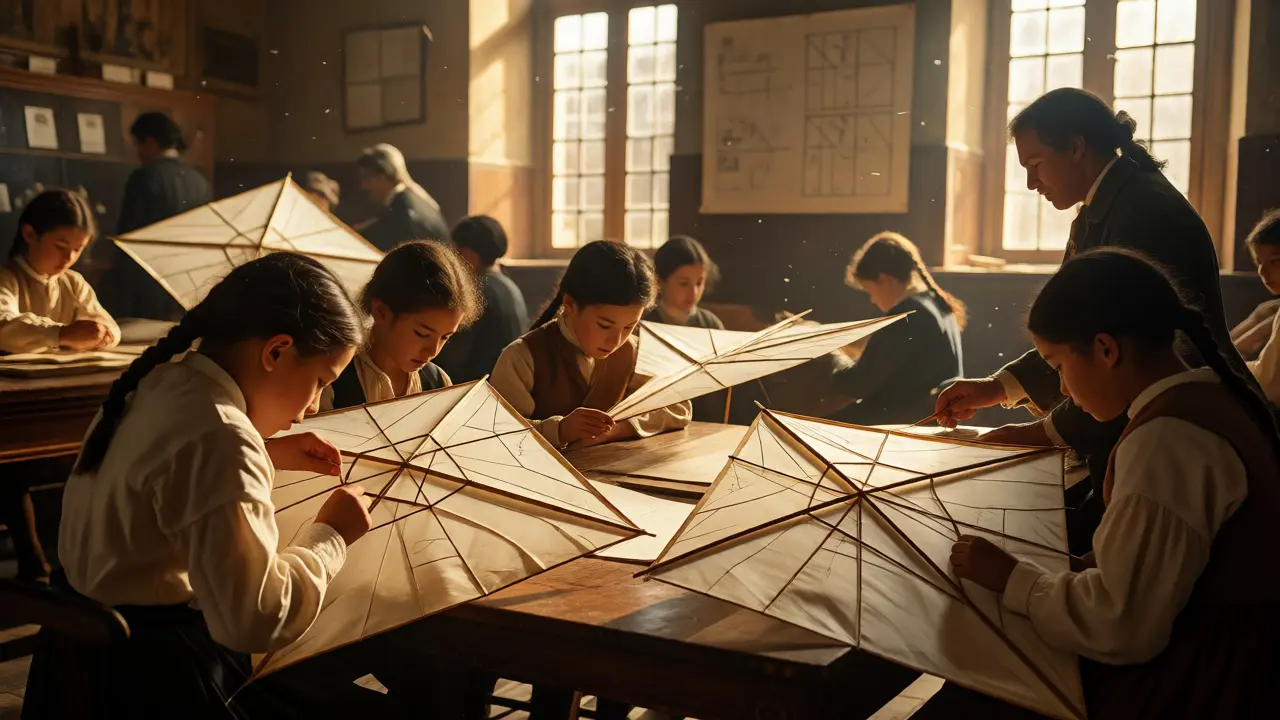
Before standardized testing or digital simulations, educators needed tangible ways to demonstrate abstract concepts. Enter the kite. In colonial schools, particularly in France and Britain, kites became essential teaching aids for mathematics and natural philosophy. Teachers realized that building a kite required understanding angles, symmetry, and aerodynamics. It was hands-on learning before "hands-on" was a buzzword.
Consider the work of Georges-Louis Leclerc, Comte de Buffon. A French naturalist, he didn't just write about birds; he built kites to study flight mechanics. His experiments helped students visualize lift and drag. If you've ever tried to get a box kite to fly in a gentle breeze, you know it's finicky. Buffon’s students learned resilience through trial and error. They adjusted tail lengths, changed sail materials, and tweaked bridle points. This wasn't just play; it was early engineering pedagogy.
The curriculum often tied kite construction to geometry lessons. Students calculated the area of the sail versus the weight of the frame. They learned why a diamond shape offered stability while a delta shape offered speed. These principles, taught with paper and string, laid the groundwork for later aviation breakthroughs. You can still see this legacy in modern STEM programs where kids build model airplanes using similar principles first tested by colonial students.
Exploration Beyond the Horizon
If education was the indoor application, exploration was the outdoor adventure. Colonial explorers faced vast, unknown terrains-dense forests, wide rivers, and mountain ranges. Maps were often guesses. Kites offered a new perspective: aerial reconnaissance. While we think of drones today, colonial scientists used kites to carry cameras and instruments into the sky.
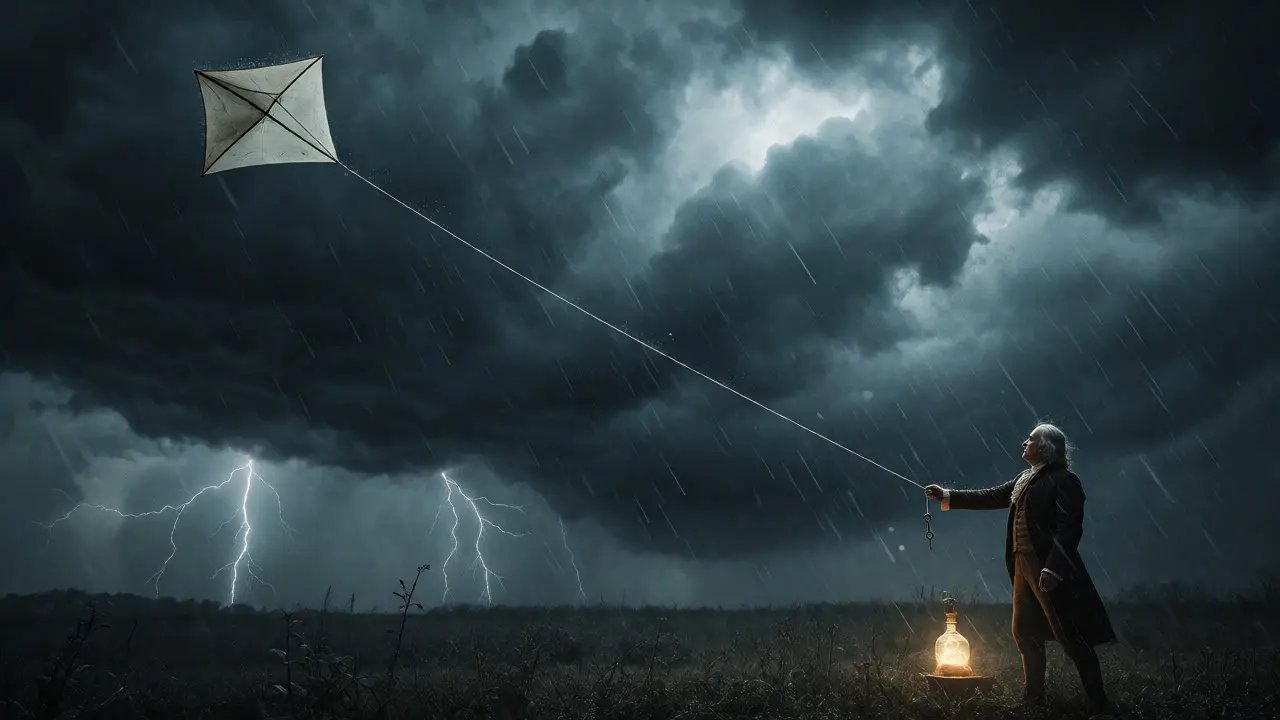
Benjamin Franklin is the most famous name associated with colonial kites, but his experiment wasn't just about catching lightning. He wanted to prove that electricity was present in the atmosphere. By flying a kite during a thunderstorm, he connected a metal key to a Leyden jar. This wasn't just a party trick; it was data collection. Franklin’s work inspired others to use kites for meteorological observations. Scientists measured temperature, humidity, and wind speed at altitudes previously unreachable without balloons.
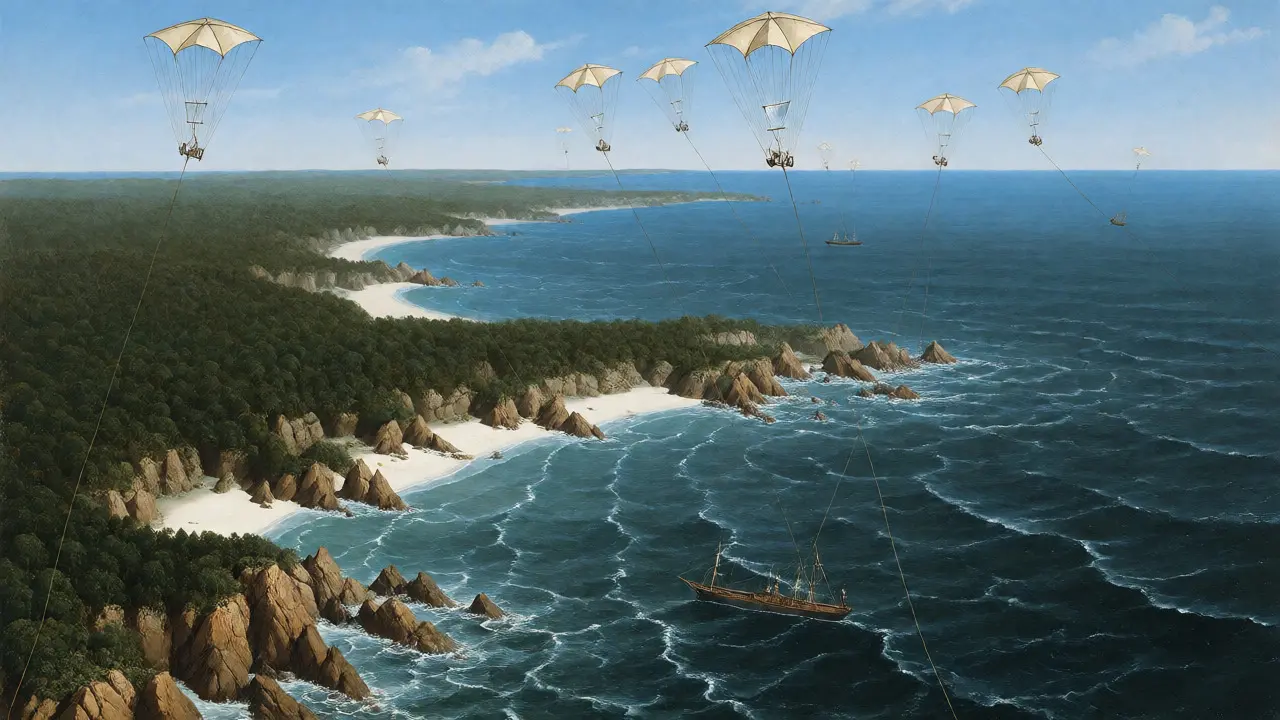
Across the Atlantic, British naval officers used kites for coastal surveying. Imagine standing on a ship deck, trying to map a jagged coastline. A kite tethered to a long line could hold a small camera or a mirror to reflect sunlight onto specific landmarks. This technique improved nautical charts significantly. Accurate maps meant safer voyages and better trade routes. The kite became a tool of empire, helping colonizers understand and control the landscapes they encountered.
Communication Across Distances
How do you send a message when there are no phones? For colonial military units and remote settlements, visual signaling was key. Kites provided a high-altitude platform for flags and lights. Unlike ground-based signals, which could be blocked by trees or terrain, a kite floated above the obstacles.
Military strategists experimented with signal kites. These were large, stable designs capable of carrying multiple flags. During the American Revolutionary War, though not widely deployed, the concept gained traction. Officers discussed using kites to relay orders from hilltops to valleys below. The idea was to create a visual network, a precursor to the semaphore towers that would follow.
Beyond war, kites facilitated scientific communication. Researchers shared findings by publishing detailed diagrams of their kite designs. Journals like the Philosophical Transactions of the Royal Society featured articles on kite performance. These publications created a transatlantic community of inventors. A farmer in Virginia could read about a design perfected in London and try it himself. Knowledge traveled faster than ships because ideas could be described in text and sketches.
| Application Area | Primary Goal | Key Technology | Notable Figures |
|---|---|---|---|
| Education | Demonstrate physics & math | Geometry models, variable tails | Buffon, local schoolmasters |
| Exploration | Aerial mapping & weather data | Camera mounts, thermometers | Franklin, naval surveyors |
| Communication | Visual signaling over terrain | Flag platforms, light reflectors | Military strategists, inventors |
Materials and Mechanics
What made these kites possible? The materials available in the colonial era dictated their design. Silk was prized for its strength-to-weight ratio. Bamboo provided a flexible yet sturdy frame. Cotton thread served as the line. These materials were accessible but required skill to work with. A poorly glued joint could ruin an expensive silk sail.
Design evolution was rapid. Early kites were often diamond-shaped, mimicking traditional Chinese designs imported via trade routes. However, colonial engineers sought more stability. They developed the box kite, a three-dimensional structure that caught wind more efficiently. This innovation mattered because it allowed heavier payloads. You couldn't attach a thermometer to a flimsy diamond kite, but a box kite held steady enough for accurate readings.
The bridle system-the strings connecting the kite to the line-was another area of intense experimentation. Adjusting the attachment point changed the angle of attack. Too steep, and the kite stalled; too shallow, and it dove. Colonials treated this tuning process like calibrating a compass. It was precise work requiring patience and observation.
Legacy in Modern Hobbyism
Today, hobbyists recreate these historical designs. Why? Because the challenge remains engaging. Building a replica of a Franklin-style kite involves researching original texts, sourcing period-appropriate materials, and testing in real weather conditions. It connects you directly to the past. When your kite lifts off, you're experiencing the same thrill a colonial student felt in a Parisian courtyard or a sailor felt on a stormy Atlantic crossing.
Clubs dedicated to traditional kite making thrive in places like Portland, Oregon, where wind patterns favor flying. Members share tips on waterproofing silk or balancing spars. They preserve techniques that might otherwise vanish. This isn't just nostalgia; it's active preservation of scientific heritage. Each completed kite is a testament to ingenuity born from necessity.
Understanding these stories changes how you view a simple toy. Next time you fly a kite, remember its roots. It’s a device that helped map continents, measure storms, and teach generations of children about the invisible forces around them. The string in your hand connects you to a rich history of curiosity and discovery.
Did Benjamin Franklin actually discover electricity with a kite?
Not exactly. Franklin proved that lightning is electrical. He collected charge from a storm cloud using a kite and stored it in a Leyden jar. He didn't discover electricity itself, which was already known, but he demonstrated its presence in the atmosphere.
What materials were commonly used for colonial kites?
Silk was preferred for sails due to its lightness and strength. Bamboo or thin wood served as the frame. Cotton or hemp thread was used for lines. Some lower-cost versions used paper and reeds, especially for educational purposes.
How did kites help in exploration?
Kites carried instruments for measuring weather conditions at altitude. They also served as platforms for early aerial photography and visual signaling, helping explorers map terrain and communicate across distances.
Were kites used for military purposes in the colonial era?
Yes, primarily for observation and signaling. Military leaders experimented with kites to raise observers above tree lines or to display flags for communication between distant units.
Why were kites important in colonial education?
They provided practical applications for geometry, physics, and engineering. Building and flying kites taught students about balance, wind resistance, and structural integrity in an engaging way.