Quick Wins for Competition Readiness
- Check line stretch and elasticity to ensure direct response.
- Symmetrize bridles to eliminate unplanned drifting.
- Test stability across different wind speeds.
- Dial in your control bar tension for maximum precision.
- Run a full gear checklist 48 hours before the event.
The Art of Tuning Your Gear
Tuning isn't just about making things tight; it's about balance. When we talk about kite competition tuning is the process of adjusting a kite's physical geometry and line tension to optimize flight stability and responsiveness , we are looking for absolute symmetry. If your kite has a slight lean, your stunt kite setup will feel "heavy" on one side.
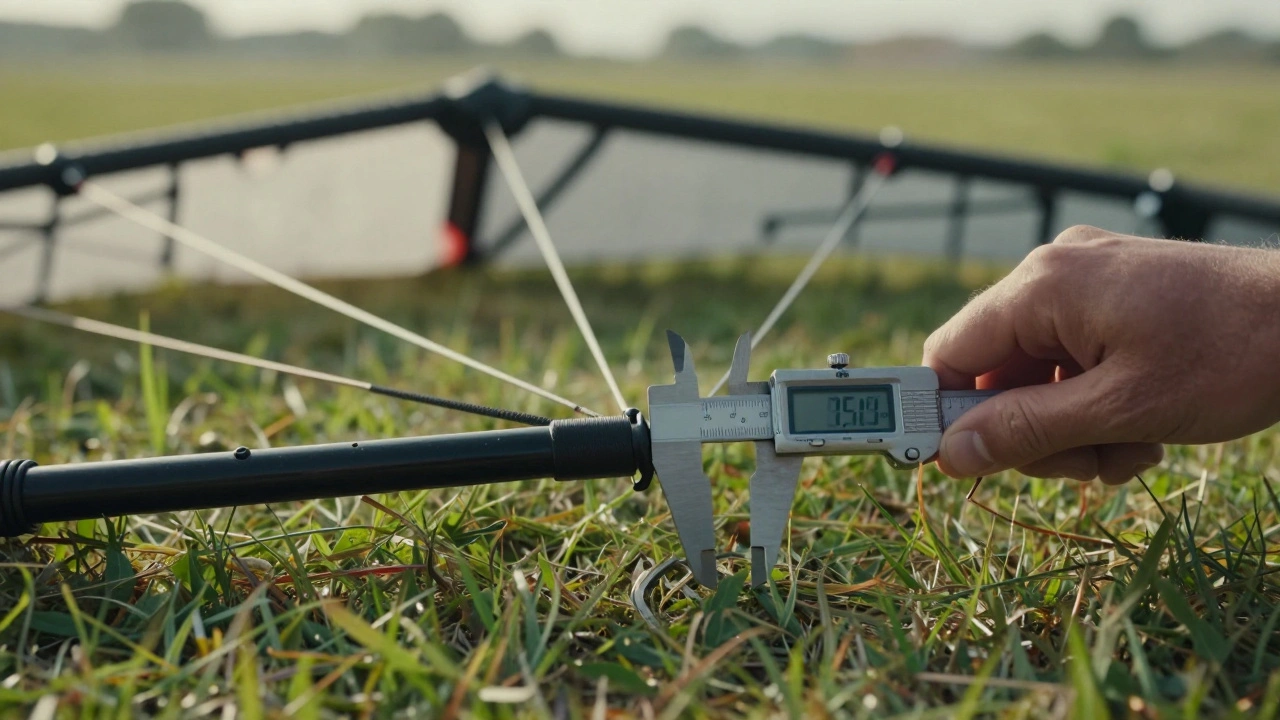
Start with the bridles. A bridle is the set of strings that connect the kite's canopy to the flying lines. If the left bridle is 2mm longer than the right, the kite will naturally pivot. Use a digital caliper to measure the distance from the attachment point to the spreader bar. Even a tiny discrepancy creates a pivot point that forces you to over-correct during high-speed maneuvers.
Next, look at your lines. Most pros use Dyneema is a high-strength ultra-polyethylene fiber known for its extremely low stretch and high tensile strength because it doesn't stretch under load. If you're using older polyester lines, they act like rubber bands, delaying your inputs. If you feel a "lag" between moving the bar and the kite reacting, your lines are likely fatigued and need replacing.
| Material | Stretch Factor | Responsiveness | Durability |
|---|---|---|---|
| Dyneema | Ultra-Low | Instant | Very High |
| Kevlar | Low | High | Moderate |
| Polyester | High | Delayed | High |
Systematic Testing Protocols
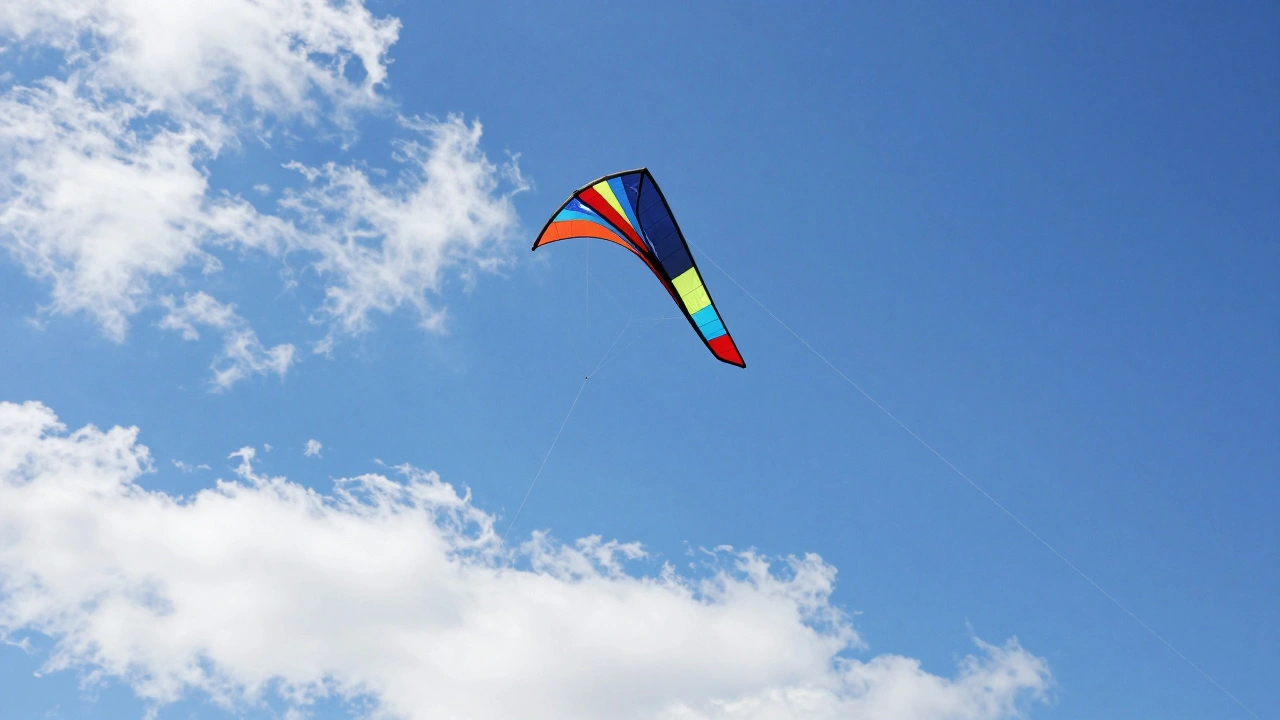
You can't just fly the kite once and call it "tuned." You need a testing protocol that mimics the competition environment. Start with a "static hover" test. Launch the kite and let it sit in the air with zero input. Does it stay centered? If it drifts, your bridle symmetry is off.
Move on to the "snap test." Perform a series of rapid, short-burst turns. A well-tuned kite should snap back to center immediately without oscillating. If the kite "wobbles" after a sharp turn, it usually means the dihedral angle is the upward angle of the kite's wings relative to the horizontal plane, which provides inherent stability is too shallow. You can often fix this by slightly shortening the center bridle point.
Don't forget to test in "dirty air." Find a spot with light turbulence-like near a treeline or a building-to see how the kite recovers from a gust. In a competition, the wind is never perfectly laminar. If your kite collapses or loses altitude during a gust, you may need to adjust the tension on your spars to make the canopy stiffer.
The Practice Phase: Muscle Memory and Precision
Once the gear is perfect, the focus shifts to the pilot. Competitive flying isn't about big tricks; it's about precision. Most judges look for a "perfect circle" or a "perfect figure-eight." To achieve this, you need to stop thinking about the kite and start feeling the tension in the lines.
Try the "blindfold drill." While staying in a safe area, close your eyes for three seconds while maintaining a steady hover. This forces you to rely on the tactile feedback from the control bar rather than visual cues. You'll start to feel the exact moment the kite loses wind speed before it actually happens.
Another pro tip is to record your flights from the ground. What feels like a perfect circle to you often looks like an egg to a judge. Use a tripod and record your patterns from a side-on perspective. This visual evidence allows you to see if you're over-steering at the apex of your turns.
Handling the Pressure of Competition Day
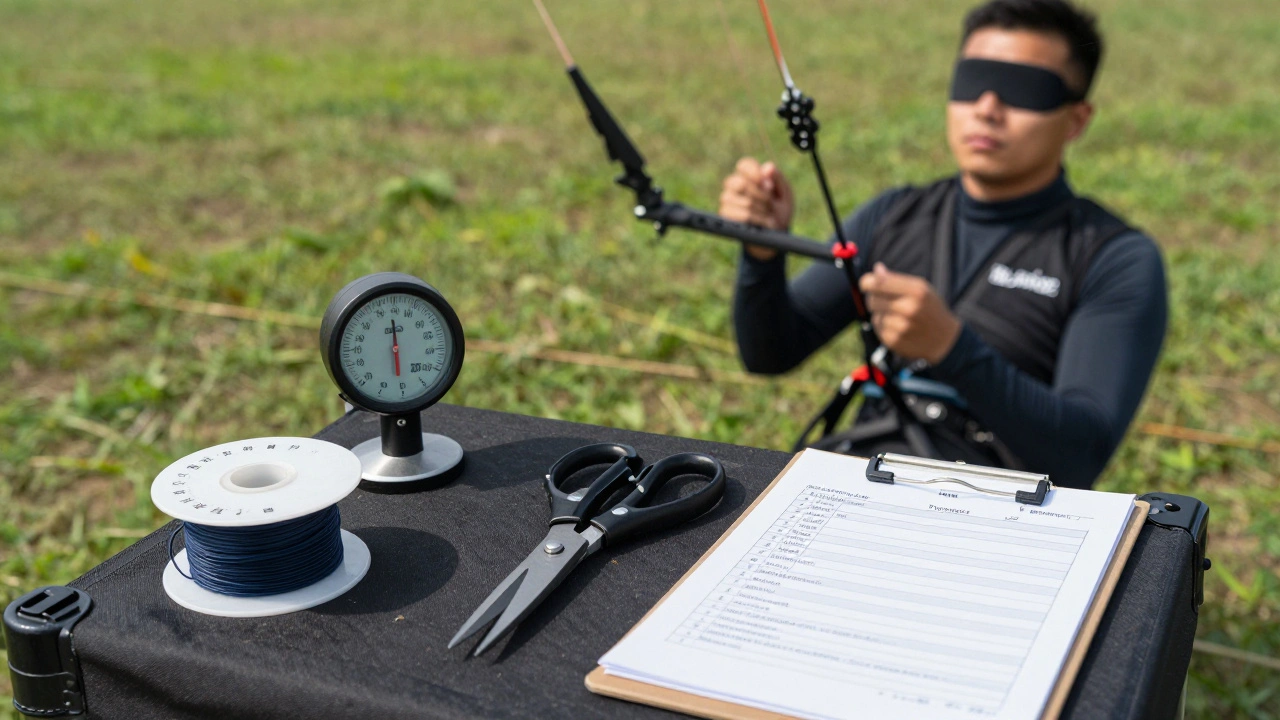
The biggest mistake pilots make is tuning their kite *at* the event. The adrenaline and stress of the crowd make it impossible to be precise. Your gear should be locked in 48 hours before you leave. Use a checklist to ensure you have everything: spare lines, a bridle adjustment kit, a high-quality wind meter, and a clean launch surface.
On the day, focus on "wind mapping." Spend ten minutes observing the wind flags and the movement of grass. Is the wind pulsing? Is there a thermal draft coming off the pavement? Adjust your flying height based on where the wind is cleanest. Usually, the wind is more stable 20-30 feet up than it is at the launch height.
If something goes wrong mid-flight, don't panic. A slight line tangle is common. The key is to recover smoothly without losing altitude. Judges often award points for a "clean recovery" from an equipment glitch, showing that the pilot is in total control of the situation.
How often should I replace my flying lines before a competition?
You should replace your lines if you notice any fraying, discoloration, or a loss of "snap." For high-stakes competitions, it's common practice to use a fresh set of Dyneema lines for every major event to ensure there is zero stretch and no risk of snapping under high-G maneuvers.
What is the best way to fix a kite that drifts to one side?
The most effective fix is to check the bridle symmetry. Use a caliper to ensure the left and right bridles are identical in length. If they are, check your control bar for balance; a skewed bar or an uneven grip can cause you to inadvertently steer the kite during a hover.
Does the wind speed affect the tuning of the kite?
Yes, definitely. A kite tuned for light winds may feel too "twitchy" or unstable in high winds. If the competition allows, have a few different bridle settings ready. Generally, a slightly more aggressive dihedral angle helps stability in stronger gusts.
What are the most important tools for a kite tuning kit?
Your kit should include a digital caliper for measuring bridles, a set of high-quality shears for clean line cuts, an anemometer to track exact wind speeds, and a variety of small knots or heat-shrink tubing to secure adjustments.
How do I improve my precision in figure-eight patterns?
Focus on the transition points. The most common error is a "flat" turn at the end of the eight. Work on a consistent steering radius and use ground-based video recording to ensure your loops are symmetrical and maintain a constant altitude.
Next Steps for Your Training
If you've mastered the basics of tuning and precision, it's time to move toward advanced aerodynamics. Start studying how different canopy materials react to wind pressure. Experiment with varying the tension of your spars to see how it changes the kite's lift-to-drag ratio.
For those looking to move from regional to national competitions, start networking with experienced pilots to learn their "secret" tuning tweaks. Every kite model has a specific "sweet spot" that isn't always listed in the manual. Finding that spot through trial and error is what separates the amateurs from the pros.