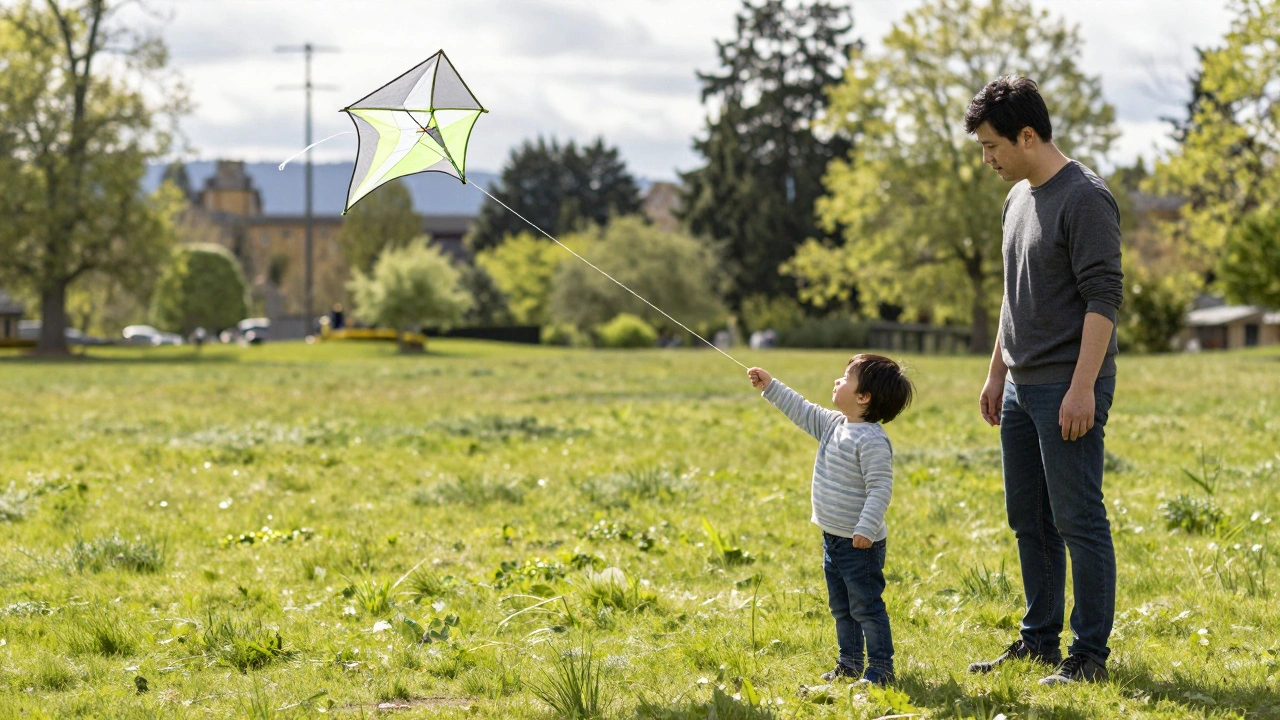
Every spring, kids in parks and open fields across Portland chase wind with kites in hand. It’s fun, it’s simple, and it’s a classic way to spend a breezy afternoon. But kite flying isn’t just about wind and string - it’s also about safety. Every year, emergency rooms see kids with eye injuries, tangled lines around fingers, and even falls from tripping over kite strings. The good news? Most of these accidents are preventable. The key isn’t banning kites - it’s matching the right kite to the child’s age and staying alert while they fly.
Why Age Matters More Than You Think
Not all kites are made the same. A 3-year-old doesn’t need the same kite as a 12-year-old. Using the wrong one increases risk. Simple plastic kites sold in toy stores often look harmless, but they come with hidden dangers. Thin, sharp lines can cut skin. Heavy frames can snap and fly like projectiles. And long strings? They’re invisible in sunlight and can wrap around legs or necks.
Here’s what works by age:
- Under 3: Avoid kites entirely. Wind can be unpredictable, and toddlers can’t react fast enough. If you must, use a handheld wind toy - no string, no height, no risk.
- 3 to 5: Choose a small, lightweight kite with a short line (under 10 feet). Look for thick, braided cotton or nylon string - never monofilament. The kite should be easy to hold, with no sharp edges. Stick to open, flat areas like grassy fields, away from trees or power lines.
- 6 to 9: This is the sweet spot for learning. Use a diamond-shaped kite with a 20- to 30-foot line. Make sure the spool has a brake or a finger guard. Teach them to never fly near roads, parking lots, or people. Always supervise.
- 10 and up: They can handle larger kites, even dual-line or stunt kites. But even at this age, they need rules: no flying in storms, no near airports, and never in crowded places. A 10-year-old can fly solo, but only if they’ve practiced with an adult first.
What to Look for in Safe Kite Gear
When shopping for a child’s kite, don’t just pick the prettiest one. Check these four things:
- Line material: Avoid clear fishing line or thin polyester. These are nearly invisible and can slice skin. Go for bright, thick cotton or woven nylon. You should be able to see the line clearly from 10 feet away.
- Spool design: Look for spools with a hand guard - a plastic or rubber ring that keeps fingers away from the winding line. Avoid spools with sharp edges or metal parts that can break.
- Frame strength: Flexible fiberglass or carbon fiber is best. Avoid brittle plastic frames. If the frame snaps, it shouldn’t fly off like a rocket. Test it by gently bending it - if it snaps easily, put it back.
- Weight: A kite that’s too heavy for a child’s size can pull them off balance. For kids under 8, the kite should weigh less than 8 ounces. That’s about the weight of a small apple.
Brands like Eddy Kites a manufacturer of child-safe kites with reinforced lines and non-slip spools and Parafoil Kites a brand known for low-wind, stable designs ideal for young flyers have models specifically designed for kids. Look for labels that say "Child-Safe" or "Under 10" - those aren’t just marketing.
The Role of Supervision - It’s Not Optional
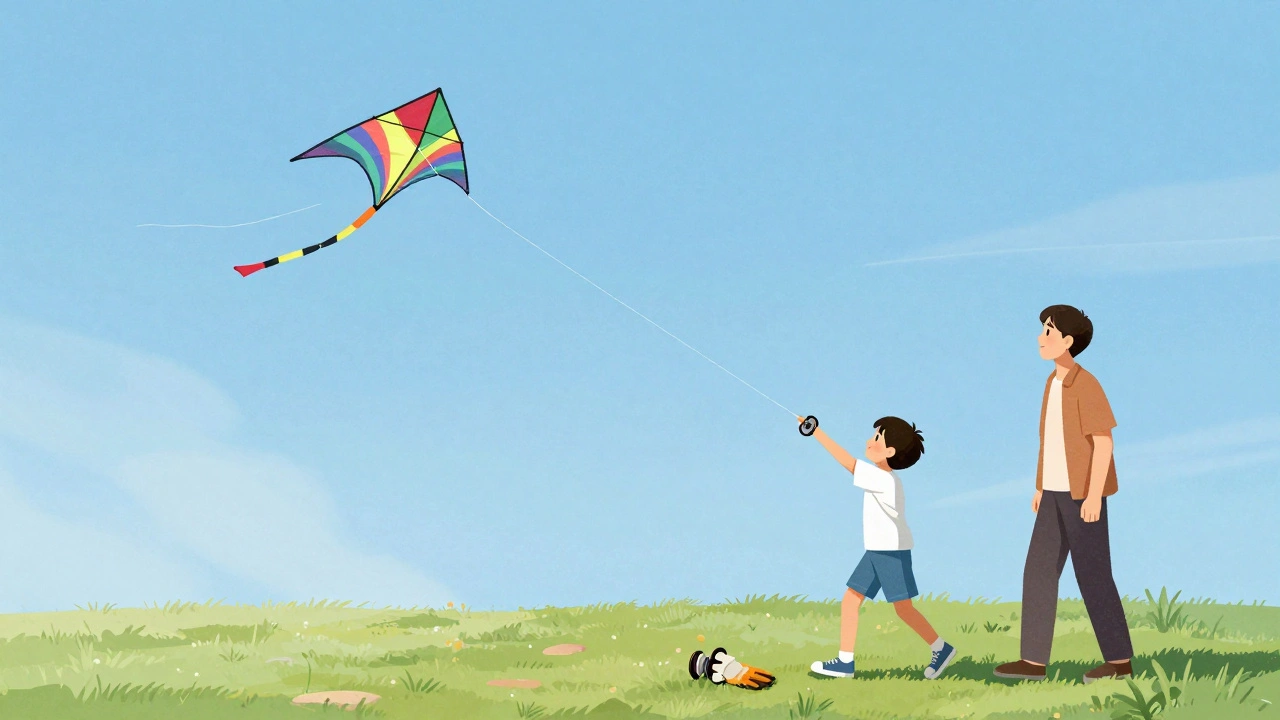
You don’t need to hold their hand the whole time. But you do need to be close, alert, and ready to act. A 2023 study from the American Academy of Pediatrics found that 78% of kite-related injuries in children happened when an adult was nearby - but not paying attention. They were scrolling, talking on the phone, or distracted by other kids.
Here’s how to supervise right:
- Stay within arm’s reach for kids under 6. Even if they’re not crying or falling, a sudden gust can yank them off balance.
- For older kids, stay within 15 feet and keep your eyes on the line, not the kite. The line is the danger, not the kite.
- Teach them to drop the spool immediately if the kite starts spinning out of control. No shame in letting go. Better a lost kite than a lost finger.
- Watch for wind changes. If clouds roll in or leaves start swirling fast, it’s time to land the kite. Wind gusts are the #1 cause of accidents.
One dad in Portland told me his 7-year-old got a deep cut on her palm when the kite line snapped and whipped back. She was flying alone. He was 20 feet away, checking his email. "I thought she was fine," he said. "I didn’t realize the line could snap like a rubber band." That’s the kind of mistake that sticks with you.
Common Mistakes That Put Kids at Risk
Even experienced parents make these errors:
- Flying near power lines: Kite strings can conduct electricity. Even dry string can become conductive in damp air. If you see power lines, walk away.
- Using old or damaged kites: A frayed line or cracked frame might still fly - but it won’t stay safe. Replace kites every season if used often.
- Flying in wind that’s too strong: If you can’t hold the spool steady, it’s too windy. For kids, 8-12 mph is ideal. Anything over 15 mph is risky.
- Letting kids fly near crowds: A kite can swing suddenly. If someone walks by, the line can snap across their face. Always pick open space.
- Not wearing gloves: Even thick lines can burn hands during fast pulls. A simple pair of work gloves costs less than $5 and prevents blisters and cuts.
What to Do If Something Goes Wrong
Accidents happen fast. Be ready:
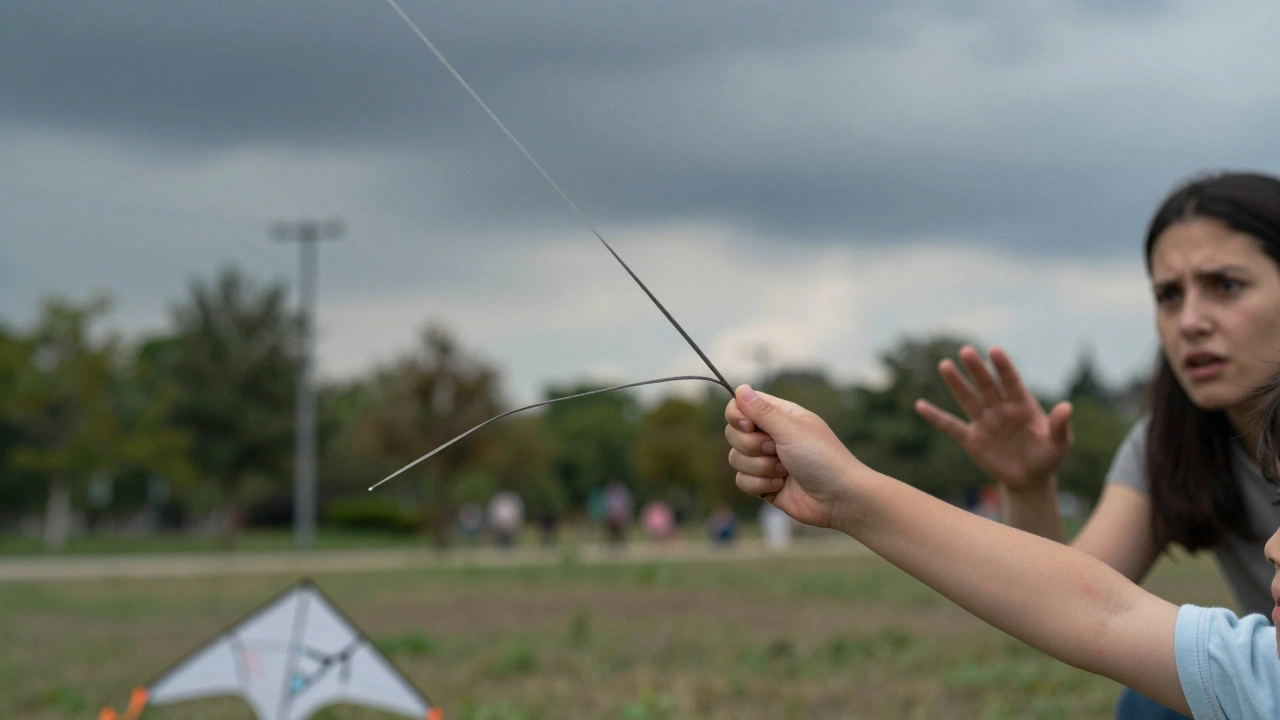
- If the line cuts skin, rinse with clean water and apply pressure. Don’t pull the line out if it’s stuck - cut it instead.
- If a child trips and falls with the kite still flying, grab the spool and stop the line immediately. Don’t let the kite keep pulling.
- If the kite gets tangled in trees, don’t climb. Use a long stick or wait for calmer winds to let it drop.
- If the kite flies into a road, leave it. Never run into traffic to retrieve it.
Keep a small first-aid kit in your bag when flying kites. Include antiseptic wipes, gauze, and a pair of scissors. You won’t need them often - but when you do, you’ll be glad you brought them.
When to Say No
There are times when kite flying isn’t safe - and it’s okay to cancel the fun:
- Storms or lightning - even if it’s not raining yet.
- High wind warnings (over 20 mph).
- Busy parks with joggers, cyclists, or dog walkers.
- Anywhere near airports or drone zones.
- If the child is tired, upset, or not listening.
Safety isn’t about being strict. It’s about being smart. A kite should bring joy - not a trip to the ER. Let kids fly, but don’t let them fly blind.
What’s the safest kite for a 4-year-old?
The safest option is a small, soft fabric kite under 6 inches wide, with a 6- to 10-foot cotton string and a finger guard on the spool. Brands like Eddy Kites’ "Tiny Tots" model or the "Bumblebee" by Parafoil are designed specifically for toddlers. Avoid anything with rigid frames or thin lines.
Can kids fly kites in the rain?
No. Wet kite lines can conduct electricity, especially if they’re near power lines. Even if the rain seems light, humidity can make strings dangerous. Plus, wet kites become heavier and harder to control. Wait for dry, breezy days.
Is it safe for two kids to fly kites together?
Only if they’re at least 8 years old, flying in a wide open space, and under direct adult supervision. Never let two kids fly near each other - their lines can cross and tangle. A tangled line can snap suddenly, whipping back with enough force to cause injury. Keep them at least 50 feet apart.
How often should I replace a child’s kite?
Replace it every season if used weekly. Check the line for fraying, the frame for cracks, and the spool for sharp edges. Even if it looks fine, the material weakens with sun exposure and wind stress. A kite that’s been used for more than a year is a safety risk.
Do I need gloves for my child when flying a kite?
Yes - especially for kids 6 and older. Even thick cotton lines can cause painful burns during sudden pulls. A simple pair of cotton work gloves, like those used for gardening, adds protection without limiting control. Keep a pair in your bag every time you go out.