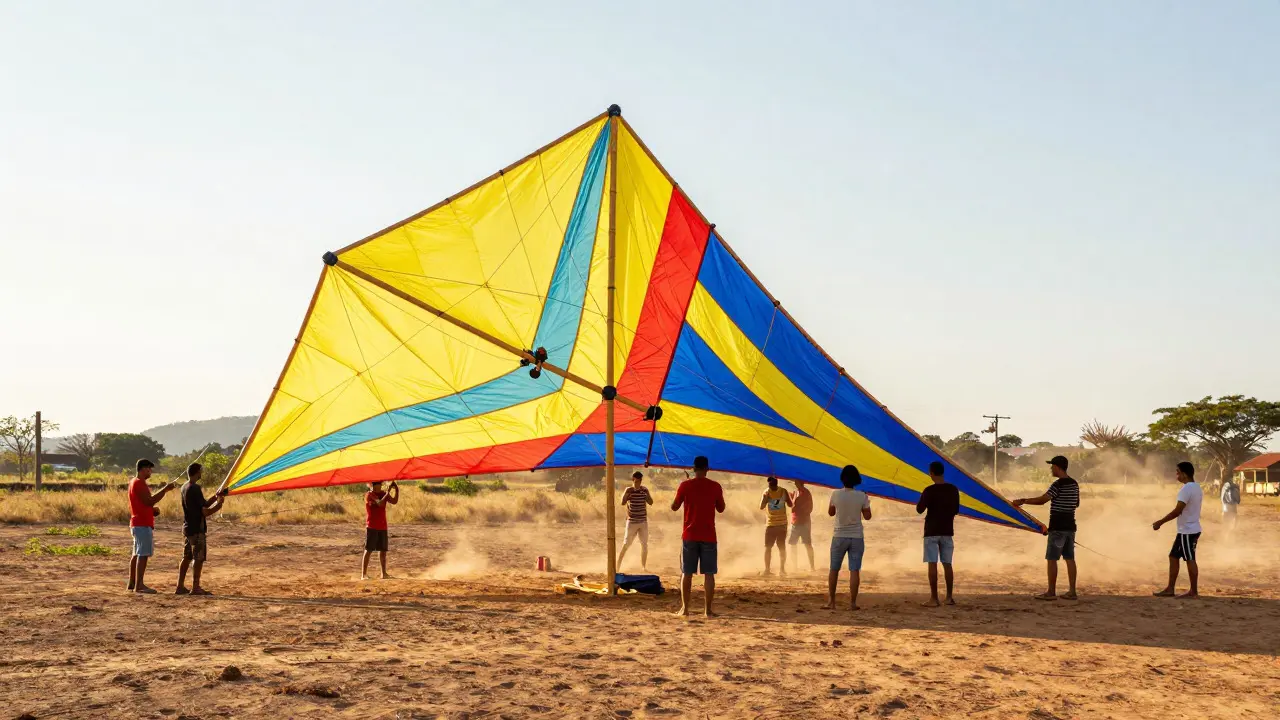
Imagine a kite the size of a small car. Not a toy you buy at a beach shop, but a massive, colorful structure made of bamboo and tissue paper that requires a team of ten people just to lift it off the ground. This is the Barrilete Gigante, a cornerstone of Brazilian cultural heritage that transforms empty fields into arenas of engineering and artistry during the June festivals.
If you have ever struggled to keep a standard diamond-shaped kite in the air on a breezy day, watching these giants dance against the sky feels almost magical. But it is not magic; it is physics, tradition, and intense teamwork. These kites are not just flown for fun. They are central to the Festa Junina, a series of celebrations honoring Saint John the Baptist, which take place across Brazil, particularly in the Northeast region where the wind conditions are perfect for this specific type of aerial sport.
The Cultural Roots of the Giant Kite
To understand why Brazilians spend months building kites they will fly for only a few days, you need to look at history. The tradition arrived with Portuguese colonizers in the 16th century. Initially, these were simple toys for children. Over time, as communities competed for prestige, the kites grew larger and more elaborate. By the 20th century, the São João Festival had become synonymous with competitive kite flying.
In cities like Salvador and Recife, entire neighborhoods rally behind their local teams. It is not uncommon for a group of friends to pool money and labor throughout the year to fund one spectacular entry. The social aspect is huge. You do not just build a kite; you build community bonds. The night before the launch, there are often parties, food stalls selling corn-based treats, and music. The kite itself becomes a symbol of local pride.
Anatomy of a Barrilete Gigante
What makes these kites different from what you might see in the US or Europe? It comes down to materials and design. Most Western kites use synthetic fabrics like ripstop nylon. Brazilian Barriletes rely on natural materials: bamboo for the frame and colored tissue paper or thin plastic for the sail.
The frame is the skeleton. Builders select bamboo poles based on age and thickness. Younger bamboo is flexible but weak; older bamboo is strong but brittle. Finding the right balance is an art form. The poles are heated over fire to bend them into precise curves without snapping. This technique, passed down through generations, ensures the frame can withstand the stress of high winds.
The sail is equally critical. Tissue paper is lightweight, which is essential when you are trying to get hundreds of square feet of surface area airborne. However, it tears easily. Builders apply layers of starch paste or specialized adhesives to reinforce the edges. Some modern builders experiment with lightweight plastics, but purists argue that tissue paper offers better aerodynamic properties and a traditional aesthetic that glows beautifully when backlit by the sun.
| Component | Traditional Material | Modern Alternative | Performance Impact |
|---|---|---|---|
| Frame | Bamboo (heated/bent) | Fiberglass or Carbon Fiber | Bamboo flexes with wind; carbon is rigid and lighter but expensive. |
| Sail | Tissue Paper | Ripstop Nylon or Tyvek | Paper is lighter but fragile; synthetics are durable but heavier. |
| Adhesive | Cassava Starch Paste | Epoxy or Contact Cement | Starch allows for repairability; epoxy is permanent and heavy. |
| Line | Cotton Twine | Dyneema or Spectra Cord | Cotton stretches (absorbing shock); Dyneema is non-stretching and stronger. |
The Engineering Challenge: Lifting the Heavyweight
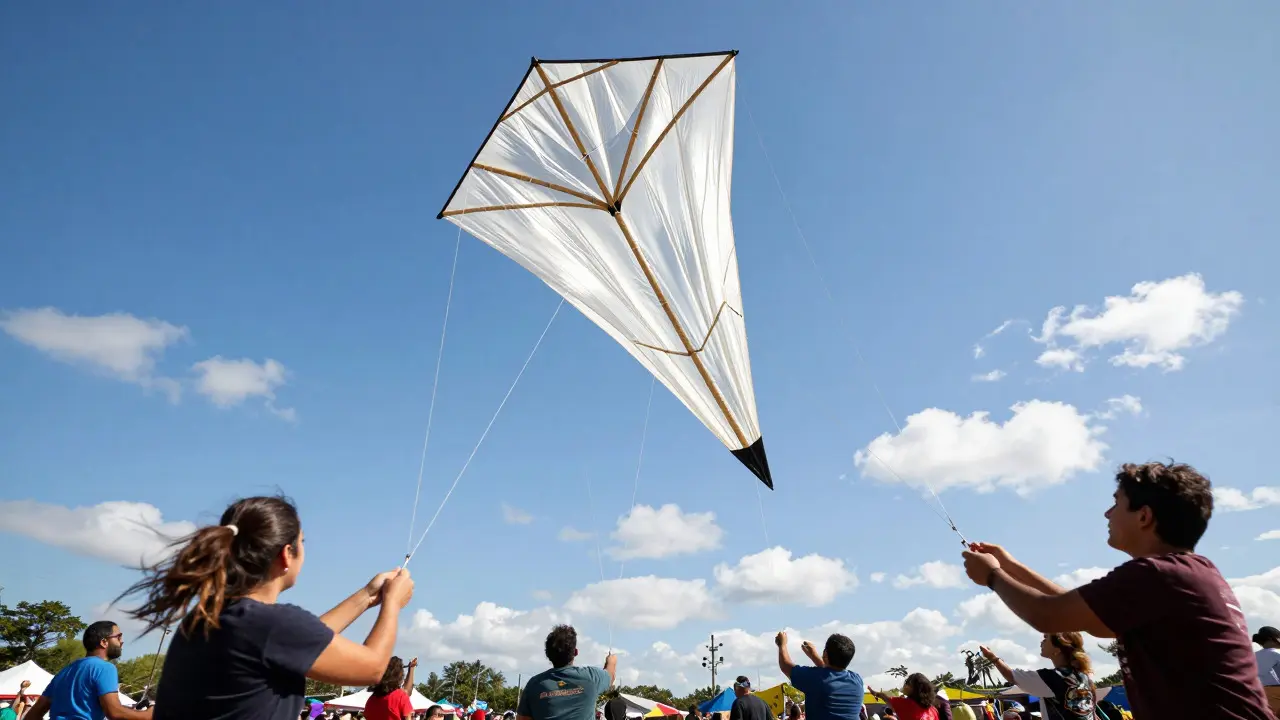
Building the kite is half the battle. Launching it is the other half. A typical Giant Kite can weigh between 50 and 200 pounds. To get that mass into the air, you need significant wind speed-usually sustained gusts of 15 to 20 miles per hour.
This is why the timing matters so much. In the Brazilian Northeast, June brings consistent trade winds. If you try to fly a giant kite in Portland, Oregon, in August, you might find the air too still or the humidity too high for the tissue paper to hold up. The environment dictates the success of the flight.
Launching requires a crew. One person holds the nose of the kite while others manage the bridle lines-the complex web of strings that connects the kite to the main line. When the wind hits, the team must release simultaneously. If one person lets go a second early, the kite spins out of control and crashes. It takes dozens of rehearsals to coordinate this move. Watching a successful launch is tense. The kite wobbles, dips, and then suddenly catches the lift, soaring upward with surprising grace despite its bulk.
Aesthetics and Symbolism
Why make them so big? Size commands attention. But the visual design carries deeper meaning. Many Barriletes feature religious imagery, political satire, or abstract geometric patterns. During the Festa Junina, it is common to see kites depicting saints, local heroes, or even caricatures of politicians.
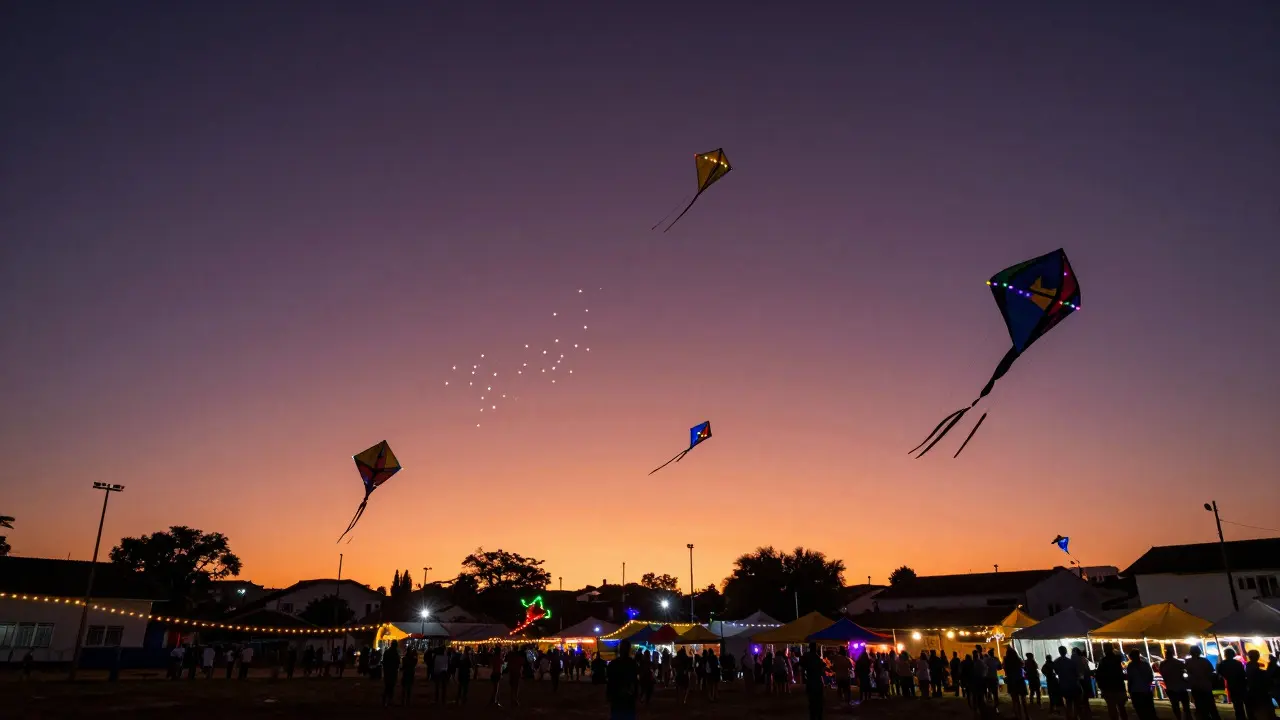
Color plays a vital role. Bright yellows, blues, and reds are chosen to be visible against the blue sky and white clouds. Some builders incorporate LEDs or reflective strips for evening flights, turning the kite into a moving light show. This fusion of folk art and engineering creates a unique visual language. Each kite tells a story about the community that built it. If you visit a festival, you can often identify which neighborhood a kite belongs to by its color scheme or emblem.
Where to See Them and How to Participate
You do not need to live in Brazil to appreciate this culture. While the heart of the tradition remains in states like Bahia and Pernambuco, Brazilian diaspora communities host festivals worldwide. Cities like Miami, Boston, and Newark hold large Junina Festivals in June, often featuring kite displays.
If you want to try your hand at building one, start small. Do not attempt a 100-pound giant immediately. Build a medium-sized hexagonal kite using dowels and wrapping paper. Learn how the bridle affects stability. Once you understand the basics of lift and drag, scale up gradually. Join a local kite club. In the United States, groups like the American Kitefliers Association often have members interested in exotic designs. They can provide advice on sourcing materials and navigating local wind conditions.
For those traveling to Brazil, plan your trip around mid-June. Look for events in Caruaru, known as the "Capital of the Northeast," which hosts one of the largest parties. Arrive early to secure a spot near the launch field. Bring cash for food and souvenirs, as card machines can be unreliable in outdoor venues.
Maintenance and Safety Tips
Giant kites are fragile. After a flight, inspect the sail for tears. Even a small hole can grow rapidly in high winds. Patch it immediately with matching tape or glue. Store the kite flat or rolled loosely in a breathable bag. Do not fold it tightly, as creases weaken the paper.
Safety is paramount. A falling 100-pound kite can cause serious injury. Always fly away from crowds, power lines, and trees. Use a proper harness if you are handling the main line, especially for kites over 50 pounds. Never wrap the line around your hand; if the kite dives, it can cut off circulation or break fingers. Wear gloves. And always check the weather forecast. Sudden storms can turn a gentle breeze into a dangerous gale in minutes.
How long does it take to build a Barrilete Gigante?
It varies significantly by size and complexity. A small team might complete a medium-sized kite (around 50 pounds) in two weeks of part-time work. Large competition kites weighing over 150 pounds can take three to six months of dedicated effort, including material sourcing, frame bending, sail cutting, and painting.
Can I fly a Brazilian giant kite in windy coastal areas outside Brazil?
Yes, provided the wind is steady rather than gusty. Coastal areas in California, Florida, or Portugal offer similar wind profiles to northeastern Brazil. However, avoid flying during hurricane season or when wind speeds exceed 25 mph, as the delicate tissue paper sails may tear under excessive stress.
What is the best material for beginners to use?
Start with lightweight wrapping paper and wooden dowels instead of bamboo. Bamboo requires heat-bending skills that take practice. Wrapping paper is forgiving and easy to replace if torn. Once you master the bridle setup, upgrade to tissue paper and bamboo for authentic performance.
Are these kites used for anything besides festivals?
Primarily, they are cultural and artistic expressions. Historically, some rural communities used smaller versions for signaling or simple recreation. Today, they are mostly seen in competitions and parades. There is no commercial transport or scientific research application for these specific giant kites, unlike the box kites used in meteorology.
How do judges score giant kites in competitions?
Judges evaluate several criteria: altitude reached, stability in the air, aesthetic design, and the quality of the launch and landing. A kite that flies highest is not necessarily the winner if it looks plain or crashed upon landing. Creativity and craftsmanship carry significant weight alongside technical performance.