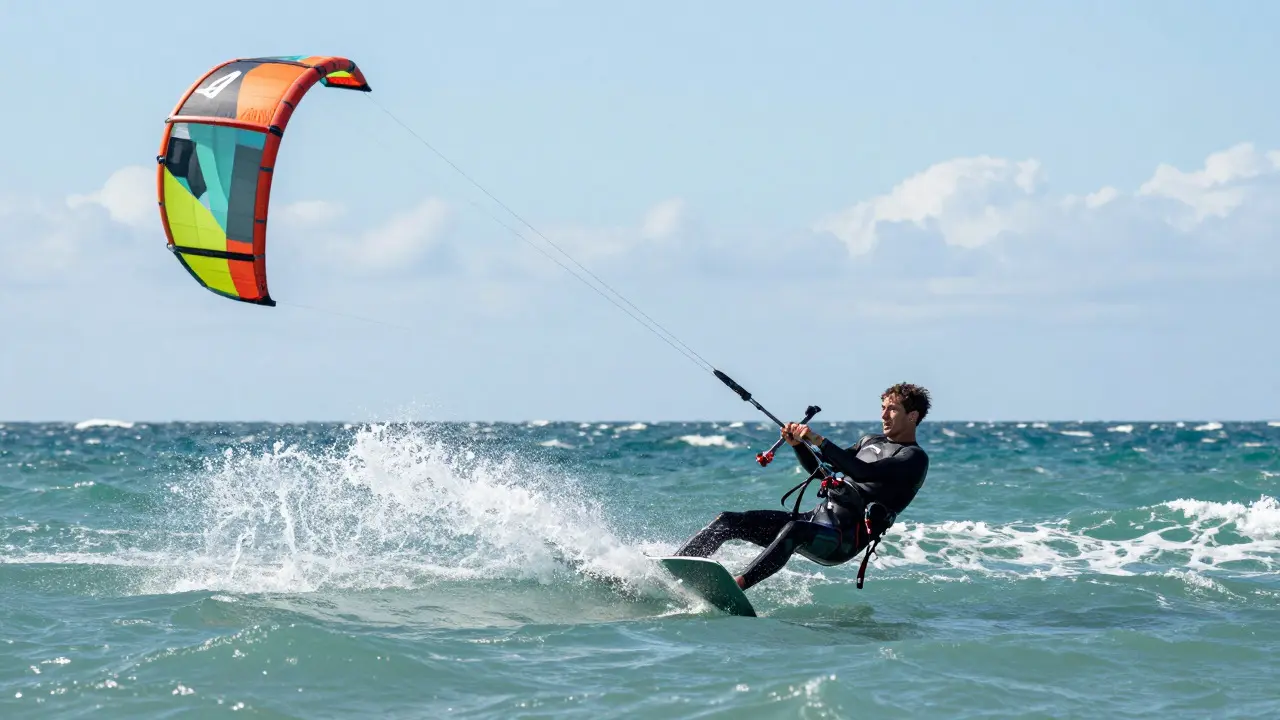
Nothing kills the thrill of your first few days on the water faster than getting slammed into the sand or spinning in circles while trying to go straight. If you are new to kiteboarding is a water sport where a rider uses a large controllable power kite to propel themselves across the surface of the water, you have likely experienced both. It feels like the kite is fighting you, and the wind seems to change its mind every second. But here is the good news: most beginner issues stem from just two root causes-mismanaging power and poor body positioning. Fix these, and the sport transforms from a chaotic struggle into a smooth glide.
Why You Keep Getting Overpowered
Overpowering happens when the force pulling you exceeds what your board and harness can handle safely. For beginners, this usually isn't because the wind is too strong for your gear; it's because you are holding the bar too low or letting the kite drift too far downwind. When the kite sits at 45 degrees or lower, it generates maximum pull. If you are not actively steering it back toward the center of the window (the arc of sky the kite flies in), that pull becomes overwhelming fast.
The fix is counterintuitive but simple: steer the kite to the edge of the window before you even think about trimming. Many riders panic and try to depower by pushing the bar out hard without moving their hands. This creates a lag. Instead, move your hands slightly forward to send the kite to the left or right edge. Once it reaches the vertical line, it naturally loses power. Then, and only then, push the bar out to trim if needed. Think of the edges as your safety zones. If you feel the pull increase, check your hand position first. Are they centered? If so, the kite is in the middle of the window, generating peak power. Move them to the side immediately.
Mastering Upwind Efficiency
Struggling to make headway against the wind is the second biggest complaint among novices. You might be pumping the board, leaning forward, and screaming internally, yet you barely move. The problem is almost always your angle of attack relative to the wind. To go upwind efficiently, you need to ride at an angle between 30 and 45 degrees to the wind direction. If you ride too close to the wind (less than 30 degrees), you lose speed and stall. If you ride too far away (more than 60 degrees), you travel in a wide arc that takes forever to cover distance.
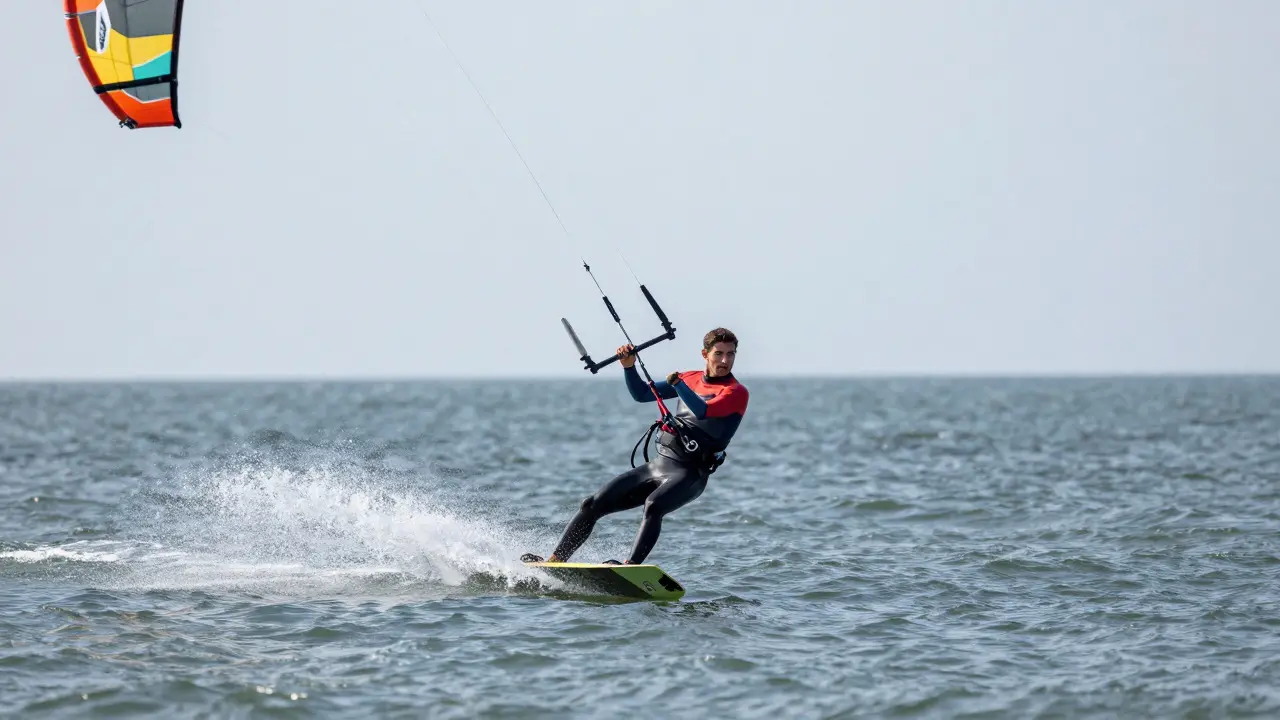
Your body position plays a critical role here. Beginners often lean back to "hold on," which drags the tail of the board and kills momentum. Instead, stand tall with your weight centered over the board. Lean slightly forward into the wind to keep the nose of the board engaged. This posture allows the kite to pull you through the water rather than dragging you behind it. Practice this on flat water first. Aim for a steady, rhythmic movement. If you find yourself drifting downwind, bring the kite higher in the window to reduce power and allow you to turn more sharply into the wind.
The Role of Harness and Bar Control
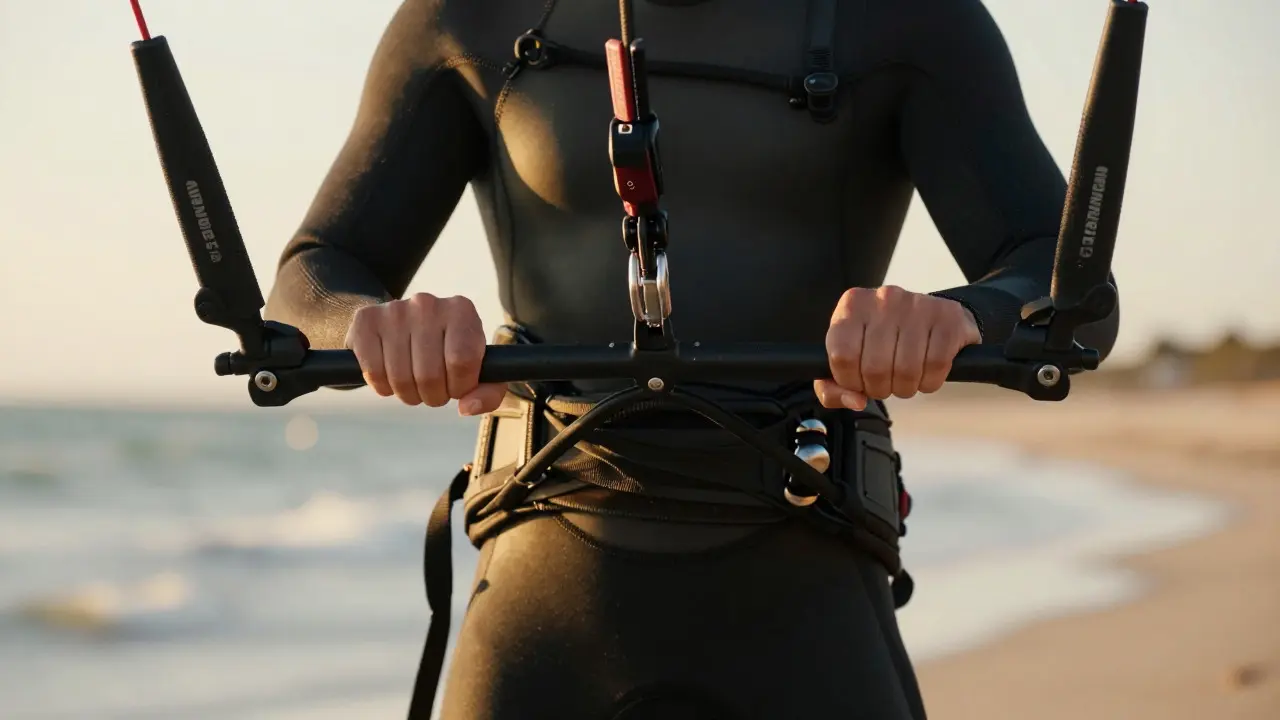
Your equipment setup dictates how much control you actually have. A common mistake is using a harness that doesn't fit properly or relying too heavily on arm strength instead of core tension. When you are hooked into the harness, your arms should remain relaxed. Tensing up your shoulders transfers fatigue quickly and reduces your ability to react to gusts. Your core muscles should do the work of keeping the bar stable against the pull.
Check your bar height. If the bar is too high, you will constantly fight the kite’s rotation. If it is too low, you risk hyperextending your wrists. The ideal position is where your elbows are bent at roughly 90 degrees when the bar is in its neutral position. Adjust your hook-in point on the harness until you feel balanced. You should feel connected to the kite without feeling like you are being pulled off-center. This small adjustment can eliminate 80% of the "fight" you feel during a session.
Wind Windows and Steering Basics
Understanding the power zone versus the depower zone is crucial. The power zone is the center of the C-shaped arc the kite travels. The depower zones are the left and right edges. Most beginners spend too much time in the power zone because they fear losing altitude. However, staying in the center means you are always at maximum load. To manage varying wind conditions, learn to "fly the kite" rather than just hold it. Small, subtle movements of your hands can shift the kite’s angle of attack significantly. A slight push forward sends the kite downwind and increases power. A slight pull back brings it upwind and decreases power. Mastering these micro-movements allows you to adapt to lulls and gusts without needing to trim the lines entirely.
Common Pitfalls and How to Avoid Them
- Holding the bar with one hand: Always use both hands unless performing a specific trick. One-handed control reduces stability and makes it harder to react to sudden shifts in wind direction.
- Ignoring the wind indicator: Don’t guess the wind speed. Use a reliable anemometer. Knowing exactly how many knots you are dealing with helps you choose the right kite size and set your expectations for the session.
- Turning too slowly: When changing direction, commit to the turn. Hesitating causes the kite to swing wildly, leading to loss of control. Smooth, decisive inputs create smooth, predictable kite movement.
- Neglecting line management: Tangled lines are a nightmare. Before launching, ensure all lines are free and untwisted. During the session, keep an eye on your rear lines. If they start to twist, stop and re-center the kite gently to resolve the tension.
Practical Drills for Improvement
You don’t need to be expert-level to practice these fixes. Start with basic steering drills on land. Hold the bar and mimic the motions of sending the kite to the left edge, then the right edge. Feel the difference in pressure. Now, get on the water. Try riding a figure-eight pattern. This forces you to constantly switch between power and depower zones. Focus on keeping your speed consistent. If you slow down too much, you are likely stalling or losing power. If you speed up uncontrollably, you are in the power zone too long. Adjust your hand positions to maintain a steady pace. Over time, this becomes muscle memory, allowing you to focus on other aspects of riding like jumping or carving.
| Mistake | Cause | Solution |
|---|---|---|
| Getting slammed into water | Kite in power zone + no depower technique | Steer to edge of window first, then trim bar |
| Drifting downwind | Poor upwind angle + leaning back | Ride at 30-45 degree angle, lean forward |
| Arm fatigue | Reliance on biceps instead of core | Relax arms, engage core, adjust harness fit |
| Unpredictable kite movement | Hesitant or jerky hand inputs | Practice smooth, deliberate steering drills |
Frequently Asked Questions
What is the best kite size for a beginner?
There is no single best size, but generally, larger kites are easier to control for beginners because they are slower and more stable. A 12m to 14m kite is often recommended for riders under 70kg in moderate winds. Always consult a local shop or instructor to match the kite to your weight and typical local wind conditions.
How do I know if I am in the power zone?
You are in the power zone when the kite is directly above you or slightly behind you, within the central part of the arc. You will feel maximum pull on the bar. To exit, steer the kite to the left or right edge of the window until the pull decreases noticeably.
Should I use a trainer kite first?
Yes, highly recommended. Flying a small 1m to 2m trainer kite on the beach teaches you the fundamentals of steering, depowering, and relaunching without the risk of injury. It builds the muscle memory needed for full-size kites.
Why does my kite crash when I turn?
Crashes usually happen due to over-steering or letting the kite drop too low during a turn. Keep the kite high in the window while turning. Use gentle, progressive inputs rather than sharp jerks. Also, ensure your lines are not tangled before launching.
Is it safe to kiteboard alone?
It is safer to kiteboard with a buddy or in a designated spot with other riders. Having someone nearby can help with relaunching and emergency situations. If going alone, inform someone of your location and expected return time, and stay within a comfortable range of the shore.