Imagine standing on a beach in Weifang, China, or flying over the skies of Bali during a festival. You see hundreds of shapes dancing against the blue-dragons with long tails, octopuses with fluttering tentacles, and geometric stars that catch the light just right. These aren't just toys for windy days. Kites are ancient artifacts of human creativity, blending engineering with deep cultural storytelling. For thousands of years, people have used these wind-borne objects to send messages, ward off evil spirits, and celebrate harvests. But beyond their utility lies a rich tradition of artistic kites that reflects the soul of the cultures that created them.
If you've ever wondered why a Japanese kite looks so different from a Mexican one, or what those intricate patterns actually mean, you're asking the right questions. This isn't just about aerodynamics; it's about history, religion, and social status woven into paper and bamboo. Let's look at how different civilizations turned simple frames and strings into iconic symbols of identity.
The Origins in China: Where It All Began
You can't talk about kite history without starting in China. Most historians agree that kites were invented there around the 5th century BC, attributed to philosophers Mozi and Lu Ban. Initially, they weren't for fun. They were tools for military signaling and measuring distances. But by the Han Dynasty, they had evolved into artistic expressions.
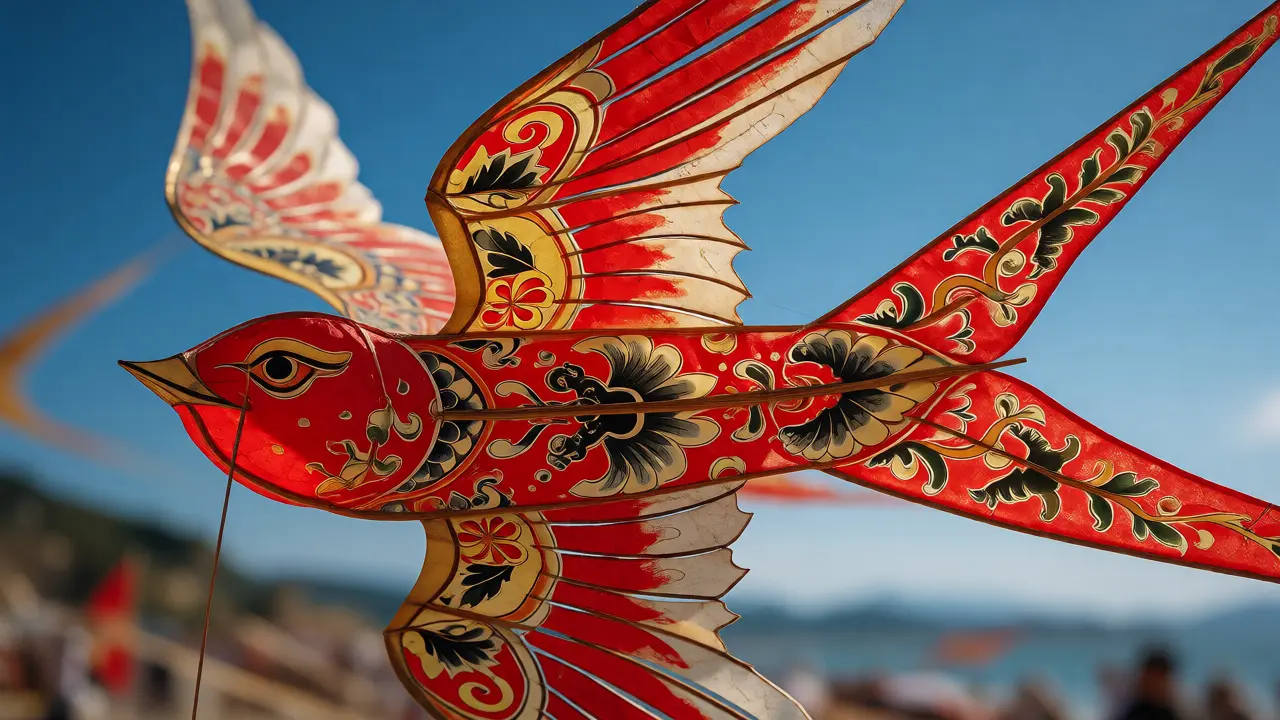
Traditional Chinese kites are often hexagonal or swallow-shaped. Why the swallow? In Chinese culture, the swallow is a symbol of spring, luck, and good fortune. Flying a swallow kite was a way to invite positive energy into your home. The materials matter too. Artisans used mulberry paper and split bamboo, painting them with vibrant reds and golds. Red represents happiness, while gold signifies wealth. If you saw a kite painted with bats, it wasn't because they liked the animal; the word for "bat" (fu) sounds like the word for "fortune." Every brushstroke was a prayer.
During the Tang Dynasty, kites became popular among the aristocracy. They added bells and whistles to the strings, turning the sky into an orchestra. This era marked the shift from purely functional use to aesthetic appreciation. The craftsmanship required to create symmetrical, lightweight structures that could still carry heavy decorations set the standard for future generations.
Japan and the Spirit World
From China, the kite traveled to Japan, where it took on a spiritual dimension. In Japan, kites are deeply tied to Shinto beliefs and seasonal festivals. Japanese kites, known as tako, are famous for their rigid rectangular frames and bold, black ink paintings.
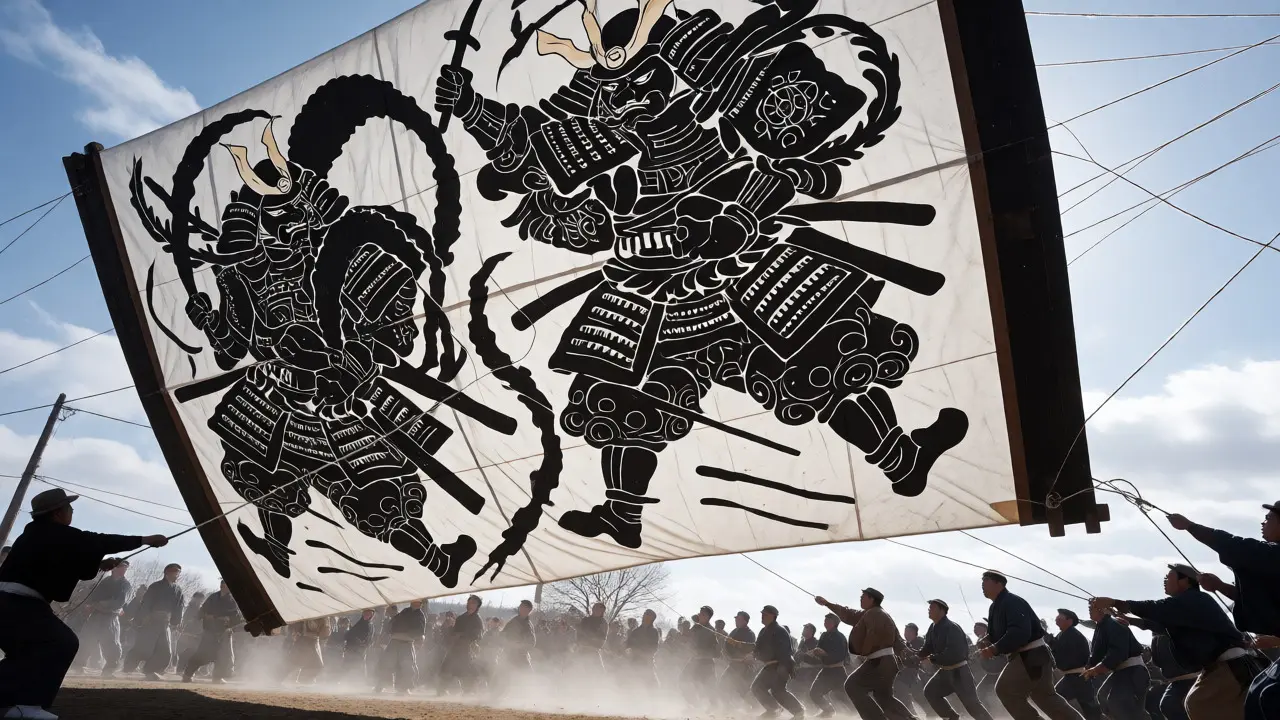
One of the most striking aspects of Japanese kite art is the depiction of samurai warriors and kabuki actors. These figures weren't just heroes; they represented strength and moral integrity. During the Edo period, kite fighting became a massive spectacle. Owners would try to cut each other's lines using glass-coated string. Losing a fight meant losing face, so the design had to be impeccable. A well-made kite showed the owner's dedication and skill.
In some regions, like Hamamatsu, giant kites are flown during New Year celebrations. These aren't small toys; some weigh over 100 pounds and require dozens of men to launch. The sheer scale turns the activity into a communal ritual. The artistry here focuses on durability and visibility. Bold colors and large characters ensure the kite is seen from miles away, acting as a beacon for the community.
Mesoamerica: The Sky Lanterns of Mexico
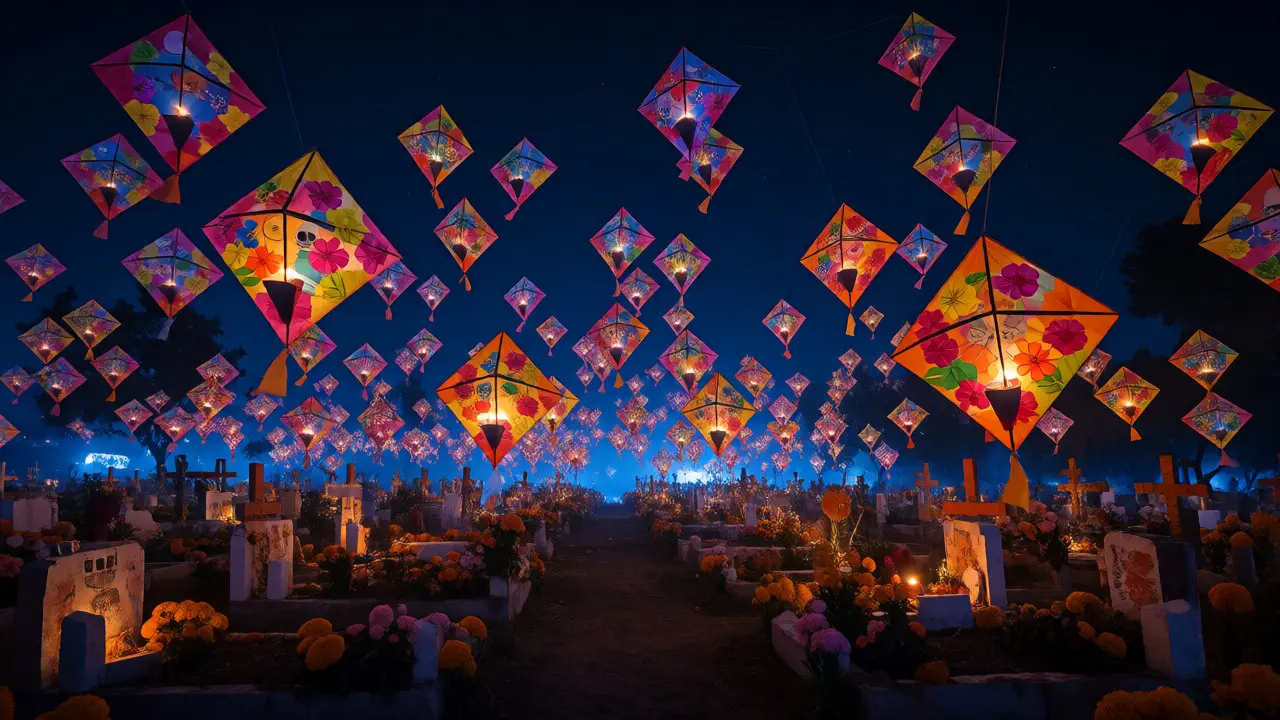
Cross the Pacific Ocean, and you find a completely different approach to aerial art. In Mexico, particularly in Oaxaca, the Papantla kite or papalote has become an icon of Day of the Dead celebrations. Unlike the single-string kites of Asia, these are often part of larger processions.
The design philosophy here is rooted in indigenous Zapotec traditions mixed with Spanish colonial influences. Papalotes are typically diamond-shaped and covered in colorful tissue paper. But the real magic happens when they are lit up at night. Thousands of glowing kites float above cemeteries, guiding the spirits of ancestors back to the world of the living. The light itself becomes part of the art.
Symbolism in Mexican kites often involves skulls, flowers, and religious icons. The bright colors aren't just for decoration; they represent the vibrancy of life contrasting with the solemnity of death. Making a papalote is a family affair, passed down through generations. The glue might be homemade flour paste, and the frame is local wood. This connection to local materials grounds the art in the land itself.
Southeast Asia: Mythology in Motion
In Indonesia and Malaysia, kites serve as bridges between the human and divine realms. Balinese kites are perhaps the most visually complex in the world. They come in three main types, each representing a different deity.
- Bebean: A fish-shaped kite representing Wisnu, the god of preservation. Its long tail mimics the movement of a fish swimming through water.
- Pecukan: A leaf-shaped kite representing Brahma, the creator. It has a distinct curve that resembles a falling leaf.
- Janggan: A bird-shaped kite representing Siwa, the destroyer. It features wide wings and a long tail to mimic flight.
Flying these kites is a serious business. Teams spend months building them, ensuring the proportions are perfect. If a kite crashes, it's considered bad luck. The competition isn't just about who flies highest; it's about who honors the gods best. The sound of the bowstring vibrating in the wind is believed to communicate with the heavens. This auditory element adds another layer to the artistic experience, making the kite a multi-sensory object.
Western Evolution: From Science to Sport
When kites reached Europe via Marco Polo and later traders, their purpose shifted again. In the West, early interest was scientific. Benjamin Franklin famously used a kite to prove lightning was electricity. But by the Victorian era, kites became leisure items for children and adults alike.
Western artistic kites tend to focus on geometric precision and aerodynamic efficiency rather than mythological storytelling. The Box Delta and Sled kites emerged in the 20th century, prioritizing stability and ease of construction. However, modern artists have reclaimed the narrative aspect. Today, you'll see contemporary kites made from ripstop nylon and carbon fiber, designed by engineers who treat them as kinetic sculptures.
Despite the technological upgrades, the core appeal remains the same: the ability to connect with nature through a tangible object. Whether it's a high-tech parafoil or a handmade bamboo frame, the act of launching a kite into the unknown remains a powerful metaphor for hope and freedom.
Comparing Cultural Approaches
To truly appreciate the diversity of Feature China Japan Mexico Bali Primary Material Mulberry Paper/Bamboo Washi Paper/Wood Tissue Paper/Wood Bamboo/Tropical Leaves Common Shape Swallow/Dragon Rectangular/Humanoid Diamond/Papalote Fish/Leaf/Bird Key Symbolism Luck/Fortune Honor/Spirituality Ancestors/Life-Death Cycle Deities/Nature Balance Usage Context Spring Festivals New Year/Kite Fighting Day of the Dead Harvest Rituals
This table highlights how function follows belief. In China, you fly kites to attract luck. In Mexico, you fly them to guide souls. In Bali, you fly them to please gods. The shape and material are secondary to the intent. Understanding this context transforms a simple craft project into a meaningful cultural practice.
Why do Chinese kites often feature swallows?
In Chinese culture, the swallow is a symbol of spring, return, and good news. Flying a swallow kite during spring festivals is believed to bring prosperity and happiness to the household. The shape also allows for stable flight in variable winds.
What is the significance of lighting kites in Mexico?
During Day of the Dead celebrations, kites are lit to guide the spirits of deceased loved ones back to the world of the living. The lights serve as beacons, helping souls find their way to family altars and offerings.
How do Balinese kites differ from others?
Balinese kites are categorized by specific shapes representing Hindu deities: Bebean (fish), Pecukan (leaf), and Janggan (bird). They are often huge, requiring teams to launch, and are integral to religious ceremonies rather than just recreation.
Can I make traditional kites with modern materials?
Yes, many artisans now use synthetic fabrics like ripstop nylon instead of paper for durability, especially for outdoor festivals. However, traditionalists argue that natural materials like bamboo and paper offer better aesthetic authenticity and respect for heritage techniques.
Are kites used for anything besides art and play?
Historically, kites have been used for military signaling, meteorological measurements, and even lifting humans for observation. Today, they are used in renewable energy experiments, such as airborne wind energy systems, continuing their role as practical tools alongside artistic objects.